.jpg)
Expansive grassland valley renowned for abundant wildlife viewing, including bison, wolves, bears, pronghorn, and elk.
Private vehicle: $35 (7-day pass)
Motorcycle: $30 (7-day pass)
Individual (walk/bike): $20 (7-day pass)
Annual Yellowstone Pass: $70
How to Get There
From Cooke City (16 mi): Follow US-212 west through the Northeast Entrance and continue along the Lamar Valley roadway to the numerous wildlife viewing pullouts.
Overview
The Lamar Valley is often called America's Serengeti because of its remarkable concentration of wildlife and vast open landscapes. Stretching across northeastern Yellowstone, the valley's rolling grasslands and winding river corridors provide ideal habitat for bison, pronghorn, coyotes, elk, grizzly bears, and one of the park's most famous wolf populations. Visitors frequently gather at dawn and dusk to observe wildlife moving across the broad valley floor beneath the Absaroka Mountains.
Beyond its wildlife reputation, Lamar Valley offers striking scenery shaped by volcanic activity, glaciers, and flowing rivers. The Lamar River and Soda Butte Creek sustain a rich ecosystem that attracts predators and prey alike, creating some of the best wildlife-viewing opportunities in North America. Whether watching a distant wolf pack through a spotting scope or observing a herd of bison crossing the roadway, visitors experience one of Yellowstone's most iconic landscapes.
Northeast Entrance
The Northeast Entrance offers one of the most scenic approaches into Yellowstone National Park. Nestled between rugged mountains and expansive valleys, the entrance serves as a gateway to Lamar Valley and the park's extensive northern wildlife habitats. Its location near the Beartooth Highway has made it a favorite route for travelers seeking dramatic mountain scenery before entering Yellowstone.
Unlike most other entrances, the roadway connecting the Northeast Entrance with the park's northern corridor remains accessible year-round. Visitors entering through this route often encounter wildlife within minutes of crossing the boundary, making it one of the most rewarding and memorable arrival experiences in Yellowstone.
Tower-Roosevelt
The Tower-Roosevelt area occupies a historic crossroads in northern Yellowstone and serves as a gateway to Lamar Valley, the Blacktail Plateau, and the surrounding wilderness. Named in honor of President Theodore Roosevelt, the area preserves the rustic atmosphere of Yellowstone's early tourism era through its historic lodge and traditional western-style experiences. Its location places visitors within easy reach of wildlife habitats, waterfalls, scenic drives, and hiking opportunities.
Roosevelt Lodge remains the heart of the district, offering a classic national park experience amid forests and open meadows. Horseback rides, wagon excursions, and nearby wildlife viewing areas provide memorable ways to explore Yellowstone's northern landscapes. Rich in history and surrounded by spectacular scenery, Tower-Roosevelt remains one of the park's most distinctive visitor destinations.
This article uses material from the Wikipedia articles and official tourism pages for the Lamar Valley and Yellowstone National Park, which are released under the on-Share-Alike License 3.0.
Featured Regions
-400.jpg)
Yellowstone National Park from Yellowstone NP, USA, Public domain, via Wikimedia Commons; Image Size Adjusted
.jpg)
Buffalo Ranch
Historic ranch complex used in the early twentieth century to breed and protect American bison from extinction, now preserved as an outdoor classroom.
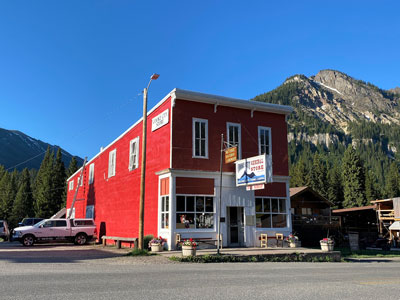
Jon Roanhaus, CC BY-SA 4.0, via Wikimedia Commons; Image Size Adjusted

Cooke City
Small mountain gateway community serving as a supply stop and jumping-off point for surrounding wilderness areas, popular for snowmobiling in winter.
-400.jpg)
Yellowstone National Park, Public domain, via Wikimedia Commons; Image Size Adjusted
Lamar Valley
Broad, glacially-carved river valley renowned for exceptional wildlife viewing, supporting large herds of bison, elk, pronghorn, wolves, and grizzly bears.
-400.jpg)
Yellowstone National Park, Public domain, via Wikimedia Commons; Image Size Adjusted
.jpg)
Tower Fall
Spectacular waterfall plunging over volcanic cliffs and framed by distinctive rock pinnacles sculpted by erosion.