.jpg)
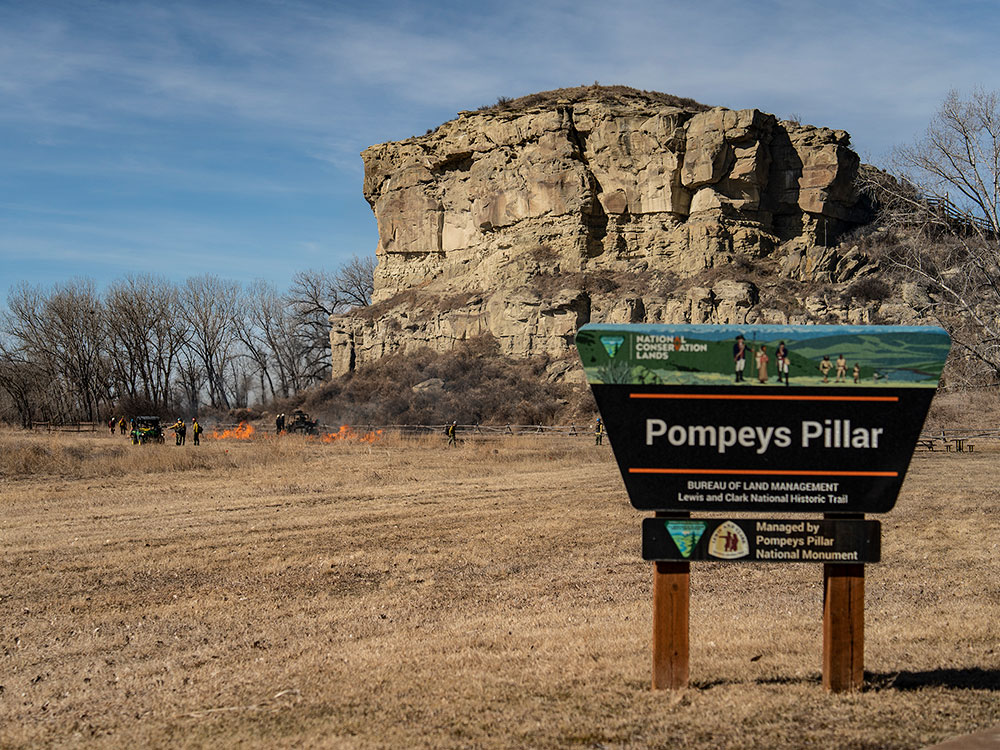
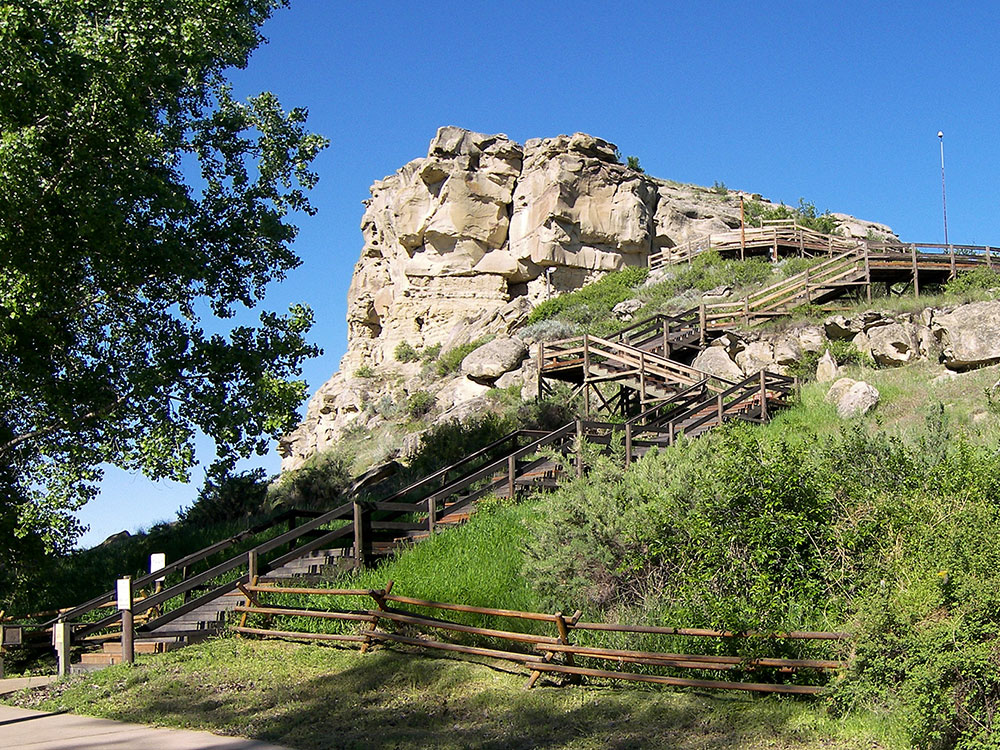
Pillar standing 150 feet (45 m) above the Yellowstone River and consists of sandstone from the late Cretaceous Hell Creek formation and features an abundance of Native American petroglyphs
General Information
May to September
Front Gates: 8am to 5:30pm
Interpretive Center: 9am to 6pm
Gift Store: 9am to 5:30pm
October (Weather Dependent)
Front Gates: 8am to 4pm
Interpretive Center: 9am to 4pm
Outbound Gate: Closes at 4:30pm
Only during operational months and hours
From Billings (29 miles): Get on I-90 E in Lockwood from 1st Ave N and I-90BL E. Take I-94 E to Fly Creek Rd. Take exit 23 from I-94 E. Drive to Hwy 312.
Overview
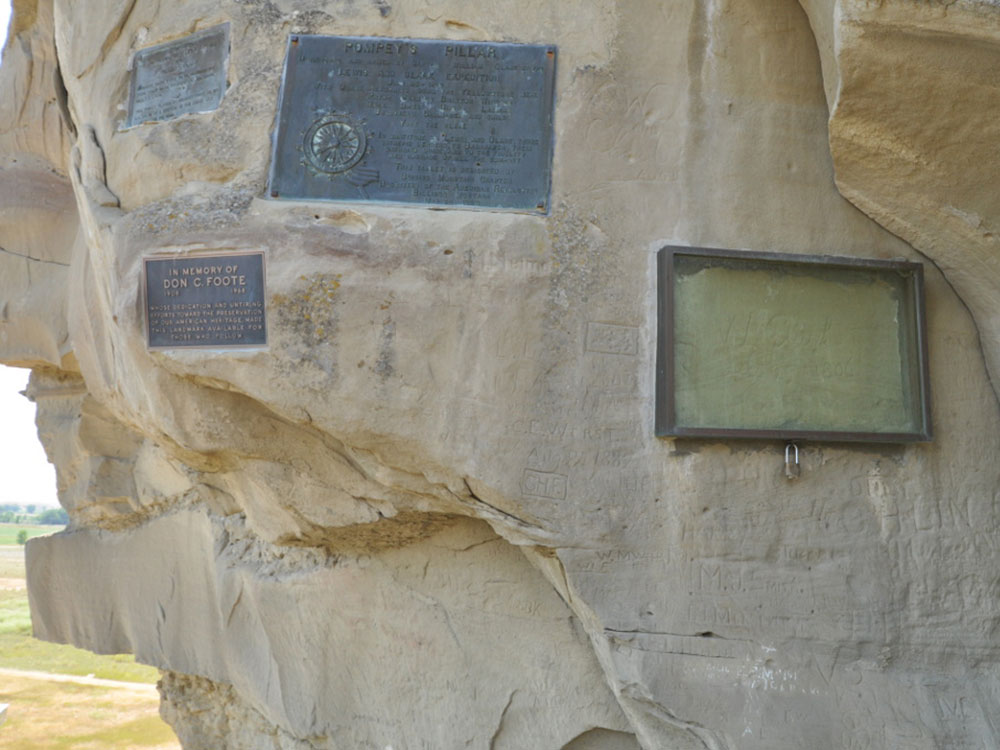
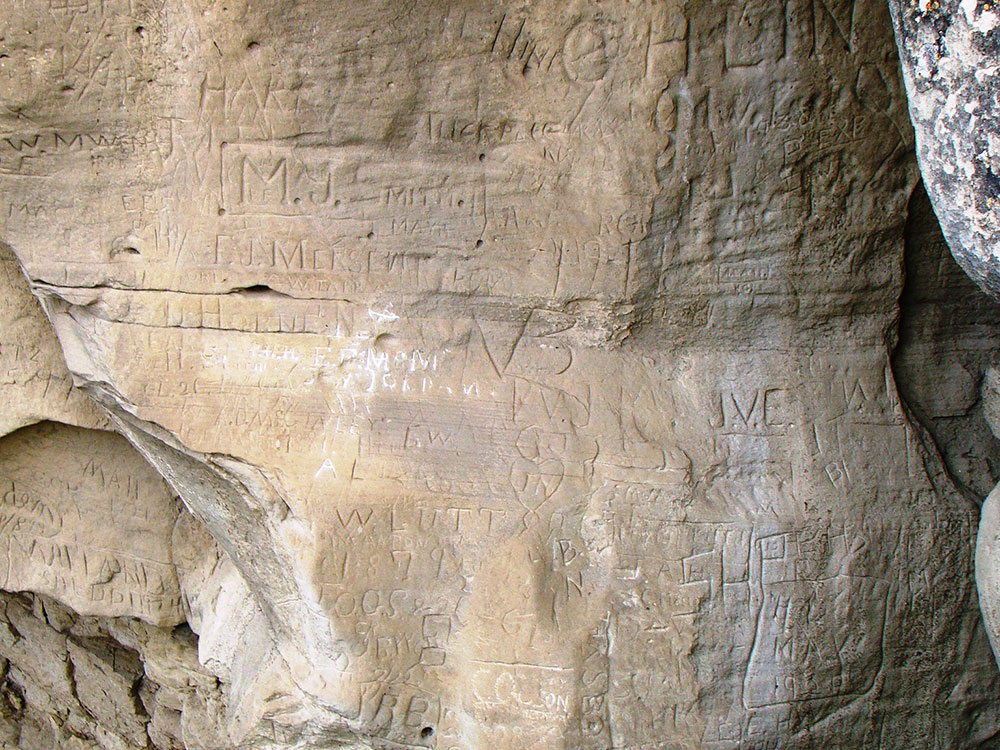
Pompeys Pillar National Monument is a 150-foot sandstone butte on the Yellowstone River, 25 miles northeast of Billings, with the only remaining physical evidence of the Lewis and Clark Expedition's route: Captain William Clark's signature, carved on July 25, 1806. Native American petroglyphs also cover the rock, showing 11,000 years of human use. It became a national monument in 2001 (National Historic Landmark since 1965). About 50,000 people visit each year.
Highlights
- Clark's inscription: reached by a boardwalk and stairs up the pillar
- Interpretive center: a 5,700-square-foot center (opened 2006) on Clark's journey
- Geology: late Cretaceous Hell Creek Formation sandstone, 66 to 75 million years old
Things to Do
Visit the Only Remaining On-Site Evidence of the Lewis and Clark Expedition
Pompeys Pillar National Monument is one of Montana's most important historic landmarks. Located along the Yellowstone River east of Billings, the monument preserves William Clark's famous signature carved into a massive sandstone pillar in 1806 during the Lewis and Clark Expedition. It is the only remaining on-site physical evidence associated with the expedition.
Climb to the Top of Pompeys Pillar
A boardwalk leads visitors up the sandstone formation to view Clark's historic inscription, Native American rock art, and hundreds of other historic carvings. The boardwalk continues to the summit, where visitors are rewarded with panoramic views of the Yellowstone River Valley and surrounding Montana landscape.
Explore the Interpretive Center
The Pompeys Pillar Interpretive Center offers exhibits covering the Lewis and Clark Expedition, Native cultures, regional wildlife, local history, and the significance of the Yellowstone River corridor. Visitors can also view artwork, historical displays, and educational exhibits related to the area's cultural heritage.
Discover Native American History
Long before Lewis and Clark arrived, Pompeys Pillar served as an important landmark for Indigenous peoples. Petroglyphs, pictographs, archaeological evidence, and oral traditions demonstrate the monument's cultural significance as a place of travel, gathering, and spiritual importance.
Enjoy the Yellowstone River Setting
The monument sits adjacent to the Yellowstone River and features picnic areas, grassy lawns, mature cottonwood trees, and scenic views. Visitors can relax, enjoy a picnic, and appreciate the same landscape encountered by generations of travelers.
Learn About Frontier and Settlement History
Throughout the nineteenth century, fur trappers, military expeditions, settlers, and railroad crews used Pompeys Pillar as a landmark and registry of their passage through the Yellowstone Valley. The site's many inscriptions tell the story of westward expansion across Montana.
Top Trails
Pompeys Pillar Boardwalk Trail
Length: Approximately 1,000 feet
Elevation Gain: Approximately 120 feet
Difficulty: Easy to Moderate
The monument's signature trail follows a wooden boardwalk to Clark's historic signature and continues to the top of the pillar. The route includes approximately 200 steps and provides outstanding views of the Yellowstone River Valley.
Interpretive Grounds Trail
Length: Short walking paths
Elevation Gain: Minimal
Difficulty: Easy
Paved walkways around the visitor center connect exhibits, picnic areas, interpretive displays, and riverside viewpoints. These accessible paths provide a relaxed introduction to the monument and its history.
Yellowstone River Viewing Area
Length: Short walking route
Elevation Gain: Minimal
Difficulty: Easy
Visitors can explore the riverside grounds and enjoy views of the Yellowstone River. The area is ideal for photography, birdwatching, picnicking, and experiencing the landscape that played an important role in regional history.
Monument Grounds Exploration Route
Length: Varies
Elevation Gain: Minimal
Difficulty: Easy
Combining the boardwalk, interpretive center, and surrounding grounds creates a complete visitor experience that highlights the monument's natural, historical, and cultural significance.
This article uses material from the Wikipedia article and official pages for Pompeys Pillar National Monument - Bureau of Land Management, Pompeys Pillar National Monument - National Park Service, Friends of Pompeys Pillar - Visiting the Pillar, Pompeys Pillar National Monument, released under the Creative Commons Attribution-Share-Alike License 3.0.

-1000.jpg)
.jpg)
-1000.jpg)
.jpg)