.jpg)
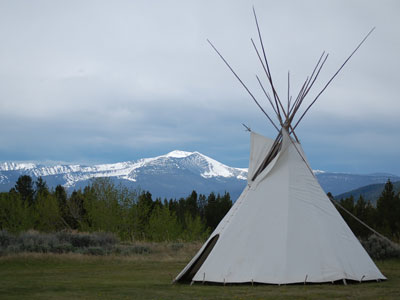
National Battlefield preserving the battlefield of the Battle of the Big Hole, the largest battle fought between the Nez Perce and U.S. Government forces in the five-month conflict known as the Nez Perce War
General Information
Visitor Center: Sunday9:00 AM-5:00 PM MondayClosed TuesdayClosed Wednesday9:00 AM-5:00 PM Thursday9:00 AM-5:00 PM Friday9:00 AM-5:00 PM Saturday9:00 AM-5:00 PM
From Missoula (111 miles): Head southwest on N Higgins Ave toward W Main St. Slight right onto US-12 W/Brooks St. Continue onto US-93 S. Turn left onto MT-43 E. Turn left onto Park Entrance Rd. Turn left. Continue straight.
Big Hole National Battlefield preserves a Nez Perce War battlefield located in Montana. The Nez Perce fought a delaying action against the 7th Infantry Regiment (United States) here on August 9 and 10, 1877, during their failed attempt to escape to Canada. This action, the Battle of the Big Hole, was the largest battle fought between the Nez Perce and U.S. Government forces in the five-month conflict known as the Nez Perce War. In 1992 the park was made a part of Nez Perce National Historical Park, which consists of 38 locations in five states, following the flight of the Nez Perce tribe from the U.S. Cavalry, the route of which was designated Nez Perce National Historic Trail in 1986.
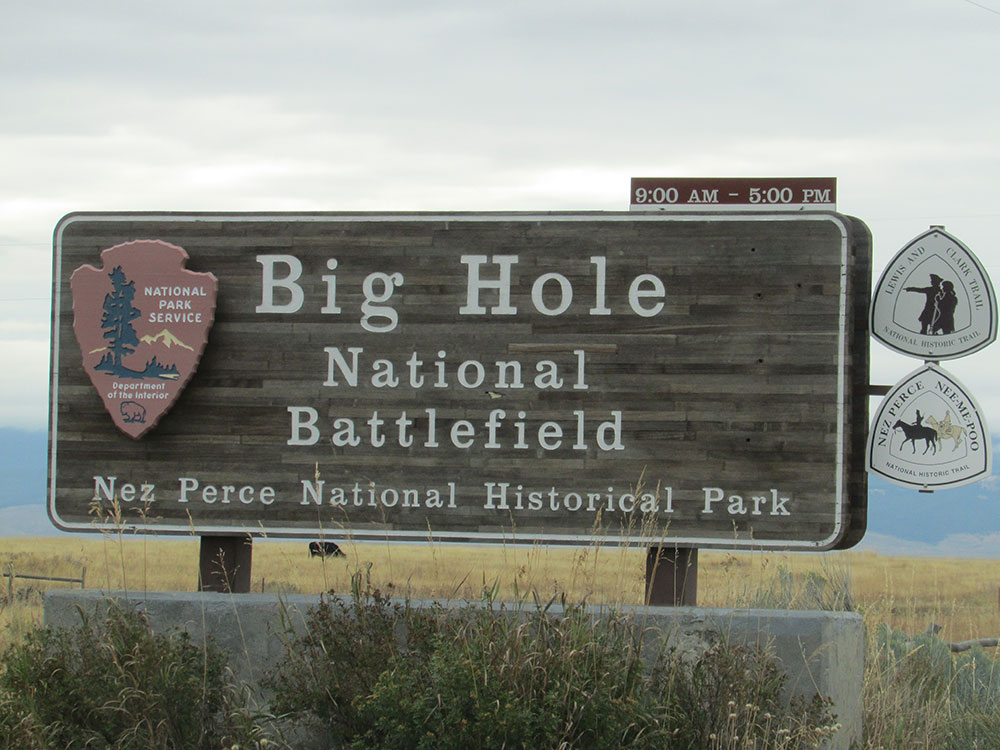
Big Hole National Battlefield is located on 1,010.61 acres (409 ha) (including 355 acres/144 ha privately held), 10 miles (16 km) west of Wisdom, Montana on Montana state highway 43. A year-round visitor center is located in the park.
Things to Do
Explore a Sacred Site of the Nez Perce War of 1877
Big Hole National Battlefield preserves the site of one of the most significant events of the Nez Perce War of 1877. The battlefield honors the nimí·pu· (Nez Perce) people, soldiers, and volunteers whose lives were forever changed during the conflict. Today, visitors can explore this historic landscape while learning about the resilience, sacrifice, and history associated with the site.
Start at the Visitor Center
The Visitor Center is the ideal starting point for any visit. Museum exhibits, educational displays, an award-winning park film, and a bookstore help visitors understand the events of August 1877 and their lasting impact. The facility also features accessibility accommodations, including a tactile battlefield map and accessible restrooms.
Watch the Park Film
Visitors can view Weet'uciklitukt: There is No Turning Back, a 26-minute film that provides a moving introduction to the history and legacy of the battle. The film offers valuable historical context before exploring the battlefield trails.
Take in Panoramic Battlefield Views
The observation deck near the Visitor Center offers sweeping views of the battlefield and the surrounding Big Hole Valley. These panoramic vistas help visitors better understand the geography that influenced the events of the battle.
Walk the Historic Battlefield Trails
Several interpretive trails lead visitors across the battlefield to key locations associated with the conflict. Trail guides are available seasonally, allowing visitors to explore the landscape while learning about important moments and locations connected to the battle.
Learn About Nez Perce History and Culture
Interpretive exhibits and trail markers throughout the park share stories of the nimí·pu· people, their traditions, and the difficult journey known as the Flight of 1877. Visitors gain a deeper understanding of the cultural significance of the site and the resilience of the Nez Perce people.
Enjoy Winter Recreation
During the winter months, snow-covered trails provide opportunities for snowshoeing and cross-country skiing. The battlefield's peaceful winter landscape offers a unique perspective on this historic site.
Top Trails
Nez Perce Camp Trail
Length: 1.6 miles round trip
Elevation Gain: None
Difficulty: Easy
This trail leads to the location where the Nez Perce camped before the attack on August 9, 1877. The relatively flat route encourages reflection while guiding visitors through one of the battlefield's most significant areas.
Siege Area Trail
Length: 1.2 miles round trip
Elevation Gain: Approximately 50 feet
Difficulty: Easy to Moderate
This trail traverses the area where Nez Perce warriors held U.S. troops under siege following the initial attack. Visitors can view historic rifle pits, the 1883 monument to the 7th U.S. Infantry, and interpretive exhibits explaining the course of the battle.
Howitzer Trail
Length: 0.8 miles round trip
Elevation Gain: Approximately 320 feet
Difficulty: Moderate to Challenging
Branching off from the Siege Area Trail, this steep route leads to the location where Nez Perce warriors captured a 12-pound mountain howitzer. The trail rewards hikers with panoramic views of the battlefield and a replica howitzer at the summit.
Battlefield Trail Network
Length: Approximately 3.6 miles if all trails are combined
Elevation Gain: Varies
Difficulty: Easy to Moderate
Visitors who complete all three trails gain a comprehensive understanding of the battlefield's key locations, historical events, and cultural significance while experiencing the natural beauty of the Big Hole Valley.
Sources: National Park Service official Big Hole National Battlefield visitor information covering exhibits, visitor center facilities, the park film, observation deck, historical interpretation, and battlefield activities.
Big Hole National Battlefield - Things To Do
Official National Park Service hiking information including trail descriptions, distances, elevation gain, accessibility information, and visitor guidelines for the Nez Perce Camp Trail, Siege Area Trail, and Howitzer Trail.
Big Hole National Battlefield - Hiking
Additional trail details and visitor information covering the battlefield trail network and key historical locations throughout the site.
Explore the Walking Trails at Big Hole National Battlefield
The Nez Perce homeland territory was in the states now known as Oregon, Washington and Idaho. In 1873, Chief Joseph negotiated with the federal government to ensure his people could stay on their land in the Wallowa Valley as stipulated in 1855 and 1863 land treaties with the U.S. government. By 1860 more than 15,000 miners had broken the treaty terms, and the government did nothing to intervene. In 1877 President Grant signed an Executive order granting the Wallowa to the Nez Perce, only to rescind it two years later. As a result, more whites overran the land, and killed Nez Perce men. Two farmers also killed a warrior wrongly accused of stealing a horse. Warriors then engaged with settlers. Fearing U.S. Army retaliation, Chief Joseph decided that the best way to avoid the official U.S. Government policy of forcing Native Americans onto reservations was to escape to Canada, where he believed that his people would be treated differently and they could unite with Sitting Bull, leader of a band of Lakota there.
At White Bird canyon, Major General Howard, who outnumbered the Nez Perce two to one, was defeated, after firing on the Nez Perce who came to parley under a white flag. 34 soldiers were killed but only 2 warriors were. The Nez Perce who were now part of the group moving to Canada, numbered around 750, with only 200 warriors. Six weeks after leaving their homeland, U.S. Army forces performed a predawn attack on the 50 men, and 750 women and children encamped at Big Hole. The Nez Perce mounted a fierce resistance and managed to overwhelm the attacking force, cornering them on a hillside. Meanwhile, the women and children fled the battlefield after burying their dead. During the day and a half battle, the Nez Perce lost an estimated 60 to 90 men, women and children, although it is believed that actual losses may have been much higher with a good portion being women and children. U.S. forces lost 28 and an additional 40 serious casualties. The confrontation was the most violent battle between the Nez Perce and the U.S. Government forces. After the battle the Nez Perce fled east through Yellowstone National Park, then headed north. In October 1877, only 40 miles (64 km) from the Canada-US border in Montana's Bear Paw Mountains, the starving and exhausted Nez Percé surrendered to the U.S. Forces commanded by General Oliver O. Howard, only after Howard and Miles said they would be allowed to return to their beloved Wallowas. Upon the final surrender by Chief Joseph he was quoted as saying, "Hear me, my chiefs! I am tired. My heart is sick and sad. From where the sun now stands I will fight no more forever". The actual speech was much longer. The Nez Perce were removed to the Colville Reservation in Washington state, and Chief Joseph was never allowed to return to his Wallowas until 1900, when he was "allowed" to see his father's grave.
This article uses material from the Wikipedia article "Big Hole National Battlefield", which is released under the Creative Commons Attribution-Share-Alike License 3.0
Featured Trails
Jeff P from Berkeley, CA, USA, CC BY 2.0, via Wikimedia Commons; Image Size Adjusted
.jpg)
Nez Perce Camp Trail
Trail leads to the site where the sleeping Nez Perce were camped when the army attacked on the morning of August 9, 1877.
Jeff P from Berkeley, CA, USA, CC BY 2.0, via Wikimedia Commons; Image Size Adjusted
Siege Area Trail
nimí·pu· warriors besieged the troops under the command of Colonel Gibbon after pushing them out of the camp. Visitors can look at rifle pits dug by the soldiers and see the monument dedicated to the Seventh U.S. Infantry soldiers.
Jeff P from Berkeley, CA, USA, CC BY 2.0, via Wikimedia Commons; Image Size Adjusted
Howitzer Trail
Trail leads to the site where nimí·pu· warriors captured a 12-Pound Mountain Howitzer from the military. A replica greets hikers who make it to the site.
-1000.jpg)
.jpg)
-1000.jpg)
.jpg)
-1000.jpg)
.jpg)
-1000.jpg)
.jpg)
-1000.jpg)
.jpg)
-1000.jpg)
.jpg)

-1000.jpg)
.jpg)