-400.jpg)

Expansive paleontological preserve showcasing rich Pliocene‑era fossil deposits that reveal the ecological history of ancient species.
General Information
How to Get There
From Twin Falls (40 mi): Follow US‑30 W through Buhl toward Hagerman, continuing approximately 40 miles to reach the visitor center area.
Overview
The ancient fossil landscape preserves one of the richest windows into the Pliocene epoch, where layers of sediment reveal a world once inhabited by early horses, mastodons, saber‑toothed predators, and a diverse collection of over two hundred species. Visitors can explore sweeping benches above the Snake River Plain, where exposed strata offer clues to long‑vanished ecosystems shaped by shifting climates and evolving fauna. These fossil beds, recognized as among the most scientifically significant in North America, provide a rare opportunity to visualize a prehistoric world that predates humanity by millions of years.
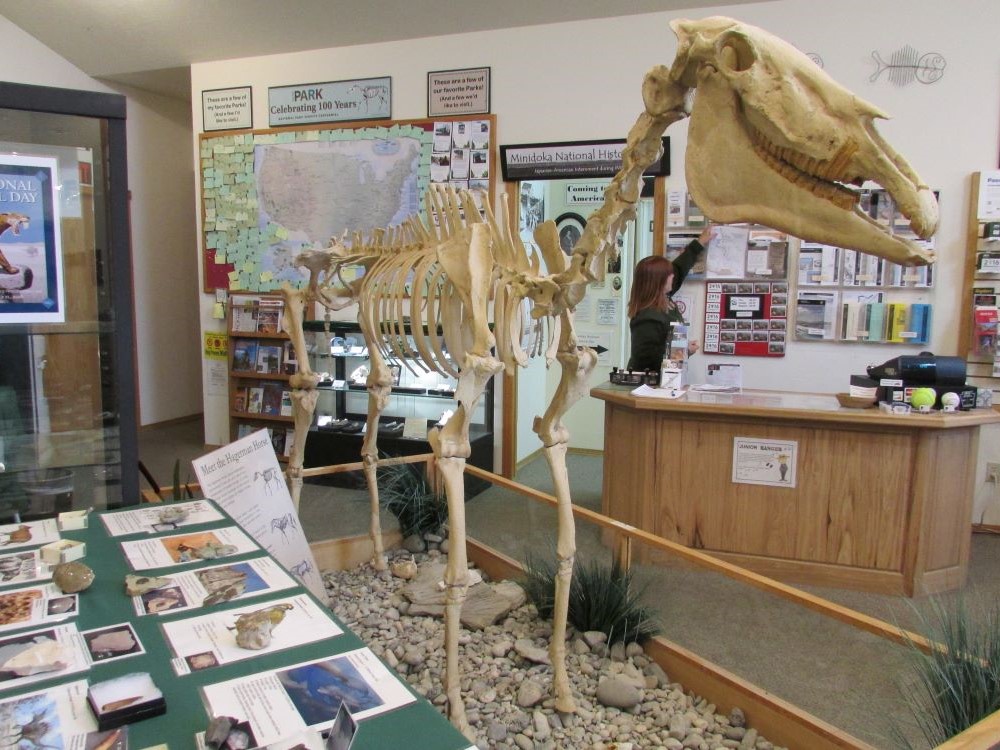
At the modern visitor center, travelers encounter carefully curated exhibits that illuminate the scientific process behind excavation and preservation, including casts and displays that bring the story of the famed Hagerman Horse to life. Trails and overlooks—quiet, wind‑etched, and rich with geologic character—encourage reflection on deep time and the forces that shaped the region. Whether drawn by natural history, paleontology, or the drama of ancient landscapes, guests will find a place where science, scenery, and storytelling converge in a uniquely immersive experience.
Things to Do
Explore One of North America's Richest Fossil Sites
Hagerman Fossil Beds National Monument preserves one of the world's richest deposits of Pliocene-era fossils along the Snake River in southern Idaho. Approximately 3.5 million years ago, this area was a landscape of wetlands, grasslands, and forests home to a remarkable variety of animals, many of which are now extinct. The monument protects these important fossil resources and helps scientists better understand prehistoric ecosystems.
Learn About the Famous Hagerman Horse
The monument is best known for the Hagerman Horse (Equus simplicidens), Idaho's official state fossil and one of the earliest members of the modern horse family. More than 200 individuals were discovered in a single fossil deposit, making it the largest known concentration of this species ever found.
Visit the Thousand Springs Visitor Center
The Thousand Springs Visitor Center is the primary location where visitors can view fossil exhibits, educational displays, and reconstructions of the animals that once lived in the Hagerman Valley. Interactive exhibits explain paleontology, fossil preservation, and the monument's significance to scientific research.
Enjoy Scenic Views of the Snake River
Several overlooks throughout the monument provide panoramic views of the Snake River Canyon and the bluffs where many fossils were discovered. Interpretive displays help visitors understand how ancient environments differed dramatically from the modern landscape.
Explore Oregon Trail History
In addition to its fossil resources, the monument preserves a section of the historic Oregon Trail. Visitors can learn about westward migration, pioneer travel, and how the Snake River corridor played an important role in the settlement of the American West.
Discover Ancient Wildlife of the Pliocene
Fossils found within the monument include not only horses, but also mastodons, saber-toothed cats, camels, ground sloths, beavers, birds, fish, and many other species. These discoveries provide a detailed picture of life during the Pliocene Epoch.
Top Trails
Snake River Overlook Trail
Length: Approximately 0.5 miles round trip
Elevation Gain: Minimal
Difficulty: Easy
This short walk leads to a scenic overlook above the Snake River, offering beautiful views of the canyon and interpretive information about the fossil beds and the ancient environments that once existed here.
Oregon Trail Overlook Trail
Length: Approximately 0.25 miles round trip
Elevation Gain: Minimal
Difficulty: Easy
Visitors can enjoy panoramic views of the Hagerman Valley while learning about emigrants who traveled through the region along the historic Oregon Trail during the nineteenth century.
Emigrant Trail Exploration Route
Length: Approximately 1 mile round trip
Elevation Gain: Minimal
Difficulty: Easy
This informal walking area provides opportunities to view traces of historic travel corridors while enjoying scenic overlooks of the Snake River and surrounding valley landscapes.
Visitor Center Interpretive Walk
Length: Short self-guided route
Elevation Gain: Minimal
Difficulty: Easy
Around the Thousand Springs Visitor Center, visitors can explore interpretive exhibits, outdoor displays, and educational signage that explain fossil discoveries, ancient ecosystems, and ongoing scientific research.
Sources: National Park Service official Hagerman Fossil Beds National Monument information, including details on the Hagerman Horse, Pliocene fossil deposits, Thousand Springs Visitor Center, Snake River Overlook, Oregon Trail Overlook, and visitor experiences.
National Park Service - Hagerman Fossil Beds National Monument
Additional information verified through National Park Service resources covering the Hagerman Horse (Equus simplicidens), fossil discoveries, paleontology research, and monument history.
The Hagerman Horse - National Park Service
Further information reviewed through regional visitor resources covering monument exhibits, Oregon Trail history, scenic overlooks, and educational opportunities in the Hagerman Valley.
Hagerman Valley Chamber - Hagerman Fossil Beds
This article uses material from the Wikipedia article and official NPS and regional tourism pages for Hagerman Fossil Beds National Monument, which are released under the Creative Commons Attribution-Share-Alike License 3.0.