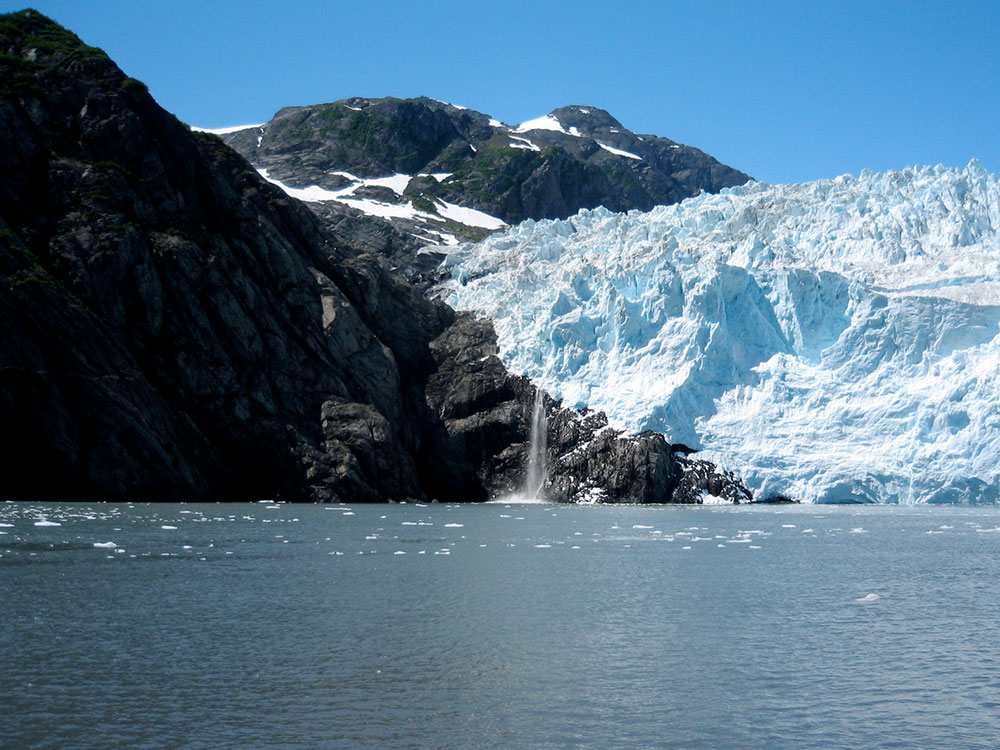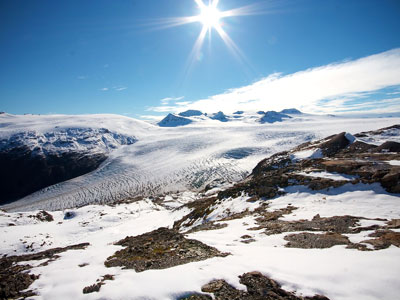

Vast coastal wilderness of glaciers, fjords, and icefields where rugged mountains meet the ocean and abundant marine wildlife thrives.
Visitor centers open daily from Memorial Day through Labor Day (hours vary seasonally)
Limited access and services during winter months
Additional fees may apply for tours, camping, or transportation
How to Get There
From Anchorage (126 mi): Take AK-1 S (Seward Highway) along Turnagain Arm, continue onto AK-9 S, and follow the Seward Highway directly into Seward, then follow signs to the Exit Glacier area or the harbor for park access.
Overview
Kenai Fjords National Park on the Kenai Peninsula covers 669,984 acres of the Harding Icefield, its outflowing glaciers, and a coast of fjords and islands, with whales, sea otters, seals, and puffins. It is reached from Seward, where boat tours go into the fjords, or by the road to Exit Glacier.
Highlights
- Boat tours: half- and full-day cruises from Seward's harbor to Holgate and Aialik glaciers, with humpbacks and orcas
- Exit Glacier and the Harding Icefield Trail
- Kayaking: in Aialik Bay and Resurrection Bay, or at Harding by water taxi
- Visitor center: Seward's small center on the waterfront
Things to Do
Explore Alaska's Glacier-Carved Coastal Wilderness
Kenai Fjords National Park protects a spectacular landscape of fjords, glaciers, mountains, and coastal ecosystems on Alaska's Kenai Peninsula. The park is dominated by the Harding Icefield, one of the largest icefields in the United States, which feeds dozens of glaciers flowing toward the ocean. Most of the park is accessible only by boat or air, creating a true wilderness experience.
Visit Exit Glacier
Exit Glacier is the only area of Kenai Fjords National Park accessible by road. Visitors can walk a network of trails leading to viewpoints of the glacier while learning how glacial retreat has reshaped the landscape over time. Ranger-led programs and interpretive exhibits are available during the summer season.
Take a Kenai Fjords Wildlife and Glacier Cruise
Boat tours departing from Seward are among the most popular ways to experience the park. Cruises provide opportunities to view tidewater glaciers, rugged fjords, marine wildlife, seabird colonies, and dramatic coastal scenery that cannot be reached by road.
See the Harding Icefield
The Harding Icefield is the centerpiece of the park, feeding numerous glaciers that carve the landscape. Visitors who hike to viewpoints above Exit Glacier can experience sweeping views of this immense field of ice stretching toward the horizon.
Enjoy Exceptional Wildlife Viewing
The park's land and marine environments support a rich variety of wildlife. Visitors frequently observe whales, sea otters, harbor seals, puffins, bald eagles, and seabirds during boat tours, while black bears may be encountered along hiking trails near Exit Glacier.
Go Kayaking Among Glaciers and Fjords
Sea kayaking offers a more intimate way to experience Kenai Fjords. Guided trips allow visitors to paddle through protected waters while viewing glaciers, icebergs, wildlife, and remote coastal landscapes from water level.
Experience Backcountry Adventure
Beyond the developed Exit Glacier area, much of the park is accessible only by boat, floatplane, or challenging backcountry routes. Visitors seeking wilderness experiences can enjoy kayaking, glacier exploration, hiking, and camping in remote coastal environments.
Top Trails
Harding Icefield Trail
Length: Approximately 7.8 miles round trip
Elevation Gain: Approximately 3,500 feet
Difficulty: Strenuous
Considered one of Alaska's premier day hikes, the Harding Icefield Trail climbs from the Exit Glacier valley through forests, meadows, and alpine terrain to panoramic views of the vast Harding Icefield. The route offers dramatic scenery throughout the climb and is the park's signature hike.
Glacier View Loop Trail
Length: Approximately 1 mile loop
Elevation Gain: Minimal
Difficulty: Easy
This accessible trail starts near the Exit Glacier Nature Center and provides panoramic views of Exit Glacier while passing through forests and landscapes shaped by recent glacial retreat. 【2-7ea852】
Exit Glacier Overlook Trail
Length: Approximately 1.2 miles round trip from the Nature Center area
Elevation Gain: Moderate
Difficulty: Easy to Moderate
This well-maintained trail leads to elevated viewpoints overlooking Exit Glacier and the valley it has carved. It provides excellent glacier views without the strenuous climb required for the Harding Icefield Trail.
Toe of the Glacier Trail
Length: Short walking trail
Elevation Gain: Minimal
Difficulty: Easy
This popular walk allows visitors to get closer to the terminus of Exit Glacier while viewing evidence of the glacier's retreat and learning about the dynamic processes that continue to shape the landscape.
This article uses material from the Wikipedia article and official pages for National Park Service - Exit Glacier Area, National Park Service - Harding Icefield Trail, Kenai Fjords National Park, released under the Creative Commons Attribution-Share-Alike License 3.0.
Featured Locations and Trails
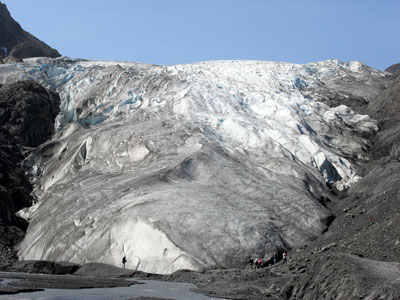
Reywas92, CC BY-SA 3.0, via Wikimedia Commons; Image Size Adjusted

Exit Glacier
Easily accessible glacier flowing from an icefield into a forested valley, offering close-up views, interpretive trails, and dynamic ice formations.
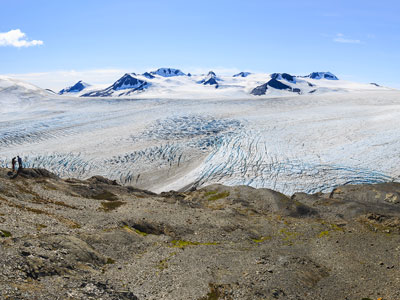
Pepahavlin, CC BY-SA 4.0, via Wikimedia Commons; Image Size Adjusted

Harding Icefield
Massive expanse of ice and snow covering mountain peaks and valleys, offering sweeping alpine views and access to one of the largest icefields in North America.
-1000.jpg)
.jpg)