Linear park located in several Downtown Boston neighborhoods consisting of landscaped gardens, promenades, plazas, fountains, art, and specialty lighting systems that stretch over one mile
General Information
How to Get There
From Boston, MA: Head downtown toward the Waterfront via Atlantic Avenue or Surface Road, follow signage for the North End or Wharf District, and access the Rose Fitzgerald Kennedy Greenway from multiple entry points along Atlantic Avenue.
Overview
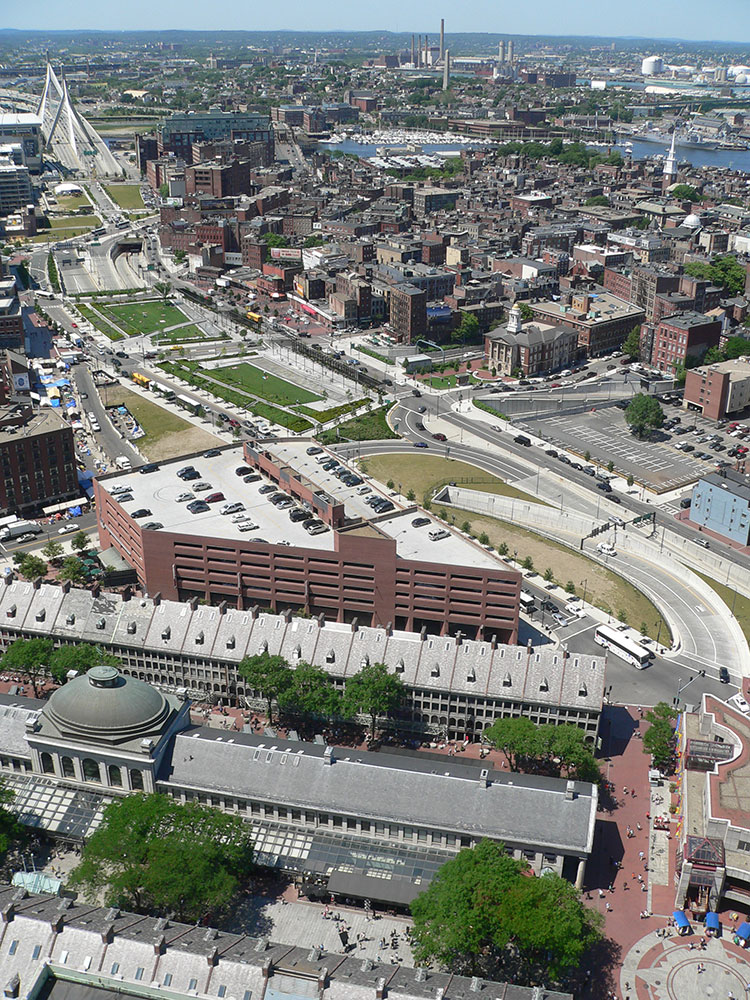
The Rose Fitzgerald Kennedy Greenway is a linear park located in several Downtown Boston neighborhoods. It consists of landscaped gardens, promenades, plazas, fountains, art, and specialty lighting systems that stretch over one mile through Chinatown, the Financial District, the Waterfront, and North End neighborhoods. Officially opened in October 2008, the 17-acre Greenway sits on land created from demolition of the John F. Fitzgerald Expressway under the Big Dig.
The Rose Fitzgerald Kennedy Greenway is named after Rose Fitzgerald Kennedy, the matriarch of the Kennedy Family who was born in the neighboring North End neighborhood. Her son, Senator Edward M. Kennedy, played an important role in establishing the Greenway.
Auntie Kay & Uncle Frank Chin Park (formerly Chinatown Park) is located at the southern end of The Greenway. This one-acre park contains design elements drawn from Asian traditions and art work. Designed by Carol R. Johnson and Associates and May Sun, Chin Park has a large plaza, as well as a serpentine walkway edged by bamboo within bright red sculptural elements and a fountain that suggests a waterfall and shallow riverbed.
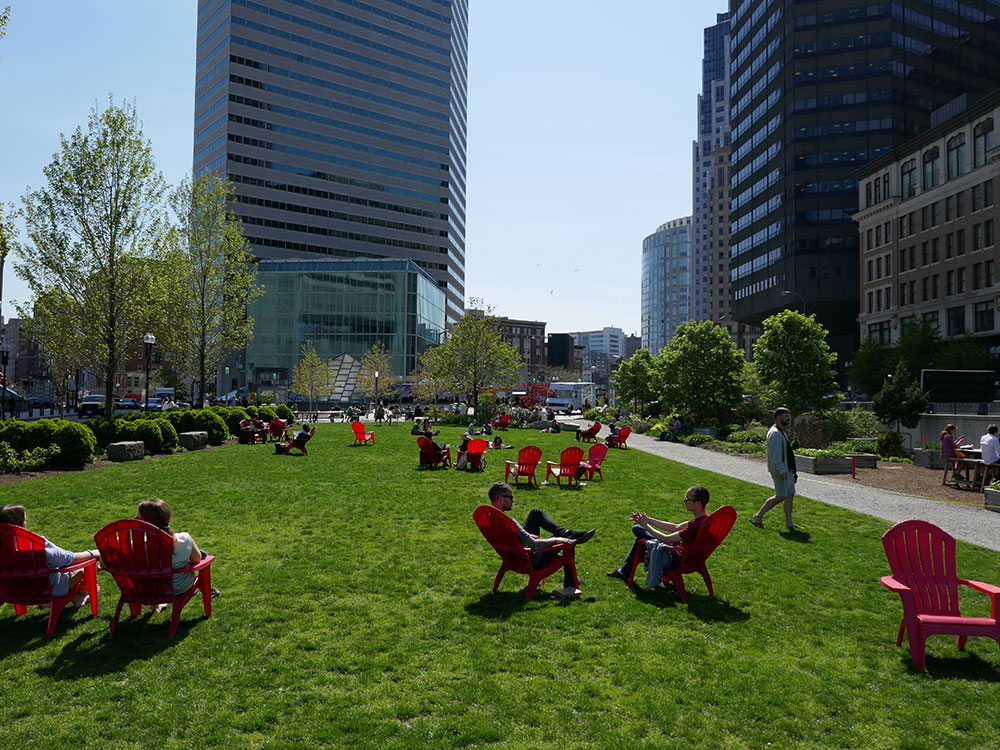
Located between Congress and Summer Streets along Atlantic Avenue, Dewey Square Park joins the major transportation hub of South Station to the Financial District. The park has gardens, lawn areas, and the adjacent plaza, which was designed to draw in commuters and nearby workers and residents. The tables, chairs, and cluster of food trucks have made Dewey Square Park a popular lunch destination, especially in the warm seasons when the plaza features the twice-weekly Boston Public Market Association’s farmers market. Food truck and other major festivals are hosted here.
The Fort Point Channel Parks are located between Oliver and Congress Streets along Atlantic Avenue, they are often referred to as the "New American Gardens" for their wide variety of trees and flowers that are often found in gardens of typical New England homes.
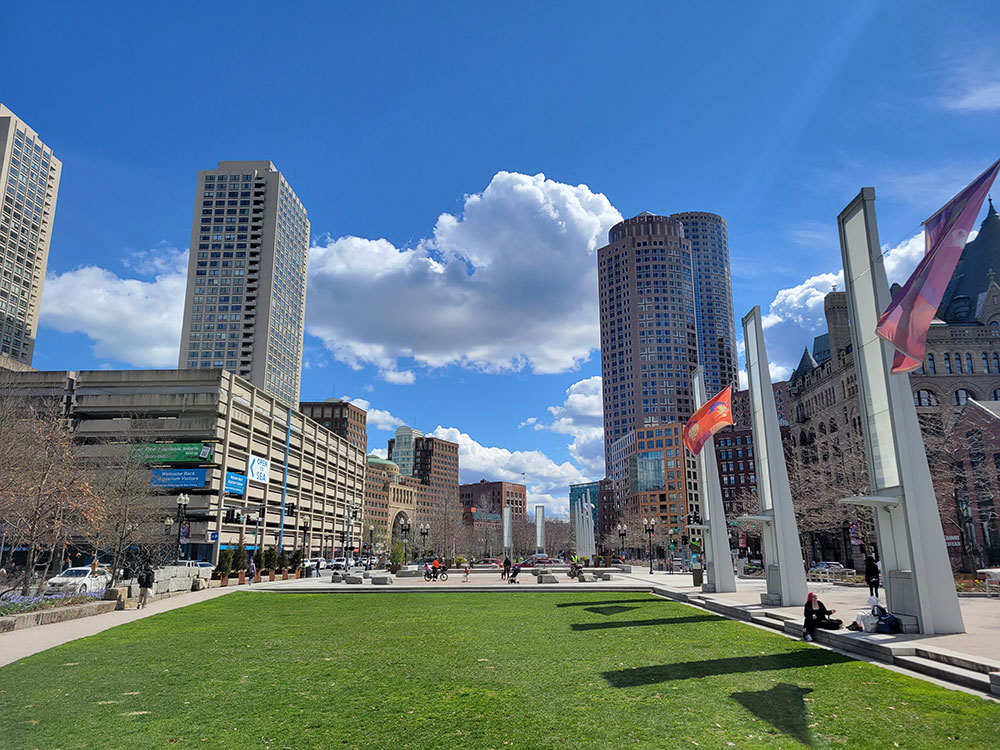
The Wharf District Parks connect Faneuil Hall and the Financial District with Boston Harbor. Designed by EDAW and Copley Wolff Design Group, the parks contain areas of paved surfaces for active public use and a gathering space for public events known as the Great Room. Three open lawn areas, surrounded with plantings, provide informal space for gatherings. During the warmer months, the Wharf District Parks host the Greenway Open Market, food vendors, concerts and fitness classes. Large events also occur across the Wharf District Parks, such as the Boston Local Food Fest and the FIGMENT participatory art festival. The Wharf District Parks are home to the Mothers’ Walk, a curving pathway that consists of pavers engraved with names and personal messages.
The Greenway Carousel at The Tiffany & Co. Foundation Grove
The Greenway Conservancy raised funds to design and construct the Greenway Carousel at The Tiffany & Co. Foundation Grove, which opened on August 31, 2013. Instead of horses, the hand-carved creatures of this carousel are the wildlife found in and around Boston and its harbor; the animals are carved by local sculptor Jeff Briggs and inspired by the drawings of Boston school children.
One of the new additions to the Wharf District Parks, the Harbor Islands Pavilion is an open-air structure staffed by National Park Service rangers to welcome visitors and provide information about the Boston Harbor Islands National Recreation Area. Ferry tickets and Boston Harbor Islands park merchandise are available for purchase at the pavilion. The Pavilion was designed by Utile and opened on June 2, 2011
The Armenian Heritage Park is dedicated to the victims of the Armenian genocide and acknowledges the history of Boston as a port of entry for immigrants worldwide, and celebrates those who have migrated to Massachusetts shores and contributed to American life and culture. The Park consists of two key features surrounded by seating, brick paving and landscaping. The Abstract Sculpture, a split dodecahedron, is mounted on a Reflecting Pool, represents the immigrant experience. The Labyrinth, a circular winding path paved in granite and set in lawn, celebrates life's journey. The Park and its endowed programs are a key initiative of the Armenian Heritage Foundation. The park opened in May 2012 The park is maintained by the Rose Kennedy Greenway Conservancy under contract with the Armenian Heritage Fountain.
The North End Parks (Boston Big Dig parcels #8 and #10, lying on opposite sides of Hanover Street) reflect the history and scale of the adjacent North End neighborhood. They were designed by two teams of landscape architects: Boston's Crosby, Schlessinger, Smallridge LLC and Seattle's Gustafson Guthrie Nichol Ltd. Lawns surrounded by densely planted perimeter beds are designed to evoke a formal feel of past European style gardens with boxwood hedges enclosing an array of perennials. A trellis and "pergola" along the eastern edge offer public seating and a vantage point that overlooks both greenspace and historic buildings. The "canal fountain," a shallow water feature with fountain jets, reflects a period approximately a century ago when a canal connected the harbor to now defunct industrial operations. During the warmer months, the North End Parks host free fitness classes and other events.
The Carolyn Lynch Garden was dedicated by the Greenway Conservancy in a ribbon-cutting ceremony with The Lynch Foundation in August 2018. The garden's name is attributed to Carolyn Hoff Lynch, an avid gardener and philanthropist, who passed away in 2015. The dedicated gardens are part of a $1.4 million gift from The Lynch Foundation.
This article uses material from the Wikipedia article "Rose Fitzgerald Kennedy Greenway", which is released under the Creative Commons Attribution-Share-Alike License 3.0