California Travel Guide
National park honoring U.S. President Theodore Roosevelt comprises three geographically separated areas of badlands in western North Dakota
General Information
How to Get There
From Bismarck (133 miles): Get on I-194 W in Captain's Landing. Follow I-94 W to I-94 BUS in South Billings. Take exit 27 from I-94 W. Follow I-94 BUS and Pacific Ave to E River Rd in Medora.
Overview
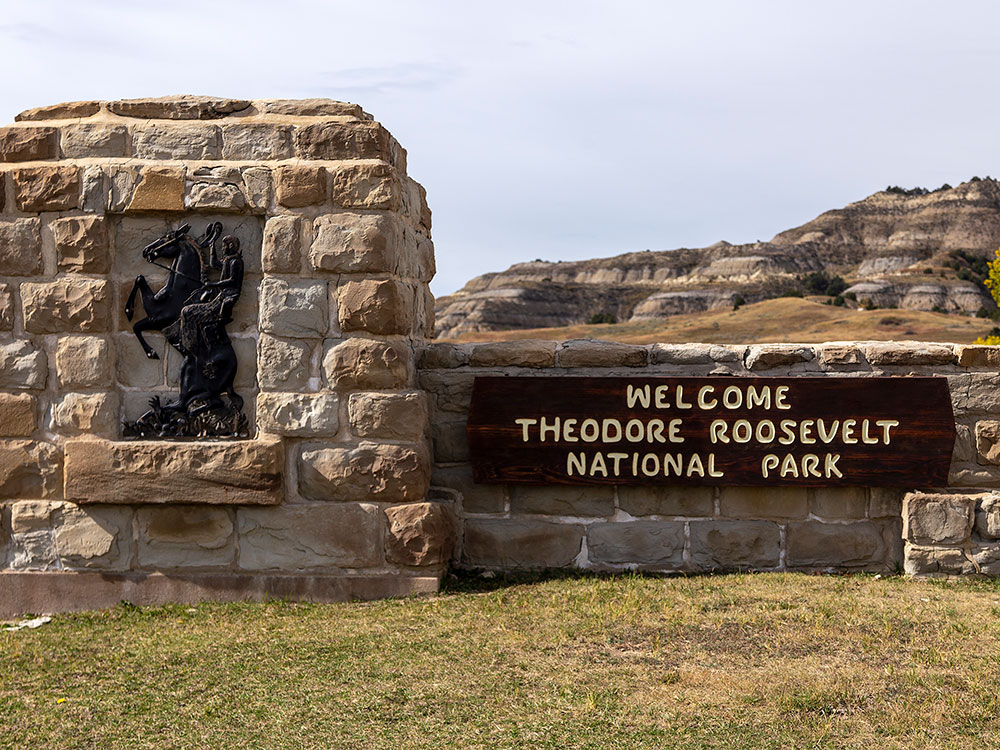
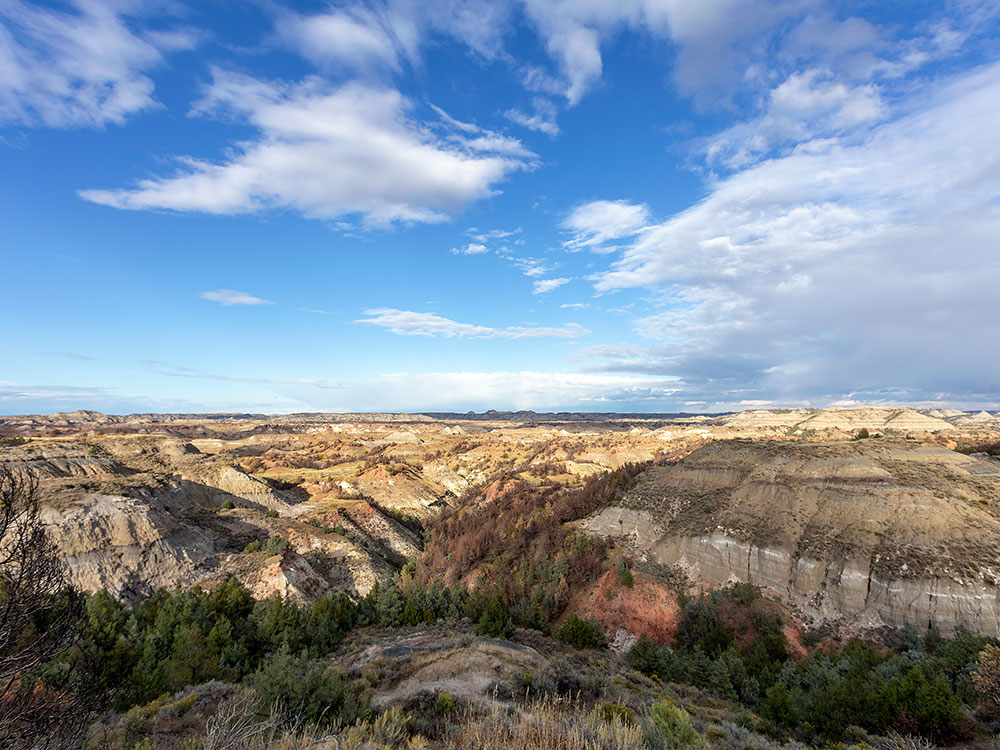
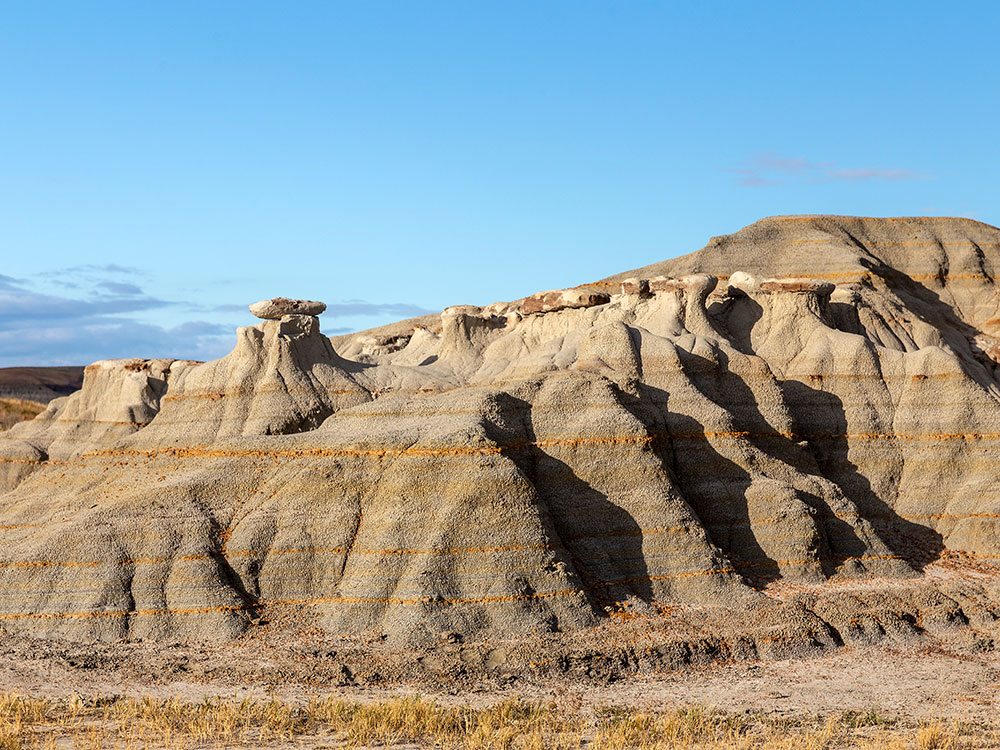
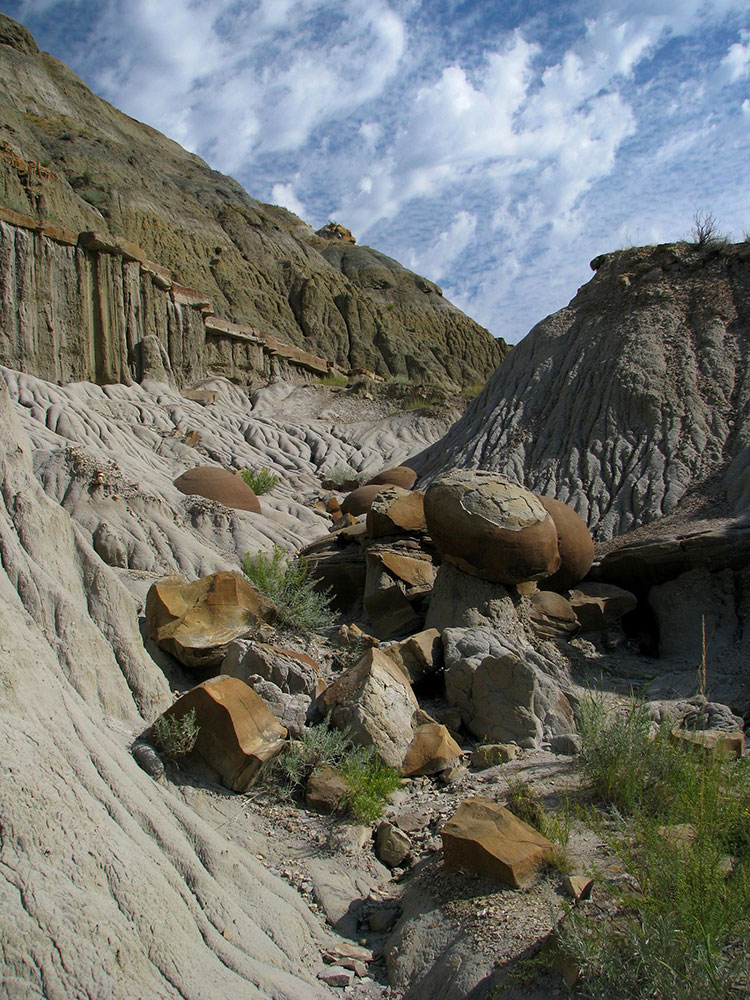
Theodore Roosevelt National Park is a national park comprising three geographically separated areas of badlands in western North Dakota. The park honors U.S. President Theodore Roosevelt and is the only American national park named directly after a single person.
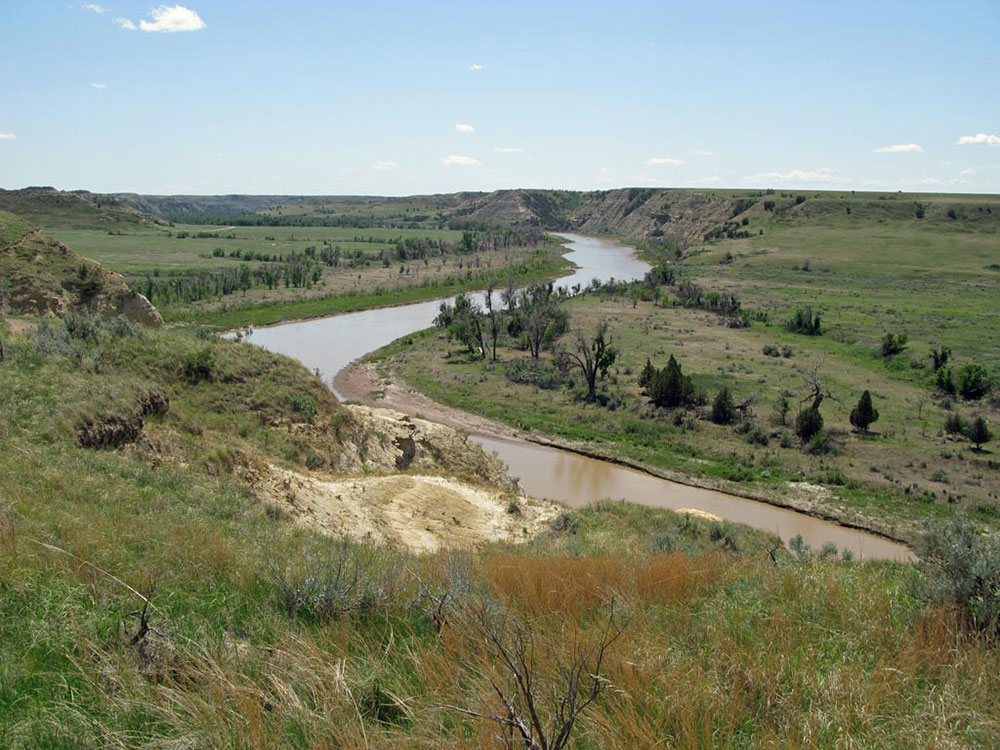

The park covers 70,446 acres (110.072 sq mi; 28,508 ha; 285.08 km2) of land in three sections: the North Unit, the South Unit, and the Elkhorn Ranch Unit. The park's larger South Unit lies alongside Interstate 94 near Medora, North Dakota. The smaller North Unit is situated about 80 mi (130 km) north of the South Unit, and Roosevelt's Elkhorn Ranch is located between the North and South units. The Little Missouri River flows through all three units of the park. The Maah Daah Hey Trail connects all three units.
Both main units of the park have scenic drives, approximately 100 miles of foot and horse trails, wildlife viewing, and opportunities for back country hiking and camping.
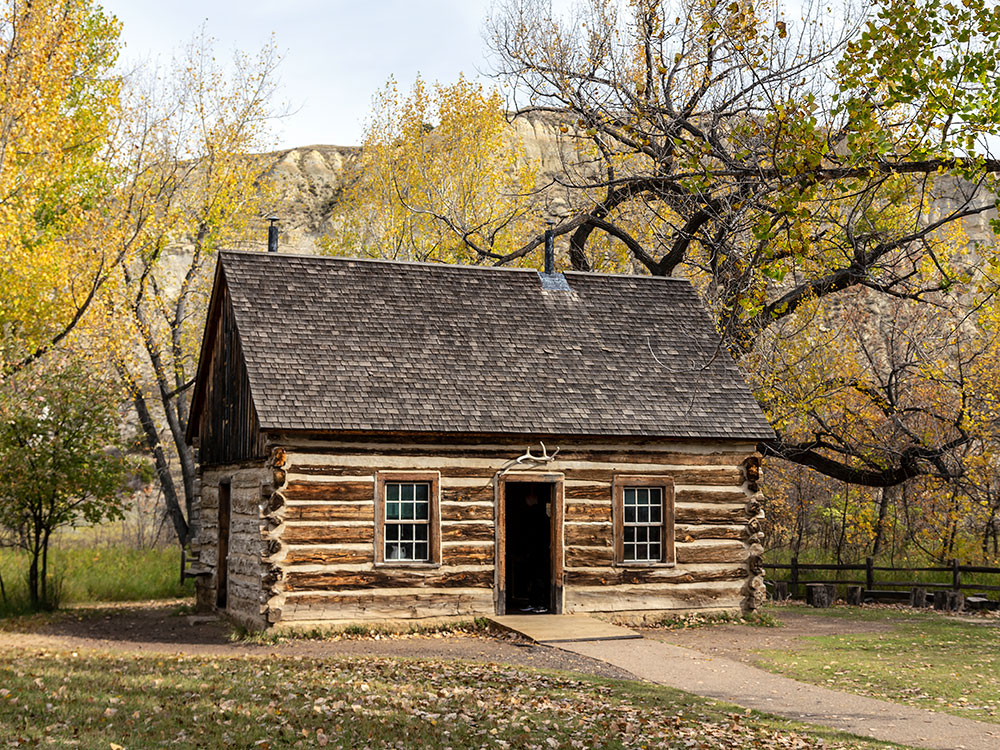
Roosevelt first came to the North Dakota badlands to hunt bison in September 1883. During that first short trip, he got his bison and fell in love with the rugged lifestyle and the "perfect freedom" of the West. He invested $14,000 in the Maltese Cross Ranch, which was already being managed by Sylvane Ferris and Bill Merrifield, seven miles south of Medora. That winter, Ferris and Merrifield built the Maltese Cross Cabin. After the death of both his wife and his mother on February 14, 1884, Roosevelt returned to his North Dakota ranch seeking solitude and time to heal. That summer, he started his second ranch, the Elkhorn Ranch, 35 miles north of Medora, which he hired two Maine woodsmen, Bill Sewall and Wilmot Dow, to operate. Roosevelt took great interest in his ranches and in hunting in the West, detailing his experiences in pieces published in eastern newspapers and magazines. He wrote three major works on his life in the West: Ranch Life and the Hunting Trail, Hunting Trips of a Ranchman and The Wilderness Hunter. His adventures in "the strenuous life" outdoors and the loss of his cattle in the starvation winter in 1886-1887 were influential in his pursuit of conservation policies as President of the United States (1901-1909).
Following Roosevelt's death in 1919, the Little Missouri Badlands were explored to determine possible park sites. Civilian Conservation Corps camps were established in both of the future park units from 1934 to 1941, and they developed roads and other structures in use today. The area was designated the Roosevelt Recreation Demonstration Area in 1935. In 1946 it was transferred to the United States Fish and Wildlife Service as the Theodore Roosevelt National Wildlife Refuge. After a five-year campaign by North Dakota representative William Lemke, President Truman established the South Unit of Theodore Roosevelt National Memorial Park on April 25, 1947, the only National Memorial Park ever established; the North Unit was added by act of Congress in June, 1948. In 1978, in addition to boundary adjustments and the establishment of 29,920 acres (121.1 km2) of the Theodore Roosevelt Wilderness, the park's designation was changed to Theodore Roosevelt National Park.
Both main units of the park have scenic drives, approximately 100 miles of foot and horse trails, wildlife viewing, and opportunities for back country hiking and camping. There are three developed campgrounds: Juniper Campground in the North Unit, Cottonwood Campground in the South Unit, and the Roundup Group Horse Campground in the South Unit.
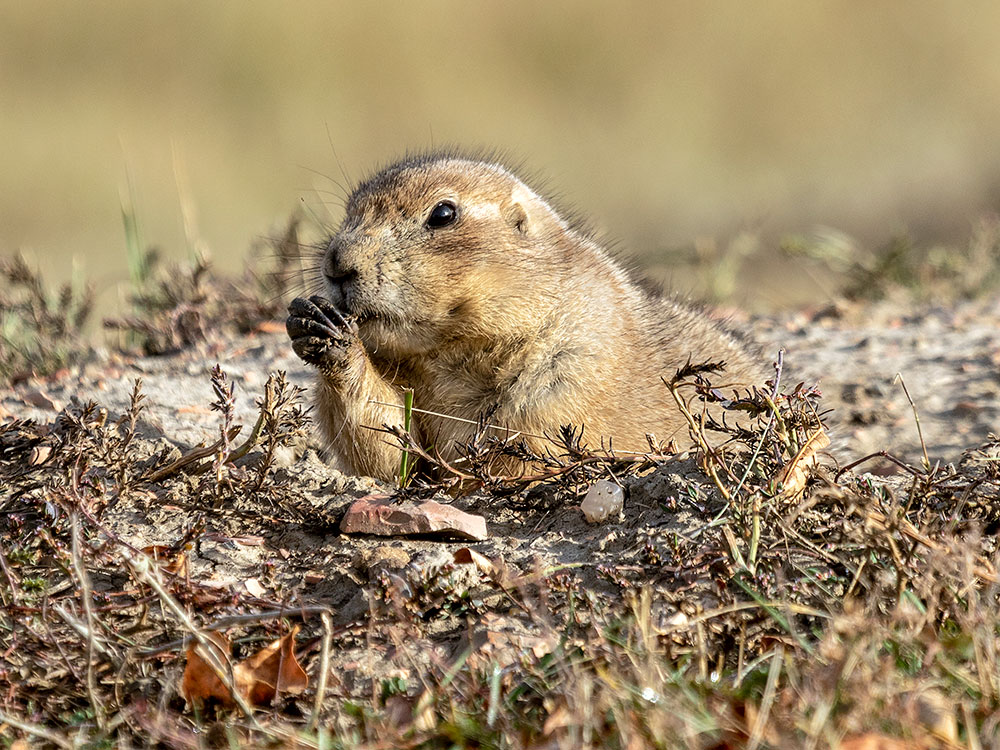
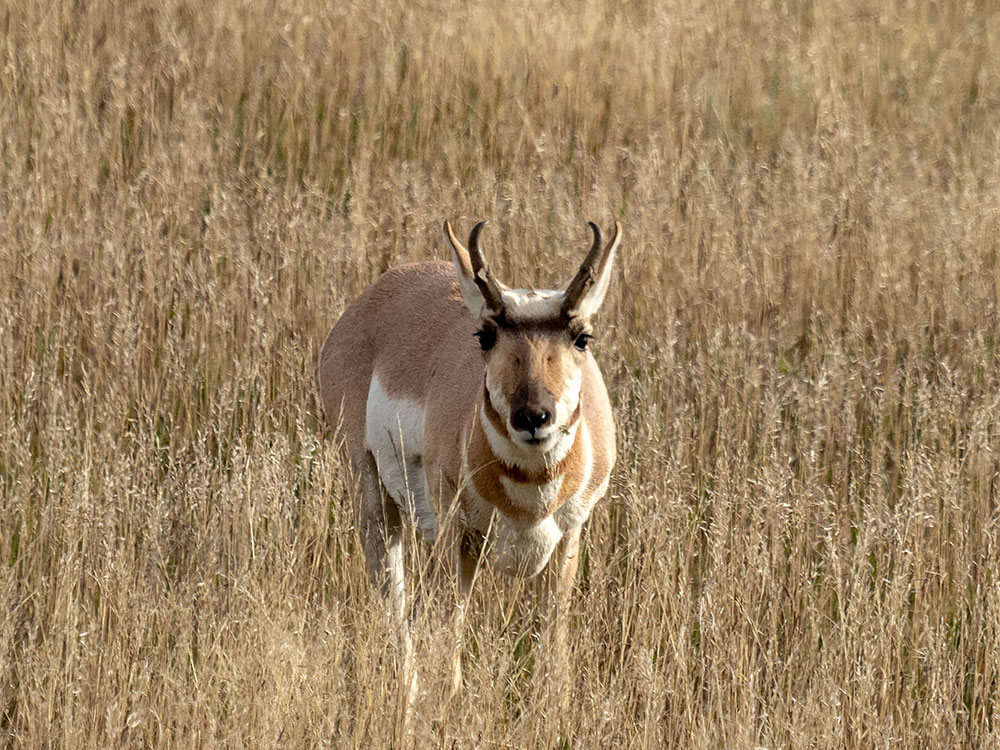
One of the most popular attractions is wildlife viewing. Among the local wildlife, bison may be more dangerous and visitors are advised to view them from a distance.
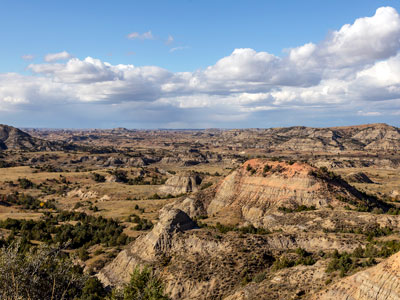
The scenery changes constantly in relationship with the seasons. The brown, dormant grass dominates from late summer through the winter, but explodes into green color in the early summer along with hundreds of species of flowering plants. Winter can be a beautiful scene as snow covers the sharp terrain of the badlands and locks the park into what Theodore Roosevelt called "an abode of iron desolation."
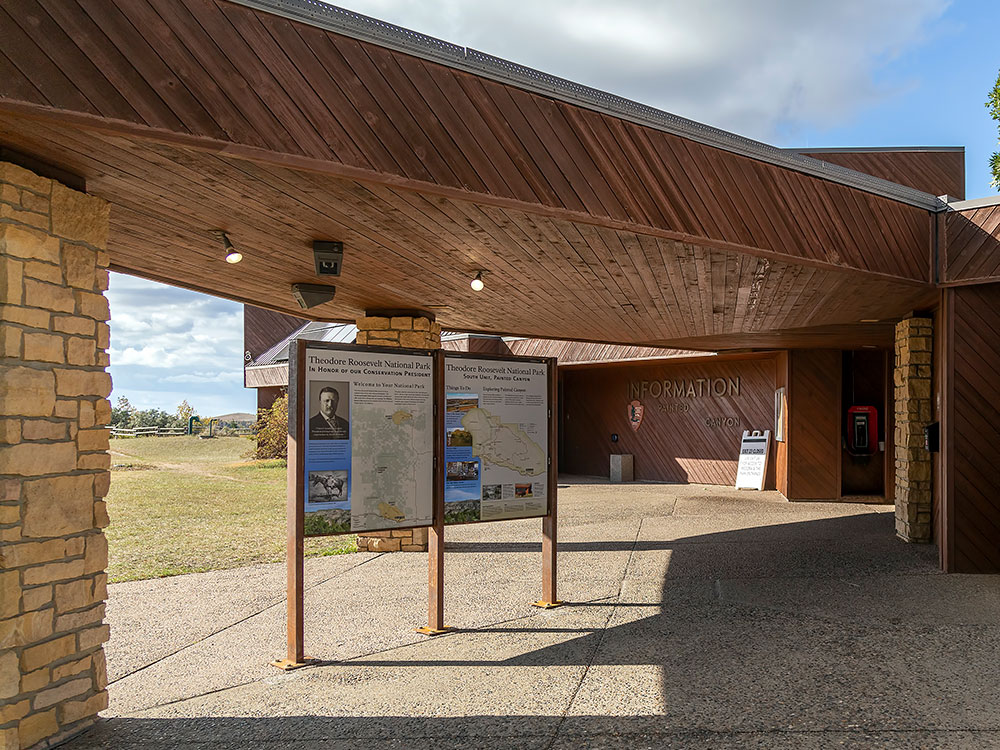
The badlands are very important in Roosevelt's life, and the park memorializes his contributions to the conservation of America's natural resources. A museum at the South Unit Visitor Center provides background on Roosevelt and his ranching days. Roosevelt's Maltese Cross Cabin is open for public viewing year-round at the South Unit Visitor Center.
Roosevelt's Elkhorn Ranch is a separate, remote area of the park, 35 miles north of Medora, accessible by gravel roads. The foundation of the ranch house and other shops buildings have been preserved, though the other portions of the cabin were removed and re-purposed after Roosevelt vacated the ranch.
The park is popular for back country hiking and horseback riding. Permits for back country camping may be obtained at the South Unit or North Unit Visitor Centers. Over 100 miles of trail make it a fine hiking park. The park units are mostly surrounded by Forest Service grasslands. The area has very dark night skies with excellent star gazing and occasional northern lights.
The town of Medora, at the entrance to the south unit, provides a touristy western experience, with wooden planked sidewalks, old fashioned ice cream parlors, and buggy rides. There are several museums and the Burning Hills Amphitheather with nightly productions of the Medora Musical from early June to early September.
This article uses material from the Wikipedia article "Theodore Roosevelt National Park", which is released under the Creative Commons Attribution-Share-Alike License 3.0
Featured Locations
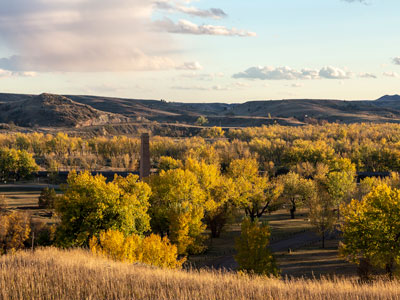
Acroterion, CC BY-SA 4.0, via Wikimedia Commons; Image Size Adjusted

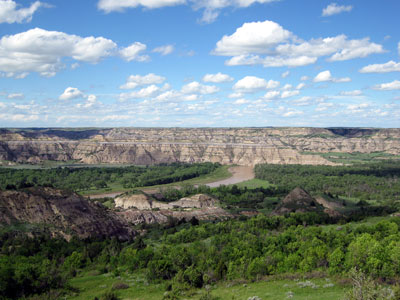
National Park Service; uploaded by User:Finetooth, Public domain, via Wikimedia Commons; Image Size Adjusted

Acroterion, CC BY-SA 4.0, via Wikimedia Commons; Image Size Adjusted