.jpg)
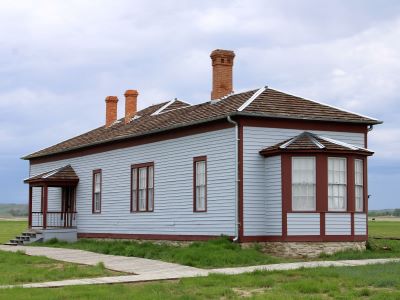
Frontier military post established in 1866, known for its role in Sitting Bull’s surrender and preserved historic buildings including a powder magazine and officers’ quarters.
General Information
August 23–September 15: Daily 8am–6pm
September 16–May 15: Weekdays by appointment
Children (6–17): $5
School Groups: $1/person
Bus Tours: $7/person
Children under 6 and SHSND members: Free
Admission includes access to Missouri-Yellowstone Confluence Interpretive Center
How to Get There
From Medora, ND (140 mi): Take I-94 E to US-85 N, then follow ND-1804 W to the site near the Montana border.
Overview
The Fort Buford State Historic Site preserves the remnants of a key military outpost from the late 19th century. Established in 1866 near the confluence of the Missouri and Yellowstone Rivers, the fort served as a supply depot and played a pivotal role in the Indian Wars. It is most famously known as the site where Hunkpapa Lakota leader Sitting Bull surrendered in 1881. Visitors can explore original structures like the stone powder magazine and the officers’ quarters, which now house a museum.
The site offers guided tours, reenactments by the 6th Infantry, and interpretive programs that bring the frontier era to life. With sweeping views of the surrounding prairie and proximity to the Missouri-Yellowstone Confluence Interpretive Center, Fort Buford offers a rich and immersive historical experience.
This article uses material from the Wikipedia articles and official tourism pages for the Fort Buford State Historic Site, which are released under the Creative Commons Attribution-Share-Al