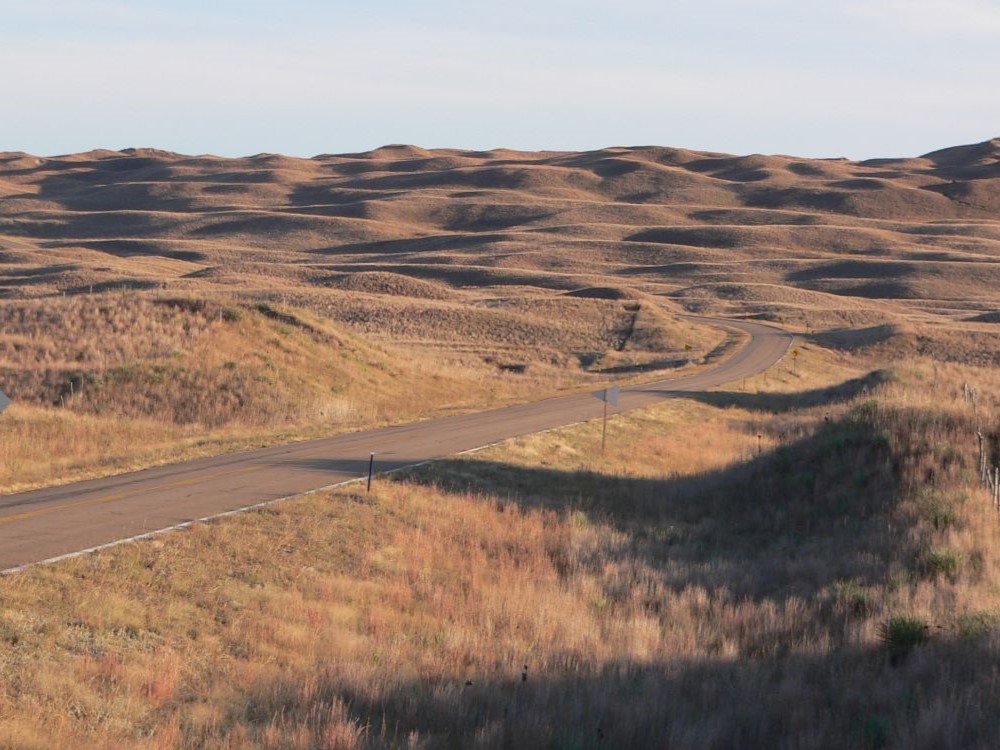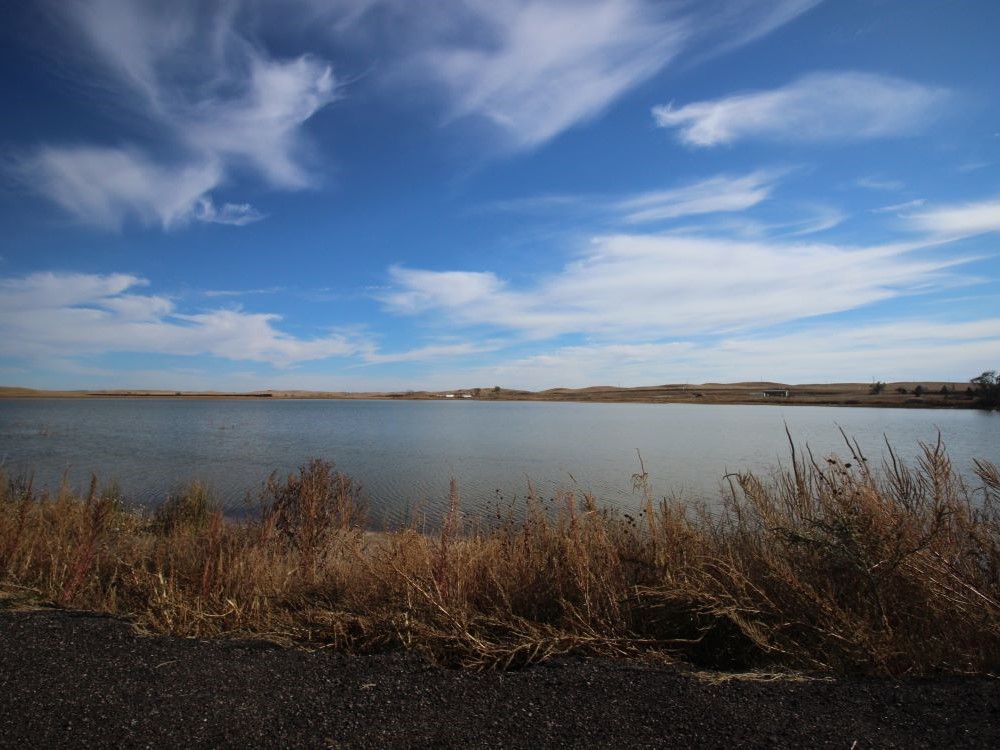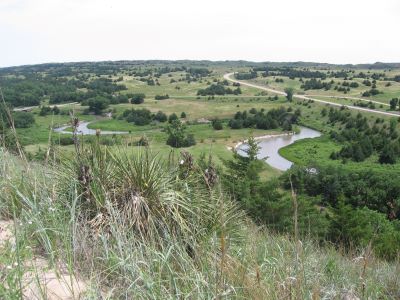
Expansive grass‑covered dune landscape offering wide‑open prairie vistas, abundant wildlife habitat, and opportunities for outdoor exploration.
General Information
How to Get There
From Scottsbluff, travel east on US‑26, connect to NE‑2, and continue across the scenic byway into the Sandhills region.
Overview
The Nebraska Sandhills encompass one of the largest grass‑stabilized dune ecosystems in the Western Hemisphere, stretching across more than 19,000 square miles of rolling prairie. Visitors encounter wide‑open horizons, thriving ranchlands, winding rivers, and sweeping dune formations that shift subtly with light and season. This vast region is home to notable waterways such as the Niobrara National Scenic River and supports a rich array of wildlife, from migratory birds to native prairie species. The quiet expanses, low light pollution, and natural diversity make the Sandhills a destination for stargazing, photography, river trips, and long scenic drives.
Along routes such as the Sandhills Journey National Scenic Byway, travelers pass through small towns, nature preserves, and recreation areas offering opportunities for hiking, fishing, paddling, and cultural interpretation. Seasonal changes dramatically shape the visitor experience: summers bring warm days ideal for water activities, springs and autumns offer mild temperatures and excellent wildlife viewing, and winters provide solitude amid austere beauty. Whether exploring on foot, by river, or by road, the Sandhills remain one of America’s last great wide‑open landscapes, inviting discovery at a slow and thoughtful pace.
This article uses material from the Wikipedia articles and official tourism pages for the Nebraska Sandhills, which are released under the Creative Commons Attribution-Share-Alike License 3.0.