National Historic Landmark featuring expansive botanical collections, themed gardens, conservatories, and one of the nation's oldest continuously operating botanical gardens.
General Information
Last entry at 4:30pm
Extended Thursday hours until 8:00pm
St. Louis City and County Residents: $6
Seniors (65+): $4
Members: Free
How to Get There
From Drury Inn & Suites St. Louis Forest Park (2 mi): Take I-44 east to the Vandeventer Avenue exit, head south, turn east onto Shaw Boulevard, and continue to the garden entrance at 4344 Shaw Blvd.
Overview
The Missouri Botanical Garden in St. Louis, Missouri. is known for its herbarium, with more than 6.6 million specimens, is the second largest in North America, behind that of the New York Botanical Garden.
Founded in 1859, the Missouri Botanical Garden is one of the oldest botanical institutions in the United States and a National Historic Landmark. It is also listed in the National Register of Historic Places.
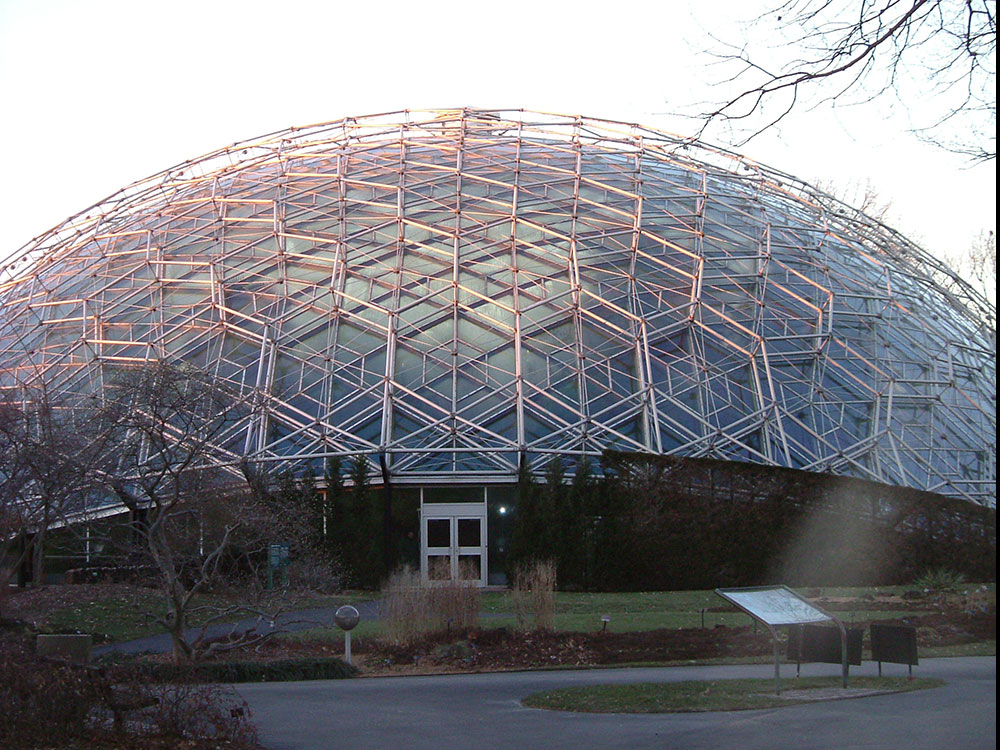
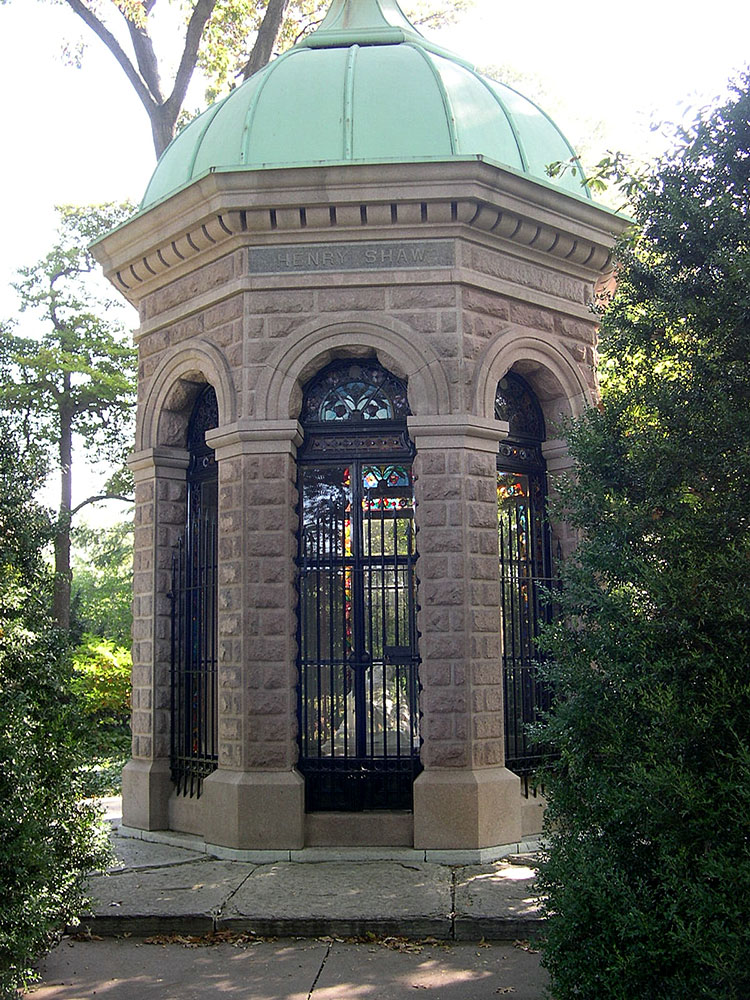
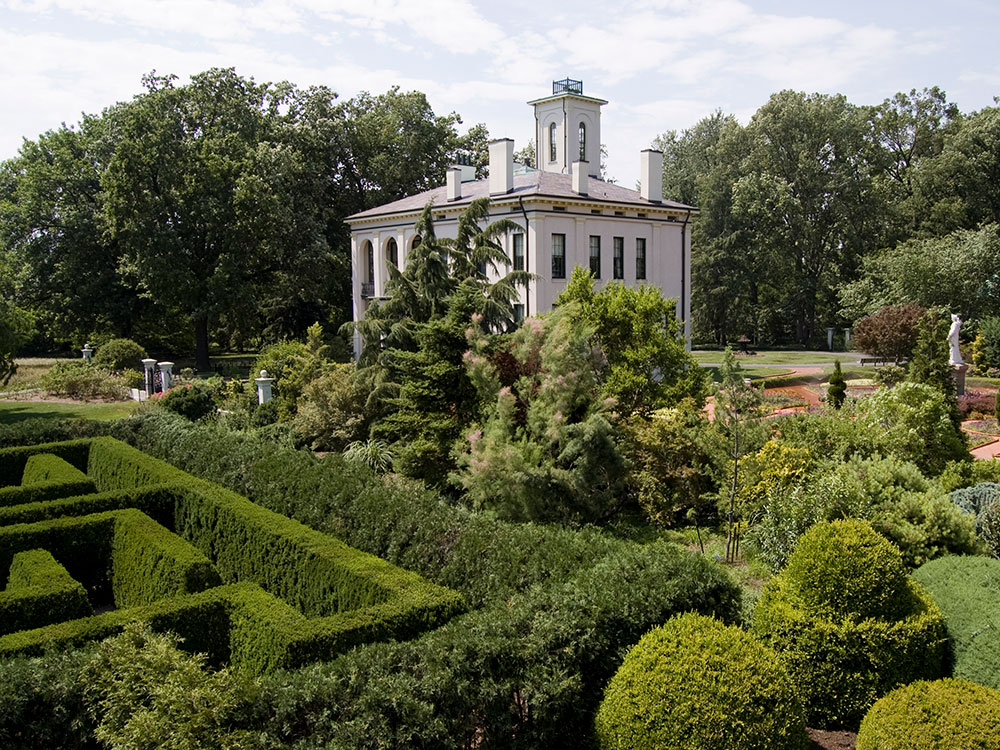
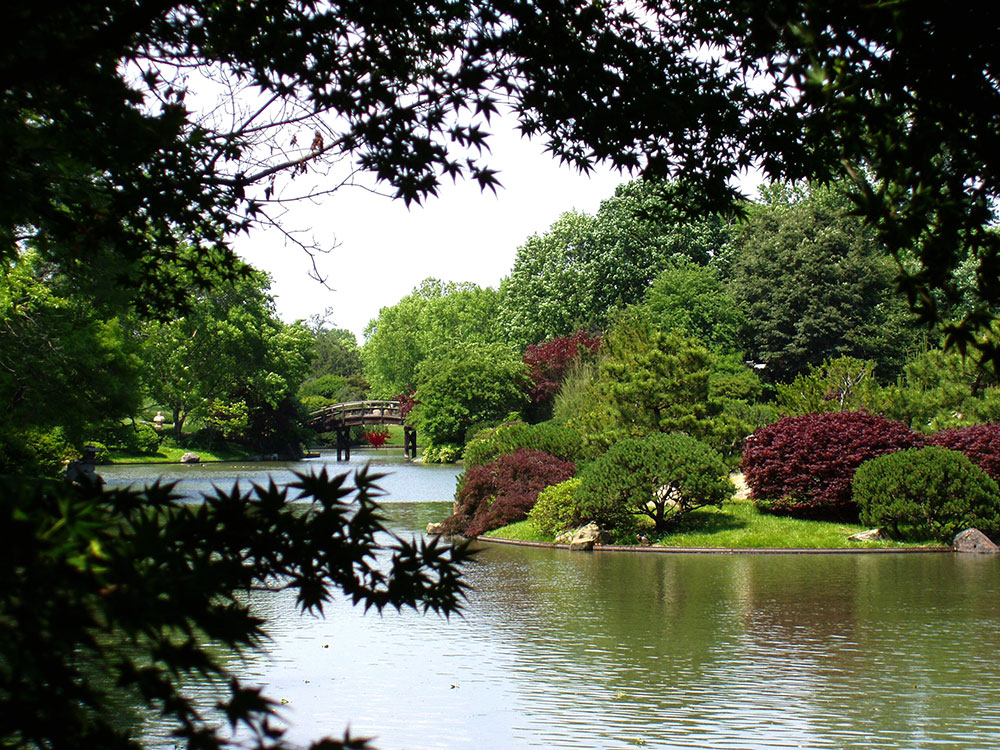
It includes a 14-acre (5.7 ha) Japanese strolling garden named Seiwa-en; the Climatron geodesic dome conservatory; a children's garden, including a pioneer village; a playground; a fountain area and a water locking system, somewhat similar to the locking system at the Panama Canal; an Osage camp; and Henry Shaw's original 1850 estate home. It is adjacent to Tower Grove Park, another of Shaw's legacies.
Major garden features include:
- Tower Grove House (1849) and Herb Garden - Shaw's Victorian country house, designed by prominent local architect George I. Barnett in the Italianate style
- Victory of Science over Ignorance - marble statue by Carlo Nicoli, a copy of the original (1859) by Vincenzo Consani in the Pitti Palace, Florence
- Linnean House (1882) – reputedly the oldest continually operated greenhouse west of the Mississippi River; originally Shaw's orangery, in the late 1930s converted to house mostly camellias
- Gladney Rose Garden (1915) – circular rose garden with arbors
- Climatron (1960) and Reflecting Pools – world's first geodesic dome greenhouse, designed by architect and engineer Thomas C. Howard of Synergetics, Inc; lowland rain forest with approximately 1500 plants
- English Woodland Garden (1976) – aconite, azaleas, bluebells, dogwoods, hosta, trillium, and others beneath the tree canopy
- Seiwa-en Japanese Garden (1977) – 14-acre (5.7 ha) chisen kaiyu-shiki (wet strolling garden) with lawns and path set around a 4-acre (1.6 ha) central lake, designed by Koichi Kawana; the largest Japanese Garden in North America
- Grigg Nanjing Friendship Chinese Garden (1995) – designed by architect Yong Pan; features (gifts from sister city Nanjing) a moon gate, lotus gate, pavilion, and Chinese scholar's rocks from Lake Tai
- Blanke Boxwood Garden (1996) – walled parterre with a fine boxwood collection
- Strassenfest German Garden (2000) – flora native to Germany and Central Europe and a bust of botanist and Henry Shaw's scientific advisor George Engelmann (sculpted by Paul Granlund)
- Biblical garden featuring date palm, pomegranate, fig and olive trees, caper, mint, citron and other plants mentioned in the Bible
- Ottoman garden with water features and xeriscape
The Climatron is a greenhouse enclosed in a geodesic dome that is part of the Missouri Botanical Garden. Initiated by then Garden director Frits W. Went, the dome is the world's first completely air-conditioned greenhouse and the first geodesic dome to be enclosed in rigid Plexiglass (Perspex) panels. Completed in 1960, it was designed by T. C. Howard, of Synergetics, Inc., Raleigh, North Carolina. The broad climatic range within the dome, which recreates a lowland rain forest, is achieved by sophisticated climate controls without using interior partitions.
The structure is an unpartitioned half-sphere dome, 42 m in diameter and 21 m high. The frame is supported by aluminum tubes under compression and aluminum rods under tension. In 1976 it was named one of the 100 most significant architectural achievements in United States history.
The dome contains a small stone pre-existing neo-classical pavilion and over 400 varieties of plant life. A bank of 24 flood lights, revolving at night in five-minute cycles, simulates noon light on one side of the dome and moonlight on other side. The climate ranges from the Amazon through Hawaii and Java to India.
This article uses material from the Wikipedia article "Missouri Botanical Garden", and "Climatron", which is released under the Creative Commons Attribution-Share-Alike License 3.0