Site of the third winter encampment of the Continental Army during the American Revolutionary War
General Information
Visitor Center: Open daily: 9:00am to 5:00pm
How to Get There
From Philadelphia (21 miles): Get on I-76 W from S Penn Square and John F Kennedy Blvd. Continue on I-76 W to King of Prussia. Take the PA-23 W exit from US-422 W. Follow PA-23/W Valley Forge Rd to N Outer Line Dr.
Overview
Valley Forge National Historical Park is the site of the third winter encampment of the Continental Army during the American Revolutionary War, taking place from December 19, 1777 to June 19, 1778. The National Park Service preserves the site and interprets the history of the Valley Forge encampment. Originally Valley Forge State Park, it became a national historical park in 1976. The park contains historical buildings, recreated encampment structures, memorials, museums, and recreation facilities.
The park encompasses 3,500 acres (1,400 ha) and is visited by over 1.2 million people each year. Visitors can see restored historic structures, reconstructed structures such as the iconic log huts, and monuments erected by the states from which the Continental soldiers came. Visitor facilities include a visitor center and museum featuring original artifacts, providing a concise introduction to the American Revolution and the Valley Forge encampment. Ranger programs, tours (walking and trolley), and activities are available seasonally. The park also provides 26 miles (42 km) of hiking and biking trails, which are connected to a robust regional trails system. Wildlife watching, fishing, and boating on the nearby Schuylkill River also are popular.
From December 19, 1777 to June 19, 1778, the main body of the Continental Army (approximately 12,000 troops) was encamped at Valley Forge. The site was chosen because it was between the seat of the Second Continental Congress in York, supply depots in Reading, and British forces in Philadelphia 18 miles (29 km) away, which fell after the Battle of Brandywine, in which many American soldiers were injured, including the Marquis de Lafayette This was a time of great suffering for the army, but it was also a time of retraining and rejuvenation. The shared hardship of the officers and soldiers of the army, combined with Baron Friedrich von Steuben's professional military training program, are considered key to the subsequent success of the Continental Army and marks a turning point in the Revolutionary War.
The park's visitor center includes a museum with artifacts found during excavations of the park, an interactive muster roll of Continental soldiers encamped at Valley Forge, ranger-led gallery programs and walks, a storytelling program, a photo gallery, a visitor information desk, and a store for books and souvenirs.
90-minute bus tours of the park and bike rentals are available seasonally. A short 18-minute film, "Valley Forge: A Winter Encampment" is shown in the park's theater next door. The visitor center, built in 1976, was undergoing renovations, and visitor center operations have moved to a temporary visitor center, located in the parking lot of the existing facility. The newly remodeled visitor center was expected to reopen in late spring 2020.
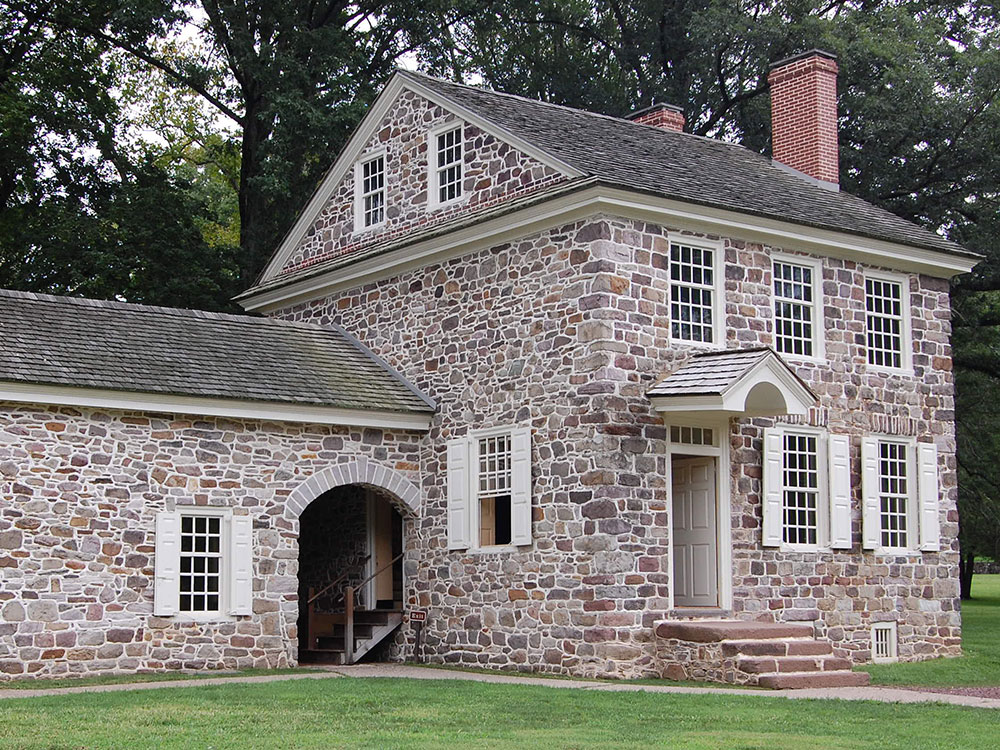
A key attraction of the park is the restored colonial home used by General George Washington as his headquarters during the encampment. Rehabilitation of the headquarters area was completed in summer 2009, and included the restoration of the old Valley Forge train station into an information center, new guided tours, new exhibits throughout the landscape, and the elimination of several acres of modern paving and restoration of the historic landscape. Quarters of other Continental Army generals are also in the park, including those of Huntington, Varnum, Lord Stirling, Lafayette, and Knox. Varnum's quarters is open on weekends during the summer.
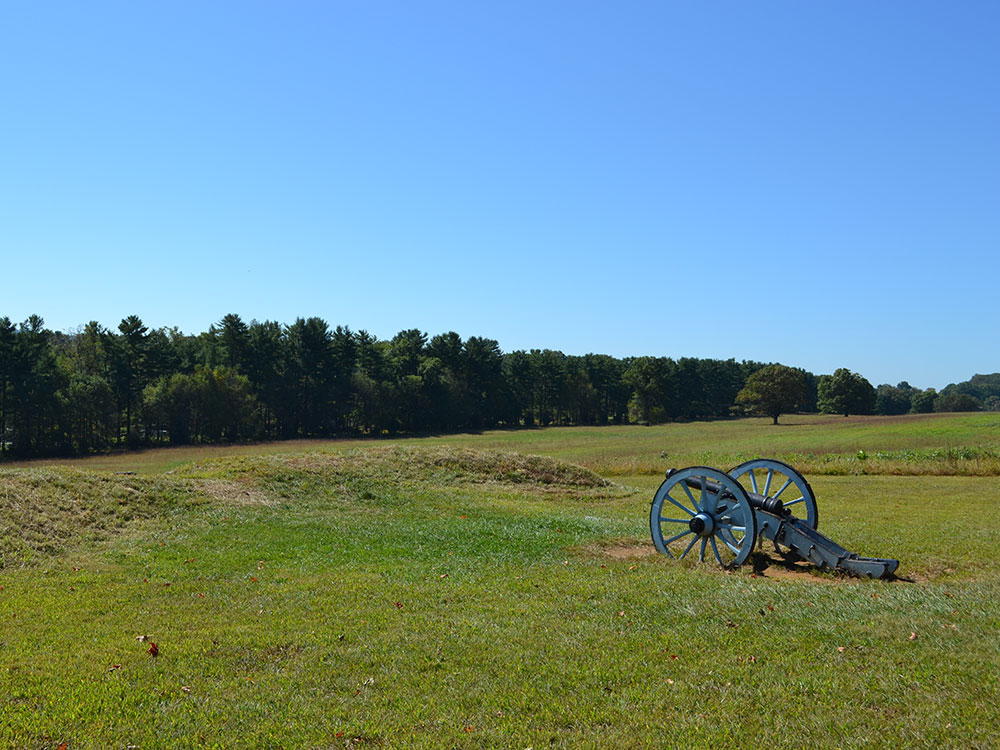
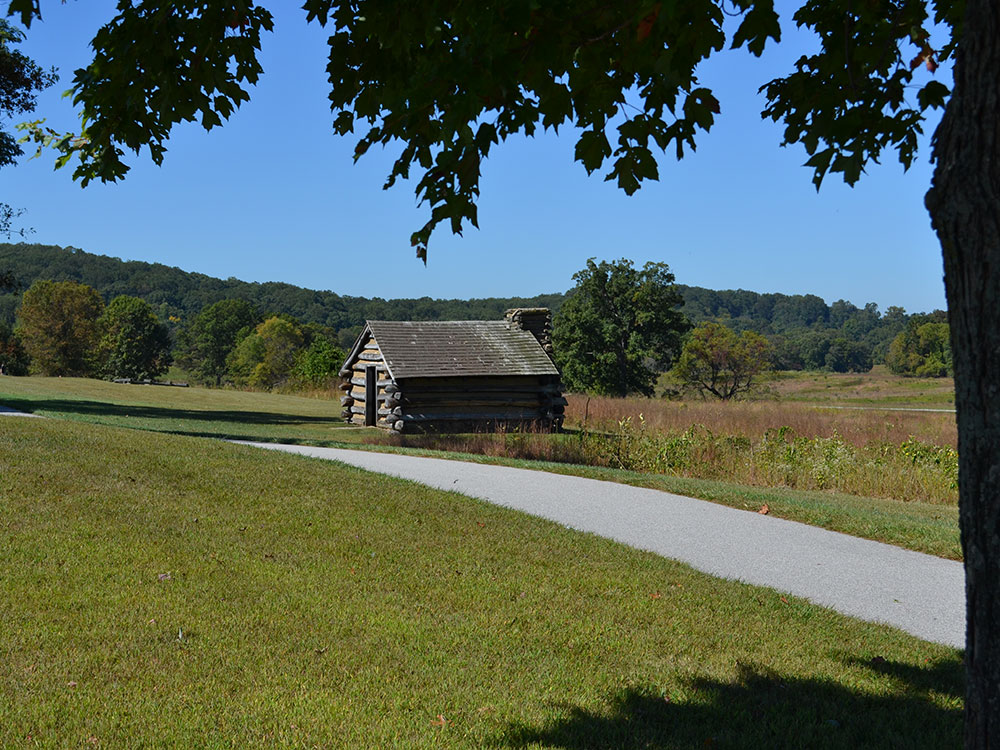
Throughout the park there are reconstructed log cabins of the type thought to be used during the encampment. Earthworks for the defense of the encampment are visible, including four redoubts, the ditch for the Inner Line Defenses, and a reconstructed abatis. The original redoubts and several redans on Route 23, Outer Line Drive, and Inner Line Drive were covered with sod to preserve them, but they are currently in need of further restoration. The original forges, located on Valley Creek, were burned by the British three months prior to Washington's occupation of the park area. However, neither the Upper Forge site nor the Lower Forge site has been reconstructed. There are also several historical buildings that have not been made open to the public because of reasons such as their current state of disrepair. These include: Lord Stirling's Quarters, Knox's Quarters, and the Von Steuben Memorial. Other historical buildings include the P.C. Knox Estate, Kennedy-Supplee Mansion and Potts' Barn.
The Washington Memorial Chapel and National Patriots Bell Tower carillon sit atop a hill at the center of the present park. The chapel is the legacy of Rev. Dr. W. Herbert Burk. Inspired by Burk's 1903 sermon on Washington's birthday, the chapel is a functioning Episcopal Church, built as a tribute to Washington. Burk was also instrumental in the development of the park, including obtaining Washington's campaign tent and banner, which used to be on display in the visitor center but is now in the Museum of the American Revolution in Philadelphia. The chapel and attached bell tower are not technically part of the park but serve the spiritual needs of the park and the community that surround it. The bell tower houses the Daughters of the American Revolution Patriot Rolls, listing those that served in the Revolutionary War, and the chapel grounds hosted the World of Scouting Museum.
On the hillside above the main house stands a four-bay carport, servants' quarters, and a guest house. These attached outbuildings were built two years later using the same quality of materials and attention to detail as the main house. The guest quarters feature a spring-fed swimming pool which overflows and drains to the river below.
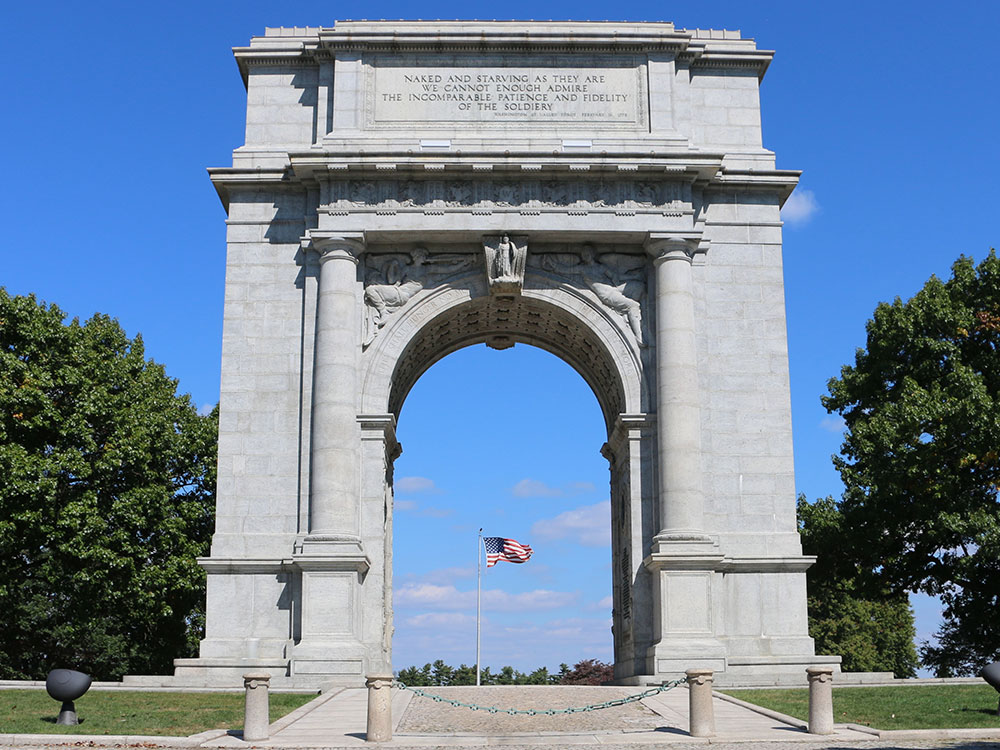
Sitting atop a hill at the intersection of the Outer Line of Defense with the Gulph Road, the National Memorial Arch dominates the southern portion of the park. It is dedicated "to the officers and private soldiers of the Continental Army December 19, 1777 – June 19, 1778." The arch was commissioned by an act of the 61st Congress in 1910 and completed in 1917.
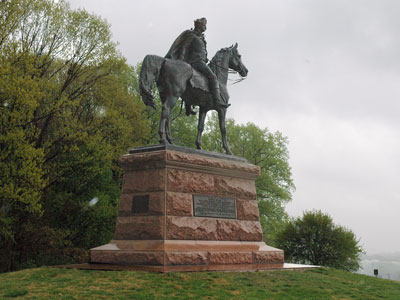
The drive is lined with large (~2 m high) memorial stones for each of the brigades, or "lines", that encamped there. Crossing Gulph Road at the arch, the drive proceeds through the Pennsylvania Columns and past the hilltop statue of Anthony Wayne on horse. More brigade stones line Port Kennedy Road.
Atop Mount Joy, the highest elevation in the main park area, stood a steel observation tower. The tower was closed in the 1980s because of deterioration, liability concerns, and the surrounding trees outgrowing the platform. The tower was removed and shipped to a private area near Wellsboro, Pennsylvania, where people can still climb it. The area where it stood is now only accessible by foot trail, the roads have been removed and the area is being given back to the woods.
There are 26 miles (42 km) of hiking and biking trails within the park, such as the Valley Creek Trail and the River Trail. The main trail is the Joseph Plumb Martin Trail, which encircles 8.7 miles of the park. Portions of regional trails, including the Horse Shoe Trail and the Schuylkill River Trail, also run through the park.
The many trails in Valley Forge allow for different activities such as jogging, walking and biking. Other activities include horseback riding and canoeing/kayaking. There are three picnic areas located on the site. In addition, Park Rangers dressed in period uniforms are stationed as the Muhlenburg Brigade Huts and Washington's Headquarters, ready to inform visitors about the historic events that happened on the site. The Valley Forge 5-Mile Revolutionary Run is also held in the park every April.
Near Washington's Headquarters is the Valley Forge Train Station, owned by the park. The station was completed in 1911 by the Reading Railroad and was the point of entry to the park for travelers who came by rail through the 1950s from Philadelphia, 23.7 miles (38.1 km) distant. The station was restored in 2009 and is used as a museum and information center that offers visitors a better understanding of Washington's Headquarters and the village of Valley Forge. Constructed of the same type of stone as Washington's Headquarters, the building was erected on a large man-made embankment overlooking the headquarters site.
This article uses material from the Wikipedia article "Valley Forge National Historical Park", which is released under the Creative Commons Attribution-Share-Alike License 3.0