Art museum including collections containing over 240,000 objects including major holdings of European, American and Asian origin
General Information
Friday: 10:00am to 8:45pm
Tuesday and Wednesday: Closed
Seniors: (65 & over): $28.00
Youths (18 & under): Free
How to Get There
Take S Penn Square, John F Kennedy Blvd and Benjamin Franklin Pkwy to Anne d'Harnoncourt Dr/Art Museum Dr. Turn left onto Anne d'Harnoncourt Dr/Art Museum Dr.
Overview
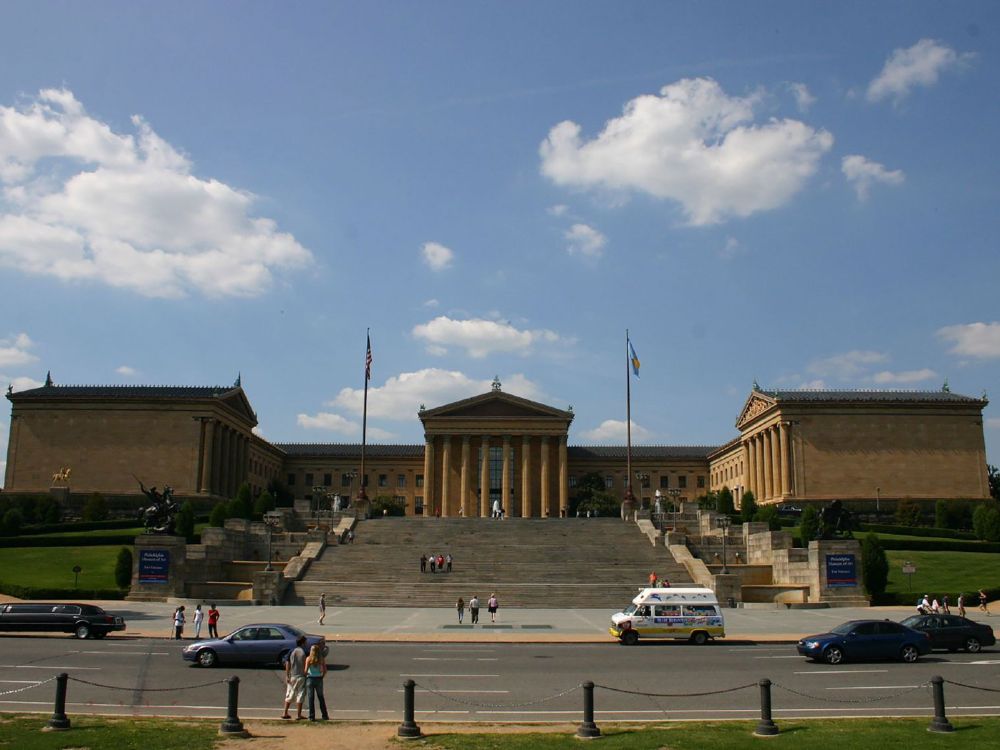
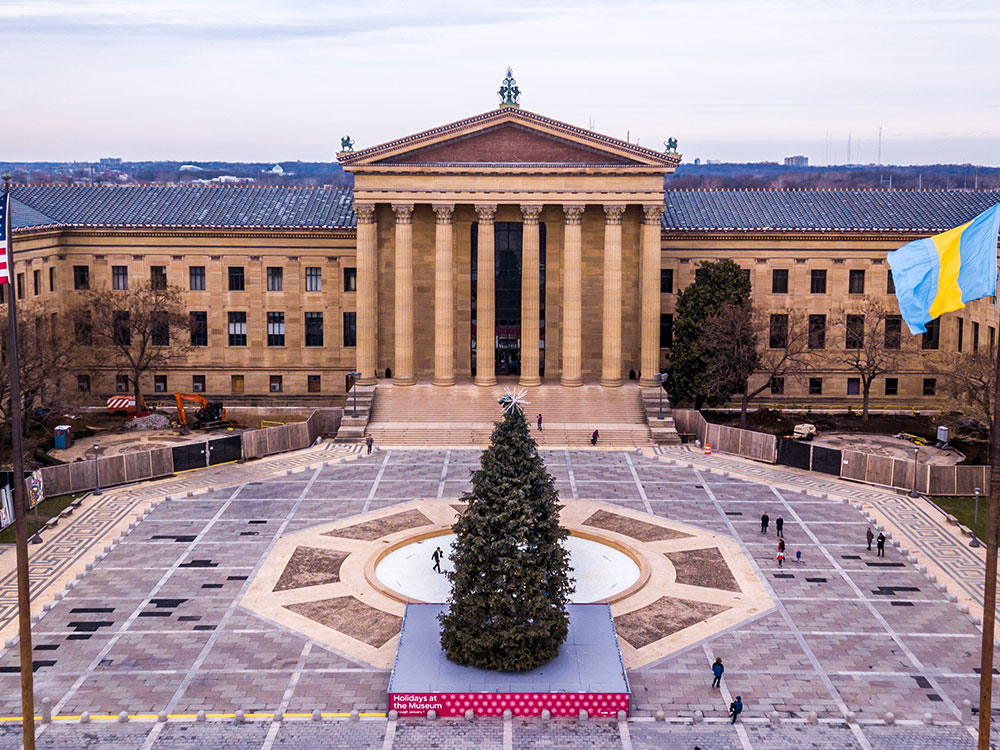
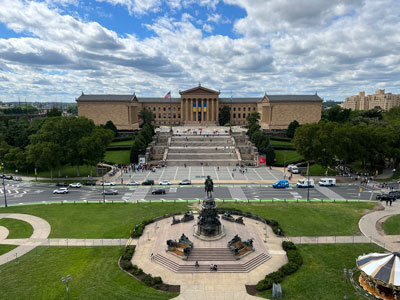
The Philadelphia Museum of Art is an art museum originally chartered in 1876 for the Centennial Exposition in Philadelphia. The main museum building was completed in 1928 on Fairmount, a hill located at the northwest end of the Benjamin Franklin Parkway at Eakins Oval. The museum administers collections containing over 240,000 objects including major holdings of European, American and Asian origin. The various classes of artwork include sculpture, paintings, prints, drawings, photographs, armor, and decorative arts.
The Philadelphia Museum of Art administers several annexes including the Rodin Museum, also located on the Benjamin Franklin Parkway, and the Ruth and Raymond G. Perelman Building, which is located across the street just north of the main building. The Perelman Building, which opened in 2007, houses more than 150,000 prints, drawings and photographs, along with 30,000 costume and textile pieces, and over 1,000 modern and contemporary design objects including furniture, ceramics and glasswork. The museum also administers the historic colonial-era houses of Mount Pleasant and Cedar Grove, both located in Fairmount Park. The main museum building and its annexes are owned by the City of Philadelphia and administered by a registered nonprofit corporation.
Several special exhibitions are held in the museum every year, including touring exhibitions arranged with other museums in the United States and abroad.
Rocky Steps
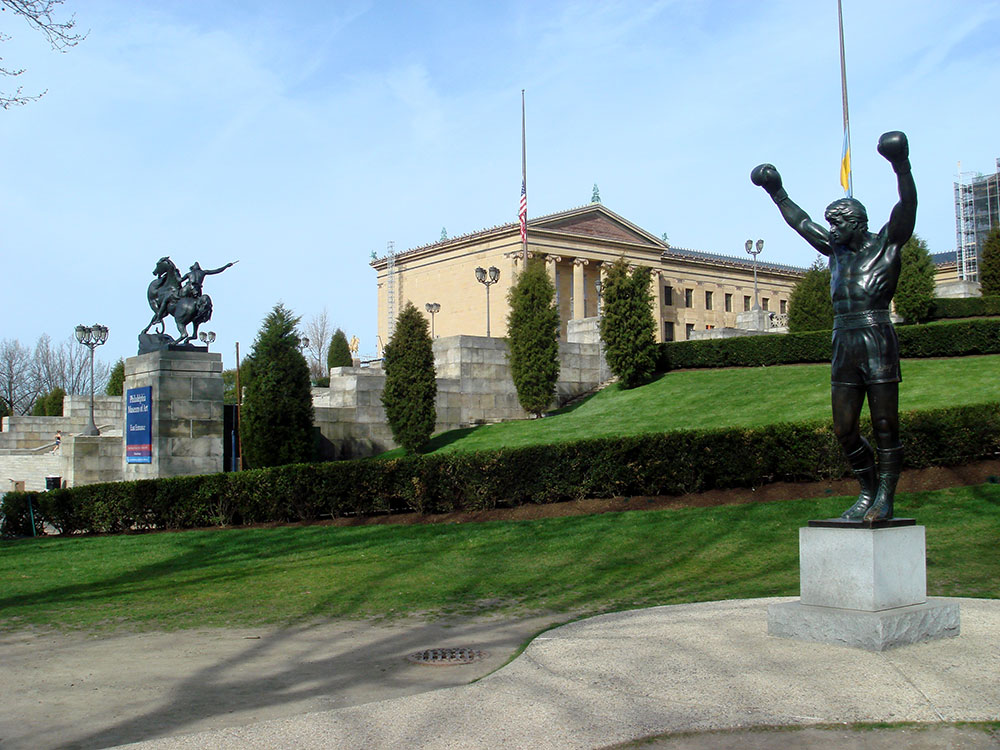
Few cinematic landmarks have merged so seamlessly with a real-world destination as the iconic Rocky Steps at the Philadelphia Museum of Art. Rising in a broad sweep of stone, the steps became legendary after the 1976 film Rocky, in which underdog boxer Rocky Balboa charges upward in a triumphant training montage. Today, visitors from around the globe reenact the climb, arms raised in victory as the Philadelphia skyline stretches behind them. At the base stands the enduring Rocky Statue, originally created as a film prop but now a permanent tribute to determination, grit, and the city’s blue-collar spirit. The scene has evolved beyond cinema into a ritual, where storytelling and place converge in a powerful expression of perseverance.
The connection between the film and the Philadelphia Museum of Art is more than symbolic—it transformed the museum into a cultural landmark far beyond its role as an artistic institution. While the museum houses vast collections spanning centuries of human creativity, its steps have become an open-air stage where visitors participate in a living narrative of ambition and resilience. The Rocky Statue’s relocation to the base of the steps helped cement its accessibility, inviting tourists to engage directly with cinematic history. Together, the steps and statue embody a unique fusion of art, film, and urban identity, making the museum not only a destination for art lovers but also a pilgrimage site for fans of one of cinema’s most enduring stories.
This article uses material from the Wikipedia articles and official tourism pages for the Rocky Steps and Philadelphia Museum of Art, which are released under the Creative Commons Attribution-Share-Alike License 3.0.
This article uses material from the Wikipedia article "Philadelphia Museum of Art", which is released under the Creative Commons Attribution-Share-Alike License 3.0