Elfreth's Alley

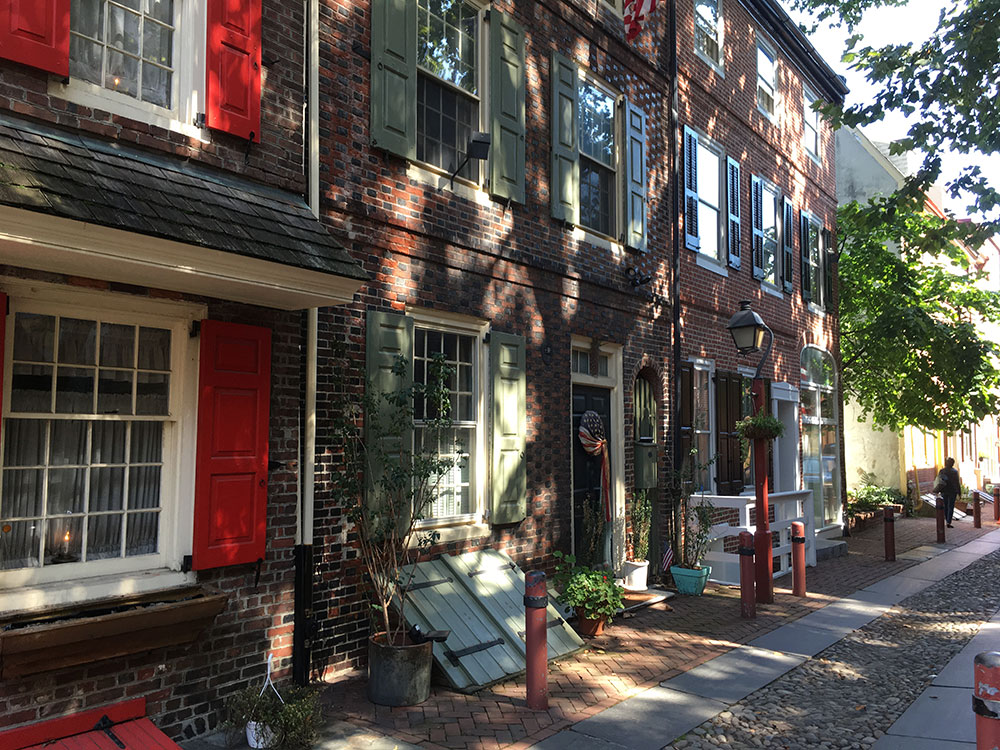
User:BenFranske, CC BY-SA 4.0, via Wikimedia Commons; Image Size Adjusted

Historic street, dating back to 1703, known for its Georgian and Federal-style houses and cobblestone pavement

General Information

Hours:
Elfreth's Alley: 24/7
The Elfreth's Alley Museum: Fridays, Saturdays, and Sundays from 12:00pm to 4:00pm
Fees:
Elfreth's Alley: No fees
The Elfreth's Alley Museum:
Adults: $3.00
Child (ages 7-12): $2.00
Child Ages 6 and under: Free
Pet Policy:
Elfreth's Alley: Pets allowed
The Elfreth's Alley Museum: Pets NOT allowed
Closest cities with hotels:
Philadelphia
Seasons:
All year
Address:
126 Elfreth's Alley, Philadelphia, PA 19106
Website:
elfrethsalley.org/
Rating:
5.0
PHILADELPHIA Weather Forecast

Take Market St, N Independence Mall E and Race St to N Front St. Continue on N Front St. Drive to Elfreth's Alley.

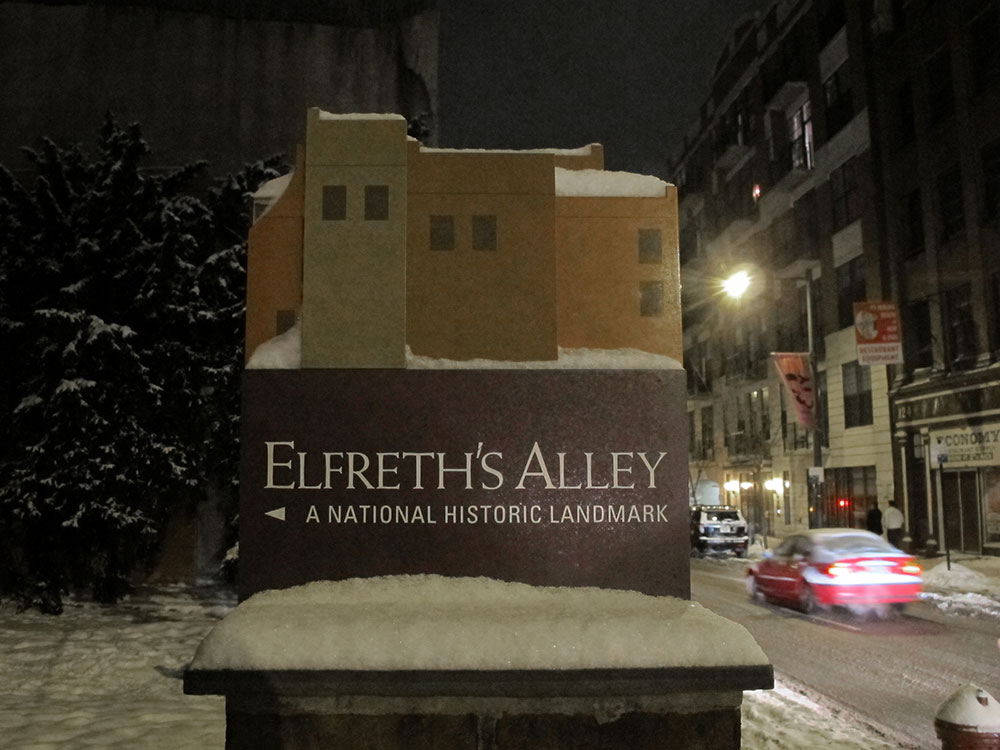
Elfreth's Alley is a historic street in Philadelphia, dating back to 1703. There are 32 houses on the street which were built between 1703 and 1836. The Elfreth's Alley Museum is located at #124 and 126. The alley is a National Historic Landmark. Located in the Old City neighborhood, Elfreth's Alley is between North 2nd Street and North Front Street, in the block between Arch and Quarry Streets.

Elfreth's Alley is named after Jeremiah Elfreth, an 18th-century blacksmith and property owner. Among the alley's residents were tradesmen and their families, including shipwrights, silver and pewter smiths, glassblowers, and furniture builders. In the 1770s, one-third of the households were headed by women. The Georgian and Federal-style houses and cobblestone pavement of the alley were common in Philadelphia during this time. The houses are typically small, and many are uniquely Philadelphian Trinity houses.

In the late 19th and early 20th centuries, industry began to change the street. Perhaps the first change was a stove factory that took its place in a row of residential houses in 1868. Eventually, factories surrounded Elfreth's Alley. The city's waterfront was only a few blocks away. Industry changed more than the architecture; successive waves of immigrants, lured by the nearby jobs, moved onto the street. In 1900, the neighborhood was overwhelmingly Irish.

In 1934, the Elfreth's Alley Association (EAA) was founded to preserve the alley's historic structures while interpreting the street's history. The EAA helped save the street from demolition, and also lobbied the city to restore the alley's name to "Elfreth's Alley"; it had been designated as the 100 block of Cherry Street years before as part of a street-name simplification program.

Elfreth's Alley is today the product of cycles of urban renewal and decay, and historic preservation efforts. The alley is a tourist attraction and a rare surviving example of 18th-century working-class housing stock. The site stands in sharp contrast to the more frequently preserved grand mansion houses of Philadelphia's Society Hill neighborhood.

Elfreth's Alley Museum, located in 124–126 Elfreth's Alley, preserves the 18th-century home of a pair of dressmakers. Restored to its appearance in the Colonial era, exhibits in the house and tour guides interpret the life of the house and alley's residents in that era. Guides also discuss other houses on the alley and their inhabitants.

This article uses material from the Wikipedia article "Elfreth's Alley", which is released under the Creative Commons Attribution-Share-Alike License 3.0
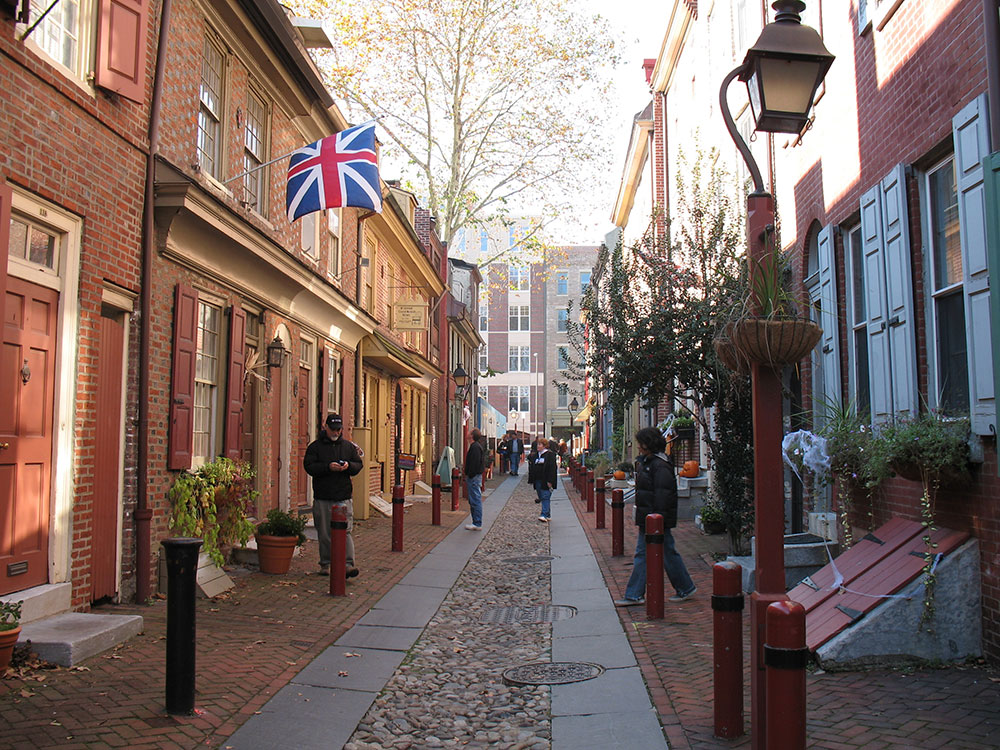
Photo: Mr. Kjetil Ree., CC BY-SA 3.0, via Wikimedia Commons; Image Size Adjusted
Sam Nabi, CC BY-SA 4.0, via Wikimedia Commons; Image Size Adjusted
Sailko, CC BY-SA 3.0, via Wikimedia Commons; Image Size Adjusted