City in South Central Pennsylvania is one of the oldest inland towns in the US and is best known for being the hub of Pennsylvania's Amish Country
General Information
How to Get There
From Philadelphia (89 miles): Get on I-76 W from S Penn Square and John F Kennedy Blvd. Follow I-76 W and US-222 S to PA-23 W/E Walnut St in Lancaster. Take the PA-23 W exit from US-30 E. Continue on PA-23 W/E Walnut St. Drive to E King St in Lancaster.
Overview
Lancaster is a city in South Central Pennsylvania, and is one of the oldest inland towns in the United States. Lancaster is best known for being the hub of Pennsylvania's Amish Country. Lancaster was home to James Buchanan, the nation's 15th president, and to congressman and abolitionist Thaddeus Stevens.
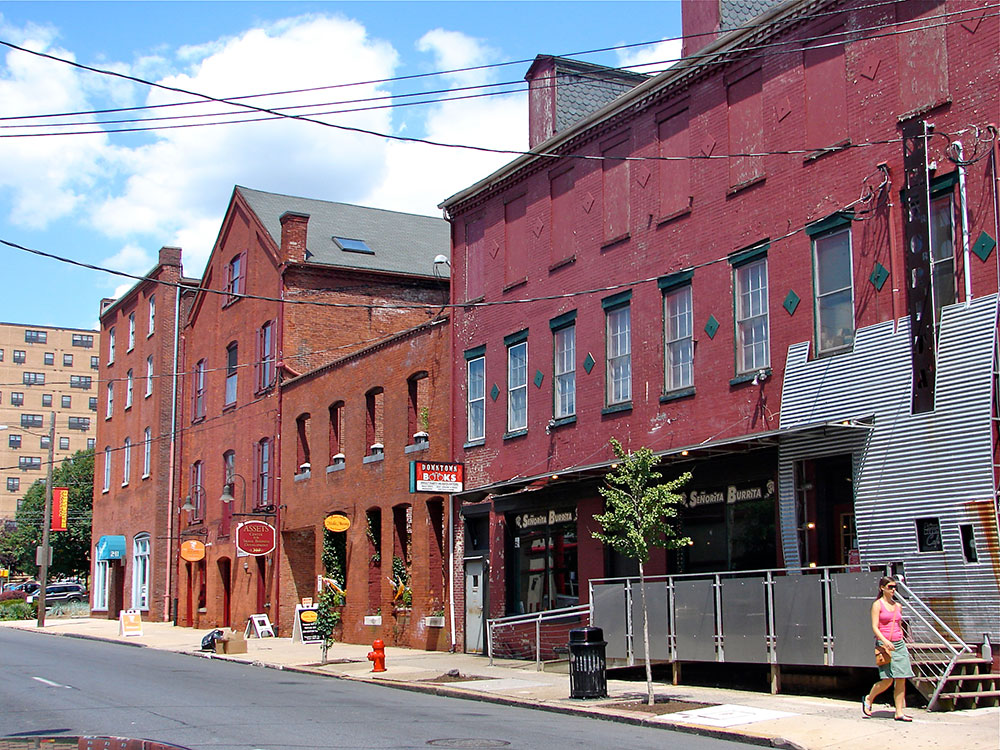
Lancaster City has been in the process of recreating itself, particularly since 2005, with a growth of specialty shops, boutiques, bars, clubs, and reinvestment in downtown institutions and locations. In 2005 the creation of "Gallery Row" solidified the status of Lancaster as an arts destination. The art community continues to thrive and expand.
In addition to Lancaster's boutiques, vintage shops, and art galleries (Gallery Row), Park City Center is the largest enclosed shopping center in South Central Pennsylvania. The mall includes more than 150 stores.
Built in 1889, the Lancaster Central Market is the oldest continuously operated farmers market in the United States, and many tourists come to purchase the handmade Amish goods that are not commonly found elsewhere. Central Market is listed with the National Register of Historic Places, and its towers are of the Romanesque Revival style.
Lancaster also has two outlet shopping centers, both of which are located in East Lampeter Township on U.S. Route 30. Tanger Outlets is home to about 65 stores. Rockvale Outlets contains over 100 stores and restaurants.
Many of Lancaster's landmarks are significant in local, state, and national history.
Central Market - built in 1889, it is the oldest continuously run farmers' market in the United States.
Bethel African Methodist Episcopal Church - built in 1879, the church's congregation aided freedmen migrating to the North for opportunities after the American Civil War. Their congregation had earlier aided fugitive slaves fleeing the South before the war, using their former church as a station on the Underground Railroad.
Cork Factory Hotel - built in 1865 as Conestoga Cork Works. Later the buildings making up what is known today as Urban Place were home to Armstrong Cork Factory and Kerr Glass Company. Rezoned in 2005, Urban Place has been adapted as 49 loft-style apartments, 115,000 square feet of retail and commercial space, the Cork Factory Hotel, and Cap & Cork Restaurant.
Fulton Opera House - the oldest continually running theater in the United States, it is one of three theaters designated as National Historic Landmarks (the others are the Walnut Street Theatre in Philadelphia and the Goldenrod Showboat in St. Louis, Missouri).
Hamilton Watch Complex - former factory and headquarters of the Hamilton Watch Company, which in 1957 sold the world's first battery-powered watch, the Hamilton Electric 500.
J. P. McCaskey High School - built in 1938 during the Great Depression, it is designed in the Art Deco architectural style.
Historic St. Mary's Church - built in 1854, this church has served the German-speaking Catholics of Lancaster since 1741.
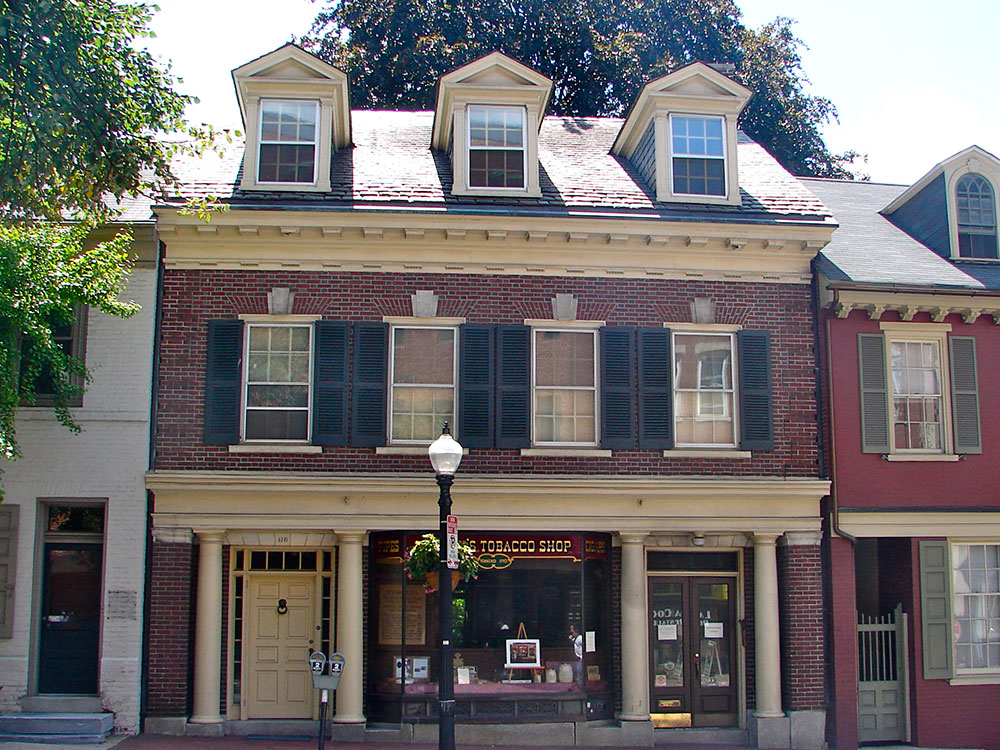
Lancaster Arts Hotel - Built in 1881, this building was the Falk and Rosenbaum Tobacco Warehouse. In October 2006, the warehouse reopened after adaptation, as Lancaster's first boutique hotel for the arts. It has 63 guest rooms (including 12 suites); an organic restaurant, John J Jeffries; and an on-site art gallery. It is registered with the Historic Hotels of America.
Lancaster County Prison - built in 1849, it was styled after the Lancaster Castle in England.
Rock Ford Plantation - built in 1794, this was the home of General Edward Hand, adjutant general to George Washington during the American Revolutionary War.
Unitarian Universalist Church of Lancaster, Pennsylvania - built in 1908-1909 in what is now the Historic District of Lancaster, it is unique among the buildings by C. Emlen Urban and contains stained glass by Franz Xaver Zettler (designed by Swiss-American architect Woldemar H. Ritter) and by Charles Connick.
W. W. Griest Building - listed on the U.S. National Register of Historic Places since June 25, 1999. It was built in 1925 in the Beaux-Arts style using granite, limestone, terra cotta, synthetics, and asphalt. The building is named after William Walton Griest, a former Pennsylvania representative. It is the second-tallest building in the city.
Wheatland - the historic estate of James Buchanan, the 15th President of the United States.
The city of Lancaster has art, craft and historical museums. The Demuth Museum is located in the former home of the well-known painter Charles Demuth, who had a national reputation in the 20th century. Additional museums include the Lancaster Museum of Art and the Philips Museum of Art on the campus of Franklin & Marshall College. Art students at the state-of-the-art Pennsylvania College of Art and Design present their works at the academy's gallery, which is open to the public. LancasterARTS, a non-profit organization founded in 2002, promotes contemporary arts and crafts.
Lancaster city has a thriving art community. Gallery Row on the 100 block of North Prince St. features a block of art galleries, and the city proper has over 40 galleries and artists' studios. The galleries host a "First Friday" each month, extending their business hours to exhibit new artwork and new artists to the public.
The Lancaster Mennonite Historical Society Museum and the Heritage Center Museum display artifacts and interpret the region's unique history. Children can have a hands-on experience with educational learning at the Hands-on House, also known as the Children's Museum of Lancaster. Nature and geology-minded visitors can view the exhibits of the Louise Arnold Tanger Arboretum and the North Museum of Natural History and Science.
Stevens and Smith Historic Site is located within the Vine Street lobby of the Lancaster County Convention Center. The site includes the preserved home of U.S. Senator Thaddeus Stevens and his companion Lydia Hamilton Smith. The underground portion of the site includes a recently discovered Underground Railroad feature: a converted water cistern used in the antebellum years to hide fugitive slaves on their way to freedom.
In Lancaster County, the Landis Valley Museum in Manheim Township has exhibits that interpret the county's history and culture, especially as a center of ethnic German Amish and Mennonite culture.
This article uses material from the Wikipedia article "Lancaster, Pennsylvania", which is released under the Creative Commons Attribution-Share-Alike License 3.0