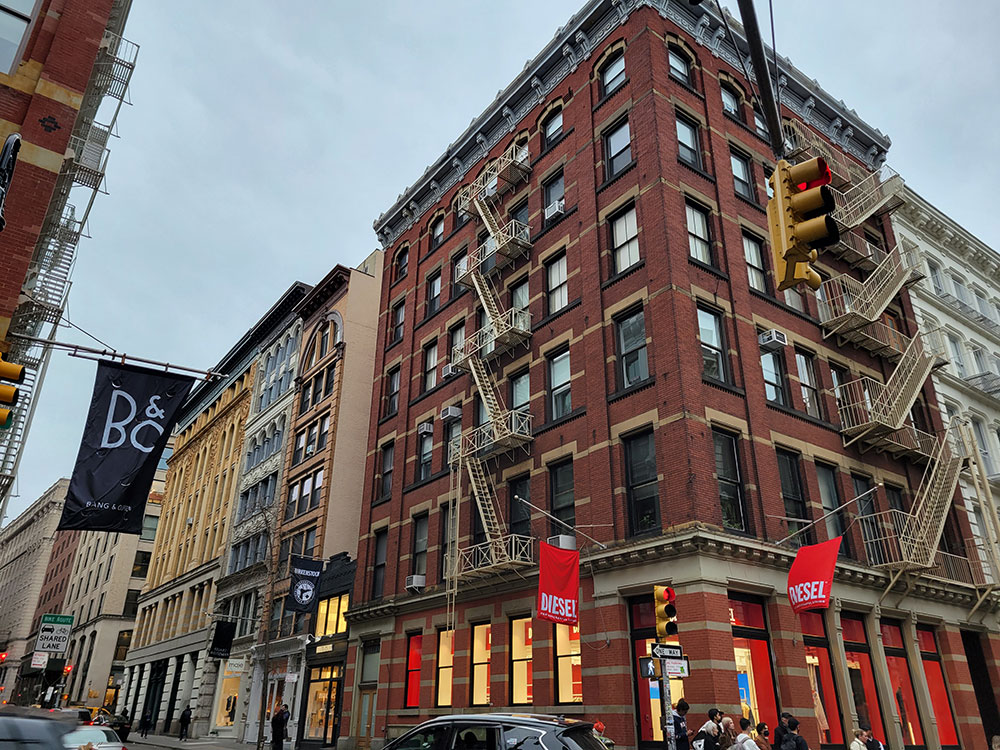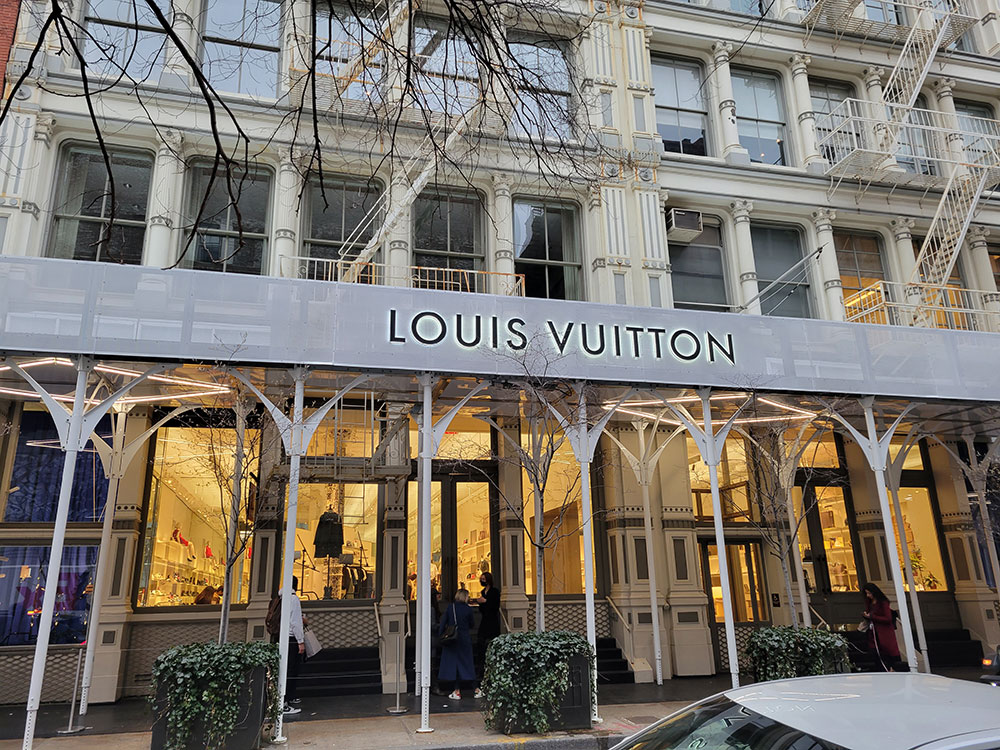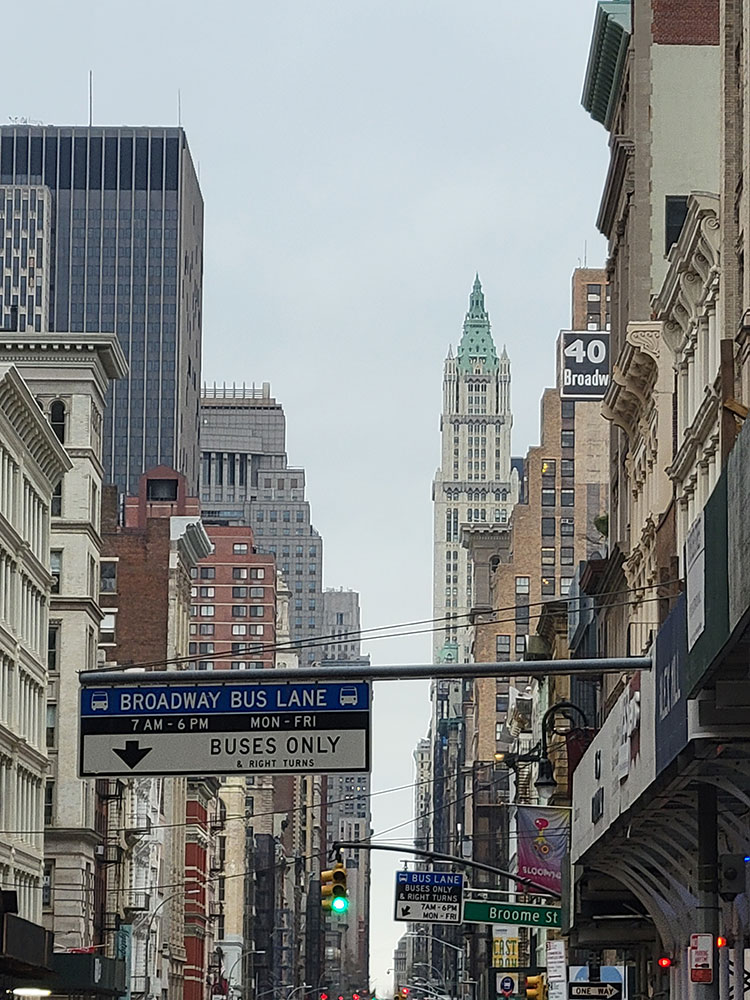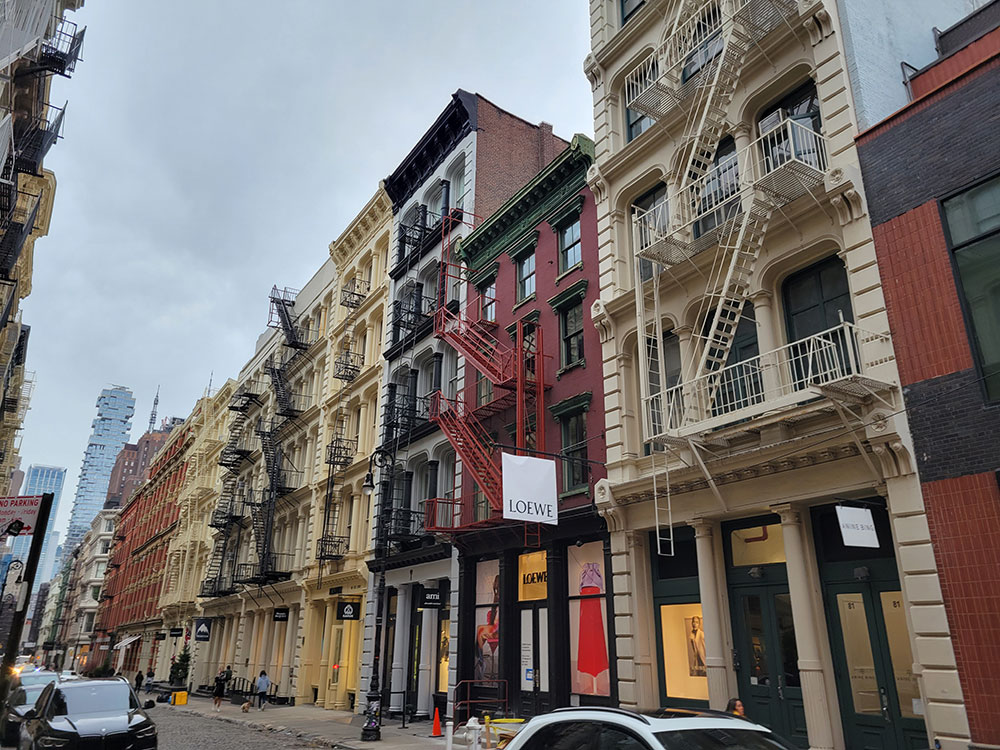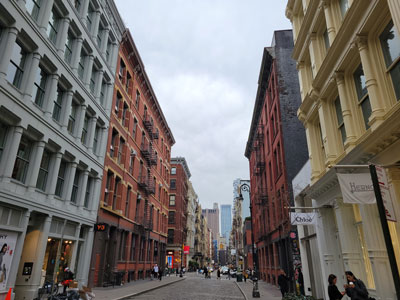
Neighborhood in Lower Manhattan known for its location of many artists' lofts and art galleries, and its variety of shops ranging from trendy upscale boutiques to national and international chain store outlets
General Information
Overview
SoHo, sometimes written Soho, is a neighborhood in Lower Manhattan in New York City. Since the 20th century it has been the location of many artists' lofts and art galleries, and has also been known for its variety of shops ranging from trendy upscale boutiques to national and international chain store outlets. The area's history is an archetypal example of inner-city regeneration and gentrification, encompassing socioeconomic, cultural, political, and architectural developments.
The name "SoHo" derives from the area being "South of Houston Street", and was coined in 1962 by Chester Rapkin, an urban planner and author of The South Houston Industrial Area study. The name also recalls Soho, an area in London's West End.
Almost all of SoHo is included in the SoHo-Cast Iron Historic District, which was designated by the New York City Landmarks Preservation Commission in 1973, extended in 2010, and was listed on the National Register of Historic Places and declared a National Historic Landmark in 1978. It consists of 26 blocks and approximately 500 buildings, many of them incorporating cast-iron architectural elements. Many side streets in the district are paved with Belgian blocks.
SoHo boasts the greatest collection of cast-iron architecture in the world. Approximately 250 cast-iron buildings stand in New York City, and the majority are in SoHo. Cast iron was initially used as a decorative front over a pre-existing building. With the addition of modern, decorative facades, older industrial buildings were able to attract new commercial clients. Most of these facades were constructed during the period from 1840 to 1880. In addition to revitalizing older structures, buildings in SoHo were later designed to feature the cast iron.
An American architectural innovation, cast iron was cheaper to use for facades than materials such as stone or brick. Molds of ornamentation, prefabricated in foundries, were used interchangeably for many buildings, and a broken piece could be easily recast. The buildings could be erected quickly; some were built in four months. Despite the brief construction period, the quality of the cast-iron designs was not sacrificed. Bronze had previously been the metal most frequently used for architectural detail. Architects found that the relatively inexpensive cast iron could provide intricately designed patterns. Classical French and Italian architectural designs were often used as models for these facades. Because stone was the material associated with architectural masterpieces, cast iron, painted in neutral tints such as beige, was used to simulate stone.
There was a profusion of cast iron foundries in New York, including Badger's Architectural Iron Works, James L. Jackson's Iron Works, and Cornell Iron Works.
Since the iron was pliable and easily molded, sumptuously curved window frames were created, and the strength of the metal allowed these frames considerable height. The once-somber, gas-lit interiors of the industrial district were flooded with sunlight through the enlarged windows. The strength of cast iron permitted high ceilings with sleek supporting columns, and interiors became expansive and functional.
During cast iron's heyday, many architects thought it to be structurally more sound than steel. It was also thought that cast iron would be fire-resistant, and facades were constructed over many interiors built of wood and other flammable materials. When exposed to heat, cast iron buckled, and later cracked under the cold water used to extinguish fire. In 1899, a building code mandating the backing of cast-iron fronts with masonry was passed. Most of the buildings that stand today are constructed in this way. It was the advent of steel as a major construction material that brought an end to the cast iron era.
This article uses material from the Wikipedia article "SoHo, Manhattan", which is released under the Creative Commons Attribution-Share-Alike License 3.0