9/11 Memorial & Museum

Memorial and museum in New York City commemorating the September 11, 2001 attacks

General Information

Hours:
9/11 Memorial, Open Daily
Thursday and Friday, 12pm to 7pm
Saturday to Wednesday, 10am to 5pm
9/11 Memorial Museum, Open Thursday-Monday
Thursday and Friday, 12pm to 7pm
Saturday to Monday, 10am to 5pm
Fees:
No fees for Memorial
Museum:
Adult: $26
Youth (7 to 12 years): $15
Young Adult (13 to 17 years): $20
Senior (65+ years): $20
Pet Policy:
No pets allowed
Closest cities with hotels:
Paterson
Seasons:
All year
Rating 5.0
★★★★★
New York City, NY Weather Forecast

The National September 11 Memorial & Museum (also known as the 9/11 Memorial & Museum) is a memorial and museum in New York City commemorating the September 11, 2001 attacks, which killed 2,977 people, and the 1993 World Trade Center bombing, which killed six. The memorial is located at the World Trade Center site, the former location of the Twin Towers that were destroyed during the September 11 attacks. It is operated by a non-profit institution whose mission is to raise funds for, program, and operate the memorial and museum at the World Trade Center site.

A memorial was planned in the immediate aftermath of the attacks and destruction of the World Trade Center for the victims and those involved in rescue and recovery operations. The winner of the World Trade Center Site Memorial Competition was Israeli-American architect Michael Arad of Handel Architects, a New York- and San Francisco-based firm. Arad worked with landscape-architecture firm Peter Walker and Partners on the design, creating a forest of swamp white oak trees with two square reflecting pools in the center marking where the Twin Towers stood. In August 2006, the World Trade Center Memorial Foundation and the Port Authority of New York and New Jersey began heavy construction on the memorial and museum. The design is consistent with the original master plan by Daniel Libeskind, which called for the memorial to be 30 feet (9.1 m) below street level—originally 70 feet (21 m)—in a plaza, and was the only finalist to disregard Libeskind's requirement that the buildings overhang the footprints of the Twin Towers. The World Trade Center Memorial Foundation was renamed the National September 11 Memorial & Museum in 2007.

A dedication ceremony commemorating the tenth anniversary of the attacks was held at the memorial on September 11, 2011, and it opened to the public the following day. The museum was dedicated on May 15, 2014, with remarks from then mayor of New York City Michael Bloomberg and then President Barack Obama. Six days later, the museum opened to the public.

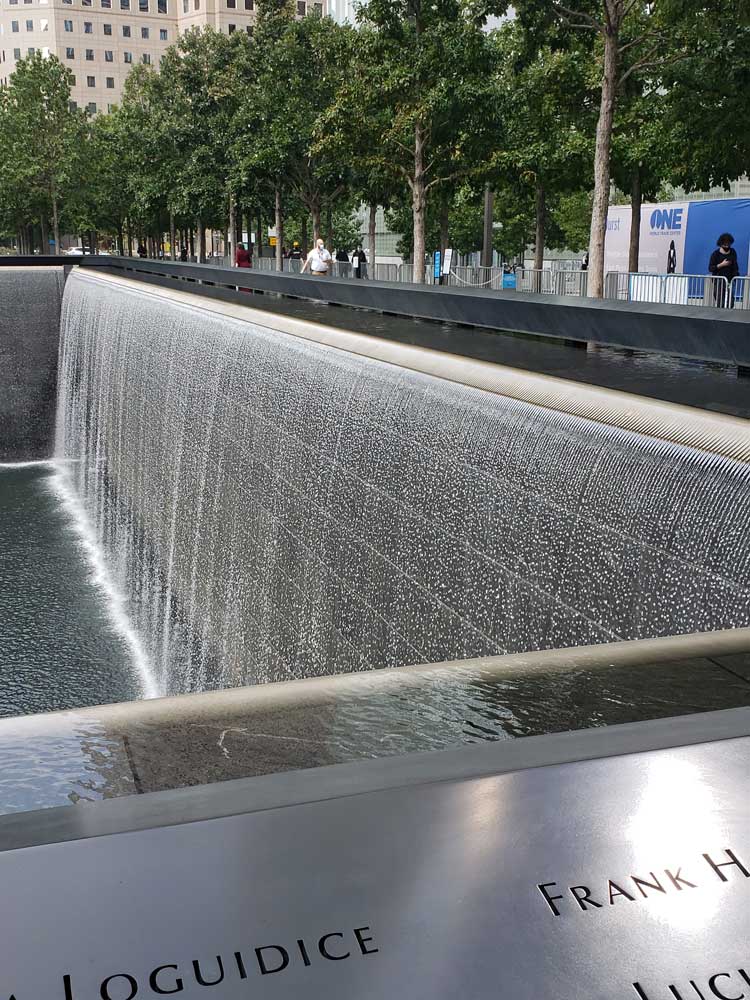
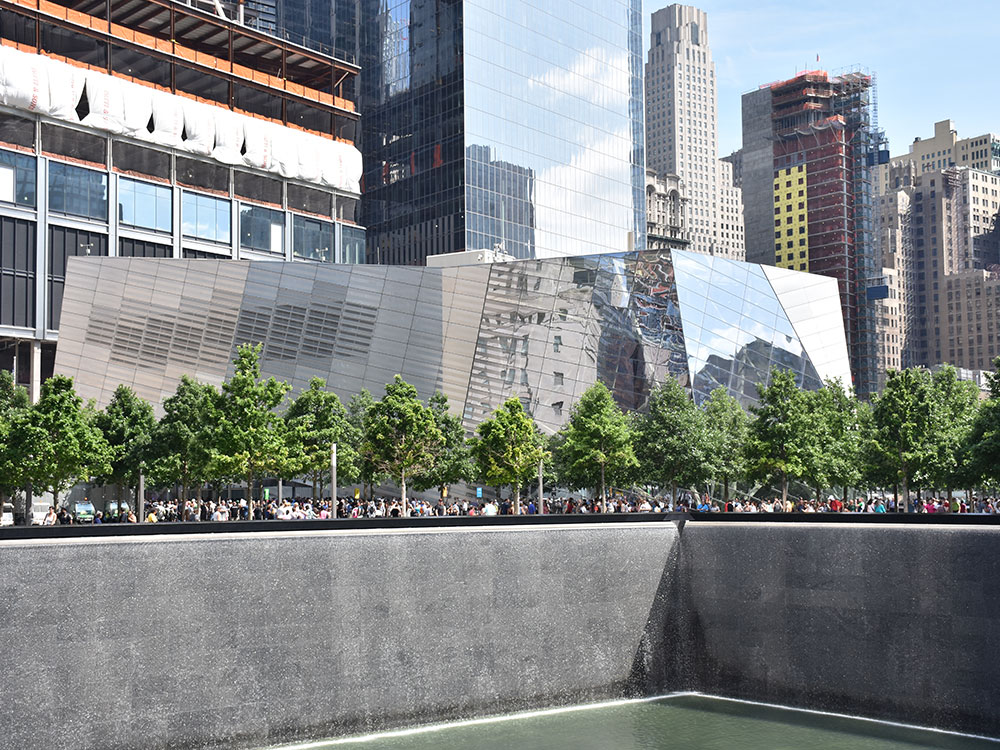
In January 2004, Reflecting Absence, by architect Michael Arad and landscape architect Peter Walker, was selected from 5,201 entries from 63 countries as the winner of the LMDC's design competition. Two 1-acre (4,000 m2) pools with the largest man-made waterfalls in the United States comprise the footprints of the Twin Towers, symbolizing the loss of life and the physical void left by the attacks. The waterfalls are intended to mute the sounds of the city, making the site a contemplative sanctuary. Landscape architect Peter Walker planted many parts of the memorial with white oaks. More than 400 swamp white oak trees fill the Memorial plaza, enhancing the site's reflective nature.

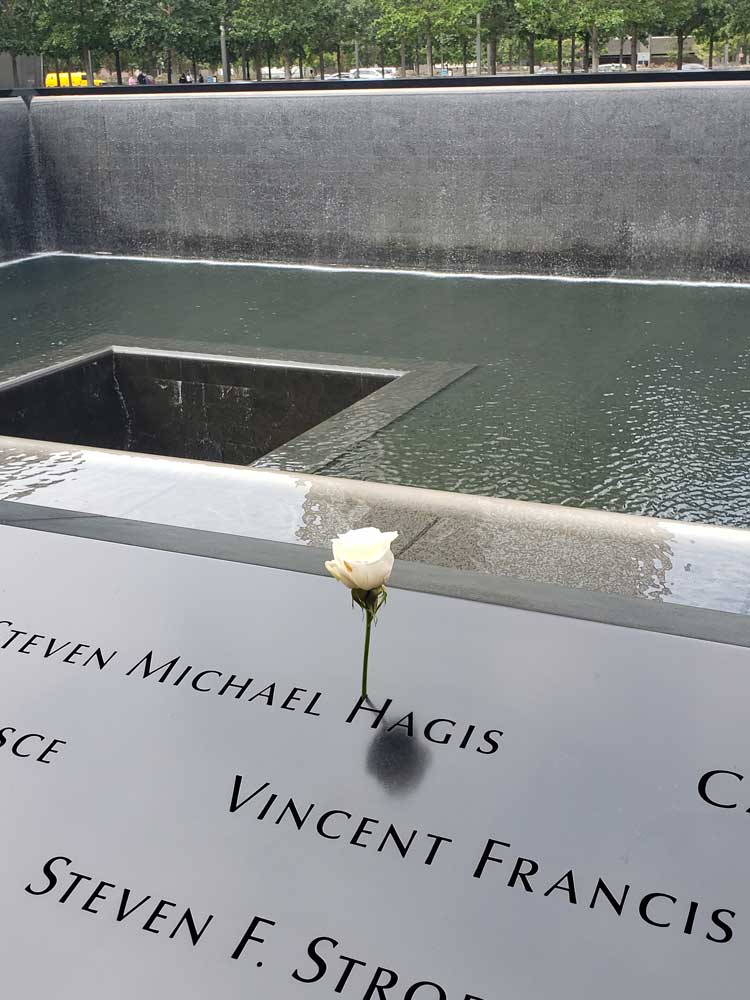
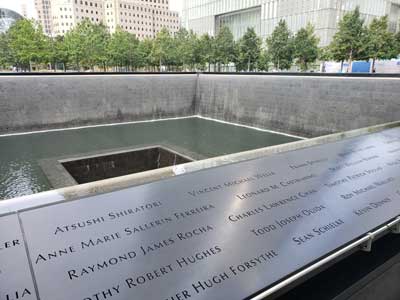
The names of 2,983 victims are inscribed on 152 bronze parapets on the memorial pools: 2,977 killed in the September 11 attacks and six killed in the 1993 World Trade Center bombing. The names are arranged according to an algorithm, creating "meaningful adjacencies" based on relationships—proximity at the time of the attacks, company or organization affiliations (for those working at the World Trade Center or the Pentagon) and in response to about 1,200 requests from family members. Software by Local Projects implemented the arrangement. All names are stylized with Optima typeface for a "balanced appearance"

The September 11 Museum was dedicated on May 15, 2014, and opened to the public on May 21. Its collection includes more than 40,000 images, 14,000 artifacts, more than 3,500 oral recordings, and over 500 hours of video.

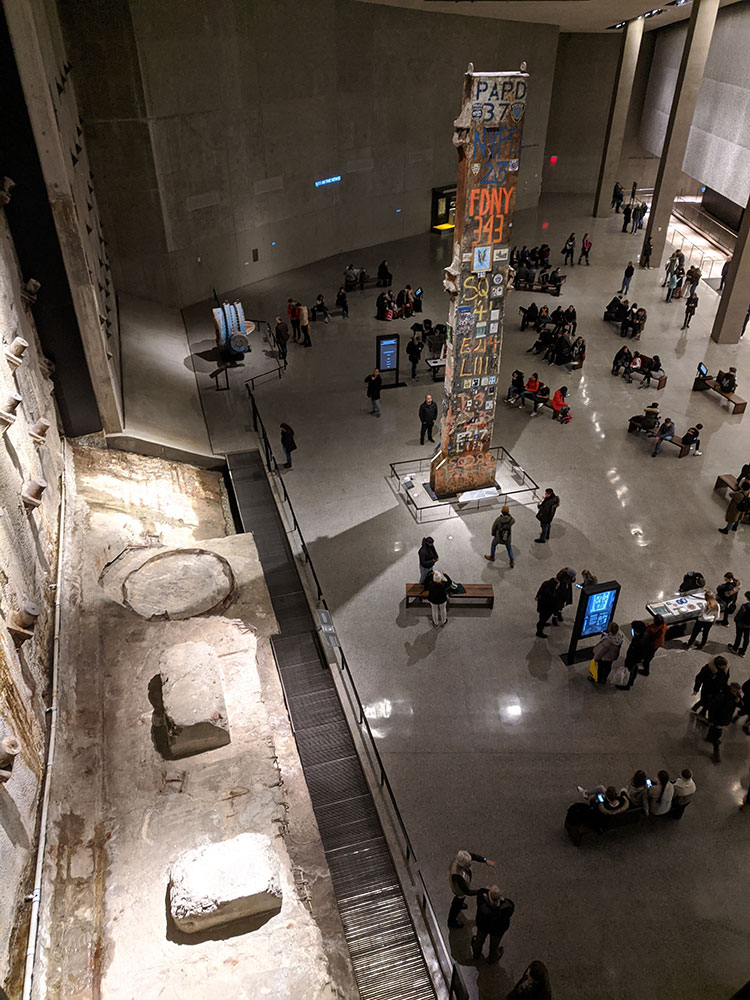
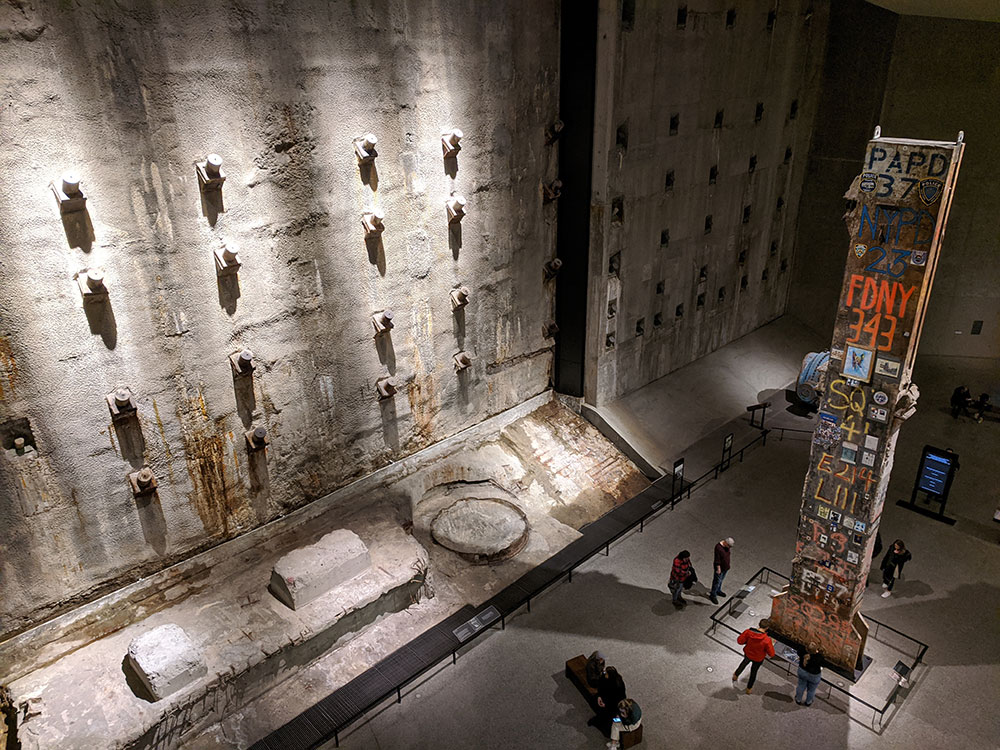
The underground museum has artifacts from September 11, 2001, including steel from the Twin Towers (such as the Last Column, the last piece of steel to leave Ground Zero in May 2002).

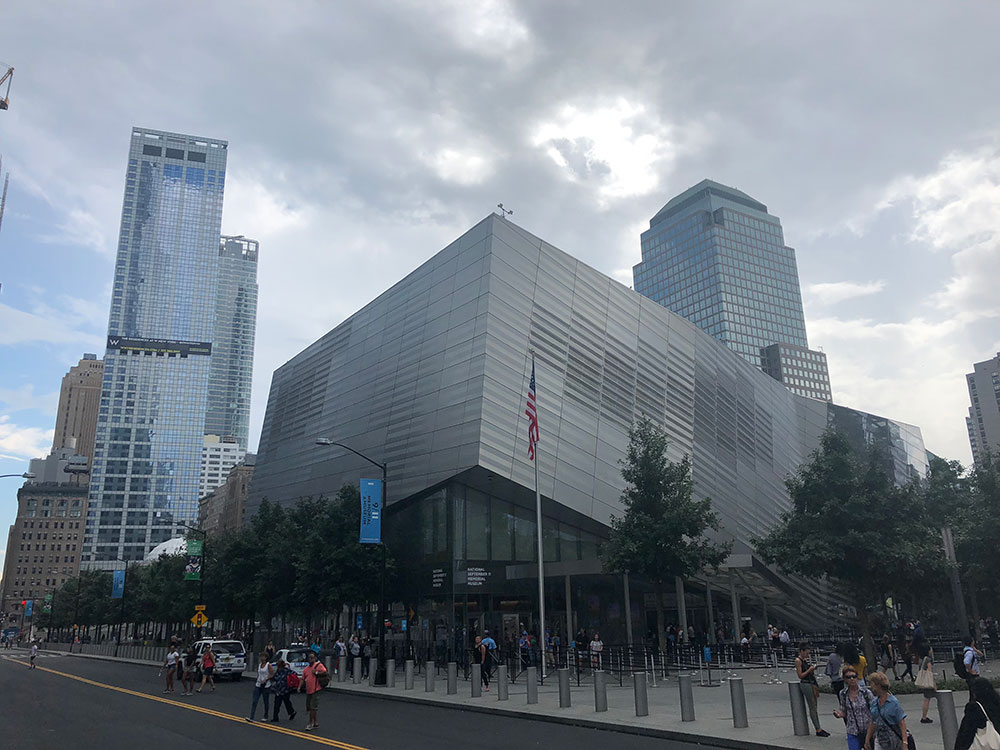
Designed by Davis Brody Bond, the museum is about 70 feet (21 m) below ground and accessible through a pavilion designed by Snøhetta. The National September 11 Memorial Museum encloses 110,000 square feet (10,000 m2) of publicly accessible space. The pavilion has a deconstructivist design, resembling a partially collapsed building (mirroring the attacks), and houses two "tridents" from the Twin Towers. One of the museum's walls is an exposed side of the slurry wall retaining the Hudson River, which remained intact through the September 11 attacks. About half of what Daniel Libeskind originally wanted to preserve of the wall is visible in the museum.

Other Ground Zero artifacts include wrecked emergency vehicles (including a fire engine deformed from the collapse), pieces of metal from all seven World Trade Center buildings, recordings of survivors and first responders (including 911 phone calls), pictures of all victims, photographs from the wreckage and other media detailing the destruction (including the crashes, collapse, fires, those who jumped and the cleanup). The museum is designed to evoke memories without additional distress, particularly to first responders and the families of victims.

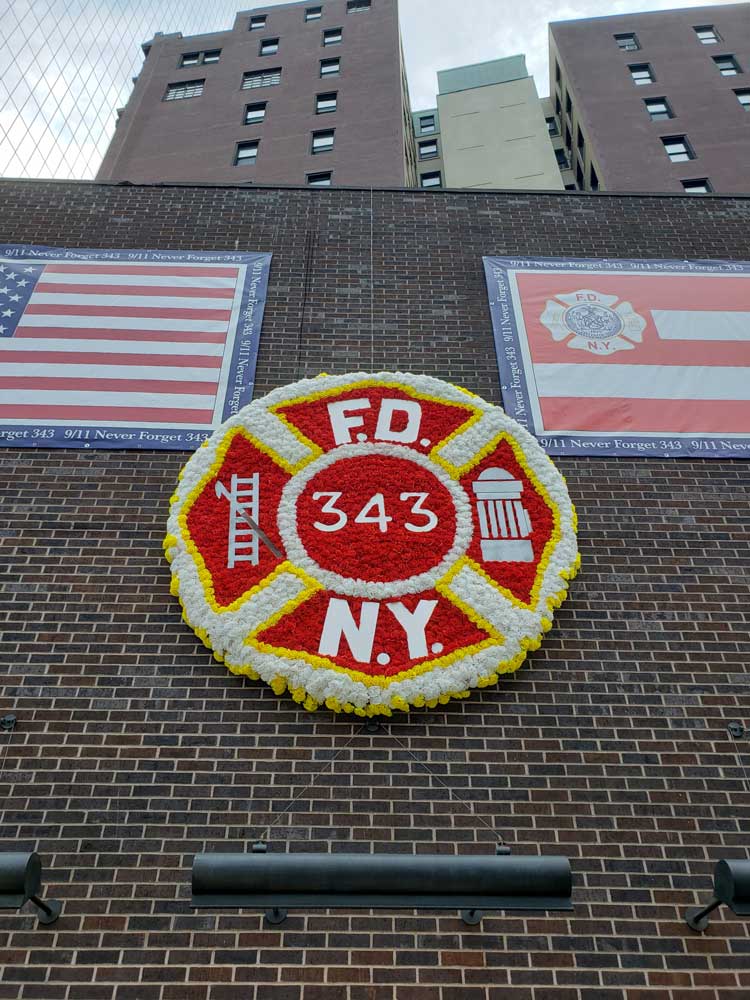
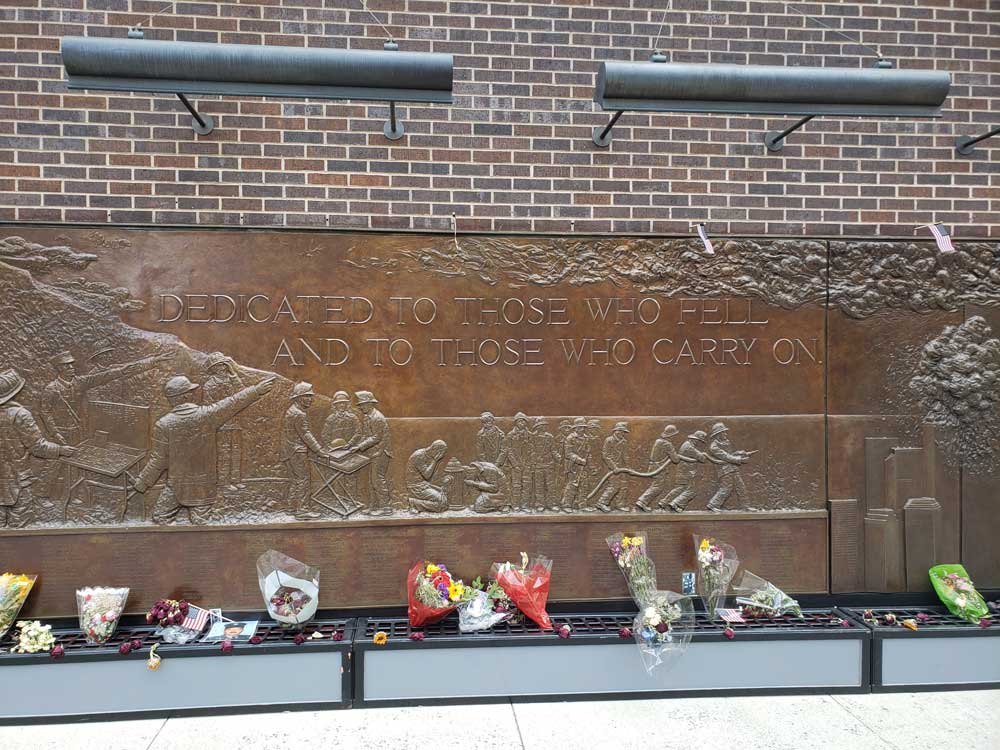
The FDNY memorial wall, a 56-foot-long bronze wall of cast bas-relief bronze that honors the 343 firefighters who gave their lives in service to the public during the attacks. Commissioned by FDNY and unveiled in 2006 as a memorial to the fallen firefighters, it lists all of the fallen firefighters names, and is installed in the west wall of Engine Company 10 - Ladder Company 10 on Greenwich Street between Albany Street and Liberty Street, just across from Ground Zero.

This article uses material from the Wikipedia articles "National September 11 Memorial & Museum", and "Memorials and services for the September 11 attacks" which are released under the Creative Commons Attribution-Share-Alike License 3.0
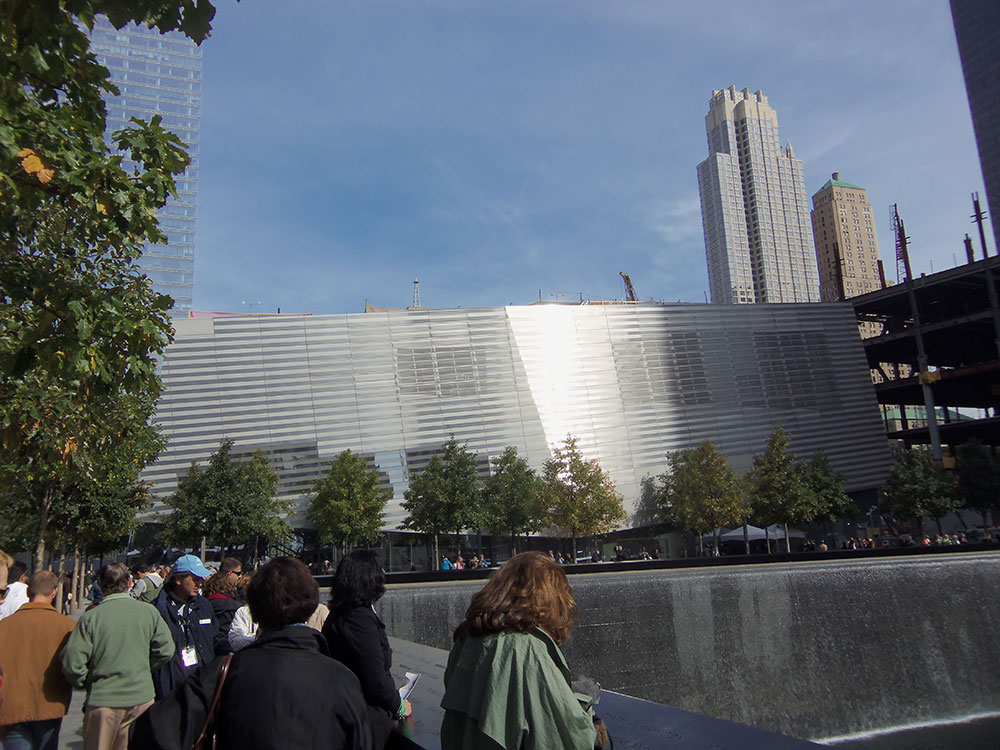
911 Memorial 1
Farragutful, CC BY-SA 3.0, via Wikimedia Commons; Image Size Adjusted
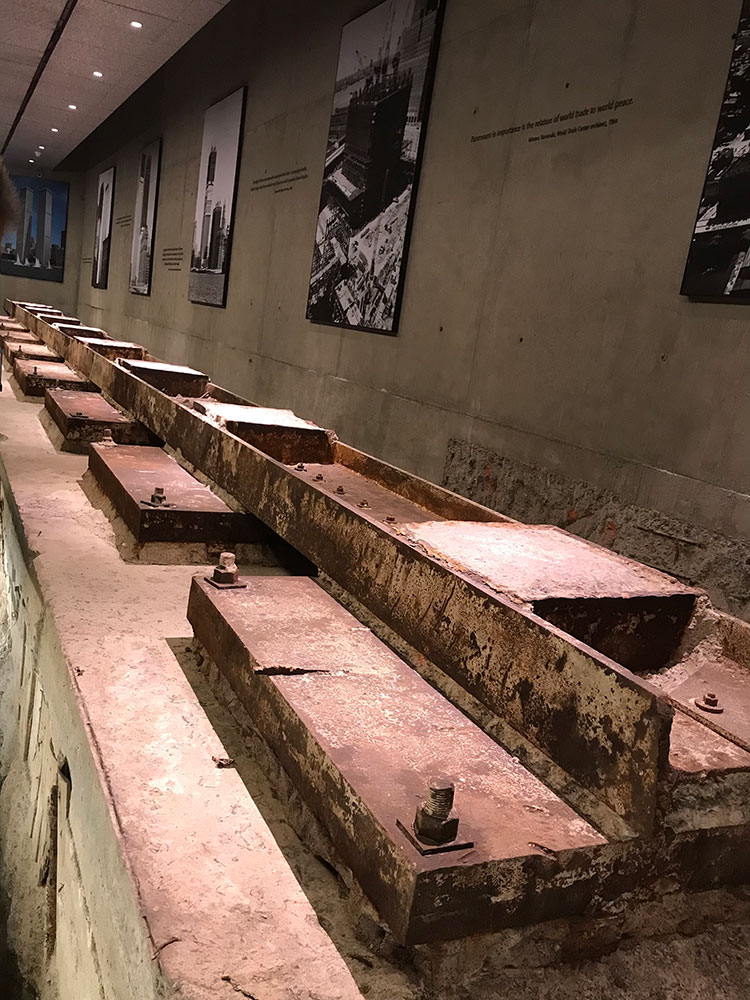
911 Memorial Rose

Bjoertvedt, CC BY-SA 4.0, via Wikimedia Commons; Image Size Adjusted
911 Memorial Waterfall

סיפן נוה, CC BY-SA 4.0, via Wikimedia Commons; Image Size Adjusted
911 Memorial Museum

911 Memorial Firefighters Decoration

911 Memorial Firefighters Memorial

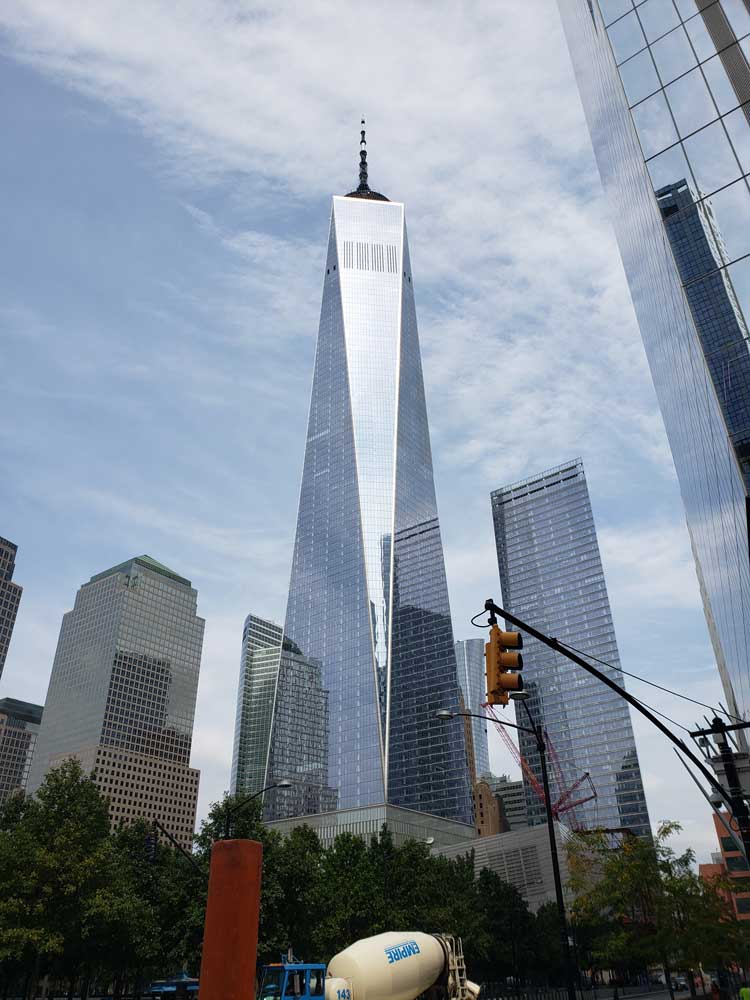
911 Memorial One World Trade Center

911 Memorial One World Trade Center

911 Memorial One World Trade Center

911 Memorial One World Trade Center

911 Memorial One World Trade Center

DanielPenfield, CC BY-SA 4.0, via Wikimedia Commons; Image Size Adjusted
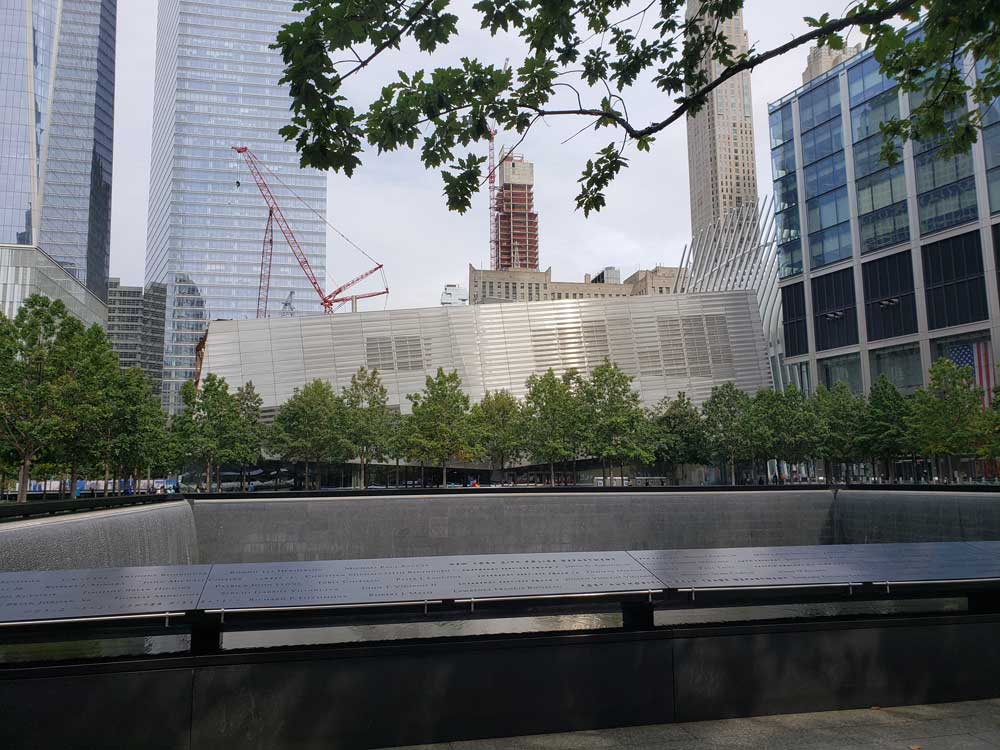
911 Memorial One World Trade Center

DanielPenfield, CC BY-SA 4.0, via Wikimedia Commons; Image Size Adjusted
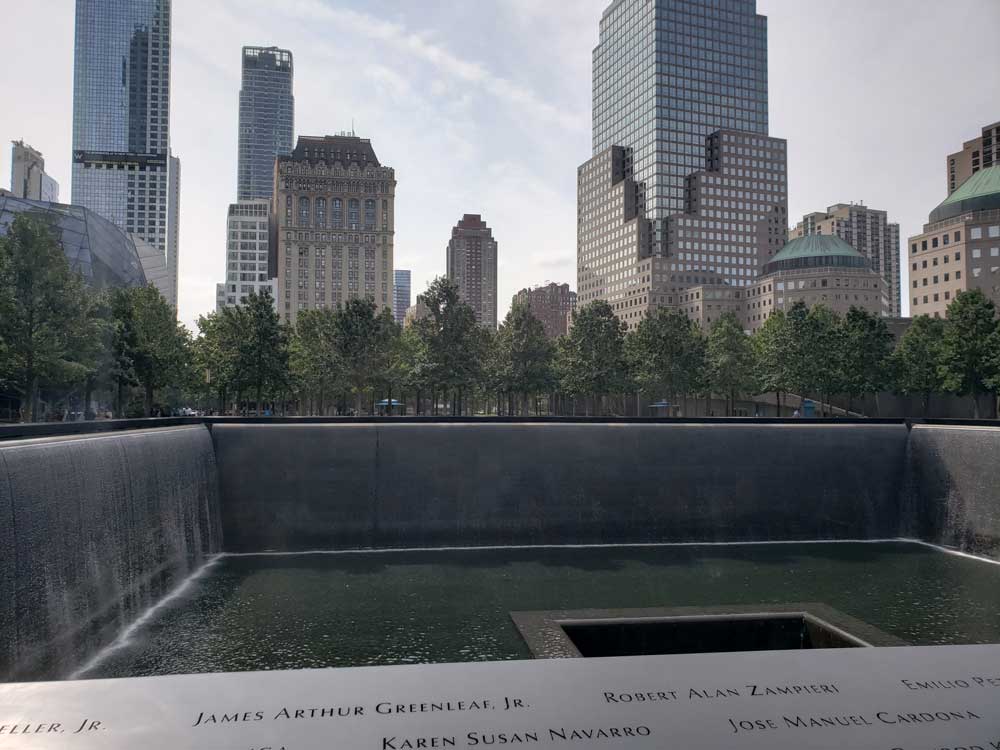
911 Memorial One World Trade Center

MusikAnimal, CC BY-SA 4.0, via Wikimedia Commons; Image Size Adjusted