The Battery

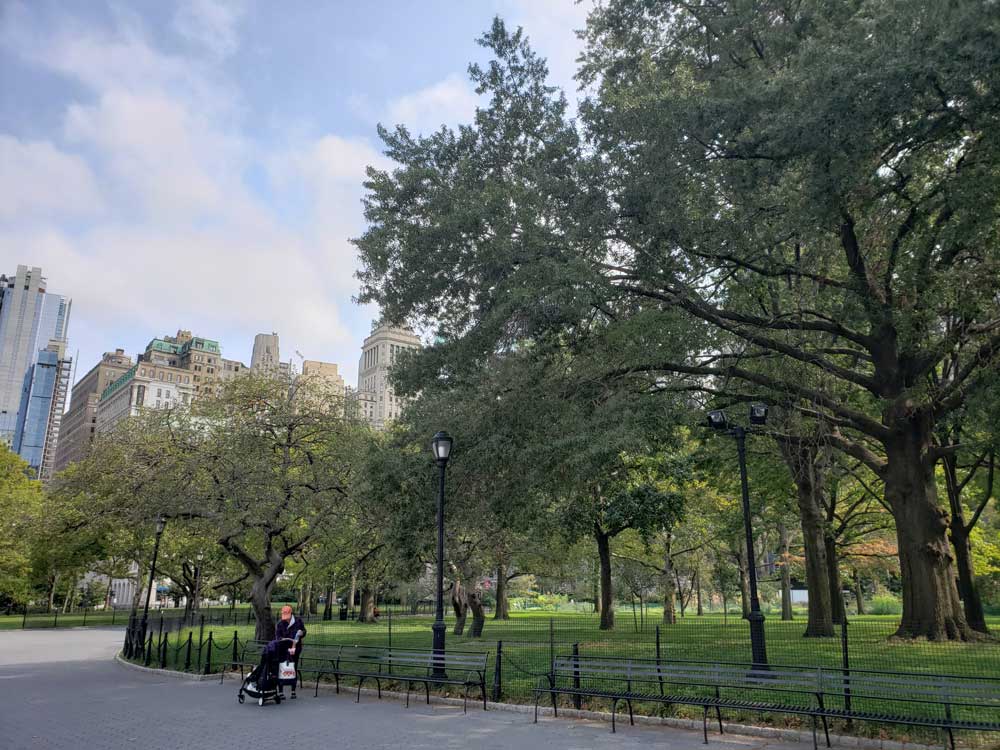
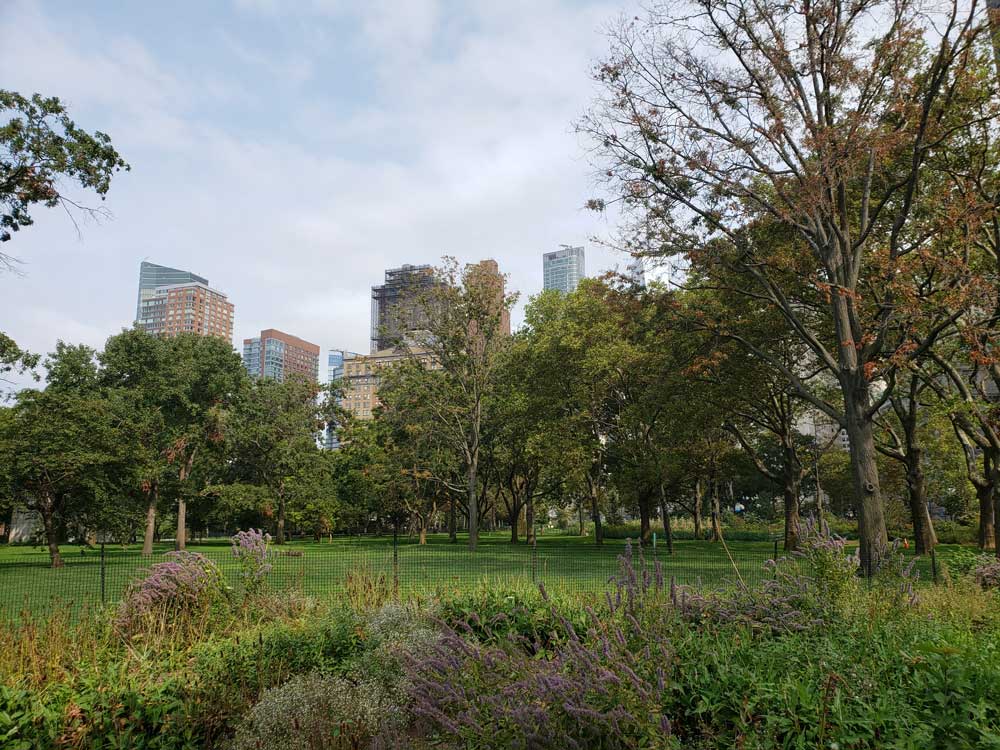
25-acre public park located at the southern tip of Manhattan Island facing New York Harbor containing multiple monuments

General Information

Hours:
6am to 12am daily
Fees:
No fees
Pet Policy:
Pets allowed
Seasons:
All year
Rating:
5.0
New York City, NY Weather Forecast

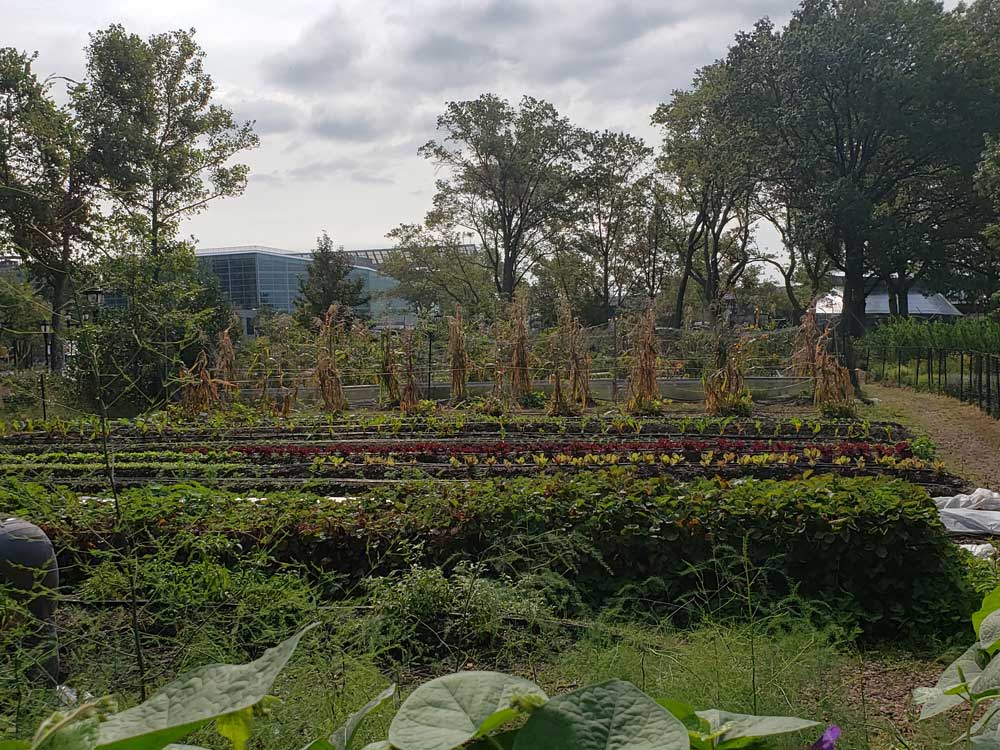
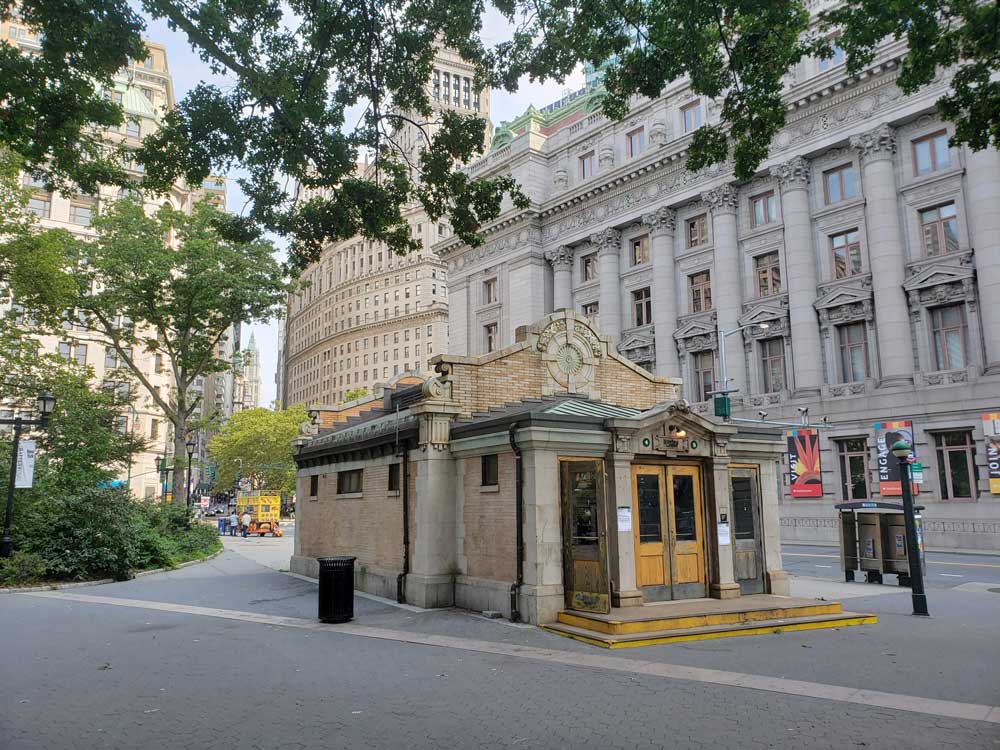
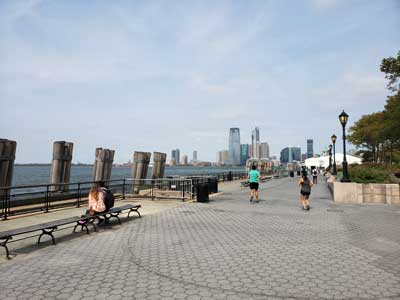
The Battery, formerly known as Battery Park, is a 25-acre public park located at the southern tip of Manhattan Island in New York City facing New York Harbor. The park contains attractions such as an old fort named Castle Clinton; multiple monuments; and the SeaGlass Carousel. The surrounding area, known as South Ferry, contains multiple ferry terminals, including the Staten Island Ferry's Whitehall Terminal; a boat launch to the Statue of Liberty National Monument (which includes Ellis Island and Liberty Island); and a boat launch to Governors Island.

In 1940, the entirety of Battery Park was closed for twelve years due to the construction of the Brooklyn-Battery Tunnel and the Battery Park Underpass. The park reopened in 1952 after a renovation, but then subsequently went into decline. The Battery Conservancy, founded in 1994 by Warrie Price, underwrote and funded the restoration and improvement of the once-dilapidated park. In 2015, the Conservancy renamed the park to its historic name of "the Battery".

The Battery contains multiple attractions and points of interest. Castle Clinton, a former fort, lies near the northwestern corner of the Battery and serves as the park's main attraction. To its north is the former fireboat station, Pier A, which since 2014 has been used as a restaurant. Another eatery, the Battery Gardens restaurant, is located next to the United States Coast Guard Battery Building.

Located nearby is a 4-acre garden called the Battery Bosque, which was designed by Dutch landscape architect Piet Oudolf and is centered around a grove of 140 plane trees. An additional grove of 15 trees was dedicated at the park in 1976 as a gift from the city of Jerusalem. This area, located northwest of Castle Clinton, is called Jerusalem Grove. The northeastern corner hosts a lawn called the Battery Oval. The 90,000-square-foot lawn opened in 2016 as part of a major restoration of the park, and contains turf made of Kentucky bluegrass. Along the waterfront, Statue Cruises offers ferries to the Statue of Liberty and Ellis Island.

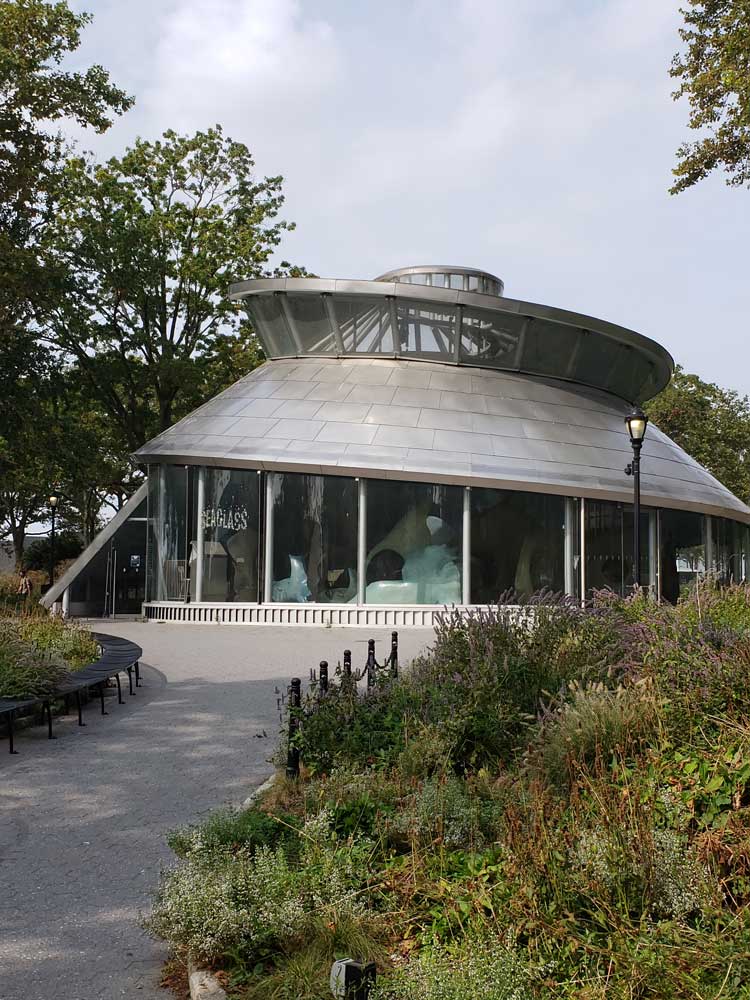
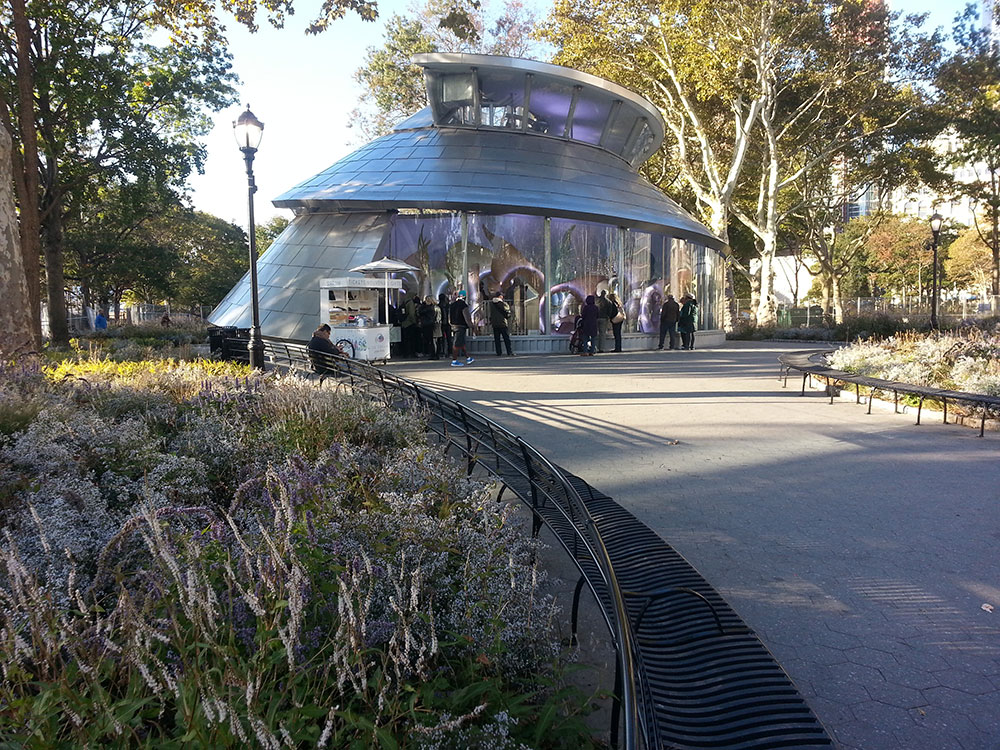
The southwestern corner of the Battery contains the SeaGlass Carousel, an attraction with bioluminescent design that pays homage not only to the carousel's waterfront site, but also to Castle Clinton's former status as an aquarium. The southeastern corner contains Peter Minuit Plaza, an intermodal passenger transport hub. The plaza hosts a bus terminal for the M5, M15 SBS and M20 buses, an entrance to the Staten Island Ferry's Whitehall Terminal, entrances to the New York City Subway's South Ferry/Whitehall Street station, and taxi stands. The plaza also includes the New Amsterdam Plein and Pavilion, a pavilion gifted by the Kingdom of the Netherlands, which displays art, design, and horticulture. The park is also the site of numerous memorials and monuments placed there over the years.

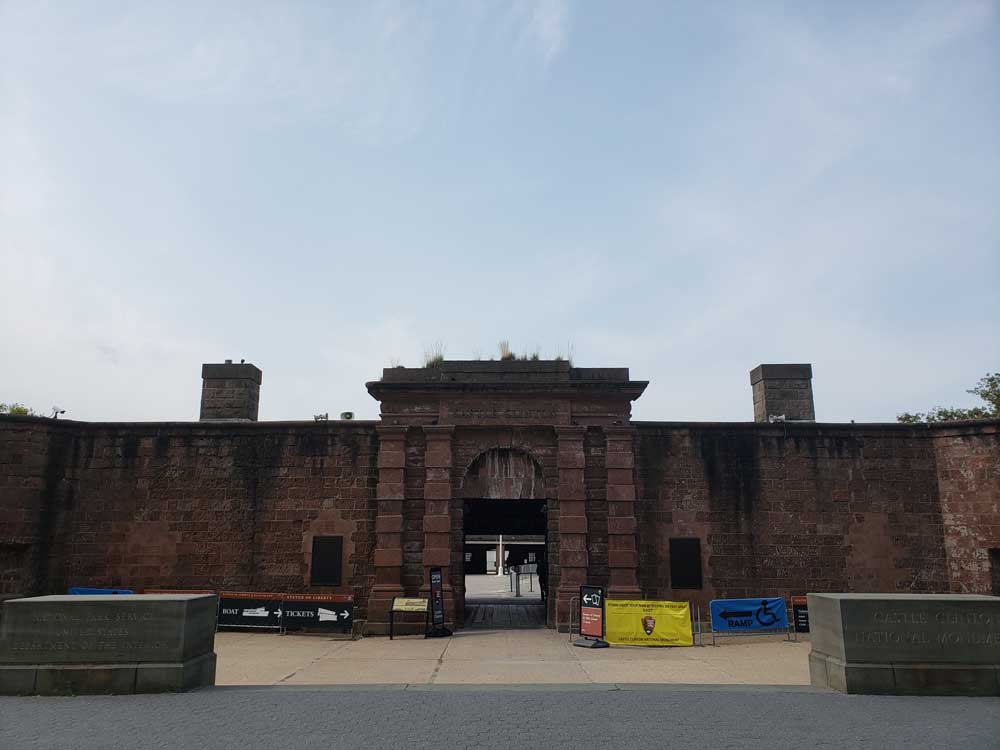
Castle Clinton was originally called the West Battery, it was built as a fort just prior to the War of 1812. It was renamed Castle Clinton in 1815 after the war, in honor of mayor DeWitt Clinton, and became property of the city in 1823. When leased by the city, it became a popular promenade and beer garden called Castle Garden. Later roofed over, it became one of the premier theatrical venues in the United States and contributed greatly to the development of New York City as the theater capital of the nation.

The migration of the city's elite uptown increased during the mid-19th century, and in 1855, Castle Garden was closed and made into the world's first immigration depot. The immigration center operated until 1890, just before the offshore immigration facility at Ellis Island opened. An estimated 7.7 million immigrants passed through the center during its operation. The structure then housed the New York Aquarium from 1896 to 1941, when it was closed as part of Triborough Bridge Authority commissioner Robert Moses's plans to build the Brooklyn-Battery Tunnel. Ultimately, Castle Clinton was preserved as part of a National Monument in 1946.

Today, Castle Clinton retains its original name and is managed by the National Park Service. It contains a small history exhibit and ticket booths for the ferries to the Statue of Liberty and Ellis Island; in addition, it occasionally hosts concerts. As the site of the ferry ticket office, it recorded nearly 4.08 million visitors in 2009. According to data from the National Park Service, the Statue of Liberty National Monument, which includes Castle Clinton, was the most popular national monument in the United States that year.

Battery Park contains over 20 monuments, many of which are clustered in an area called "Monument Walk". Within the park is Hope Garden, a memorial dedicated to AIDS victims. The garden has also been used as a site for environmental demonstrations due to its fragility and the Battery's status as a tourist attraction.

The Netherlands flagpole was dedicated on December 6, 1926, as a gift from the Dutch in honor of the establishment of New Amsterdam three centuries prior. It was originally located south of Castle Clinton, but during the 1940-1952 renovation, the flagpole was relocated to the northeast entrance of the Battery, where it still stands. It was renovated and rededicated in 2000.

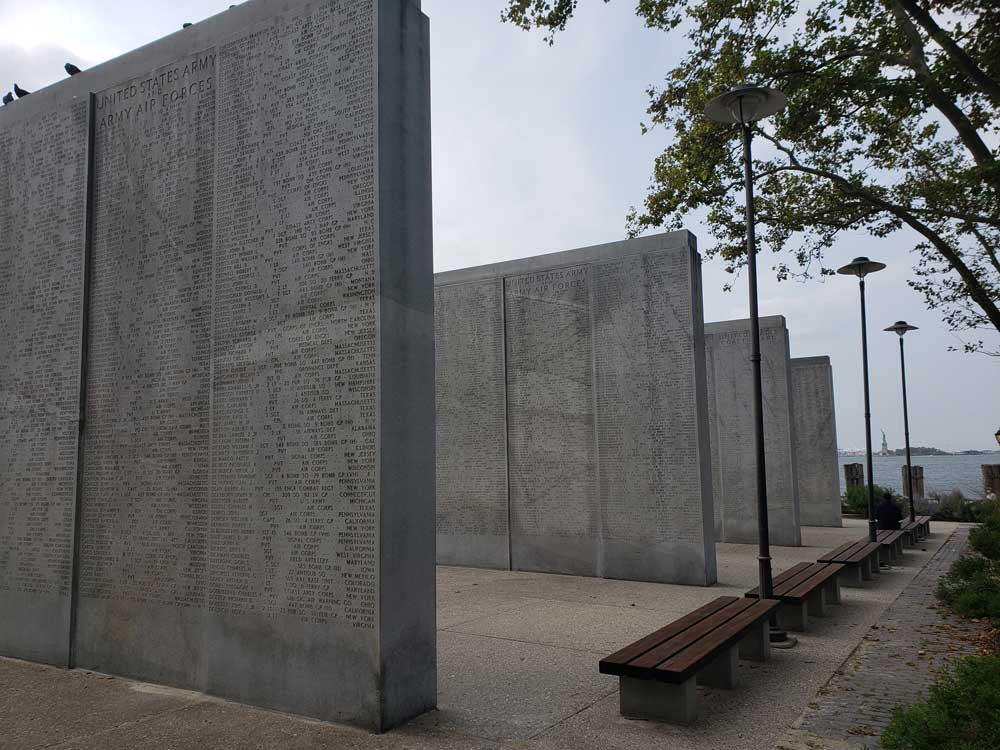
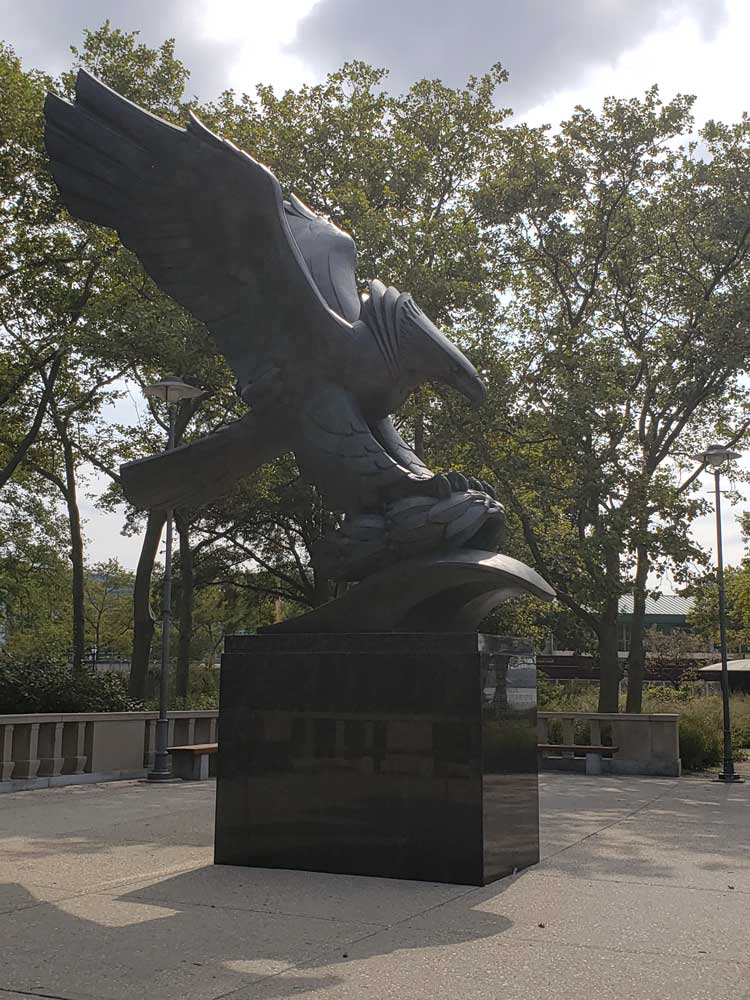
A World War II war memorial, the East Coast Memorial is one of three war memorials in the United States administered by the American Battle Monuments Commission. The memorial commemorates U.S. servicemen who died in coastal waters of the western Atlantic Ocean during the Battle of the Atlantic. A total of 4,609 names are inscribed on both sides of eight 19-foot-tall granite pylons. The pylons are arranged in two rows of four each. Between the two rows stands a bronze statue of an eagle, erected on a black granite pedestal. The eagle faces the Statue of Liberty in New York Harbor.

The American Merchant Mariners' Memorial sculpture, located in the Hudson River west of the park, is sited on a stone breakwater just south of Pier A and connected to the pier by a dock. It was designed by the sculptor Marisol Escobar and dedicated in 1991. The bronze sculpture depicts four merchant seamen with their sinking vessel after it had been attacked by a U-boat during World War II. One of the seamen is in the water, and is covered by the sea with each high tide. The sculpture is loosely based on a real photograph of crewmen of the SS Muskogee that was taken by the commander of an attacking submarine, all of whom died at sea The memorial was commissioned by the American Merchant Mariners' Memorial, Inc.

The park also contains several other memorials, including:
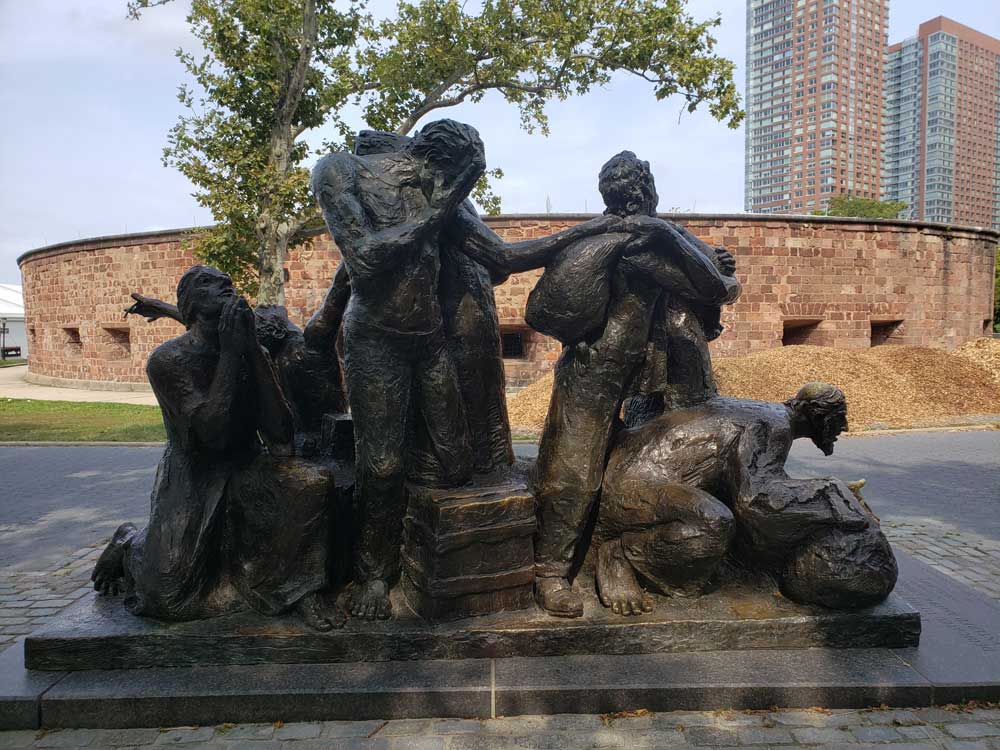
The Immigrants (1983, rededicated 2005) - Located south of Castle Clinton, this statue by Luis Sanguino depicts multiple types of immigrants that would have passed through Castle Clinton in the late 19th century.
Korean War Memorial (1991) - Located at Battery Place just northeast of Castle Clinton and designed by Mac Adams, it is a black granite obelisk dedicated to veterans of the Korean War. It was intended as one of the United States' first Korean War memorials.
John Ericsson statue (1903) - Located near the center of the park, the statue was designed by Jonathan Scott Hartley. It commemorates Ericsson, a designer and innovator of ironclad warships, and depicts him holding a model of the USS Monitor.
Walloon Settlers Memorial (1924) - Located at Battery Place, the memorial was designed by Henry Bacon. The monument is a stele dedicated to Jessé de Forest for his contributions to the founding of New York City.
Giovanni da Verrazzano (1909) - Located at Battery Place, the memorial was designed by Ettore Ximenes. It is a statue of Verrazzano, the first European to sail into New York Harbor, on a pedestal.
World War II Coast Guard Memorial (1955) - Located at the extreme southeast end of Battery Park, this memorial was designed by Norman M. Thomas and depicts three figures on a pedestal.
Wireless Operators Memorial (1915, rededicated 1952) - Located near the center of the park, the monument consists of a cenotaph commemorating wireless telegraph operators who went down with their ships.

This article uses material from the Wikipedia article "The Battery (Manhattan)", which is released under the Creative Commons Attribution-Share-Alike License 3.0
Battery Clinton Memorial
Battery Eagle Statue
Battery Sculpture
Battery Memorial
Battery Carousel

Battery Garden and Carousel

Battery Park

Battery City Backdrop

Battery Garden

Battery Building

Battery City Backdrop

Allison Meier from Brooklyn, United States, CC BY-SA 2.0, via Wikimedia Commons
Battery Garden

Rhododendrites, CC BY-SA 4.0, via Wikimedia Commons; Image Size Adjusted