
Park covering the early colonial history of Delaware and the role Delaware played in the establishment of the nation, leading up to it being the first state to ratify the U.S. Constitution.
General Information
How to Get There
From Wilmington, DE (in city): The main Wilmington unit (Old Swedes Church) is at 606 Church St in downtown Wilmington; take I-95 to Exit 6 (Route 141/Newport) and follow signs into the city.
Overview
First State National Historical Park is a National Park Service unit which lies primarily in the state of Delaware but which extends partly into Pennsylvania in Chadds Ford. Initially created as First State National Monument by President Barack Obama under the Antiquities Act on March 25, 2013, the park was later redesignated as First State National Historical Park by Congress.
Description
The park covers the early colonial history of Delaware and the role Delaware played in the establishment of the nation, leading up to it being the first state to ratify the U.S. Constitution. It tells the unique story of the early settlement of the Delaware Valley by the Dutch, Swedes, Finns, and English and their relationship with Native Americans. It also seeks to preserve the cultural landscape of the Brandywine River Valley.
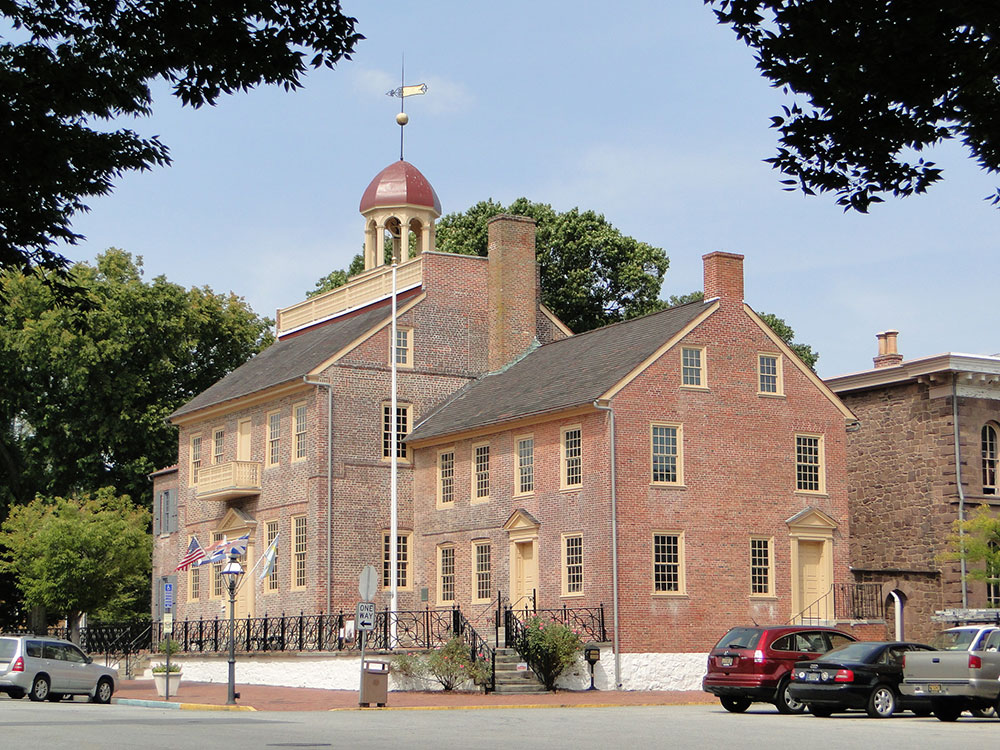
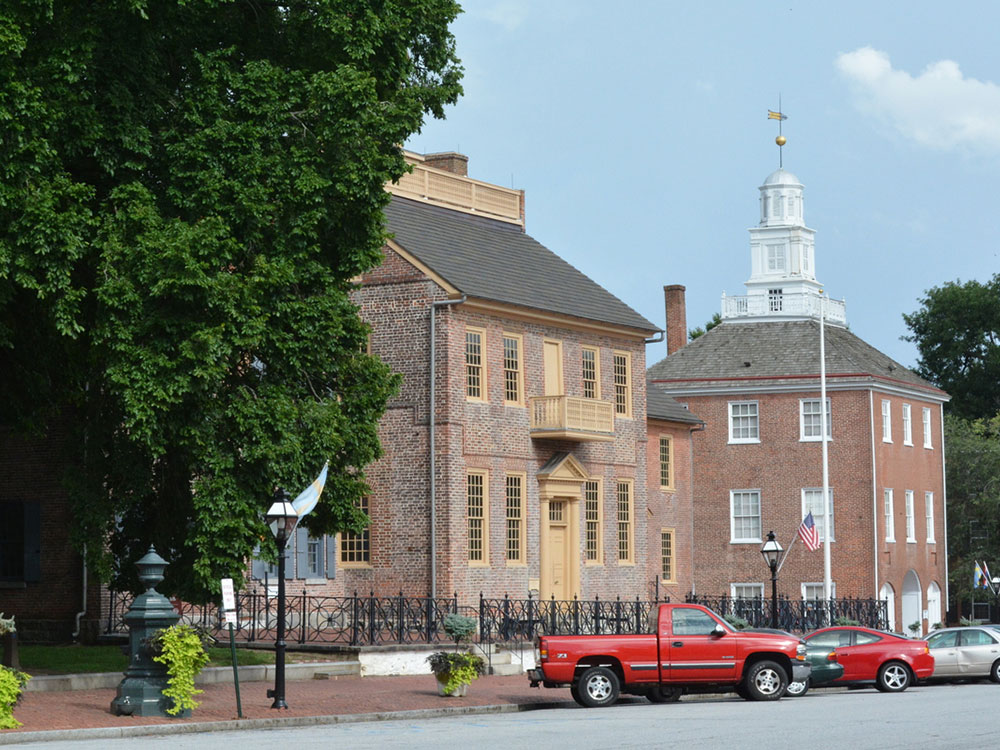
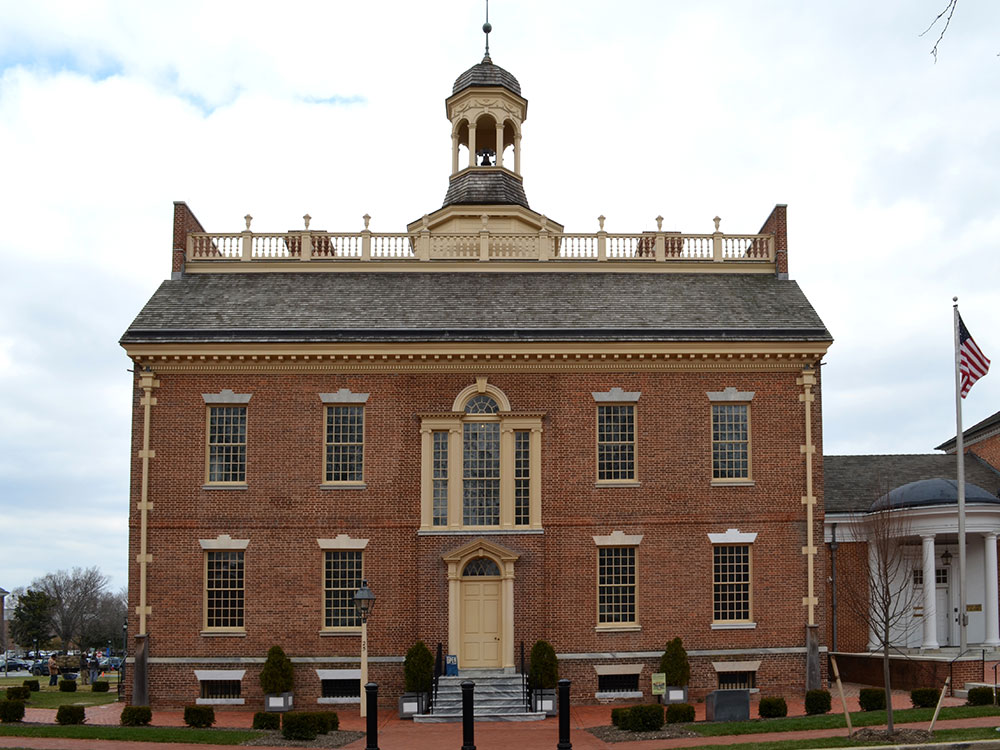
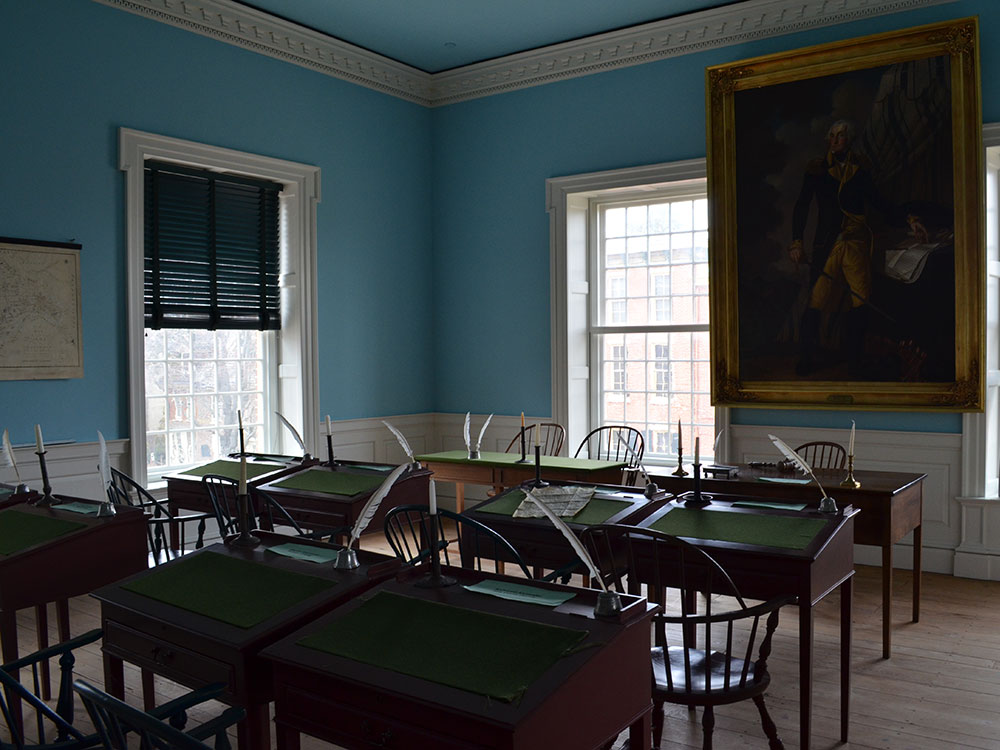
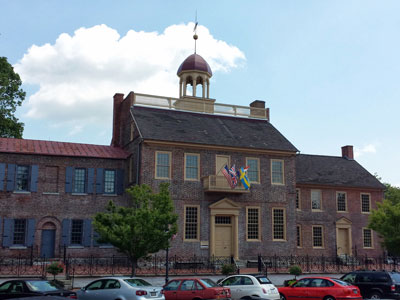
The New Castle Court House, which dates back to 1730, is one of the oldest courthouses in the country and played a role in a number of historic events that shaped the nation. The cupola of the Court House is the center of a 12 mile circle that forms the border between Delaware, Pennsylvania, and Maryland; the most famous attempt to survey these borders, incorporating the circle, was the Mason-Dixon line. The building was used as the meeting place for Delaware's colonial assembly, and was where the assembly voted in favor of independence from both Pennsylvania and England in 1776. The Declaration of Independence was read from the Court House's second floor balcony, and Delaware's first Constitution was drafted and adopted here. U.S. Supreme Court Justice Samuel Chase was impeached over his actions in the Court House during a trial in 1800. In 1848, U.S. Chief Justice Roger Taney presided over a series of trials in the Court House when prominent Quaker abolitionists and Underground Railroad conductors Thomas Garrett and John Hunn were accused of violating the Fugitive Slave Act. The Garrett trial was an inspiration to Harriet Beecher Stowe for certain scenes in Uncle Tom's Cabin.
The New Castle Green was first laid out as a town common in the 1650s by the Dutch colonists who founded New Castle. It is located a block away from the spot where William Penn first arrived in America in 1682, and is bounded by several historic structures, including the Court House, the 1809 federal Arsenal, and the 1703 Immanuel Episcopal Church on the Green where founder George Read is buried. The Sheriff's House, built in 1857, abuts the Court House and will eventually serve as First State National Historical Park's headquarters and Visitor's Center.
The Court House and the Green are owned by the state of Delaware, with the National Park Service owning a conservation easement on them. The Sheriff's House is owned by the National Park Service.
The Dover Green was first laid out as a public space in 1717 by William Penn's surveyors, and has been host to several historic events. The Declaration of Independence was read to the citizens of Dover from the Green in 1776, and it was the site of the mustering of a Continental Army regiment during the Revolution. When the proximity of the British navy threatened New Castle, the state changed its capital city to Dover in 1777, and a State House was built just off the Green in 1787. At a tavern which once stood on the Green, a convention ratified the Constitution on December 7, 1787, making Delaware the first state.
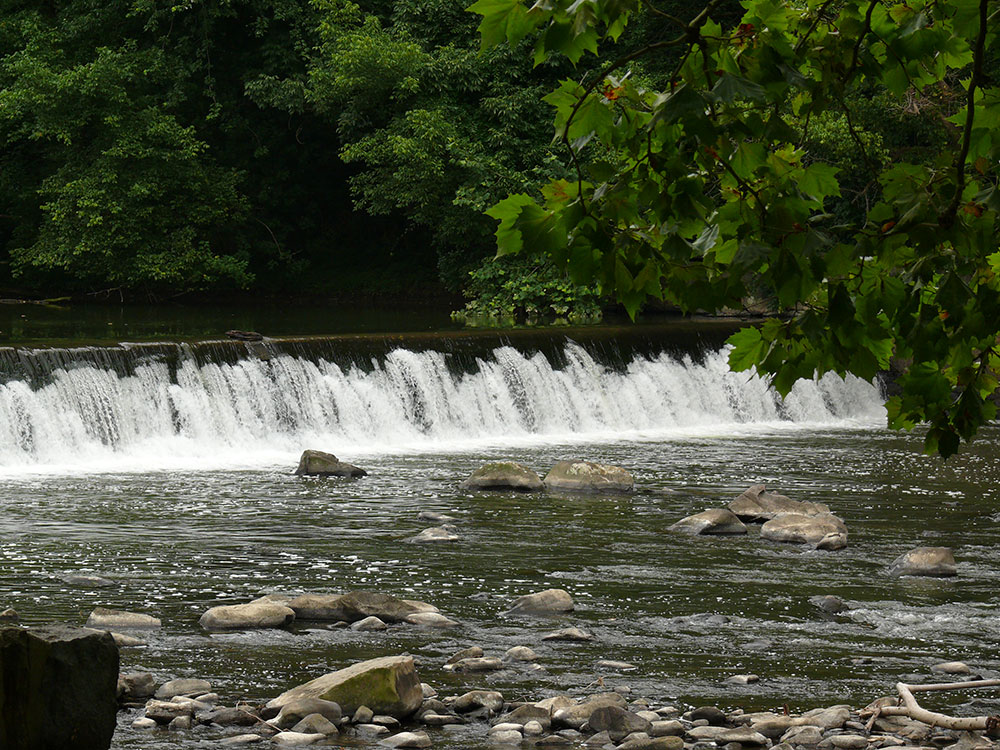
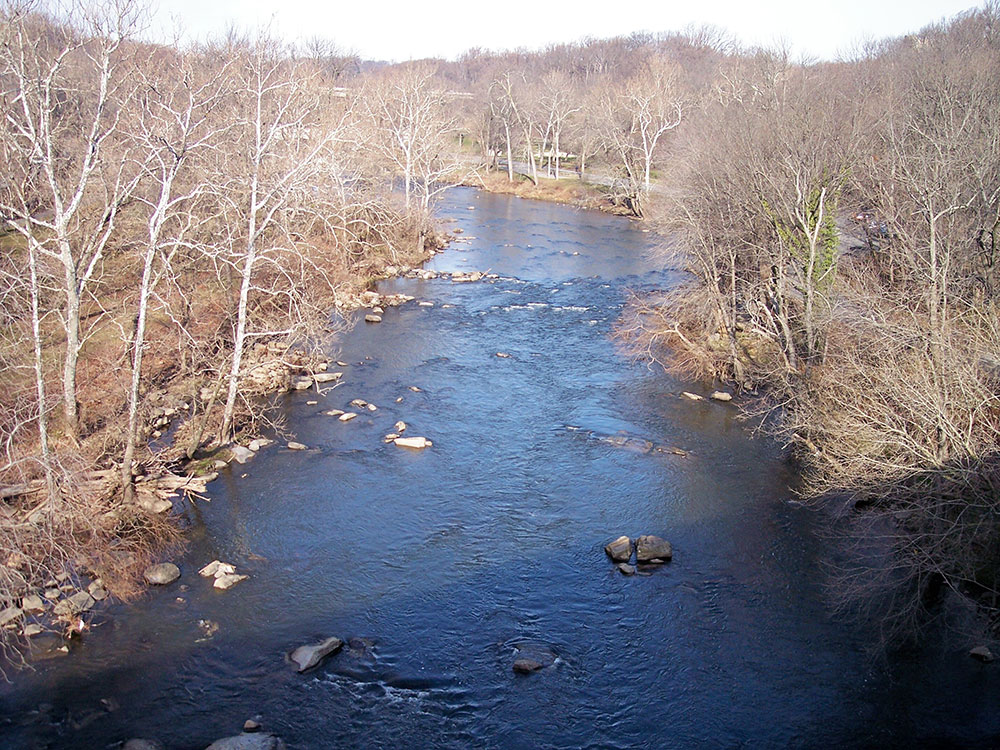
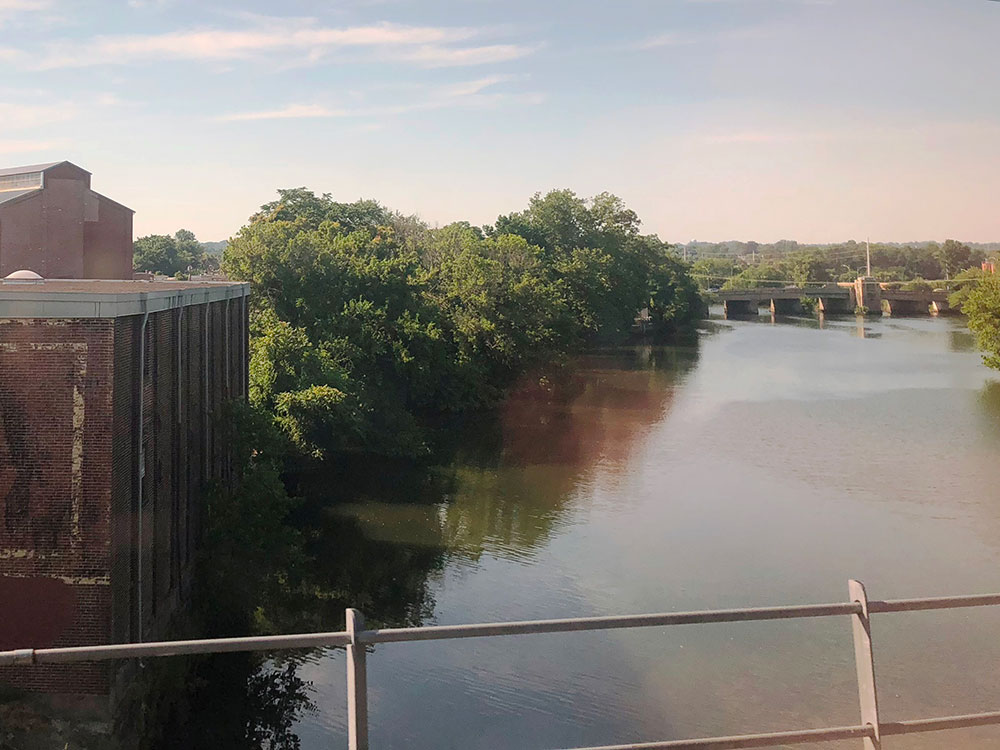
Brandywine Valley (formerly Beaver Valley) consists of land originally purchased in the early 1900s by Quaker industrialist and conservationist William Poole Bancroft, whose goal it was to preserve as much land as possible along the Brandywine River to ensure its scenic rural beauty remained for future generations as the cities of Wilmington and Philadelphia continued to expand. Much of the land has remained unchanged since it was set aside for preservation, and it includes forests and rolling farmsteads that were once primarily settled by the Quakers who followed Penn to America. The tract is adjacent to Delaware's Brandywine Creek State Park, and the Brandywine Valley National Scenic Byway runs through it.
Brandywine Valley is the largest component of First State National Historical Park, comprising 1,100 acres (220 of which extend into southeastern Pennsylvania). It is open for recreational activities such as hiking, horseback riding, biking, and kayaking.
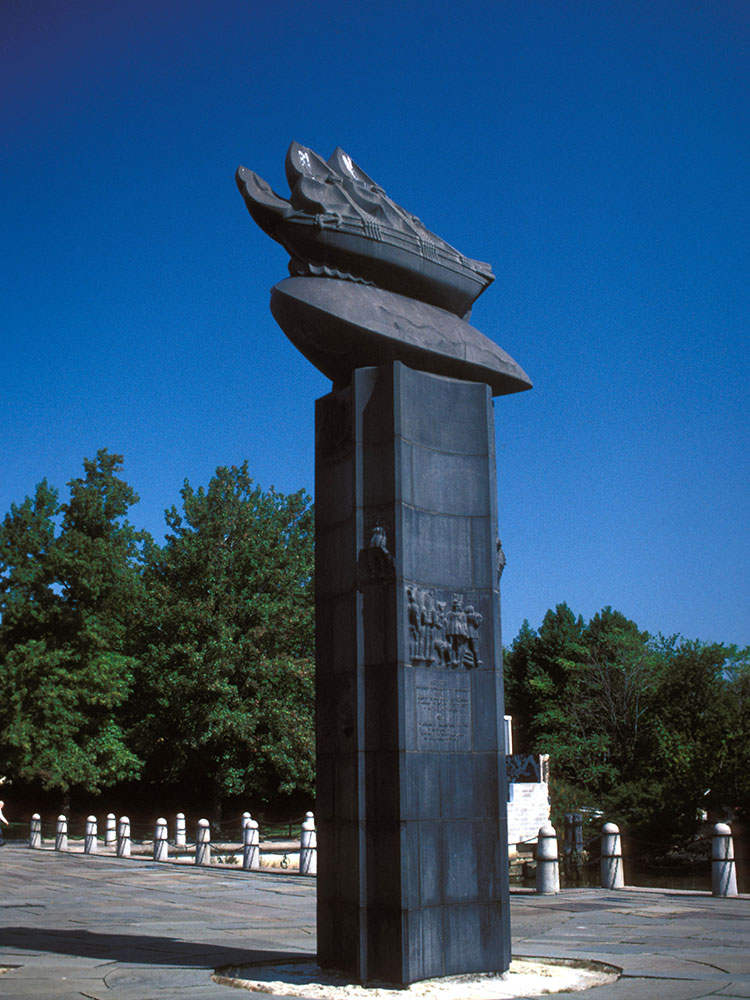
Located in Wilmington, Fort Christina is an enclosed park that preserves the original landing site, known as "The Rocks," of the colonists who established New Sweden in 1638, the first European settlement in the Delaware Valley. After negotiating with the local Leni Lenape to purchase the land, the settlers disembarked from their ships, the Fogel Grip and Kalmar Nyckel, and built a fort and town at this site. As the colony grew, more settlers arrived and spread out, establishing outposts in New Jersey, outside present-day Philadelphia, and along the Brandywine River.
The park is a National Historic Landmark and includes a monument by Swedish sculptor Carl Milles that was donated by Sweden for the colony's tricentennial anniversary. The park also includes a reconstructed Swedish log cabin, to recognize one of the more important contributions the colonists made to America.
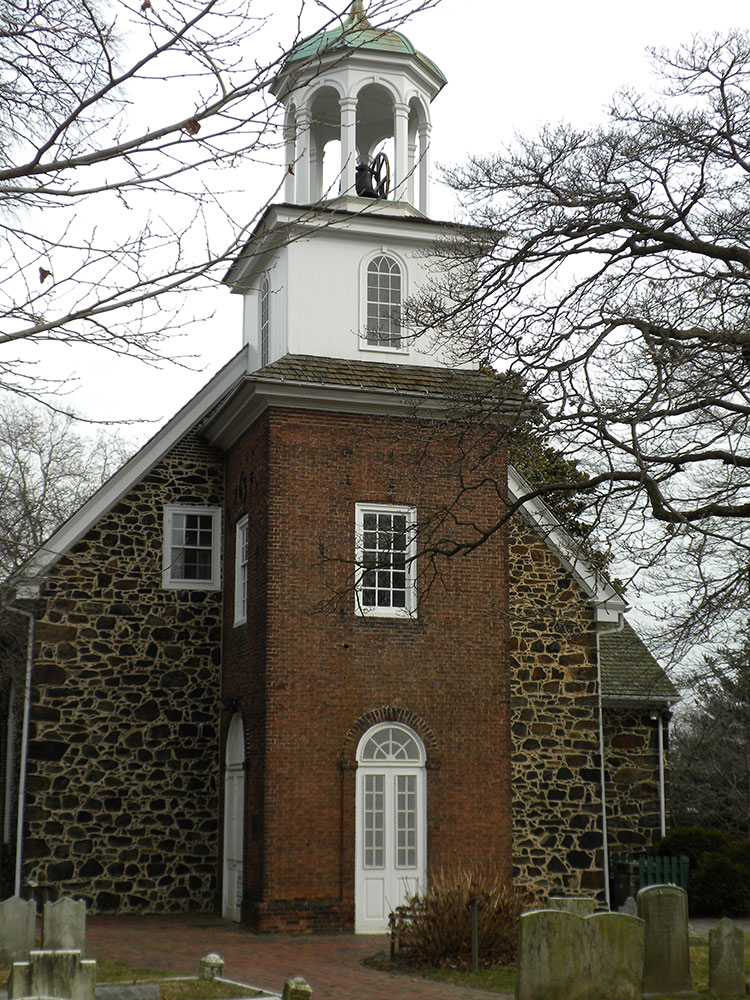
Old Swedes' Church is located in Wilmington about a block from Fort Christina, where the New Sweden colony was first established. Built in 1698, it is one of the oldest churches in the United States. It was built on the original burial site for Fort Christina and so its cemetery contains graves dating back to the 1630s. The pulpit was carved in 1698 and is believed to be the oldest in the United States by the NPS. The church itself is built from Swedish bricks that had originally been used as ballast by the ships which brought the colonists to America.
The churchyard includes the Hendrickson House, a Swedish home dating back to 1690 and believed to be one of the oldest Swedish homes remaining in existence in the country. The house serves as a museum dedicated to interpreting early Swedish colonial life.
Old Swedes' Church is a National Historic Landmark, and is not to be confused with another church known as Old Swedes', located in Philadelphia.
This plantation house, built in 1740 outside of Dover, was the boyhood home and country estate of John Dickinson, known as "the Penman of the Revolution" and considered one of the foremost founding fathers of the country. His Letters from a Farmer in Pennsylvania and "The Liberty Song" (which included the first use of the phrase "united we stand, divided we fall"), were early articulations of the rights of the British citizens in America. As a delegate to the Continental Congress, Dickinson authored the Olive Branch Petition and the Declaration of the Causes and Necessity of Taking Up Arms. Later he was also the primary author of the Articles of Confederation, and was one of the drafters of the U.S. Constitution.
The plantation is a National Historic Landmark.
This article uses material from the Wikipedia article "First State National Historical Park", which is released under the Creative Commons Attribution-Share-Alike License 3.0