
Monumental memorial and visitor center commemorating a pivotal Revolutionary War victory through exhibits, films, and landscaped grounds.
General Information
Closed on Thanksgiving, Christmas, and New Year’s Day
How to Get There
From Indianapolis (120 mi): Take I-70 W to US-41 S, continue south through Terre Haute, then follow signs to Vincennes and turn onto S 2nd Street to reach the park.
Overview
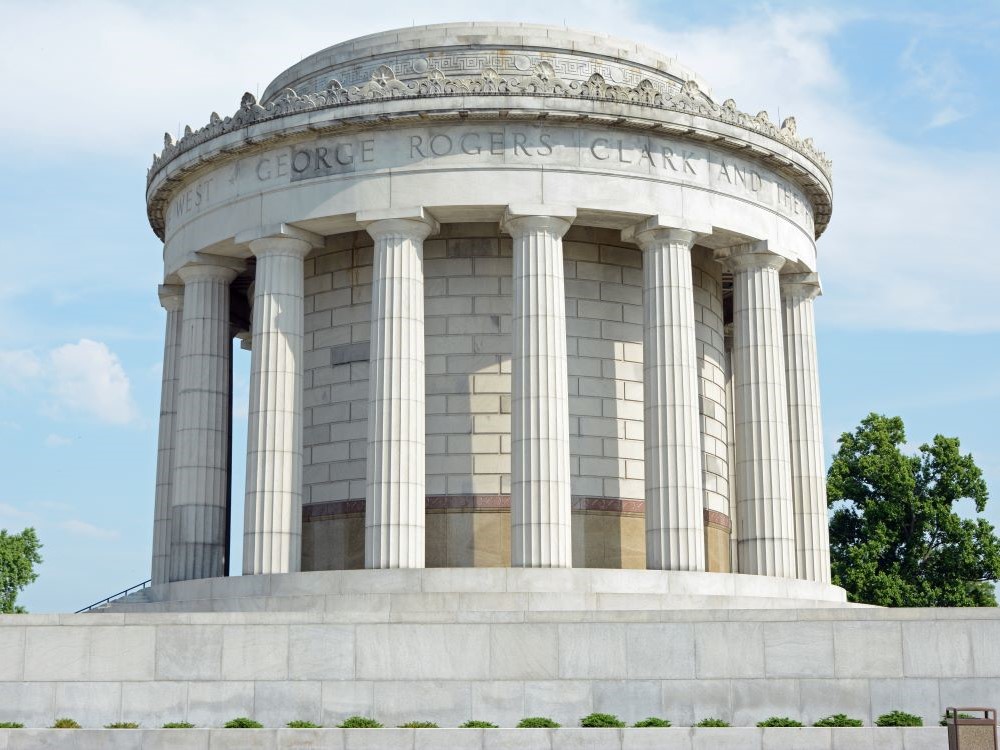
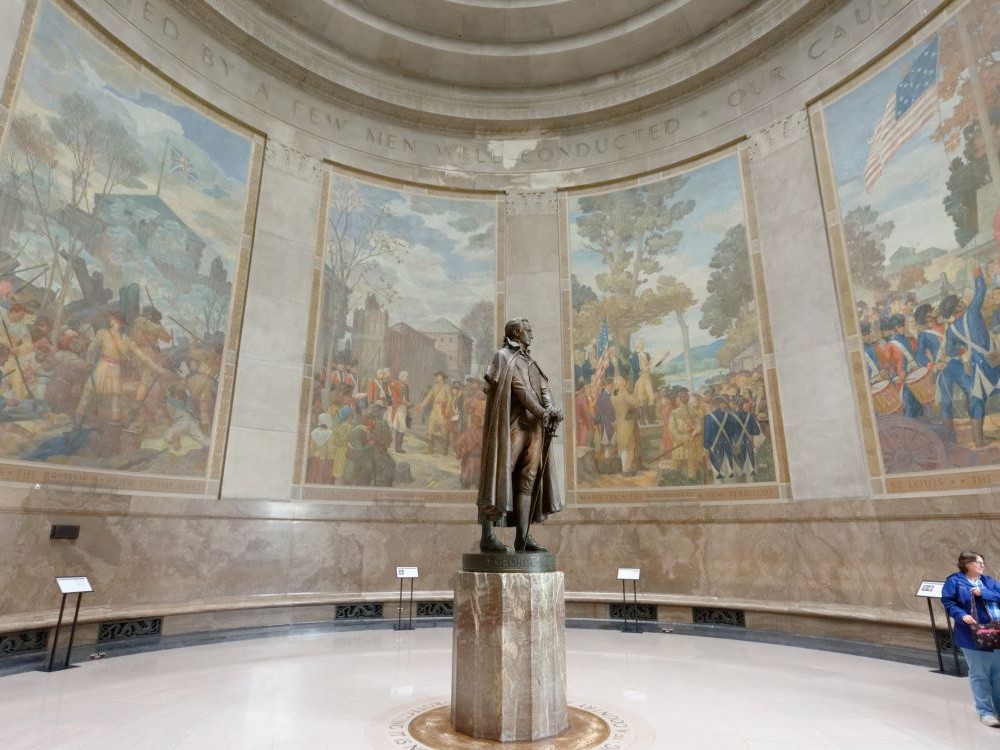
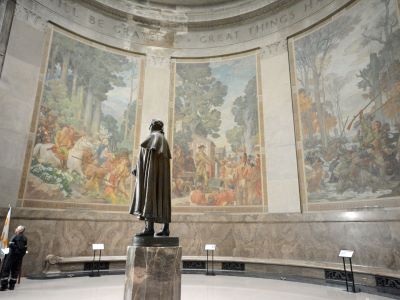
The George Rogers Clark National Historical Park honors one of the most daring feats of the American Revolutionary War. Located on the banks of the Wabash River, the park commemorates the 1779 capture of Fort Sackville by Lieutenant Colonel George Rogers Clark and his small force of frontiersmen. This victory, achieved during a grueling winter campaign, helped secure the Northwest Territory for the United States and weakened British influence in the region. At the heart of the park stands a grand rotunda-style memorial, featuring a bronze statue of Clark and murals depicting scenes from his campaign.
Visitors to the park can explore the memorial, stroll the landscaped grounds, and learn more at the visitor center, which offers exhibits and a short film about Clark’s expedition. The site is not only a tribute to military strategy and endurance but also a peaceful place for reflection on the early struggles of American independence. With its blend of history, architecture, and natural beauty, the park offers a compelling destination for history buffs and casual travelers alike.
Things to Do
Visit the George Rogers Clark Memorial
George Rogers Clark National Historical Park commemorates the capture of Fort Sackville by Lieutenant Colonel George Rogers Clark on February 25, 1779, a pivotal event during the American Revolutionary War. Located in Vincennes, Indiana, the park's centerpiece is the imposing George Rogers Clark Memorial, one of the largest national monuments outside Washington, D.C. Visitors can explore exhibits, murals, and interpretive displays that recount Clark's role in securing the Northwest Territory for the United States.
Learn About Revolutionary War History
The park tells the story of Clark's winter campaign and the importance of Vincennes in the struggle for control of the western frontier. Through exhibits, ranger programs, and historical interpretation, visitors gain insight into the military, political, and cultural events that shaped the early United States.
Explore the Visitor Center and Museum Exhibits
The visitor center features exhibits, artifacts, maps, and a film that explain the significance of the Northwest Campaign. Visitors can learn about Clark's leadership, frontier life, Native American tribes, and the strategic importance of the Wabash River Valley.
Walk the Historic Grounds
The memorial grounds overlook the Wabash River and offer a peaceful setting for reflection and exploration. Interpretive signs throughout the site help visitors understand the landscape and historical events associated with the Revolutionary War in the western frontier.
Discover Vincennes' Historic Attractions
The park is located near several other important historic sites, including the Vincennes State Historic Sites, Grouseland (the home of William Henry Harrison), and the Old French House. Together, these attractions provide a comprehensive look at Indiana's early history and frontier development.
Top Trails
George Rogers Clark Memorial Walking Path
Length: Approximately 0.5 miles
Elevation Gain: Minimal
Difficulty: Easy
This paved walking path circles the memorial grounds and provides views of the monument, Wabash River, and interpretive features. It offers an enjoyable way to learn about the historic significance of the site.
Wabash River Walk
Length: Approximately 1 mile round trip
Elevation Gain: Minimal
Difficulty: Easy
Visitors can enjoy a leisurely walk along the nearby riverfront while appreciating the natural setting that played an important role in frontier transportation, trade, and military operations.
Vincennes Historic Walking Tour
Length: Approximately 1 to 2 miles
Elevation Gain: Minimal
Difficulty: Easy
This self-guided walking route connects the national historical park with other nearby historic landmarks, museums, and preserved buildings that showcase Vincennes' rich colonial and frontier heritage.
Sources: National Park Service official George Rogers Clark National Historical Park information, including details on the George Rogers Clark Memorial, Revolutionary War history, visitor center exhibits, memorial grounds, and educational programs. https://www.nps.gov/gero
Additional historical and visitor information verified through National Park Service resources and Vincennes historic site information covering the Northwest Campaign, Wabash River region, historic walking opportunities, and nearby attractions. https://www.nps.gov/gero/planyourvisit
This article uses material from the Wikipedia articles and official tourism pages for the George Rogers Clark National Historical Park, which are released under the Creative Commons Attribution-Share-Alike License 3.0.