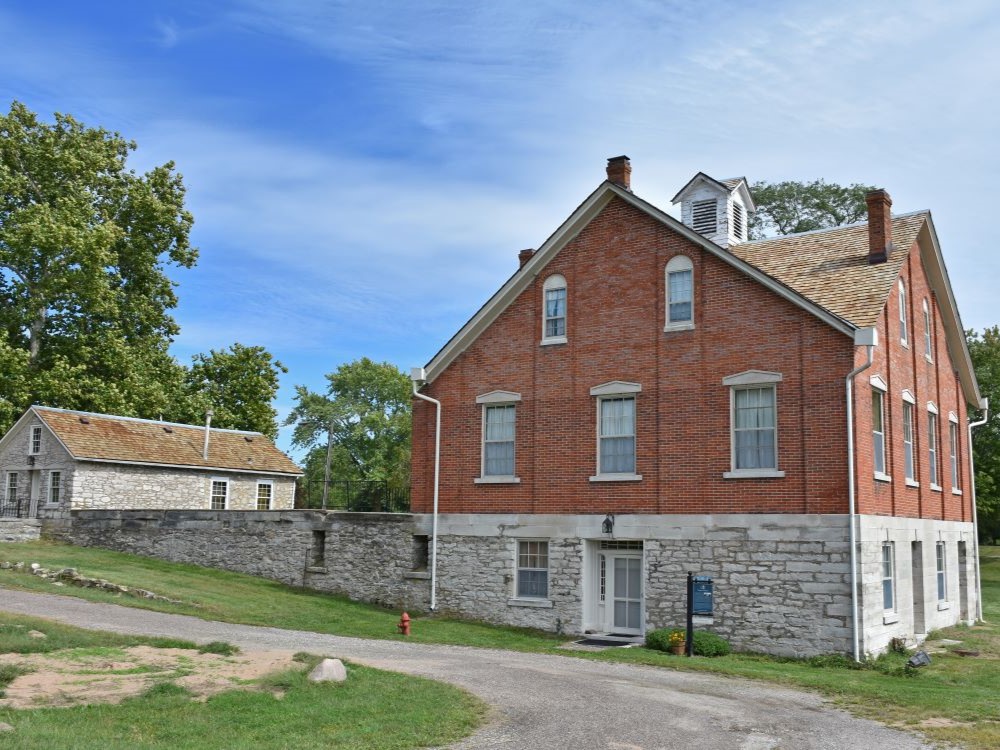
Historic district preserving 1840s homes, trades, and daily life through free exhibits, guided tours, and hands‑on demonstrations.
General Information
Sunday: 12pm to 4pm
How to Get There
From Springfield, take IL‑97 northwest to US‑136 west, continue on IL‑96 north into town, then follow North Main Street to the visitors’ center at 290 N Main St.
Overview
Nauvoo, Illinois, is a small town on a bend of the Mississippi River in western Illinois that is best known as a major site in the history of the Church of Jesus Christ of Latter-day Saints. In the early 1840s it was the headquarters of the church under founder Joseph Smith and one of the largest cities in Illinois, and today it has restored homes, shops, and the rebuilt Nauvoo Temple that attract visitors from around the world. The town is also known for its limestone buildings, its vineyards, and its role in the story of the Icarian utopian community.
Visitors come to Nauvoo for the Historic Nauvoo sites, which are free, and for the Nauvoo Temple, the Joseph Smith Historic Site, and the Pioneer Trail that leads west. Others come for the scenic Great River Road, the Nauvoo State Park, the wine tasting, and the annual Nauvoo Grape Festival. It is a quiet, family-friendly destination that can be visited in a day or two and combined with other Mississippi River sights such as Keokuk, Iowa, and Hannibal, Missouri.
History
The area was originally called Commerce, and in 1839 Latter-day Saints who had been driven out of Missouri bought land here, renamed it Nauvoo, and began building a new city. By 1844 Nauvoo had about 12,000 residents, rivaling Chicago in size, and the Saints built a large limestone temple on the bluff. After Joseph Smith and his brother Hyrum were killed by a mob in nearby Carthage in 1844, Brigham Young led most of the community west to Utah in 1846, and the temple was burned in 1848. French Icarians, led by Etienne Cabet, then settled here in 1849, and German immigrants planted vineyards that gave Nauvoo a wine-making tradition. The Nauvoo Temple was rebuilt on its original site and dedicated in 2002.
Sightseeing and Popular Landmarks
The Nauvoo Temple sits on the bluff above the river and is the best-known landmark, though only church members can enter. The Historic Nauvoo area has more than 20 restored buildings, such as the Brigham Young home, the Heber C. Kimball home, and the Red Brick Store, with costumed guides and demonstrations of pioneer skills such as blacksmithing and candle making. The Joseph Smith Historic Site includes his home and the Mansion House, and the Nauvoo Visitors' Center has maps and a film about the town's history.
Culture and Museums
The Nauvoo Historic District shows life in the 1840s, and the Nauvoo Visitors' Center and the Family Living Center show crafts and trades that were common in the early days of the community. The Icarian Living History Museum tells the story of the French utopian colony, and the Nauvoo Brass Band are part of the summer cultural calendar. The Baxter's Vineyards, Illinois's oldest winery, is open for tasting, and the Nauvoo Grape Festival in September has parades and wine competitions.
Parks
Nauvoo State Park is a small park along the river with a lake, a campground, and a museum of local history, and the Mississippi Riverfront Trail is a good place to walk. The Great River Road passes through the town and offers views of the river and the bluffs, and nearby Lock and Dam 19 at Keokuk is a popular place to watch for bald eagles in winter. The rolling farmland around Nauvoo is also good for biking, especially in fall.
Seasons and Weather
Nauvoo has a humid continental climate with hot, humid summers and cold winters. Summer highs are in the upper 80s°F, winter highs are in the 30s°F, and snowfall averages about 25 inches a year. Spring and fall are the most comfortable seasons, and the busiest time of year runs from late spring through early fall, when the historic sites operate with their longest hours. Some sites have reduced hours or close in winter, so visitors should check ahead.
Things to Do
Explore One of Illinois' Most Historic River Towns
Nauvoo is a picturesque city located along the Mississippi River in western Illinois and is one of the state's most significant historic destinations. Known for its beautifully restored nineteenth-century buildings, religious heritage, riverfront scenery, and living history experiences, Nauvoo attracts visitors interested in American history, architecture, and culture.
Visit Historic Nauvoo
Nauvoo is best known for its role in the history of The Church of Jesus Christ of Latter-day Saints. During the 1840s, it was one of the largest cities in Illinois. Today, visitors can explore dozens of restored homes, shops, and public buildings that recreate life in the frontier community. Costumed interpreters demonstrate traditional crafts, trades, and daily activities from the era.
Tour the Nauvoo Temple Area
The Nauvoo Illinois Temple is a prominent landmark overlooking the Mississippi River. While entrance is limited to church members with temple recommends, visitors can enjoy the surrounding grounds, scenic views, and historical exhibits that explain the importance of Nauvoo in the city's history.
Discover Local History and Culture
Visitors can explore attractions such as the Joseph Smith Historic Site, the Historic Nauvoo Visitor Center, the Rheinberger House Museum, and other preserved buildings that tell the stories of early settlers, immigrants, and religious communities that shaped the region.
Enjoy Mississippi River Views and Recreation
Nauvoo's location along the Mississippi River provides opportunities for scenic walks, photography, birdwatching, boating, fishing, and enjoying beautiful sunsets over the river. The surrounding countryside also offers picturesque rural landscapes and seasonal wildflower displays.
Top Trails
Nauvoo Historic District Walking Tour
Length: Approximately 2 miles
Elevation Gain: Minimal
Difficulty: Easy
This self-guided walking route connects many of Nauvoo's most important historic sites, including restored homes, shops, gardens, and interpretive exhibits. It is the best way to experience the city's rich history and architectural heritage.
Mississippi Riverfront Trail
Length: Approximately 1 mile round trip
Elevation Gain: Minimal
Difficulty: Easy
This scenic route follows the riverfront and offers views of the Mississippi River, local wildlife, and historic areas of the city. It is ideal for walking, photography, and relaxing by the water.
Vineyard and Countryside Walking Routes
Length: Variable distances available
Elevation Gain: Minimal to Moderate
Difficulty: Easy
The rolling countryside surrounding Nauvoo features scenic roads and paths through agricultural landscapes, vineyards, and rural river bluffs that showcase the natural beauty of western Illinois.
Nearby Great River Road Recreation Areas
Length: Variable distances available
Elevation Gain: Minimal
Difficulty: Easy
Several nearby parks and conservation areas along the Great River Road provide additional opportunities for hiking, wildlife viewing, birdwatching, and enjoying panoramic views of the Mississippi River Valley.
Sources: Nauvoo Area Chamber of Commerce and Historic Nauvoo information regarding historical attractions, visitor experiences, museums, walking tours, and cultural heritage resources. https://www.visitnauvoo.com and https://www.historicnauvoo.net
Additional information verified through Illinois tourism and Mississippi River recreation resources covering Nauvoo's historic district, riverfront attractions, local museums, and outdoor recreation opportunities.
This article uses material from Wikipedia as well as information from official tourism and institutional sources. Key references include Nauvoo Tourism, Historic Nauvoo, Nauvoo State Park, and National Weather Service Quad Cities. Wikipedia material is from the article "Nauvoo, Illinois", and is available under the Creative Commons Attribution-Share-Alike License 3.0.