Historic town blending cultural landmarks, local eateries, art galleries, and lush valley landscapes into a vibrant community experience.
General Information
- Hours:
-
Most attractions open daily between 8am and 5pm
Individual business hours vary; check ahead for specific sites - Fees:
-
Many attractions are free or donation-based
State parks and museums may charge entry or parking fees - Pet Policy:
- Pets are not allowed in most indoor attractions and state parks
- Closest cities with hotels:
- Kahului (2 mi), Lahaina (22 mi)
- Seasons:
- All year; best weather typically April to October
- Location:
- Wailuku, HI
- Website:
- gohawaii.com
How to Get There
From Kahului, HI (2 mi): Drive west on Kaʻahumanu Avenue (HI-32) for about 10 minutes; Wailuku begins just past the bridge over ʻĪao Stream and continues into the historic town center.
Overview
Wailuku is the county seat of Maui, a historic town of about 17,000 people at the foot of the West Maui Mountains and the mouth of Iao Valley. It has the island's courthouse and government buildings, along with older storefronts, galleries and local restaurants, and is a quieter, more local alternative to the beach resorts.
Visitors come to Wailuku mainly for Iao Valley and its green needle peak, for the Bailey House Museum and Maui's historic downtown, and for the area's local eateries. It is also close to the airport in Kahului and a convenient base for exploring the island.
History
Wailuku, whose name means "water of destruction," was the site of the 1790 Battle of Kepaniwai, where Kamehameha I defeated Maui's forces in Iao Valley. Missionaries arrived in the 1830s, and Wailuku became the political and religious center of Maui, with sugar plantations powering the economy. The courthouse and many plantation-era buildings reflect that history.
Sightseeing and Popular Landmarks
Iao Valley State Monument and the Iao Needle are the best-known sights, and the Kepaniwai Heritage Gardens honor Maui's many ethnic groups. Halekii-Pihana Heiau is an ancient temple site, and Kaahumanu Church, built in 1876, is a landmark of the town.
Culture and Museums
The Bailey House Museum displays Hawaiian artifacts and missionary-period rooms. The Maui Historical Society operates it, and the Wailuku First Friday street party fills Market Street with food, art and music. The Iao Theater, a historic 1928 theater, hosts local productions.
Parks
Iao Valley State Monument has short trails along Iao Stream, and Kepaniwai Park features cultural pavilions and picnic areas. Waihee Ridge Trail and Waihee Valley are a short drive north, and the Maui Nui Botanical Gardens in Kahului show native Polynesian plants.
Seasons and Weather
Wailuku has a warm, relatively dry climate, with highs in the low to mid 80s°F, but Iao Valley above town is cooler and wetter, with frequent showers. Rain is most likely from November to March, and afternoon clouds often gather over the mountains.
Things to Do
- Bailey House Museum: Hawaiian artifacts and missionary-period rooms, including Duke Kahanamoku’s surfboard.
- Kaʻahumanu Church (1876) and the missionary-era sites on upper Main Street, including a tiny graveyard with tombs of aliʻi and missionary families and the Alexander House.
- ʻĪao Valley up the road.
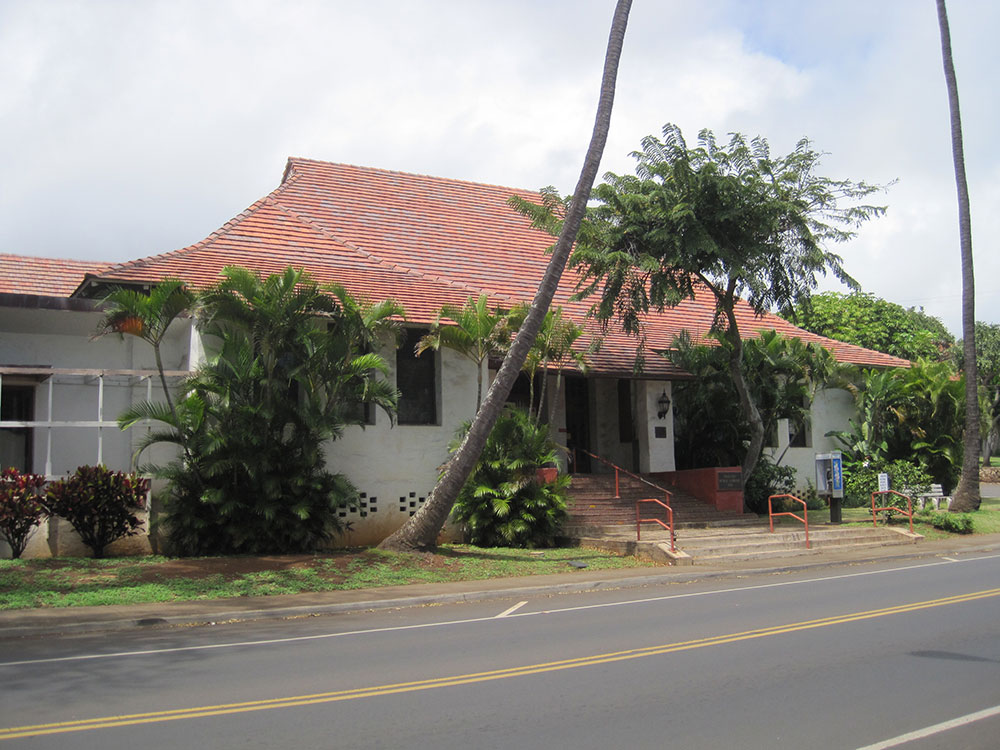
- Historic High Street: century-old monkeypod trees and 1920s residences. The business district has false fronts and art deco facades.
- Heiau: Halekiʻi and Pihanakalani, two ancient temples nearby.
- Also: ʻĪao Theater, Tropical Gardens of Maui, the Old Wailuku Inn at Ulupono and Wailuku First Friday.
History
- Home to Maui’s most famous Hawaiian rulers and the site of Kamehameha’s decisive 1790 victory at the Battle of Kepaniwai in ʻĪao Valley.
- New England missionaries arrived in the mid-1800s, and by the 1860s the Wailuku Sugar Company and other plantations were milling sugarcane, with irrigation ditches bringing water from the mountains. Workers from China, Japan, Okinawa, Korea, the Philippines and Europe settled here.
- Wailuku became the county seat in 1905, a hub of government and business, until the sugar industry’s decline in the late 1960s drew business elsewhere.
This article uses material from Wikipedia as well as information from official tourism and institutional sources. Key references include Hawaii Tourism Authority, County of Maui, Maui Historical Society (Bailey House Museum), Hawaii Department of Land and Natural Resources, and National Weather Service Honolulu. Wikipedia material is from the article "Wailuku, Hawaii", released under the Creative Commons Attribution-Share-Alike License 3.0.