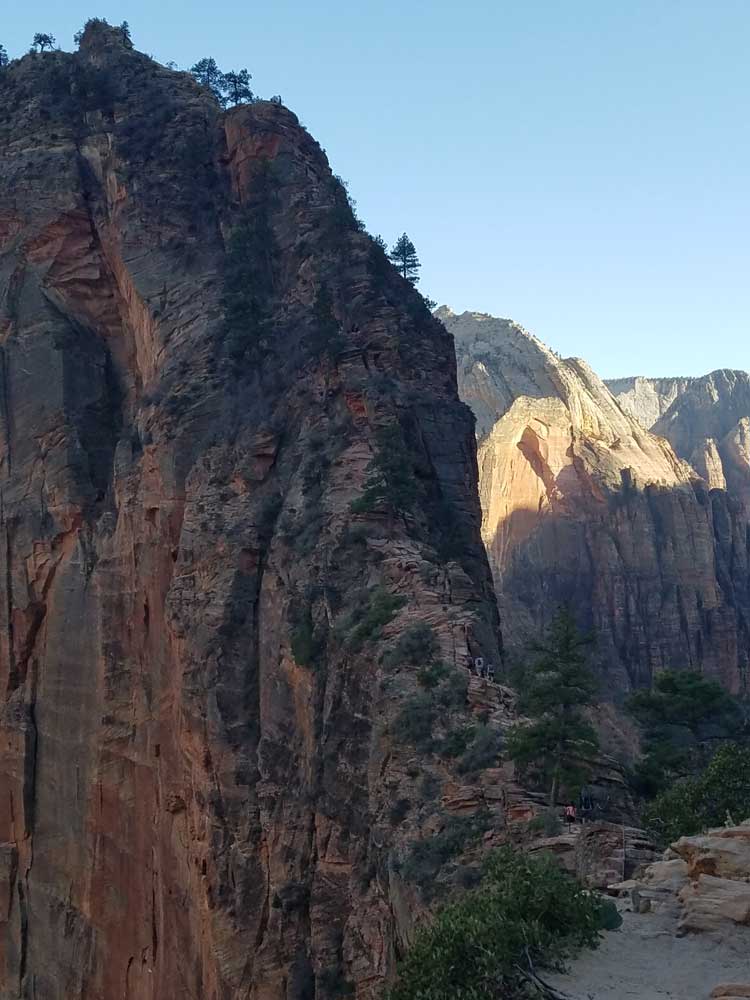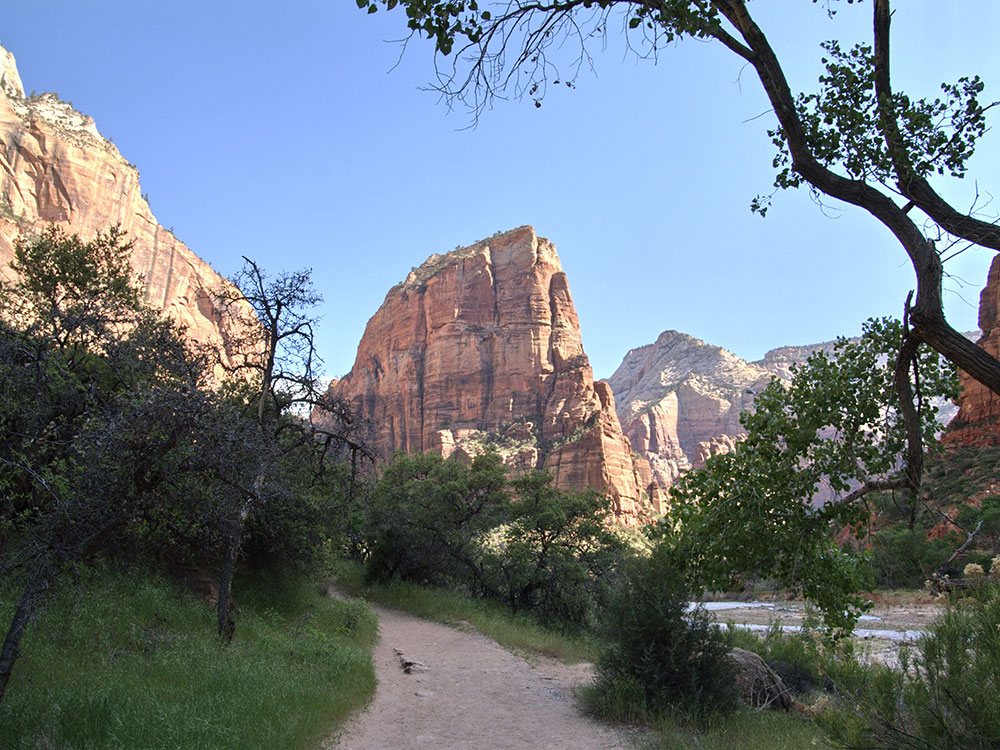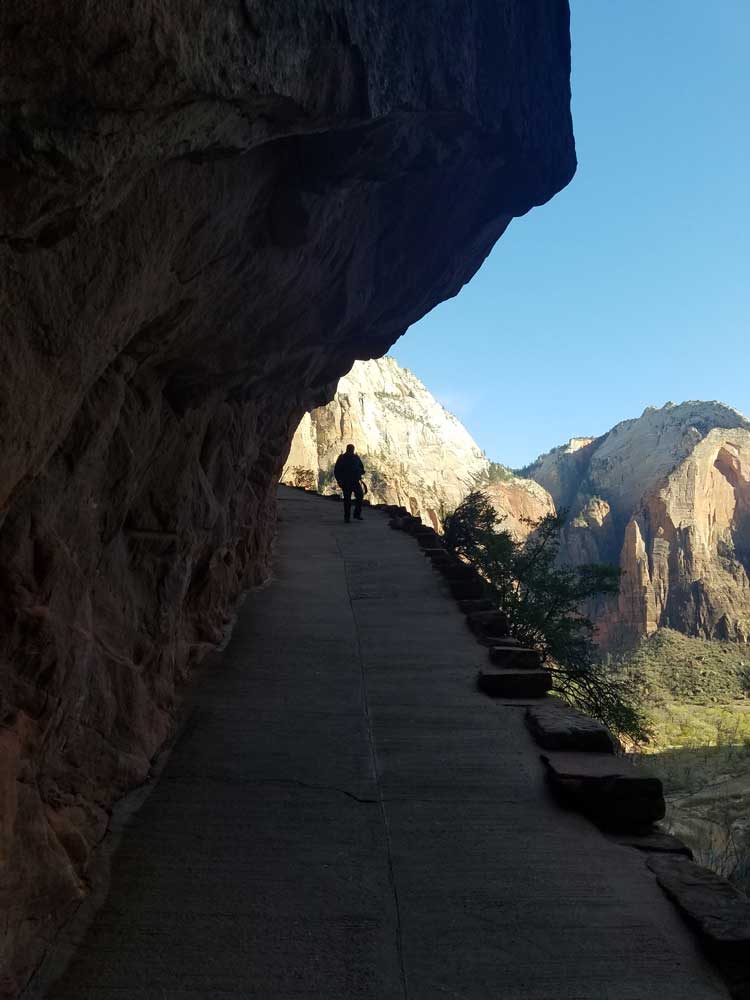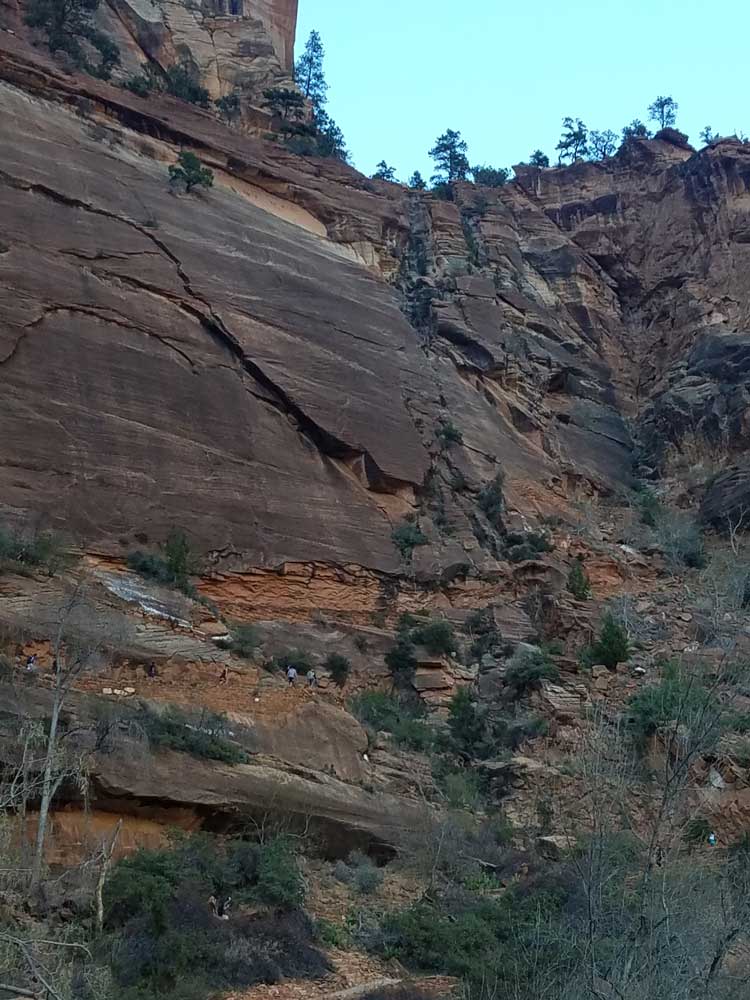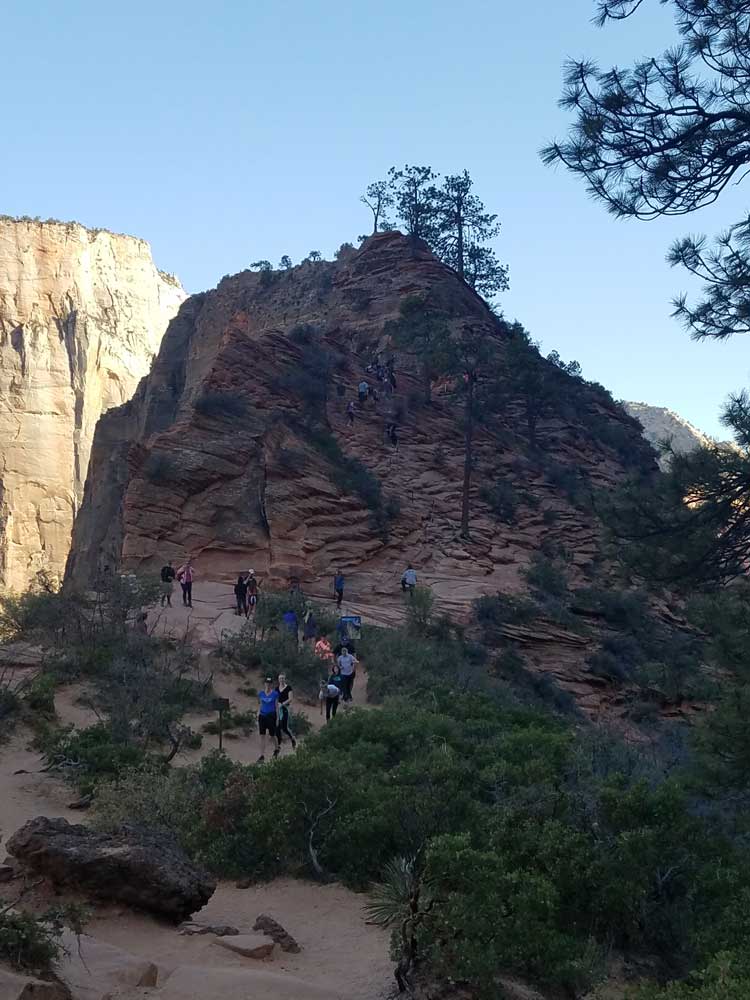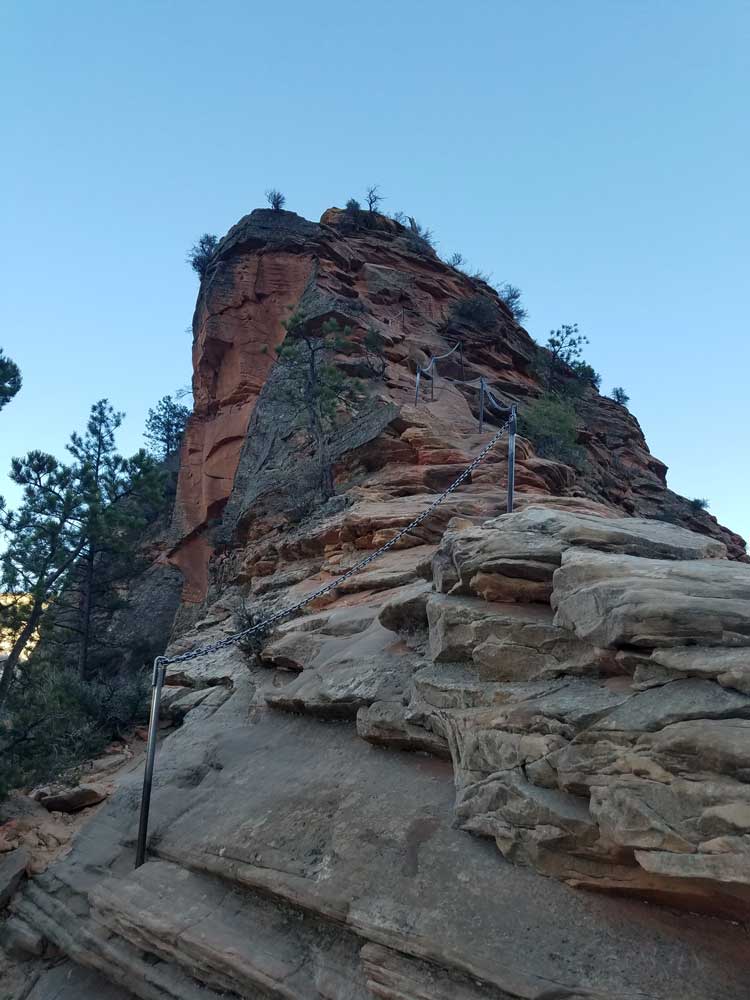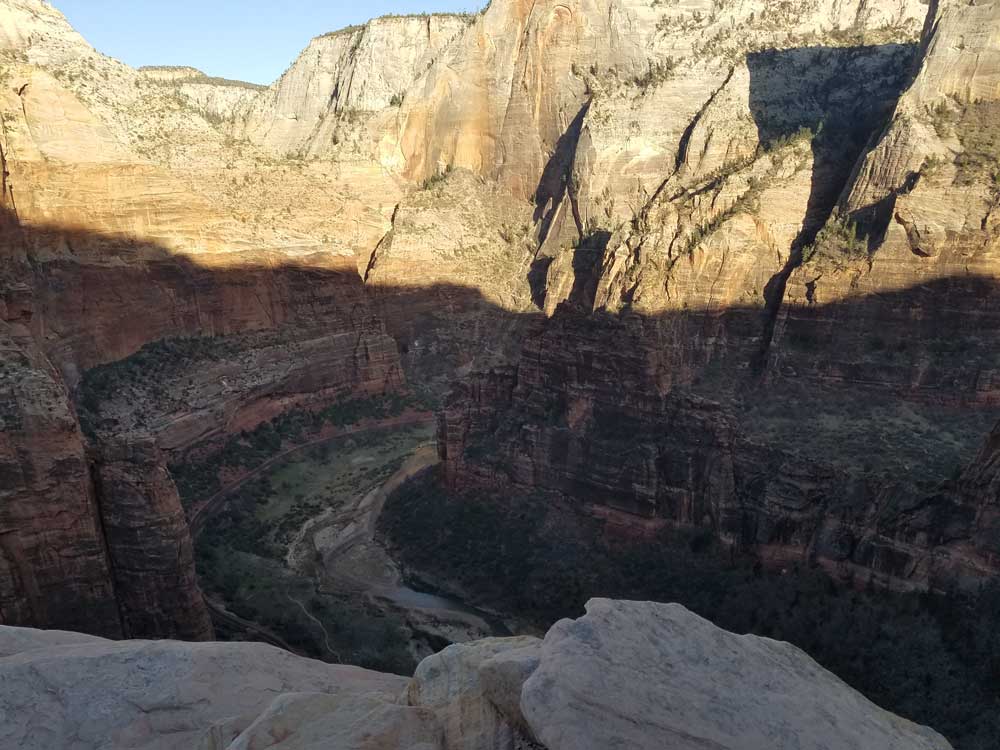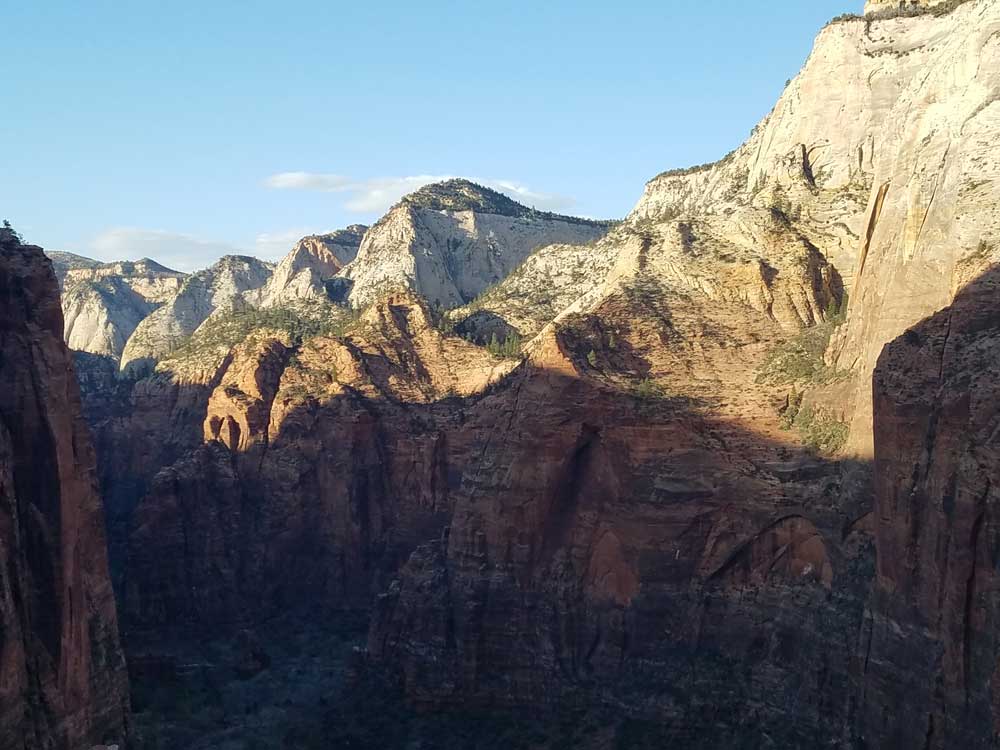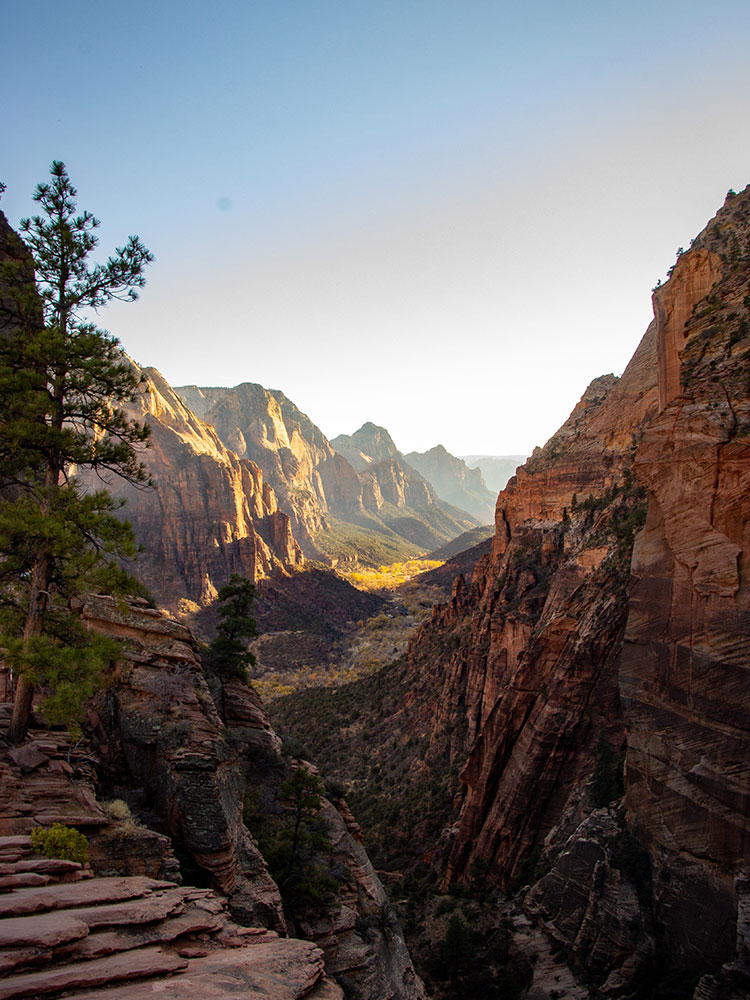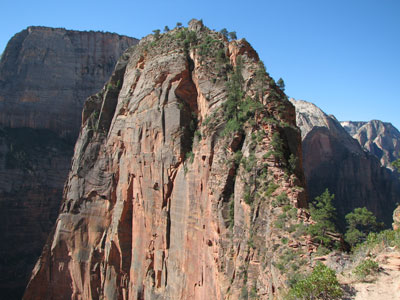

Trail cut into 1,488-foot (454 m) tall rock formation in 1926 leads to the top of Angels Landing and provides views of Zion Canyon.
General Information
To hike Angels Landing beyond Scout Lookout, you must have a permit. Permits are available through a seasonal lottery or a day-before lottery on Recreation.gov. More info on Angels Landing Permits
How to Get There
From Springdale (4 mi): Drive to the Zion National Park south entrance, park at the Zion Canyon Visitor Center, and take the park shuttle up Zion Canyon Scenic Drive to The Grotto, where the Angels Landing/West Rim Trail begins.
Overview
Angels Landing is one of the most famous hikes in the United States and the signature adventure of Zion National Park. The trail climbs to the top of a narrow, 1,488-foot sandstone fin in the middle of Zion Canyon, and the final half mile follows an exposed ridge with chain handrails and sheer drop-offs on both sides. Hikers come for the thrill of the climb and for the summit views, which take in the Virgin River winding along the canyon floor, the Great White Throne, and the canyon walls stretching north and south. The trail was built in 1926, and the section up the spine was listed on the National Register of Historic Places in 1987. A permit, issued through a lottery, is required to continue beyond Scout Lookout to the summit.
Getting to the Trailhead
The hike starts at The Grotto, stop 6 on the Zion Canyon Shuttle. When the shuttle is operating, private vehicles are not allowed on Zion Canyon Scenic Drive, so visitors park at the Zion Canyon Visitor Center and ride the shuttle up the canyon. The visitor center lot often fills by mid-morning in busy seasons; when it is full, park in Springdale (paid parking) and take the free Springdale shuttle to the pedestrian entrance next to the visitor center. The Grotto has a picnic area, restrooms, and drinking water. When the shuttle is not running, visitors may drive Zion Canyon Scenic Drive and park at The Grotto, but the lot is small and fills quickly.
Trail Description
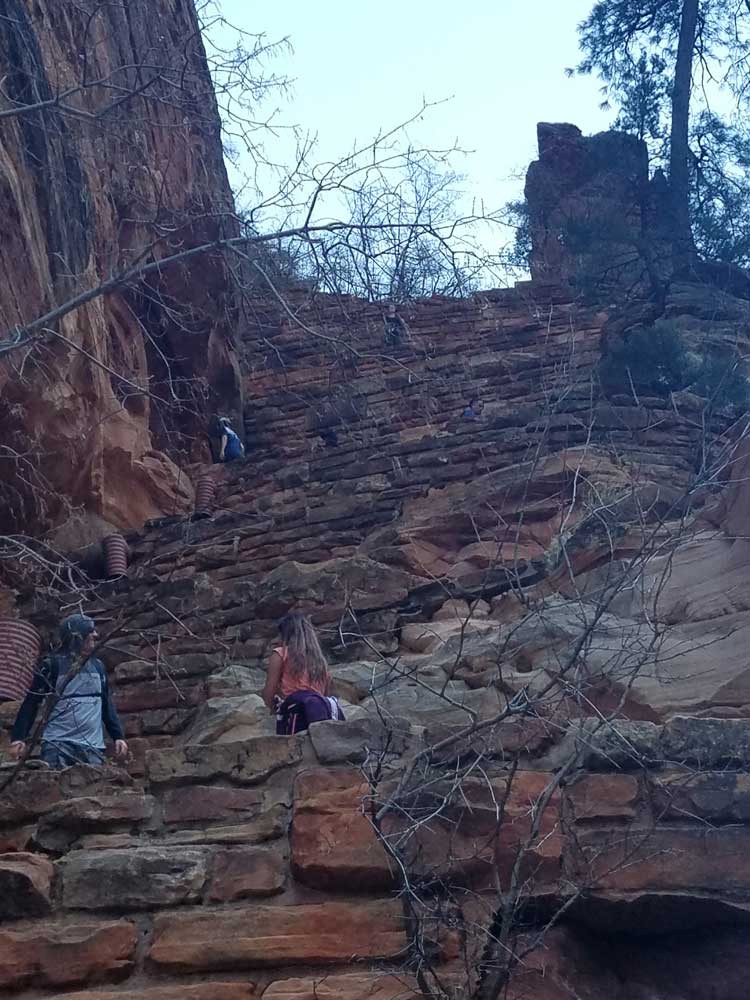
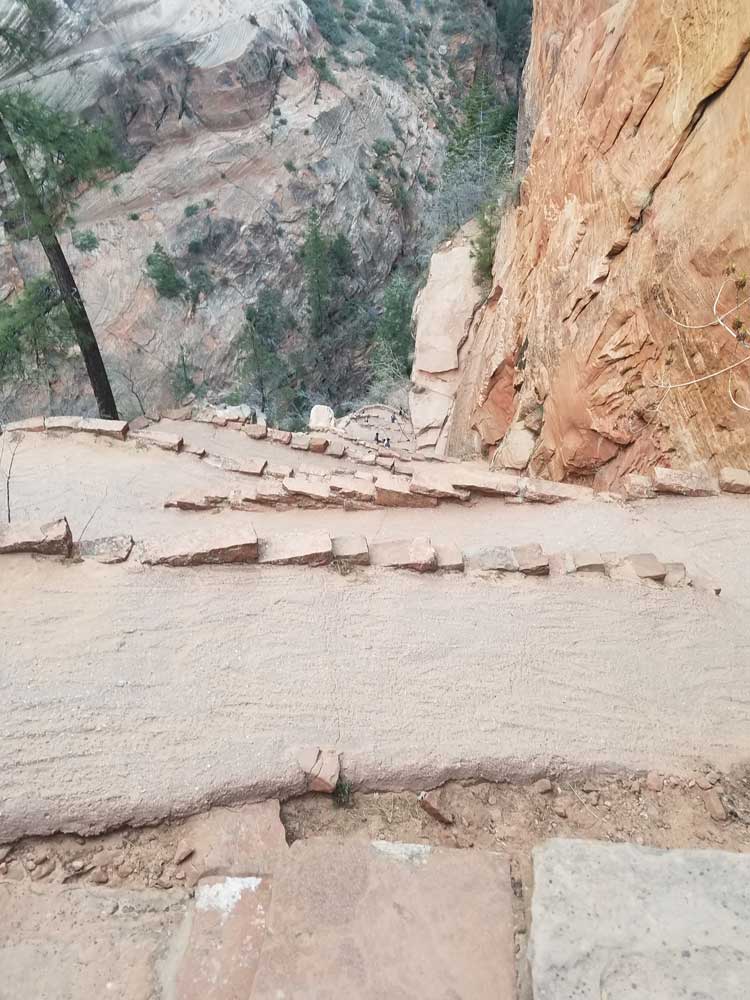
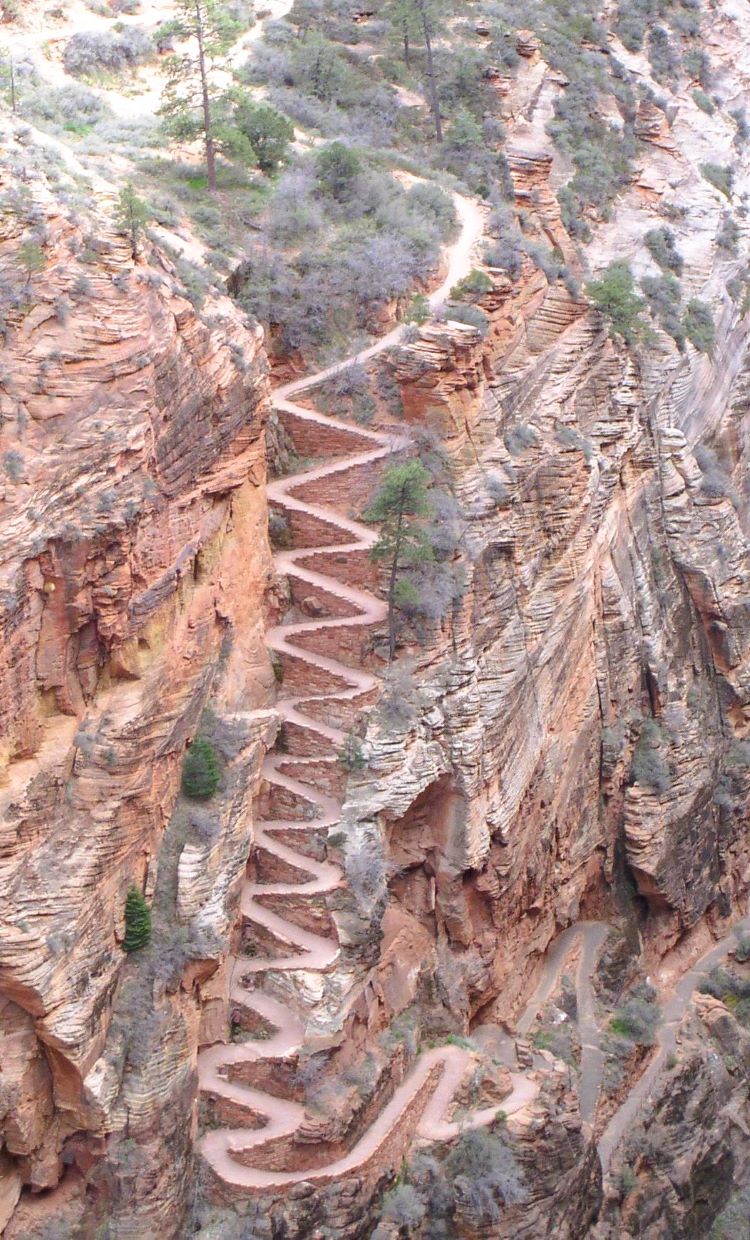
From The Grotto, cross the footbridge over the Virgin River and follow the West Rim Trail upstream along the river before it begins climbing a series of paved switchbacks up the canyon wall. The trail then enters Refrigerator Canyon, a cool, shaded side canyon that offers a welcome break from the sun, before reaching Walter's Wiggles, a set of 21 tight switchbacks built in 1926 and named for Zion's first superintendent, Walter Ruesch. At the top of the Wiggles is Scout Lookout, a broad sandstone area with restrooms and views into the canyon, and the turnaround point for hikers without a permit. The West Rim Trail continues north from Scout Lookout toward the high plateau, so hikers bound for the summit should watch for the signed Angels Landing spur, where rangers may check permits. The final half mile climbs the narrow spine with the help of chains bolted into the rock, alternating between steep pitches and short, level saddles, before reaching the broad summit at 5,790 feet. Hikers return the same way, for a total of about 5.4 miles round trip.
Trail Conditions and Difficulty
Angels Landing is a strenuous hike that requires good fitness and, above all, comfort with heights. The climb to Scout Lookout is steep but paved and well graded, while the chain section beyond involves hands-on scrambling over uneven sandstone with drop-offs of more than 1,000 feet. No technical climbing gear is needed, but hikers should keep three points of contact and be prepared to pass other hikers on narrow ledges. People have died in falls from the trail, so the summit route is not recommended for young children or anyone uneasy with exposure. Summer temperatures in Zion Canyon regularly top 100 degrees and much of the climb is in direct sun, so an early start and plenty of water are essential. In winter, snow and ice can coat the shaded switchbacks and the chain section, making traction devices such as microspikes necessary and the summit route hazardous. Avoid the hike in wet weather or when thunderstorms threaten, since the sandstone becomes slick and lightning is a serious danger on the exposed ridge.
This article uses material from the Wikipedia article "Angels Landing", which is released under the Creative Commons Attribution-Share-Alike License 3.0. Additional trail information is from the National Park Service pages "Angels Landing Permits & Hiking" and "Zion Canyon Shuttle System".