
Redwood National and State Parks Travel Guide
Complex of several state and national parks located along the coast of northern California, featuring old-growth temperate rainforests and protect 45 percent of all remaining coast redwood, which are the tallest, among the oldest, and one of the most massive tree species on Earth.
General Information
- Hours:
-
Park open 24/7
Hiouchi Visitor Center
Spring to Fall: Open 9am to 5pm daily
Winter: Open 9am to 4pm daily
Jedediah Smith Visitor Center
May 31 - September 30: Open 9am to 5pm daily
Crescent City Information Center
Spring to Fall: Open 9am to 5pm daily
Winter: Open 9am to 4pm daily Closed Tuesday and Wednesday.
Closed: New Years day, Thanksgiving Day, and Christmas Day.
Prairie Creek Visitor Center
Summer: 9am to 5pm daily.
Off-season/winter: 9am to 4pm daily.
Closed: New Year's Day, Thanksgiving Day, and Christmas Day.
Thomas H. Kuchel Visitor Center
Spring to Fall: Open 9am to 5pm daily
Winter: Open 9am to 4pm daily
Closed: New Year's Day, Thanksgiving Day, and Christmas Day.
- Fees:
-
Redwood National Park is free to visit
California State Parks: Jedediah Smith, Del Norte Coast, and Prairie Creek Redwoods state parks collect day-use fees at developed campground entrance stations. These three California State Parks will honor the federal America the Beautiful series of passes and provide discounted pricing to pass holders. Holders of California State Parks passes will be able to use their state pass.
In Prairie Creek Redwoods State Park there is an entrance fee to drive to Gold Bluffs Beach / Fern Canyon. This state park entrance fee will be waived to holders of federal America the Beautiful pass. - Pet Policy:
- Places To Go With A Leashed Pet:
Parking Areas: Fern Canyon, Lady Bird Johnson, Tall Trees Trail, and Stout Grove parking lots only. Elk Meadow Day Use Area parking lot.
Scenic View Points: Klamath River Overlook, Redwood Creek Overlook.
Developed Campgrounds: Elk Prairie Campground, Gold Bluffs Beach, Mill Creek Campground, and Jedediah Smith Campground.
Beaches: Freshwater Beach, Gold Bluffs Beach and Crescent Beach.
Gravel Roads: Cal Barrel Road and Walker Road. - Closest cities with hotels:
- Crescent City (north end), Klamath, Orick, Trinidad, and Arcata (south end)
- Seasons:
- All year
- Location:
- Redwood National and State Parks, CA
- Website:
- nps.gov/redw/index.htm
How to Get There
From Sacramento ( mi): Get on I-5 N from I St. Continue to Redding. Take exit 678 from I-5 N.Take CA-299 W and Pine Creek Rd to Bald Hills Rd in Humboldt County.
Overview
Redwood National and State Parks along California's far north coast protect nearly half of all the old-growth coast redwoods left on Earth. These are the tallest trees in the world. One of them, Hyperion, is about 380 feet tall, the tallest known living tree. The parks cover about 139,000 acres of misty old-growth forest, open prairies, river valleys, and 37 miles of wild Pacific coastline in Del Norte and Humboldt Counties. Their ancient forests and coastal ecosystems earned them recognition as a UNESCO World Heritage Site in 1980 and an International Biosphere Reserve in 1983.
In 1850, old-growth redwoods covered more than two million acres of the California coast, in the homelands of the Tolowa Dee-ni', Yurok, and other Native peoples. After the Gold Rush, logging cut down about 95 percent of these forests. The Save the Redwoods League, founded in 1918, helped create Prairie Creek, Del Norte Coast, and Jedediah Smith Redwoods State Parks in the 1920s. Redwood National Park followed in 1968 and was expanded in 1978. Since 1994, the National Park Service and California State Parks have managed the four parks together. Visitors come to walk among the giant trees, drive scenic parkways through the forest, explore the fern-covered walls of Fern Canyon, watch herds of Roosevelt elk, and walk wild, driftwood-strewn beaches.
Park Sections
The parks stretch about 50 miles along US 101, which links all four units. In the north, Jedediah Smith Redwoods State Park, just east of Crescent City along the Smith River, has some of the most impressive groves, including Stout Grove. Just south, Del Norte Coast Redwoods State Park has old-growth forest that runs down to steep coastal cliffs. The middle of the parks centers on the Klamath River and the town of Klamath. Prairie Creek Redwoods State Park is known for Elk Prairie, the Newton B. Drury Scenic Parkway, Gold Bluffs Beach, and Fern Canyon. The southern part of Redwood National Park, near Orick, includes the Thomas H. Kuchel Visitor Center, Bald Hills Road, Lady Bird Johnson Grove, and Tall Trees Grove along Redwood Creek. Driving from Orick to Crescent City takes about an hour.
Sightseeing and Scenic Drives
The parks have several of California's most beautiful forest drives. The 10-mile Newton B. Drury Scenic Parkway winds through the old-growth forest of Prairie Creek, past Elk Prairie and the Big Tree Wayside, a giant redwood just steps from the road. In Jedediah Smith, the narrow, unpaved Howland Hill Road passes through towering groves near Stout Grove and is one of the most memorable drives in the parks. Bald Hills Road climbs steeply from US 101 past Lady Bird Johnson Grove and the Redwood Creek Overlook to open prairies where elk often graze. The Coastal Drive near Klamath and the Klamath River Overlook offer ocean views and are good places to watch for whales. Partway down Coastal Drive is the High Bluff Overlook. The gravel Davison Road leads to Gold Bluffs Beach and Fern Canyon and is not suitable for trailers. Some unpaved roads close seasonally or after storms.
Hiking
The parks have more than 200 miles of trails, many of them short and easy walks among the giant trees. Popular easy hikes include Lady Bird Johnson Grove (1.5-mile loop), Stout Grove, the Simpson-Reed Trail, the Big Tree Wayside loops, and the Prairie Creek and Cathedral Trees Trails near Elk Prairie. The short loop through Fern Canyon, where 50-foot walls are covered in ferns, is one of the most famous hikes in the parks. Moderate to strenuous options include the Boy Scout Tree Trail in Jedediah Smith, the hike to Tall Trees Grove (a free permit is required to drive to the trailhead), the steep Damnation Creek Trail to a hidden cove, the Hidden Beach Trail, and the James Irvine and Miners Ridge Trails, which combine with Fern Canyon into a 10-mile loop. The California Coastal Trail runs about 70 miles through the parks. See the Redwood trails table for a full list.
Other Activities
Beyond the redwood groves, the parks offer a variety of coastal and river activities. In summer, rangers lead free kayak tours on the clear, emerald waters of the Smith River, one of the last undammed rivers in California, and visitors can also paddle on their own. Tidepooling is popular at Enderts Beach and other rocky shores at low tide. Whale watching is good from the Klamath River Overlook and other coastal bluffs during the gray whale migration in winter and spring. Anglers fish the Smith and Klamath Rivers for salmon and steelhead. Mountain bikers and horseback riders have designated trails, and beachcombers can explore the long, wild stretches of Gold Bluffs Beach and Crescent Beach. Rangers lead nature walks, campfire programs, and Junior Ranger activities in the summer. Just outside the parks in Klamath, the privately run Trees of Mystery offers a gondola ride into the redwood canopy.
Flora and Wildlife
The parks protect the world's tallest forest. Coast redwoods (Sequoia sempervirens) can live more than 2,000 years and grow over 350 feet tall. They grow alongside Sitka spruce, Douglas fir, and western hemlock above an understory of sword ferns, redwood sorrel, and wild rhododendrons that bloom pink in late spring. The parks are especially famous for their herds of Roosevelt elk, the largest elk subspecies in North America, which are often seen grazing at Elk Prairie, along Davison Road, at Gold Bluffs Beach, and in Elk Meadow near Orick. Other wildlife includes American black bears, river otters, banana slugs, northern spotted owls, and the marbled murrelet, a seabird that nests high in old-growth redwoods. Offshore, gray whales, sea lions, and harbor seals are common. Elk can be dangerous, especially during the fall rut and spring calving seasons, so visitors should always keep a safe distance.
Access
The parks are on the North Coast of California, between the towns of Orick and Crescent City, near the Oregon border. They are about 5.5 to 6 hours north of San Francisco on US 101. From Interstate 5, visitors can take Highway 299 from Redding to the coast near Arcata, or US 199 from Grants Pass, Oregon, to Crescent City. The closest airports are California Redwood Coast–Humboldt County Airport near McKinleyville, about 40 minutes south of Orick, and Del Norte County Regional Airport in Crescent City. Larger airports are in Medford, Oregon, and Sacramento. Redwood Coast Transit buses run along US 101 between Crescent City and Arcata, but a car is the easiest way to explore. Redwood National Park has no entrance fee, but the state parks charge day-use fees at some areas. A free reservation is required to drive to Gold Bluffs Beach and Fern Canyon from May 15 to September 15.
Seasons
The parks are open all year, with a mild coastal climate that rarely gets very hot or very cold. Summer is the busiest season, with comfortable temperatures but frequent coastal fog, which adds to the mysterious feel of the redwood forests. Seasonal footbridges are placed in Fern Canyon in summer. Fall often brings the clearest, sunniest weather of the year, along with the elk rut, when bulls bugle and spar in the meadows, and salmon runs on the rivers. Winter is the rainy season, and the area receives 60 to 80 inches of rain a year. Storms can bring high water and close some unpaved roads and trails, but the forests are lush and quiet. In spring, rhododendrons and wildflowers bloom, elk calves are born, and gray whales migrate north along the coast.
Camping and Lodging
The parks have four developed campgrounds, all run by California State Parks and reservable through ReserveCalifornia. Jedediah Smith Campground sits among old-growth redwoods along the Smith River. Mill Creek Campground in Del Norte Coast is open seasonally. Elk Prairie Campground is in Prairie Creek, and Gold Bluffs Beach Campground is right on the ocean. Backcountry camps such as Nickel Creek, Flint Ridge, and Little Bald Hills require a free permit. The parks have few indoor lodging options. Elk Meadow Cabins near Orick offer cabin rentals inside the parks. Crescent City, at the northern end, has the most hotels, motels, and restaurants near the parks. Klamath and Orick have a few small motels and RV parks. To the south, the charming coastal town of Trinidad, as well as McKinleyville, Arcata, and Eureka, are 30 minutes to an hour from Orick and offer many lodging choices. Brookings, Oregon, is about 30 minutes north of Crescent City.
Visitor Centers
The parks have several visitor centers. The Thomas H. Kuchel Visitor Center, at the southern end near Orick, sits beside the beach and has exhibits, a film, a bookstore, and information for the whole park. The Prairie Creek Visitor Center at Elk Prairie is surrounded by redwoods and meadows, often with elk grazing nearby. The Jedediah Smith Visitor Center in Hiouchi, near the Jedediah Smith Campground, is open seasonally. The Crescent City Information Center at park headquarters serves visitors arriving from the north. Rangers at these centers can provide maps, tide tables, and permits for Tall Trees Grove and backcountry camping. Hours vary by season.
This article uses material from the Wikipedia article "Redwood National and State Parks", which is released under the Creative Commons Attribution-Share-Alike License 3.0. Additional material comes from nps.gov "Redwood National and State Parks" and "Gold Bluffs Beach and Fern Canyon Permits", and from Redwood Parks Conservancy.
Featured Trails
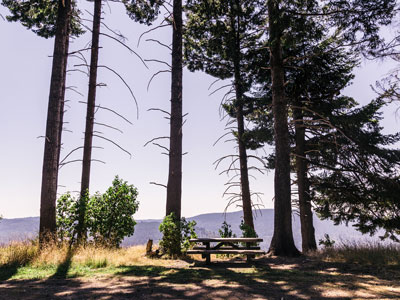
Bald Hills Road
Scenic mountain drive winding through open prairies, oak woodlands, and remote highlands with sweeping views, wildlife sightings, and access to some of the tallest trees on Earth.
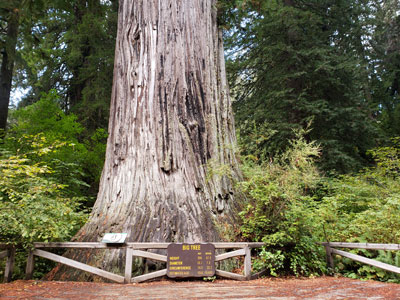
Big Tree Wayside
Easy walk to stunning old-growth redwood trees
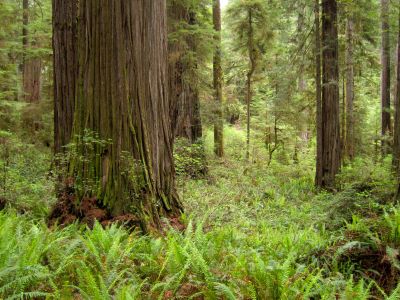
Boy Scout Tree Trail
5.6 miles roundtrip, 800 feet elevation gain, Moderate
Moderately challenging forest trail leading through dense old-growth redwoods to a massive twin-trunk tree and a small cascading waterfall.
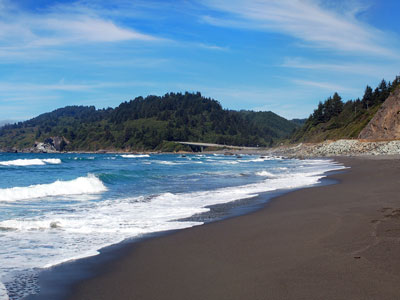
Del Norte Coast Redwoods State Park
Expansive coastal park combining ancient redwood forests, rugged ocean cliffs, and secluded beaches with opportunities for hiking, wildlife viewing, and scenic exploration.
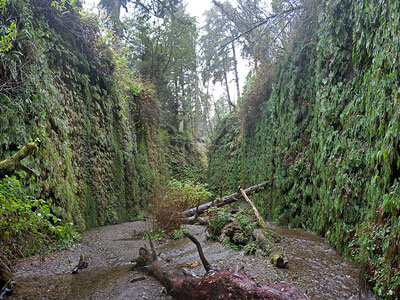
Fern Canyon
0.7 mile loop, 150 feet elevation gain, Easy
Narrow canyon hike lined with lush vertical walls draped in dense ferns, featuring shallow stream crossings and a uniquely enclosed rainforest-like atmosphere.
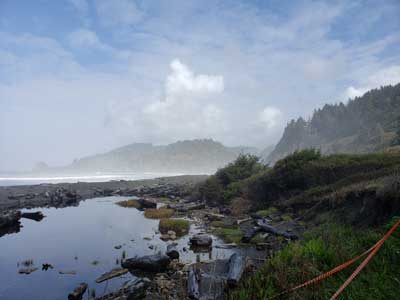
Hidden Beach Trail
0.5 mile roundtrip, 100 feet elevation gain, Easy
Short coastal trail leading through spruce forest to secluded beaches, tide pools, sea stacks, and dramatic Pacific Ocean viewpoints along a rugged stretch of shoreline.
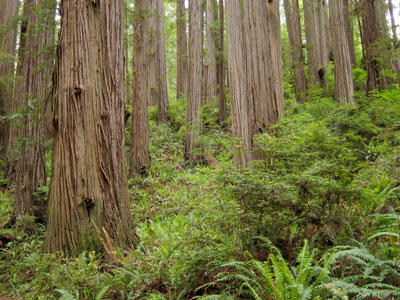
Jedediah Smith Redwoods State Park
Dense old-growth redwood forest featuring some of the largest trees on Earth, scenic river access, and peaceful hiking trails through lush, cathedral-like groves.
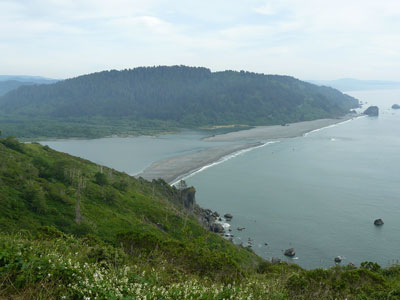
Klamath River
Wild and scenic river corridor flowing through rugged canyons and forested landscapes, offering opportunities for fishing, rafting, and wildlife viewing.
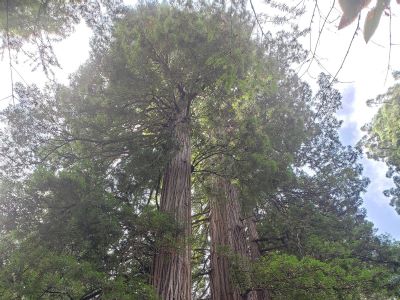
Lady Bird Johnson Grove Trail
1.5 miles loop, 100 feet elevation gain, Easy
Situated around the dedication site of Redwood National Park, winding through stands of old-growth redwood, Douglas-fir, and tanoak
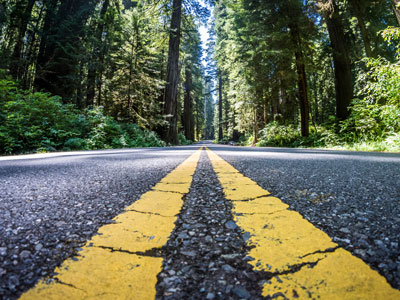
Newton B. Drury Scenic Byway
Scenic drive through old-growth redwoods with trailheads and wildlife viewing.
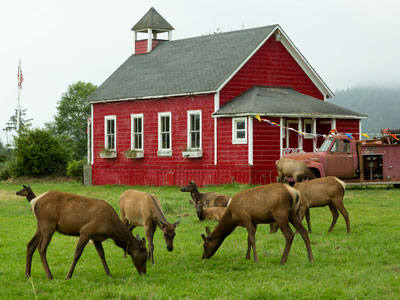
Orick
Small community on Redwood Creek along U.S. 101, 43 miles north of Eureka, and the gateway to Redwood National Park.
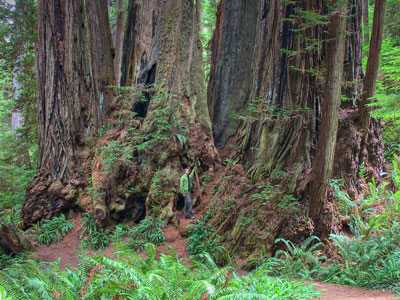
Prairie Creek Redwoods State Park
Old-growth redwood park near Orick famed for Roosevelt elk grazing in Elk Prairie and for trails to Fern Canyon and Gold Bluffs Beach.
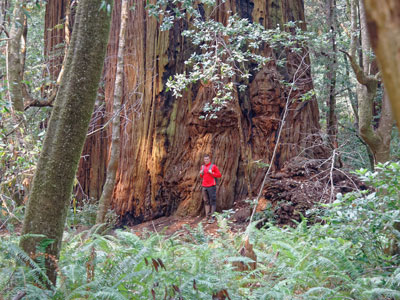
Redwood Creek
Creek winding from forested uplands to the Pacific past towering redwoods, gravel bars, and shifting channels, forming one of Northern California's most dynamic ecosystems.
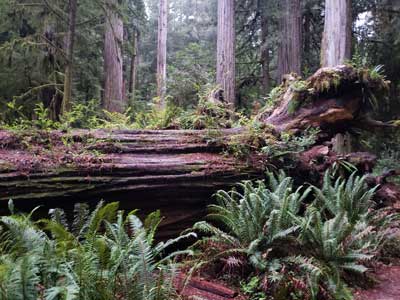
Simpson Reed Trail
1 mile loop, 50 feet elevation gain, Easy
Ancient forest where 1,000-year-old redwoods form a towering canopy over a mixture of hardwood trees, shrubs, and ferns
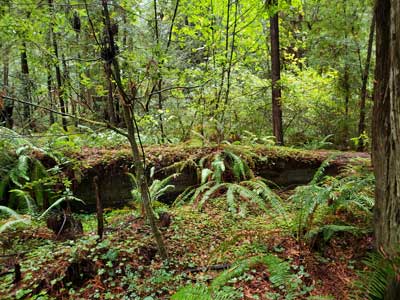
Stout Grove Trail
0.5 mile loop, 50 feet elevation gain, Easy
Majestic 44-acre grove of 300-foot old-growth redwoods, considered the heart of Jedediah Smith Redwoods State Park and a popular summer destination for the adventurous
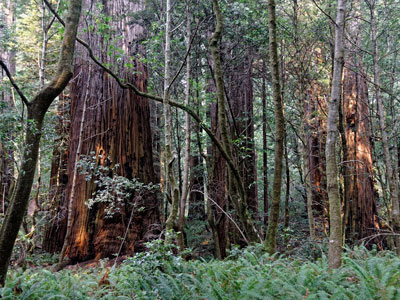
Tall Tree Grove
4.5 miles roundtrip, 800 feet elevation gain, Moderate
Old-growth forest trail to a secluded overlook of some of the world's tallest trees, with lush redwood groves, river views, and an ancient coastal ecosystem.