
California Missions Travel Guide
Series of 21 religious outposts or missions established between 1769 and 1833 founded by Catholic priests of the Franciscan order, the surviving mission buildings are the state's oldest structures and its most-visited historic monuments.
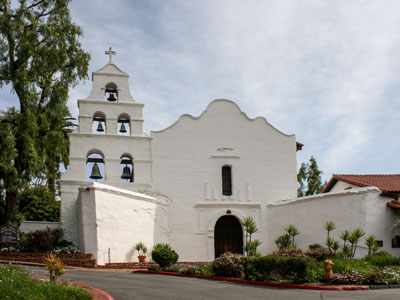
Mission San Diego de Alcalá
First Franciscan mission in The Californias is the fifth to stand on this location. The mission site is a National Historic Landmark
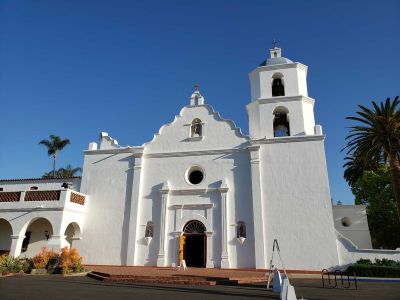
Mission San Luis Rey de Francia
National Historic Landmark, for its pristine example of a Spanish mission church complex and functions as a parish church of the Diocese of San Diego as well as a museum and retreat center
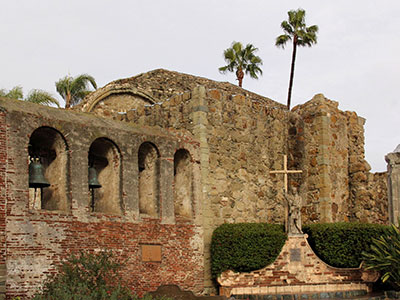
Mission San Juan Capistrano
Californioa mission modeled after the Byzantine cathedrals scattered throughout Europe and Western Asia
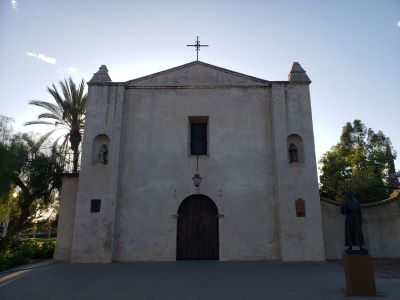
Mission San Gabriel Arcángel
Roman Catholic mission and historic landmark in San Gabriel, California, named after the Archangel Gabriel and often referred to as the "Godmother of the Pueblo of Los Angeles"
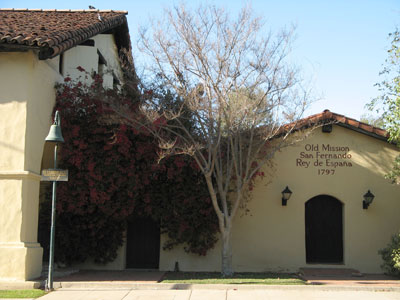
San Fernando Rey de Espana
Spanish mission in the Mission Hills community of Los Angeles and was the seventeenth of the twenty-one Spanish missions is the namesake of the nearby city of San Fernando and the San Fernando Valley
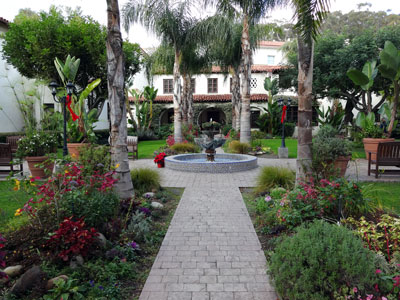
San Buenaventura
Ninth Spanish mission includes the remains of the original mission including the church and its garden
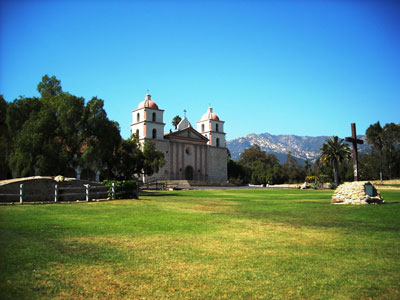
Santa Barbara
Spanish mission founded by Padre Fermín Lasuén for the Franciscan order on December 4, 1786, is the namesake of the city of Santa Barbara as well as of Santa Barbara County
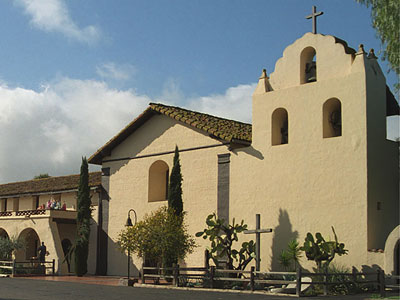
Santa Ines
Home to the first learning institution in Alta California and today serves as a museum
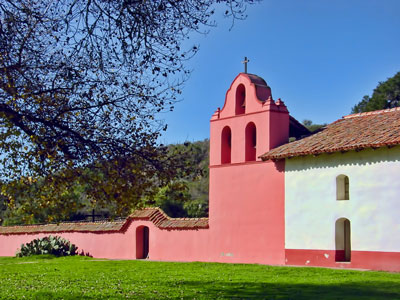
La Purisima Concepcion
Currently the only example in California of a complete Spanish Catholic mission complex, and was designated a National Historic Landmark in 1970
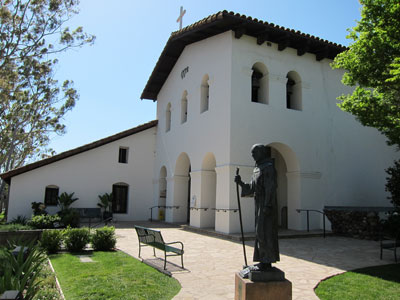
San Luis Obispo de Tolosa
Spanish mission founded September 1, 1772 is the namesake of San Luis Obispo and offers tours of the beautiful church, gardens, school and small museum that holds a collection of its artifacts
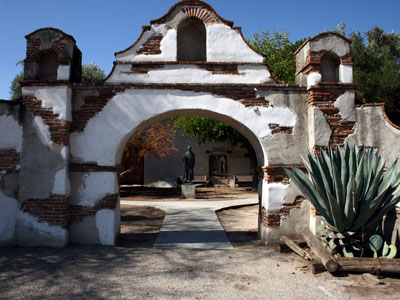
San Miguel Arcangel
Named to a National Historic Landmark in 2006, of California's missions, it is one that retains more than most of its layout and buildings, including a portion of its neophyte village
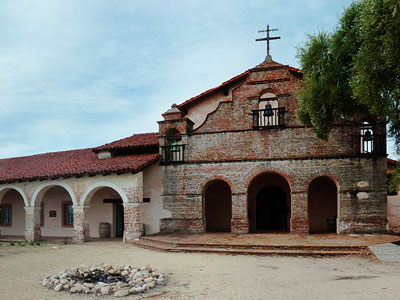
San Antonio de Padua
First Franciscan mission in The Californias is the fifth to stand on this location. The mission site is a National Historic Landmark
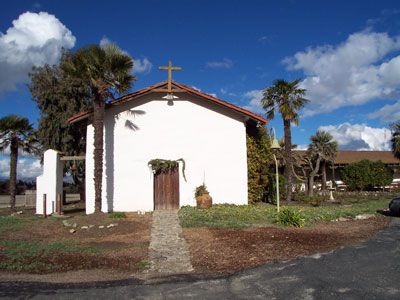
Nuestra Senora de la Soledad
Chapel now functions as a chapel of Our Lady of Solitude, a parish church of the Diocese of Monterey. The priests' residence was later recreated, and functions as a museum
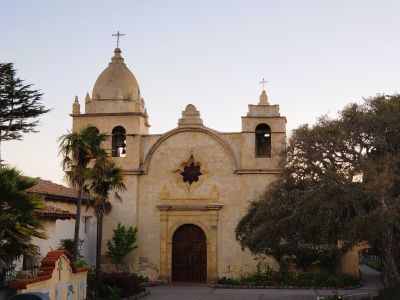
San Carlos Borromeo del Carmelo
Carmel mission church is one of the most authentically restored of all the mission churches in California
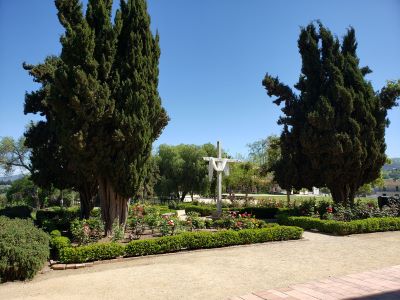
San Juan Bautista
Mission has served mass daily since 1797, and today functions as a parish church of the Diocese of Monterey
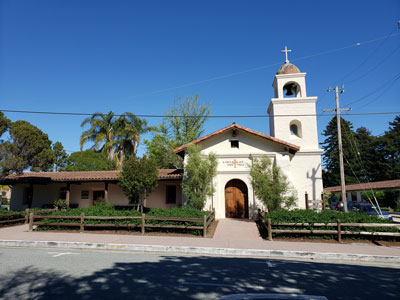
Santa Cruz
Only surviving mission building, a dormitory for native acolytes, has been restored to its original appearance and functions as a museum of the Santa Cruz Mission State Historic Park
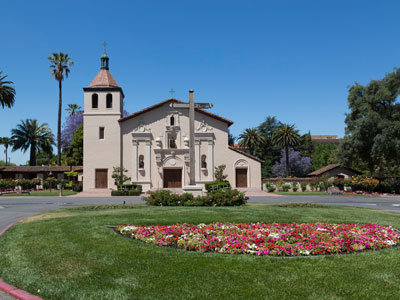
North Park
Namesake of both the city and county of Santa Clara, as well as of Santa Clara University. Although ruined and rebuilt six times, the settlement was never abandoned, and today it functions as the university chapel for Santa Clara University
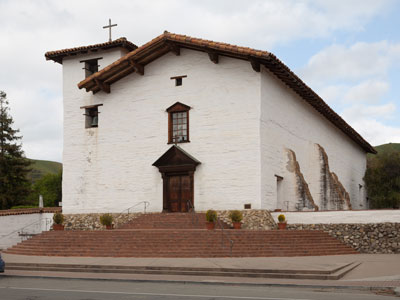
San Jose
Old mission church remains in use as a chapel of Saint Joseph Catholic Church, a parish of the Diocese of Oakland. The museum also features a visitor center, museum, and slide show telling the history of the mission
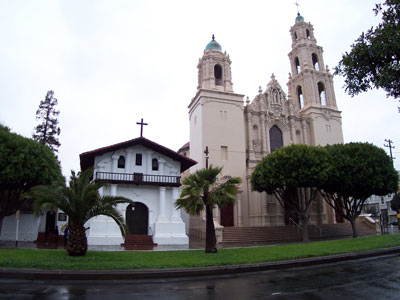
San Francisco de Asis
Mission commonly known as Mission Dolores, is a Spanish Californian mission and the oldest surviving structure in San Francisco, located in the Mission District
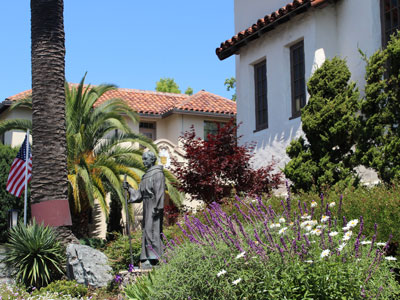
San Rafael Arcangel
Spanish mission in San Rafael, California founded in 1817 as a medical asistencia ("sub-mission") of Mission San Francisco de Asís
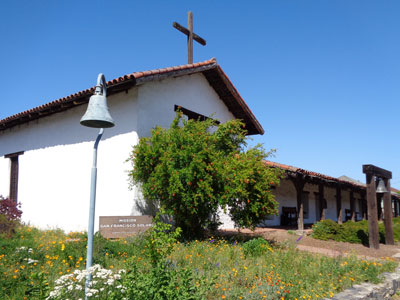
San Francisco Solano
The 21st, last, and northernmost mission in Alta California, named for Saint Francis Solanus. It was the only mission built in Alta California after Mexico gained independence from Spain
Overview
The California Missions are a chain of 21 Spanish Franciscan missions stretching along the coast from San Diego to Sonoma, founded between 1769 and 1833. Their surviving buildings, with whitewashed arches, bell towers and courtyard gardens, are the state’s oldest structures and most-visited historic sites, and they helped inspire Mission Revival architecture. Visitors can follow the 600-mile California Mission Trail along El Camino Real, with each mission about a day’s ride apart.
The Spanish established the missions to spread Catholicism among Native Americans and to secure Alta California, and the presidios and towns that grew around them became the roots of Los Angeles, San Diego, San Jose and San Francisco. Mission San Diego de Alcalá, founded in 1769, was the first. Highlights include Mission San Juan Capistrano, famous for its swallows, Mission Santa Barbara, the “Queen of the Missions,” Mission San Carlos Borromeo in Carmel and Mission Dolores in San Francisco.
Mission locations
There were 21 missions accompanied by military outposts in Alta California from San Diego to Sonoma, California. To facilitate travel between them on horse and foot, the mission settlements were situated approximately 30 miles apart, about one day's journey on horseback, or three days on foot. The entire trail eventually became a 600-mile long "California Mission Trail."
Following the old Camino Real northwards, from San Diego through to the northernmost mission in Sonoma, California, north of San Francisco Bay, the missions were:
| No. | Name | Named for | Location | Date founded |
|---|---|---|---|---|
| 1. | Mission San Diego de Alcalá | St. Didacus of Alcalá | San Diego | July 16, 1769 |
| 2. | Mission San Luis Rey de Francia | St. Louis, King of France | Oceanside | June 12, 1798 |
| 3. | Mission San Juan Capistrano | St. John of Capistrano | San Juan Capistrano | November 1, 1776 |
| 4. | Mission San Gabriel Arcángel | The Archangel Gabriel | San Gabriel | September 8, 1771 |
| 5. | Mission San Fernando Rey de España | St. Ferdinand, King of Spain | Los Angeles | September 8, 1797 |
| 6. | Mission San Buenaventura | St. Bonaventure | Ventura | March 31, 1782 |
| 7. | Mission Santa Barbara | St. Barbara | Santa Barbara | December 4, 1786 |
| 8. | Mission Santa Inés | St. Agnes | Solvang | September 17, 1804 |
| 9. | Mission La Purísima Concepción | The Immaculate Conception | Southeast of Lompoc | December 8, 1787 |
| 10. | Mission San Luis Obispo de Tolosa | St. Louis of Toulouse | San Luis Obispo | September 1, 1772 |
| 11. | Mission San Miguel Arcángel | The Archangel Michael | San Miguel | July 25, 1797 |
| 12. | Mission San Antonio de Padua | St. Anthony of Padua | Northwest of Jolon | July 14, 1771 |
| 13. | Mission Nuestra Señora de la Soledad | Mary, Our Lady of Solitude | South of Soledad | October 9, 1791 |
| 14. | Mission San Carlos Borromeo de Carmelo | St. Charles Borromeo | Carmel | June 3, 1770 |
| 15. | Mission San Juan Bautista | St. John the Baptist | San Juan Bautista | June 24, 1797 |
| 16. | Mission Santa Cruz | The Exaltation of the Holy Cross | Santa Cruz | August 28, 1791 |
| 17. | Mission Santa Clara de Asís | St. Clare of Assisi | Santa Clara | January 12, 1777 |
| 18. | Mission San José | St. Joseph | Fremont | June 11, 1797 |
| 19. | Mission San Francisco de Asís | St. Francis of Assisi | San Francisco | July 16, 1769 |
| 20. | Mission San Rafael Arcángel | The Archangel Raphael | San Rafael | October 9, 1776 |
| 21. | Mission San Francisco Solano | St. Francis Solanus | Sonoma | April 4, 1824 |
Coastal mission chain, planning and overview
Plans for the Alta California missions were laid out under the reign of King Charles III. The missions were to be interconnected by an overland route which later became known as the Camino Real. The detailed planning and direction of the missions was to be carried out by Friar Junípero Serra(who, in 1767, along with his fellow priests, had taken control over a group of missions in Baja California Peninsula previously administered by the Jesuits). Rev. Fermín Francisco de Lasuén took up Serra's work and established nine more mission sites, from 1786 through 1798; others established the last three compounds. Work on the coastal mission chain was concluded in 1823.
Mission sites, selection and layout
In addition to the presidio (royal fort) and pueblo (town), the misión was one of the three major agencies employed by the Spanish sovereign to extend its borders and consolidate its colonial territories. The Spanish Californians had never strayed from the coast when establishing their settlements; Mission Nuestra Señora de la Soledad was located farthest inland, being only some thirty miles from the shore. Each frontier station was forced to be self-supporting, as existing means of supply were inadequate to maintain a colony of any size. California was months away from the nearest base in colonized Mexico, and the cargo ships of the day were too small to carry more than a few months' rations in their holds. To sustain a mission, the padres required converted Native Americans, called neophytes, to cultivate crops and tend livestock in the volume needed to support a fair-sized establishment. The scarcity of imported materials, together with a lack of skilled laborers, compelled the missionaries to employ simple building materials and methods in the construction of mission structures.
The first priority when beginning a settlement was the location and construction of the church (iglesia). The majority of mission sanctuaries were oriented on a roughly east-west axis to take the best advantage of the sun's position for interior illumination; the exact alignment depended on the geographic features of the particular site. Once the spot for the church had been selected, its position was marked and the remainder of the mission complex was laid out. The workshops, kitchens, living quarters, storerooms, and other ancillary chambers were usually grouped in the form of a quadrangle, inside which religious celebrations and other festive events often took place. The cuadrángulo was rarely a perfect square because the missionaries had no surveying instruments at their disposal and simply measured off all dimensions by foot.
Mission Bells
Bells were vitally important to daily life at any mission. The bells were rung at mealtimes, to call the Mission residents to work and to religious services, during births and funerals, to signal the approach of a ship or returning missionary, and at other times; novices were instructed in the intricate rituals associated with the ringing the mission bells. The daily routine began with sunrise Mass and morning prayers, followed by instruction of the natives in the teachings of the Roman Catholic faith. After a generous breakfast of atole, the able-bodied men and women were assigned their tasks for the day. The women were committed to dressmaking, knitting, weaving, embroidering, laundering, and cooking, while some of the stronger girls ground flour or carried adobe bricks (weighing 55 lb, or 25 kg each) to the men engaged in building. The men worked a variety of jobs, having learned from the missionaries how to plow, sow, irrigate, cultivate, reap, thresh, and glean. In addition, they were taught to build adobe houses, tan leather hides, shear sheep, weave rugs and clothing from wool, make ropes, soap, paint, and other useful duties.
Impact
The impact that the original Spanish system of colonization had on modern day California cannot be overstated. The early missions and their sub-missions formed the nuclei of what would later become the major metropolitan areas of San Francisco and Los Angeles, as well as many other smaller municipalities. In addition to clearing the way for Spanish, Mexican, and later American settlers, the early Spanish mission system established the viability of the early Western economies of cattle and agriculture which survive in modern form in the state to this day. The Spanish mission system acted to "settle and Westernize" California, but unfortunately did so very much at the expense of the earlier Native American Culture of California that had preceded the Spanish mission system.
Present-day California missions
California is home to the greatest number of well-preserved missions found in any U.S. state. The missions are collectively the best-known historic element of the coastal regions of California.
Most of the missions are still owned and operated by some entity within the Catholic Church. Three of the missions are still run under the auspices of the Franciscan Order (Santa Barbara, San Miguel Arcángel, and San Luis Rey de Francia).
Mission La Purísima Concepción, Mission San Francisco Solano, and the one remaining mission-era structure of Mission Santa Cruz are owned and operated by the California Department of Parks and Recreation as State Historic Parks.
Seven mission sites are designated National Historic Landmarks, fourteen are listed in the National Register of Historic Places, and all are designated as California Historical Landmarks for their historic, architectural, and archaeological significance.
Today, the missions exist in varying degrees of architectural integrity and structural soundness. The most common extant features at the mission grounds include the church building and an ancillary convento (convent) wing. In some cases (in San Rafael, Santa Cruz, and Soledad, for example), the current buildings are replicas constructed on or near the original site. Other mission compounds remain relatively intact and true to their original, Mission Era construction. A notable example of an intact complex is the now-threatened Mission San Miguel Arcángel: its chapel retains the original interior murals created by Salinan Indians under the direction of Esteban Munras, a Spanish artist and last Spanish diplomat to California. Many missions have preserved (or in some cases reconstructed) historic features in addition to chapel buildings.
The missions have earned a prominent place in California's historic consciousness, and a steady stream of tourists from all over the world visit them. In recognition of that fact, on November 30, 2004 President George W. Bush signed HR 1446, the California Mission Preservation Act, into law. The measure provided $10 million over a five-year period to the California Missions Foundation for projects related to the physical preservation of the missions, including structural rehabilitation, stabilization, and conservation of mission art and artifacts.
This article uses material from the Wikipedia article "Spanish Missions in California ", which is released under the Creative Commons Attribution-Share-Alike License 3.0