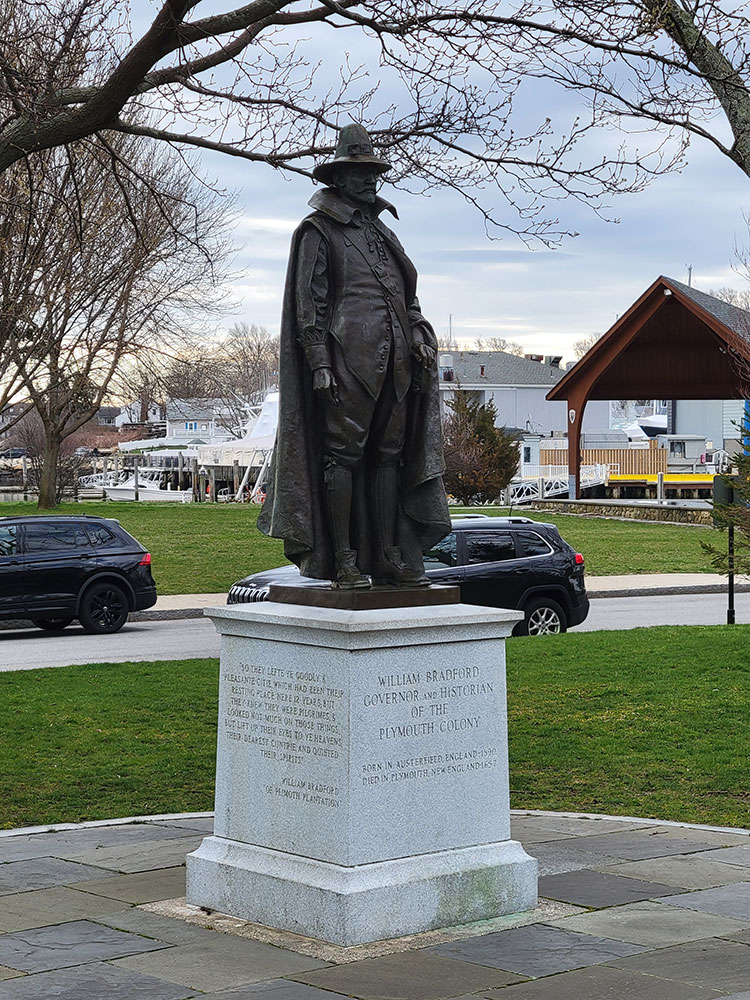
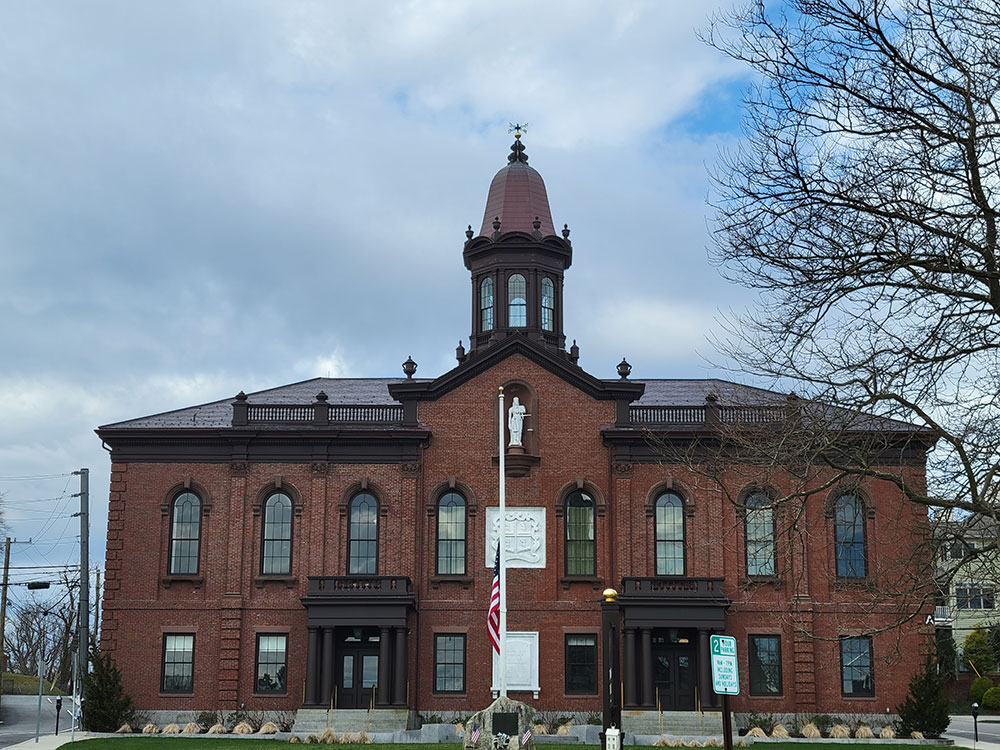
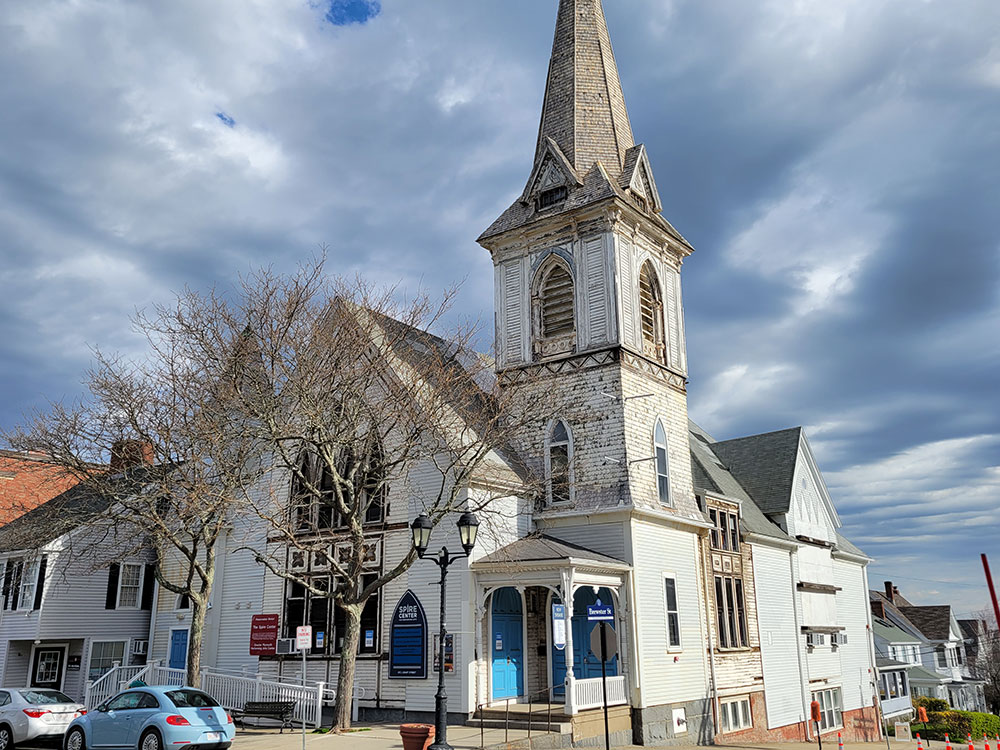
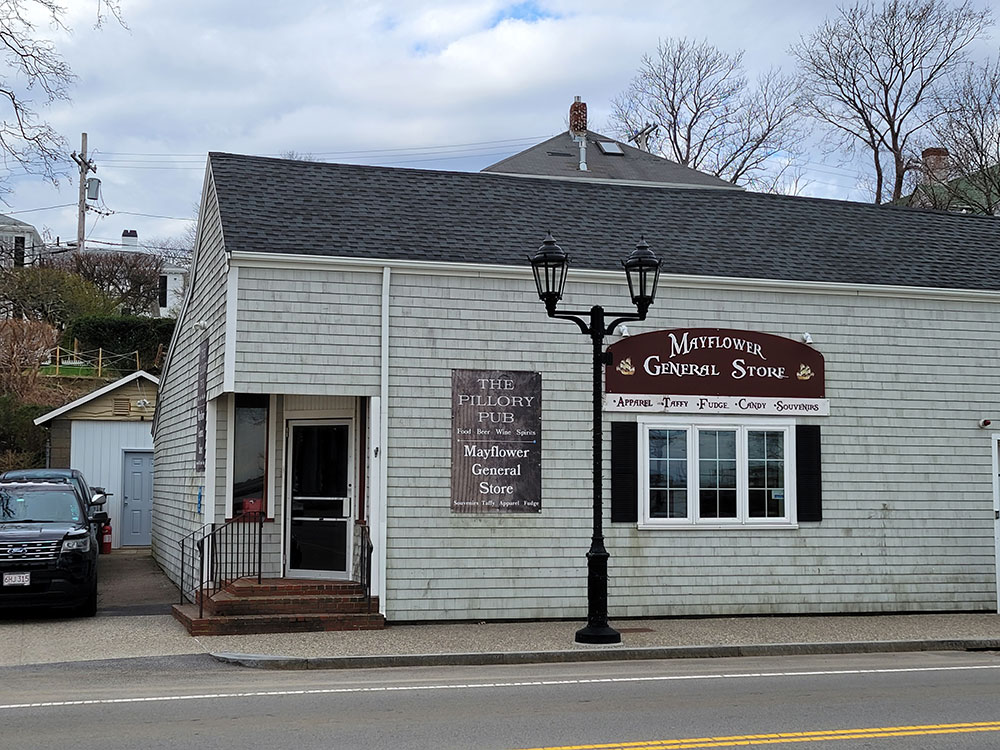
Site of the colony founded in 1620 by the Mayflower Pilgrims, where New England was first established.
Places to See in Plymouth
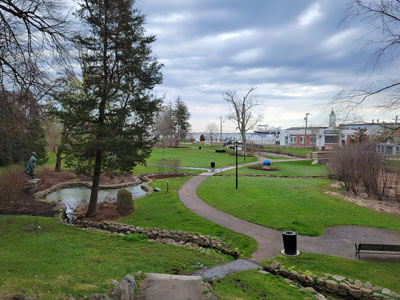
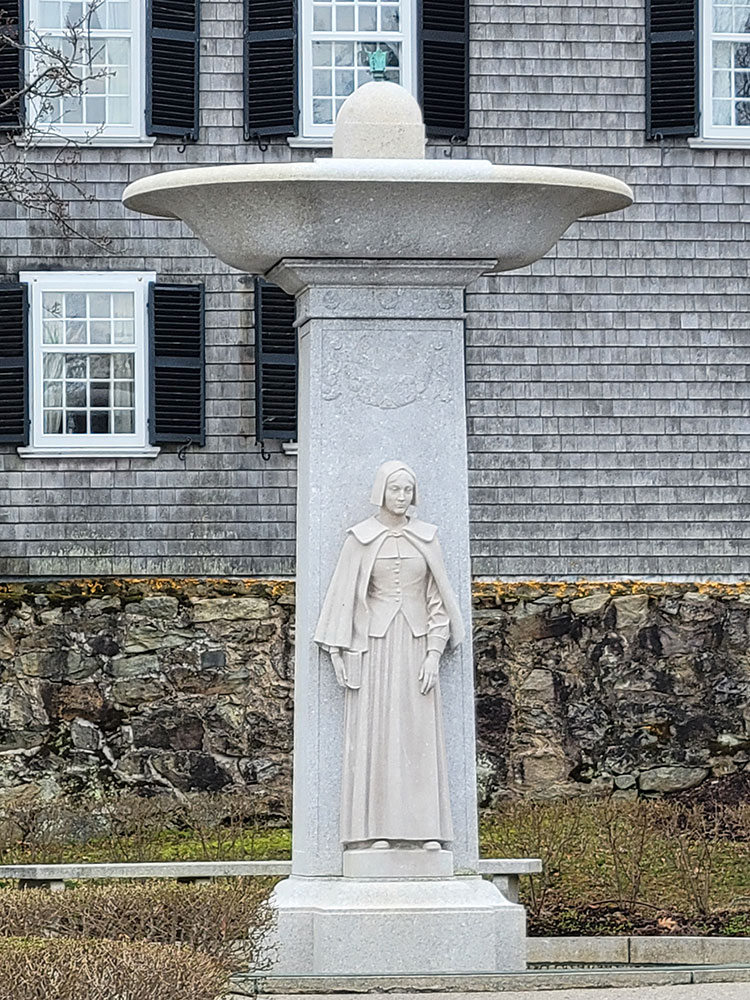
Brewster Gardens
Park located in the center of Plymouth covers the original garden plot that was granted to Elder William Brewster in 1620
Giorgio Galeotti, CC BY 4.0, via Wikimedia Commons; Image Size Adjusted

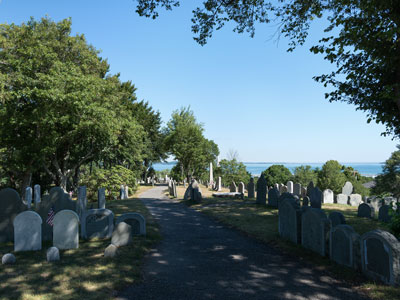
Burial Hill
Historic cemetery in Plymouth, established in the 17th century, is the burial site of several Pilgrims, the founding settlers of Plymouth Colony

Jeff P from Berkeley, CA, USA, CC BY 2.0, via Wikimedia Commons; Image Size Adjusted

Cole's Hill
Historic landmark containing the first cemetery used by the Mayflower Pilgrims in Plymouth in 1620
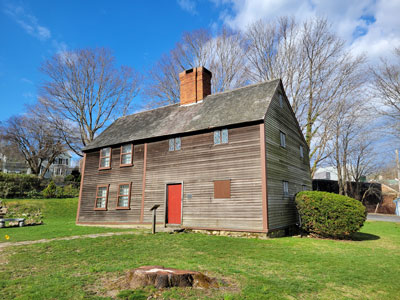
Jabez Howland House
Oldest portion of two-story wood-frame house built in 1667, and purchased by Jabez Howland, son of two of the original Mayflower passengers
Robert Linsdell from St. Andrews, Canada, CC BY 2.0, via Wikimedia Commons; Image Size Adjusted

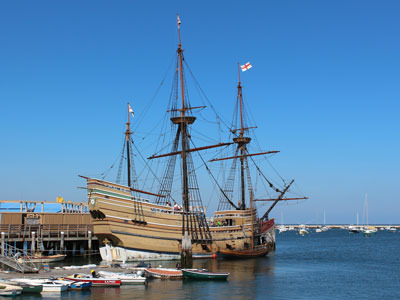
Mayflower II
Replica of the 17th-century ship Mayflower, celebrated for transporting the Pilgrims to the New World in 1620
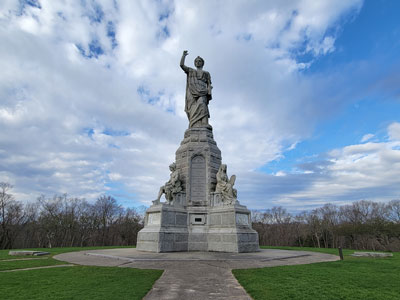
National Monument to the Forefathers
81-foot-tall (25 m) monument commemorating the Mayflower Pilgrims
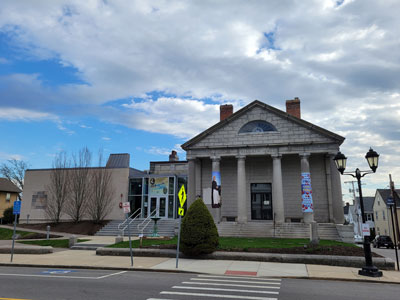
Pilgram Hall Museum
Oldest public museum in the United States in continuous operation, having opened in 1824, tells the story of the Pilgrims and Plymouth Colony
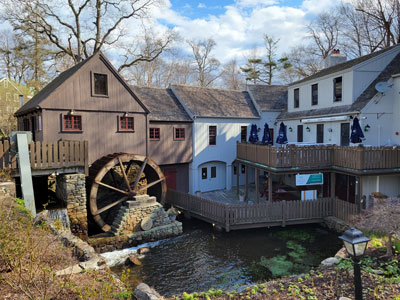
Plimoth Grist Mill
Working grist mill located in Plymouth
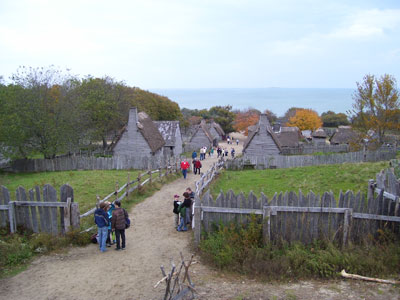
Swampyank at en.wikipedia, CC BY-SA 3.0, via Wikimedia Commons; Image Size Adjusted

Plimoth Plantation
Living history museum attempts to replicate the original settlement of the Plymouth Colony established in the 17th century by the Pilgrims
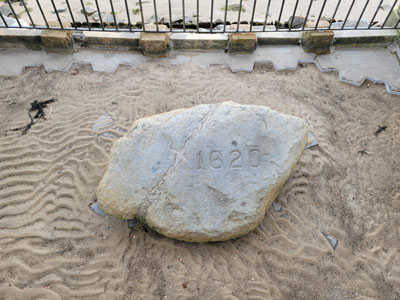
Plymouth Rock
Traditional site of disembarkation the Mayflower Pilgrims who founded Plymouth Colony in December 1620
Overview
Plymouth, Massachusetts, calls itself "America's Hometown" because it is the site of the first permanent European settlement in New England, founded by the Pilgrims who arrived on the Mayflower in 1620. Located on Cape Cod Bay about 40 miles south of Boston, it is associated with the story of the first Thanksgiving, with Plymouth Rock, and with the Wampanoag people who helped the colonists survive. Today the town is both a major historic destination and a harbor community with beaches, cranberry bogs, and a working waterfront.
Visitors come to Plymouth to see Plymouth Rock, to tour the Mayflower II, a replica of the Pilgrims' ship, and to visit Plimoth Patuxet Museums, a living history museum. They also come for Pilgrim Hall Museum, for Plymouth Beach and the harbor, for whale watching and cruises, and for the Thanksgiving celebrations in November.
History
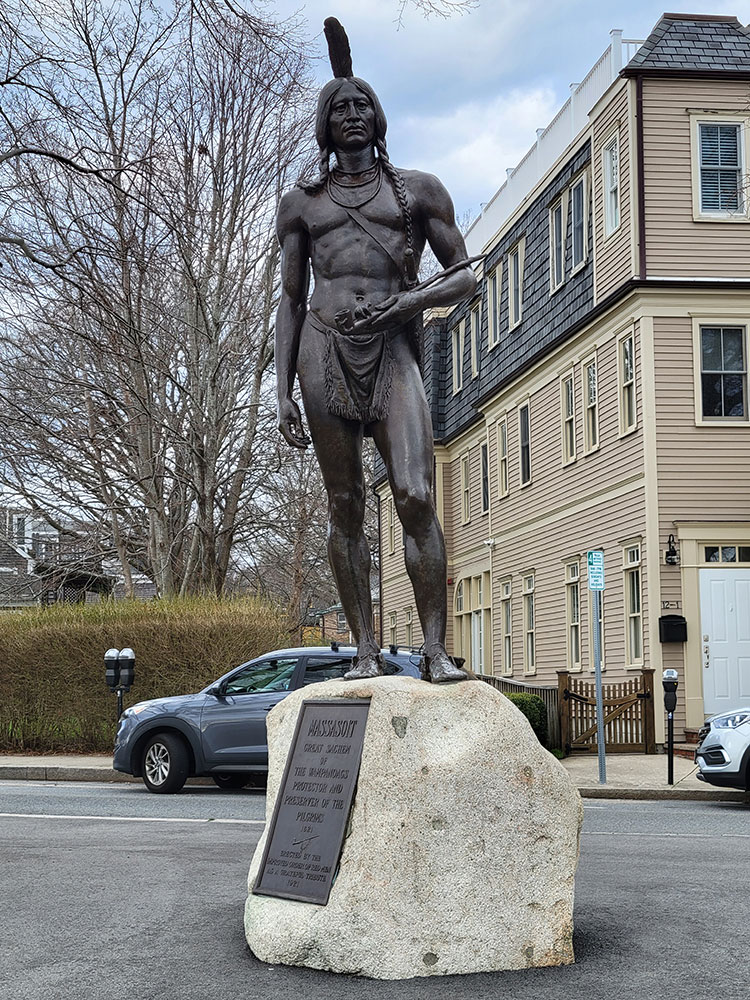
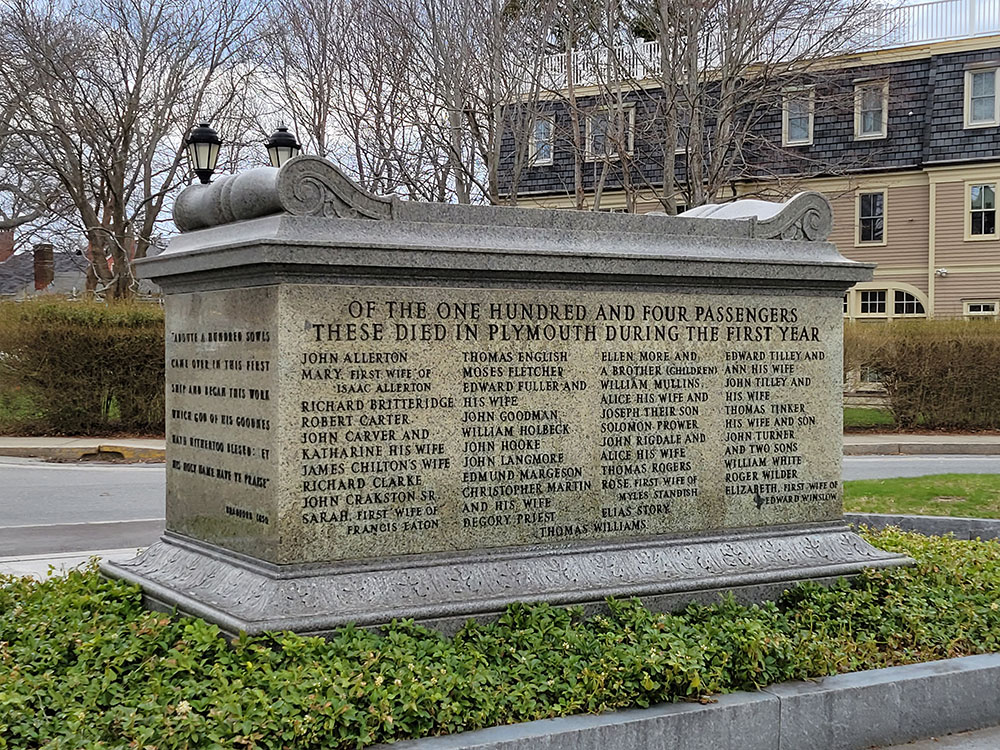
The Pilgrims, English Separatists seeking religious freedom, sailed on the Mayflower in 1620 and first landed at Provincetown on Cape Cod, where they signed the Mayflower Compact, before settling at Plymouth in December, on the site of an abandoned Wampanoag village called Patuxet. Nearly half of the 102 passengers died during the first winter, and in the spring the survivors were helped by Squanto, a Patuxet man who spoke English, and by the Wampanoag sachem Massasoit, who made a treaty with them. The harvest feast of 1621, shared by the colonists and about 90 Wampanoag men, is the basis for the American Thanksgiving tradition. Plymouth Colony remained a separate colony until it merged with Massachusetts Bay in 1691, and the town later became a center for fishing, shipbuilding, and rope-making, and then a tourist destination.
Preserved Sites of the Pilgrims and Early Colonization
Plymouth preserves more sites of the Pilgrim landing and early colonization than any other place in America. Plymouth Rock, the traditional landing place identified in 1741, sits on the waterfront beneath a classical portico, and the nearby Mayflower II, a 1957 replica, is open for tours. Cole's Hill overlooks the harbor and has the graves of the settlers who died in the first winter, and Burial Hill, the site of the original fort, has gravestones from the 1600s. The Jabez Howland House, built in 1667, is the only remaining home in Plymouth known to have been occupied by a Mayflower passenger, and the Pilgrim Hall Museum, founded in 1824, is the oldest continuously operating public museum in the country, with the Pilgrims' possessions. Plimoth Patuxet Museums recreates the 1627 colony and a Wampanoag homesite, the Plimoth Grist Mill is a working reconstruction of a 1636 mill, and the National Monument to the Forefathers, an 81-foot granite statue dedicated in 1889, honors the Pilgrims.
Sightseeing and Popular Landmarks
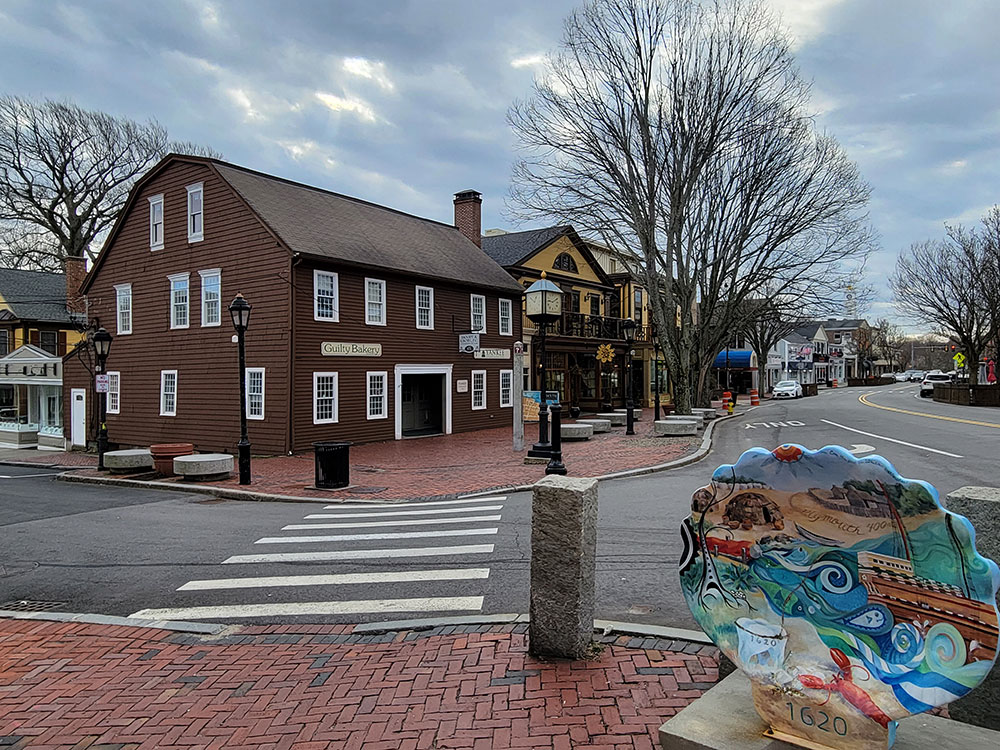
Plymouth's waterfront has the Rock, the Mayflower II, and State Pier, and Water Street and Main Street have shops, restaurants, and historic buildings. Brewster Gardens is a park along Town Brook, named for Elder William Brewster, and the Plymouth Antiquarian Society operates historic house museums such as the Hedge House and the Spooner House. Whale watching and fishing boats leave from the harbor, and a seasonal ferry runs to Provincetown.
Culture and Museums
Pilgrim Hall Museum displays the objects associated with the Pilgrims, including the cradle of Peregrine White, the first English child born in New England, and Plimoth Patuxet Museums includes both the 17th Century English Village and the Wampanoag Homesite staffed by Native interpreters. The Plymouth Antiquarian Society, the Mayflower Society House, and the Plymouth National Wax Museum are other attractions, and the Plymouth Center for the Arts and the Spire Center for Performing Arts host events. America's Hometown Thanksgiving Celebration includes a parade in November.
Parks
Plymouth Beach is a three-mile barrier beach with views of the harbor, and the town has nine public beaches in all. Myles Standish State Forest, in the southern part of the town, has 12,000 acres of pitch pine forest, kettle ponds, and trails, and Morton Park and Brewster Gardens are popular for picnics. Cranberry bogs are a distinctive part of the landscape, particularly in autumn when the harvest takes place.
Seasons and Weather
Plymouth has a humid continental climate moderated by Cape Cod Bay. Summers are warm, with highs in the upper 70s°F, and winters are cold, with highs in the 30s°F and about 40 inches of snow. Summer and fall are the busiest seasons, and some attractions are closed or have reduced hours in winter.
This article uses material from Wikipedia as well as information from official tourism and institutional sources. Key references include Visit Plymouth, Plimoth Patuxet Museums, Pilgrim Hall Museum, Plymouth 400, Mass.gov Visit Massachusetts, and National Weather Service Boston/Norton. Wikipedia material is from the articles "Plymouth, Massachusetts" and "Plymouth Colony", and is available under the Creative Commons Attribution-Share-Alike License 3.0.