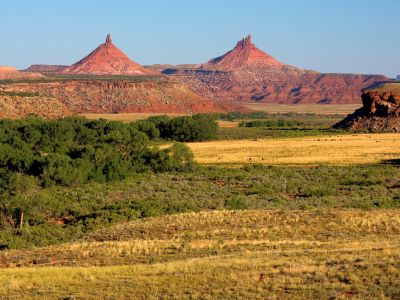

Expansive high desert landscape rich in archaeological sites, sacred Indigenous landmarks, and rugged canyons ideal for hiking, camping, and cultural exploration.
General Information
Visitor centers have seasonal hours
Permits required for Cedar Mesa hikes and San Juan River trips
How to Get There
From Moab (120 mi): Take US-191 S to Blanding, then head west on UT-95 to access the northern section or south on UT-191 to Bluff and west on UT-162 for southern access points.
Overview
The Bears Ears National Monument spans over 1.3 million acres of southeastern Utah’s red rock wilderness, encompassing a landscape sacred to Native American tribes and rich with archaeological treasures. Named for the twin buttes that rise above the horizon, the monument protects thousands of cultural sites, including cliff dwellings, rock art, and ancient roads. Visitors can explore remote canyons, hike to ruins like House on Fire, or gaze upon the Valley of the Gods and Cedar Mesa. The monument is co-managed by the Bureau of Land Management, U.S. Forest Service, and the Bears Ears Inter-Tribal Coalition, reflecting its deep cultural significance.
Travelers should come prepared for rugged conditions, as many roads require high-clearance vehicles and cell service is limited. Permits are required for certain hikes and river trips, and visitors are encouraged to follow “Visit with Respect” guidelines to protect fragile archaeological resources. Spring and fall offer the best weather for exploration, while summer heat and monsoon storms can pose hazards. Whether you're drawn by the natural beauty, the cultural history, or the solitude of the high desert, Bears Ears offers a profound and humbling experience in one of the most storied landscapes in the American Southwest.
Things to Do
Explore a Landscape Rich in Cultural and Natural History
Bears Ears National Monument protects more than one million acres of canyons, mesas, buttes, deserts, forests, and archaeological sites in southeastern Utah. Named for the twin buttes that rise above the landscape, the monument is considered one of the most culturally significant areas in the American Southwest, containing thousands of archaeological and sacred sites associated with Indigenous peoples.
Discover Ancient Cliff Dwellings and Rock Art
The monument contains an extraordinary concentration of Ancestral Puebloan ruins, granaries, petroglyphs, pictographs, and ancient roads. Visitors can explore remarkable archaeological sites that provide insight into thousands of years of human history and cultural traditions throughout the region.
Visit Mule Canyon and House on Fire Ruin
One of the monument's most photographed attractions, House on Fire Ruin is a spectacular Ancestral Puebloan structure built beneath a rock overhang. When illuminated by sunlight, the sandstone above the ruin resembles flames, creating a unique and memorable sight.
Explore Valley of the Gods
Located near the monument, Valley of the Gods features towering sandstone buttes, colorful desert landscapes, and scenic backcountry roads. Often compared to Monument Valley, the area provides exceptional photography opportunities and dramatic views of Utah's canyon country.
Drive the Scenic Moki Dugway
The Moki Dugway is a steep gravel road carved into towering cliffs that offers breathtaking views of Cedar Mesa, Valley of the Gods, and the surrounding desert landscape. It is one of the most scenic and memorable driving experiences in the Southwest.
Experience Exceptional Stargazing and Wilderness
Because of its remote location and minimal light pollution, Bears Ears National Monument offers outstanding night sky viewing. Visitors can enjoy dark skies, incredible views of the Milky Way, camping opportunities, and a wilderness experience that feels largely unchanged from centuries past.
Top Trails
House on Fire Trail
Length: Approximately 1.5 miles round trip
Elevation Gain: Approximately 70 feet
Difficulty: Easy
This popular hike follows Mule Canyon to the famous House on Fire Ruin. The trail is relatively short and provides access to one of the most iconic archaeological sites in the Bears Ears region.
Moon House Ruin Trail
Length: Approximately 4 miles round trip
Elevation Gain: Moderate
Difficulty: Moderate
This trail leads to one of the most impressive archaeological sites on Cedar Mesa. Visitors can view a remarkably preserved cliff dwelling complex featuring numerous rooms, intricate masonry, and significant cultural resources.
Kane Gulch Trail
Length: Approximately 6 to 10 miles round trip depending on route
Elevation Gain: Moderate
Difficulty: Moderate to Strenuous
A gateway to Cedar Mesa, Kane Gulch offers access to numerous archaeological sites, rock art panels, canyons, and scenic overlooks. The trail provides an excellent introduction to the monument's cultural and natural resources.
Bullet Canyon Trail
Length: Approximately 6 miles round trip
Elevation Gain: Moderate
Difficulty: Moderate
This scenic canyon hike passes natural alcoves, archaeological sites, and desert landscapes while providing access to the renowned Perfect Kiva, one of the region's most notable ancestral ceremonial structures.
Sources: Bureau of Land Management official Bears Ears National Monument information, including details on cultural resources, archaeological sites, recreation opportunities, scenic drives, and monument management.
https://www.blm.gov/programs/national-conservation-lands/utah/bears-ears-national-monument
Additional information verified through Bears Ears Partnership and public lands resources covering Cedar Mesa, House on Fire Ruin, Moon House Ruin, Kane Gulch, Indigenous cultural significance, and visitor stewardship information.
https://bearsearspartnership.org/
Further trail and recreation information reviewed through Bureau of Land Management recreation guides covering Valley of the Gods, Moki Dugway, Bullet Canyon, archaeological sites, hiking opportunities, and backcountry travel within Bears Ears National Monument.
https://www.blm.gov/visit/valley-gods
This article uses material from the Wikipedia articles and official tourism pages for Bears Ears National Monument, which are released under the Creative Commons Attribution-Share-Alike License 3.0