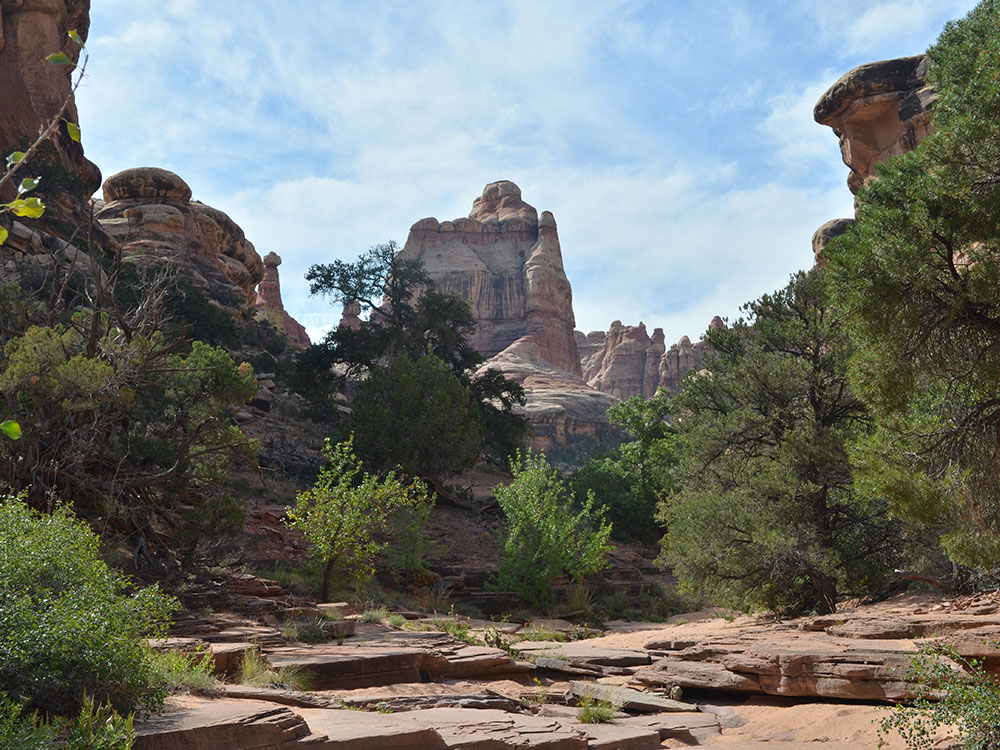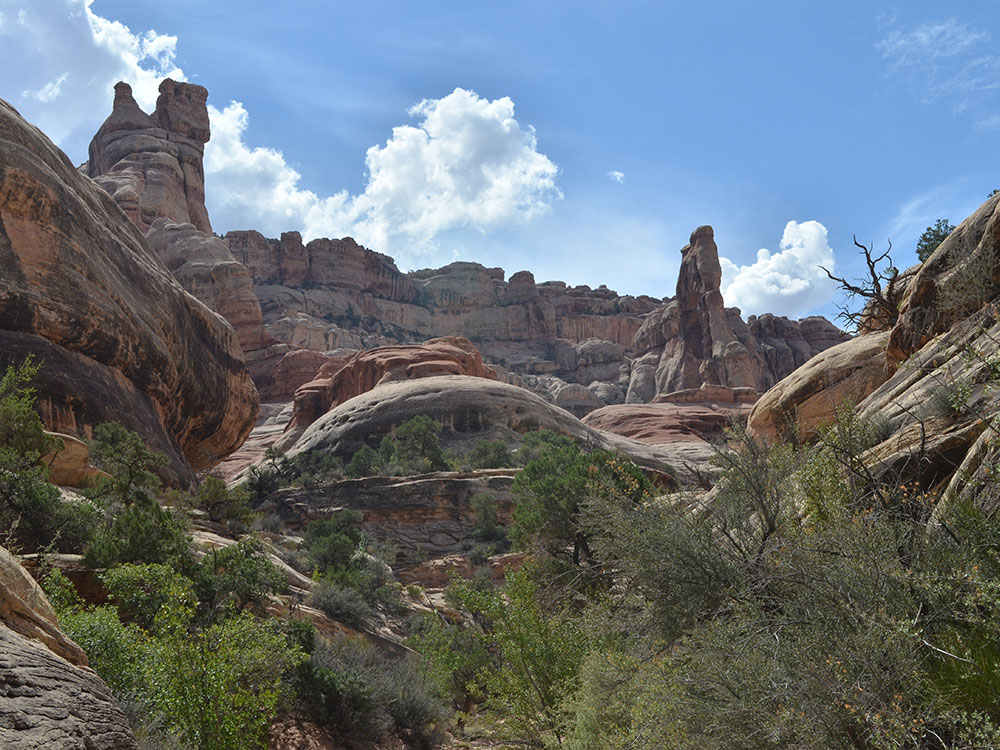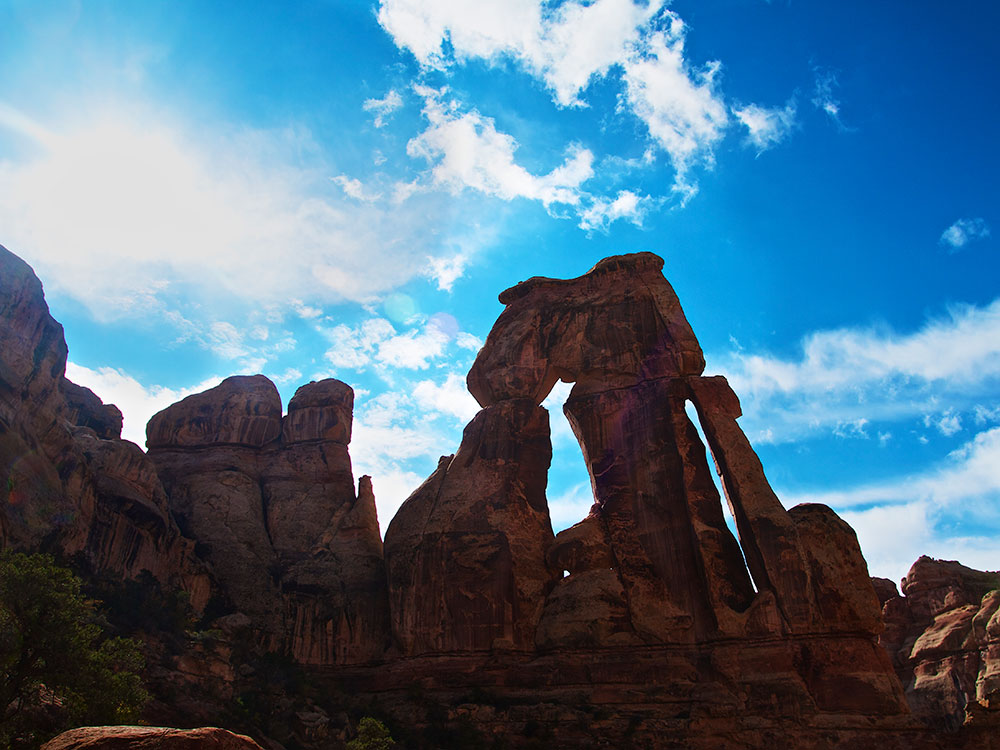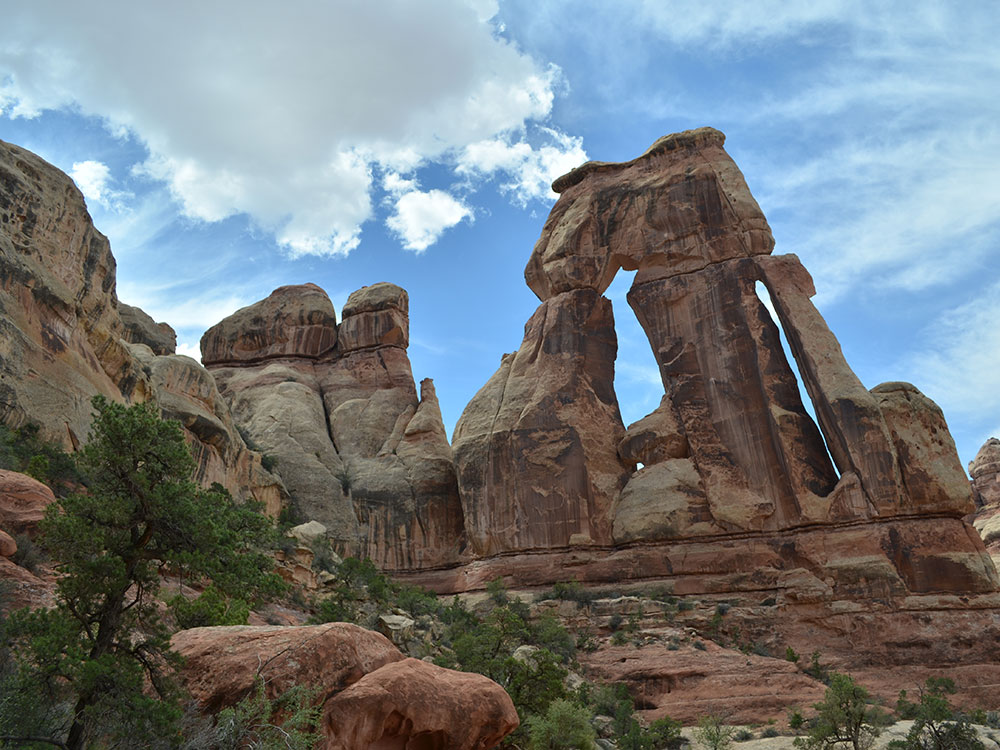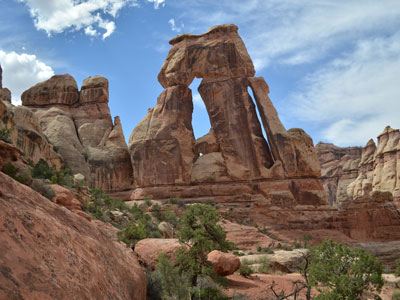

A massive stone arch rising above a rugged canyon landscape, reached by a challenging backcountry trail that passes through sandstone formations, desert washes, and expansive wilderness scenery.
General Information
- Length:
- 10.8 miles roundtrip
- Elevation Gain:
- 1,500 feet
- Difficulty:
- Strenuous
- Hours:
- Open 24 hours daily as part of Canyonlands National Park; hiking is recommended during daylight hours
- Fees:
-
Canyonlands National Park entrance fees apply:
Private Vehicle: $30 (7-day pass)
Motorcycle: $25 (7-day pass)
Individual (walk-in/bicycle): $15 (7-day pass)
America the Beautiful and other federal passes accepted - Pet Policy:
- Pets are not allowed on the trail
- Closest cities with hotels:
- Moab (50 mi)
- Seasons:
- Spring and Fall provide the most comfortable hiking conditions; the trail is accessible year-round
- Location:
- Druid Arch Trailhead, Needles District, Canyonlands National Park, UT
- Website:
- nps.gov/cany/planyourvisit/druid-arch.htm
How to Get There
From Moab (50 mi): Follow US-191 south and UT-211 west to the Needles District Visitor Center, continue to the Elephant Hill Trailhead area, and begin the trail through Chesler Park and Elephant Canyon toward the arch.
Overview
Druid Arch is one of the most spectacular landmarks in the Needles District of Canyonlands National Park. Named for its resemblance to the standing stones of Stonehenge, the massive, slab-like arch rises high above the head of Elephant Canyon, and the National Park Service describes the hike as offering one of the most spectacular views in the Needles. The trail travels through slickrock, sandy washes, and towering sandstone spires, culminating in a steep climb to the base of the arch. No permit is required for a day hike, but overnight trips to the designated campsites along the way require a backcountry permit.
Getting to the Trailhead
The hike begins at the Elephant Hill Trailhead. The Needles District is reached from US-191 between Moab and Monticello by turning west onto UT-211, a paved road that winds through Indian Creek Canyon past Newspaper Rock to the park entrance, about 75 miles and 1.5 hours from Moab. Services are very limited, so fill up on gas and water before leaving town. The Elephant Hill Trailhead is at the end of a graded gravel road of about 3 miles that leaves the paved scenic drive near the Needles Campground; the road is passable for standard passenger vehicles in dry conditions, but the notoriously steep and rocky four-wheel-drive road that continues beyond the parking area is only for experienced drivers with high-clearance four-wheel-drive vehicles. The parking lot is moderate in size and can fill on spring and fall weekends, so arrive early.
Trail Description
From the Elephant Hill Trailhead, the trail follows the first part of the Chesler Park Trail, climbing onto slickrock and winding past sandstone formations. It then drops into Elephant Canyon and branches off up the canyon bottom, following the wash through deep sand and loose rock for several miles. The canyon narrows as it approaches its upper end, and the final quarter mile climbs steeply up the slope, with one ladder and some scrambling, to a viewpoint at the base of Druid Arch. Hikers return the same way, for a total of about 10.8 miles round trip. The Needles trail network has many junctions, so carry a map and check the signs, especially where the trail leaves the Chesler Park Trail and enters Elephant Canyon.
Trail Conditions and Difficulty
The hike is strenuous because of its length, the long stretches of deep sand in Elephant Canyon, and the steep final climb, and it usually takes 5 to 7 hours. The ladder and scrambling at the end require careful footing, but no technical skills are needed. There is little shade, and water in Elephant Canyon is seasonal and unreliable, so carry plenty. Summer temperatures often exceed 100 degrees, so spring and fall are the best seasons. In winter, snow and ice can make the slickrock and the final climb slippery, and flash floods are possible in Elephant Canyon during thunderstorms.
This article uses material from the Wikipedia articles and official tourism pages for the Druid Arch, which are released under the Creative Commons Attribution-Share-Alike License 3.0. Additional trail information is from the National Park Service page "Hiking - Canyonlands National Park".