A remote desert hike and 4x4-access route in Arches National Park leading to expansive viewpoints of sandstone fins, arches, and cliffs, offering a quieter alternative to the park’s more crowded areas.
~600–950 ft elevation gain
Moderate (can be strenuous due to distance and exposure)
Best visited during daylight hours (park access may require timed entry in peak season)
How to Get There
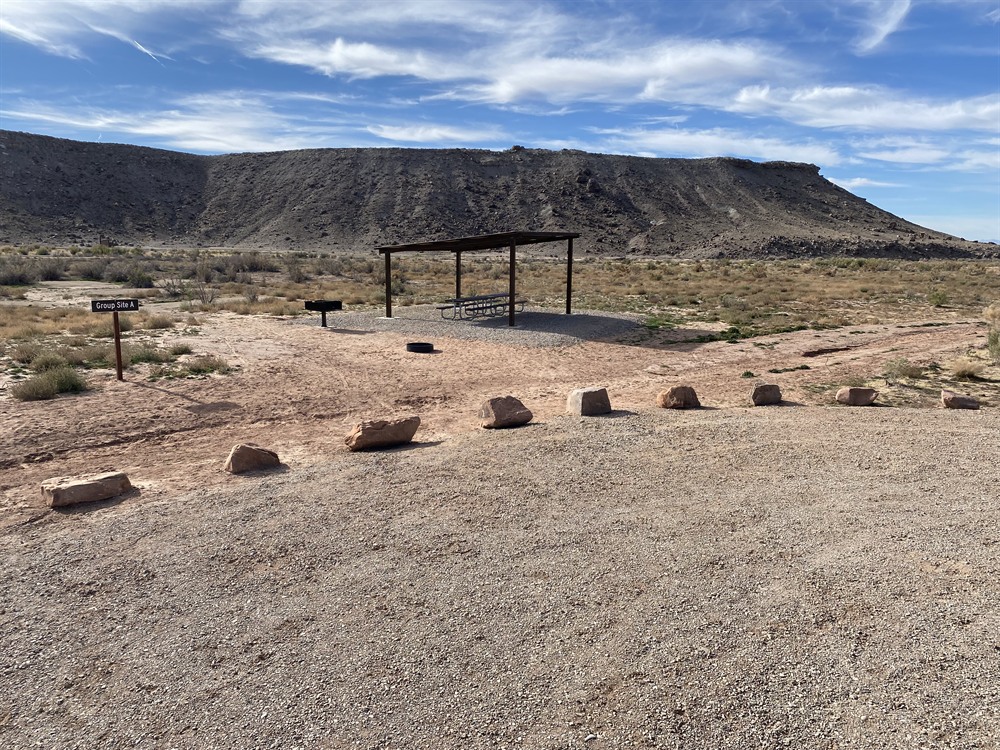
From Moab (~20–25 mi): Enter Arches National Park and follow the main scenic drive north to Salt Valley Road. Continue on this gravel road to the Tower Arch / Klondike Bluffs area. Alternatively, from Highway 191 outside the park, take the signed Klondike Bluffs access road near Canyonlands Field Airport and follow it to the trailhead parking area.
Overview
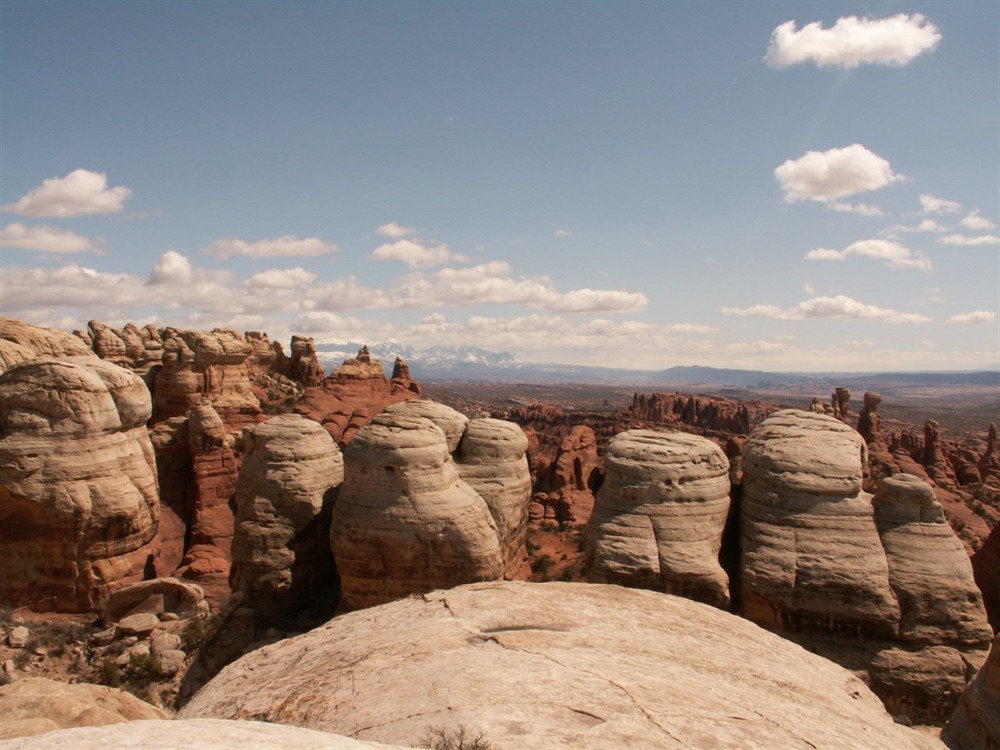
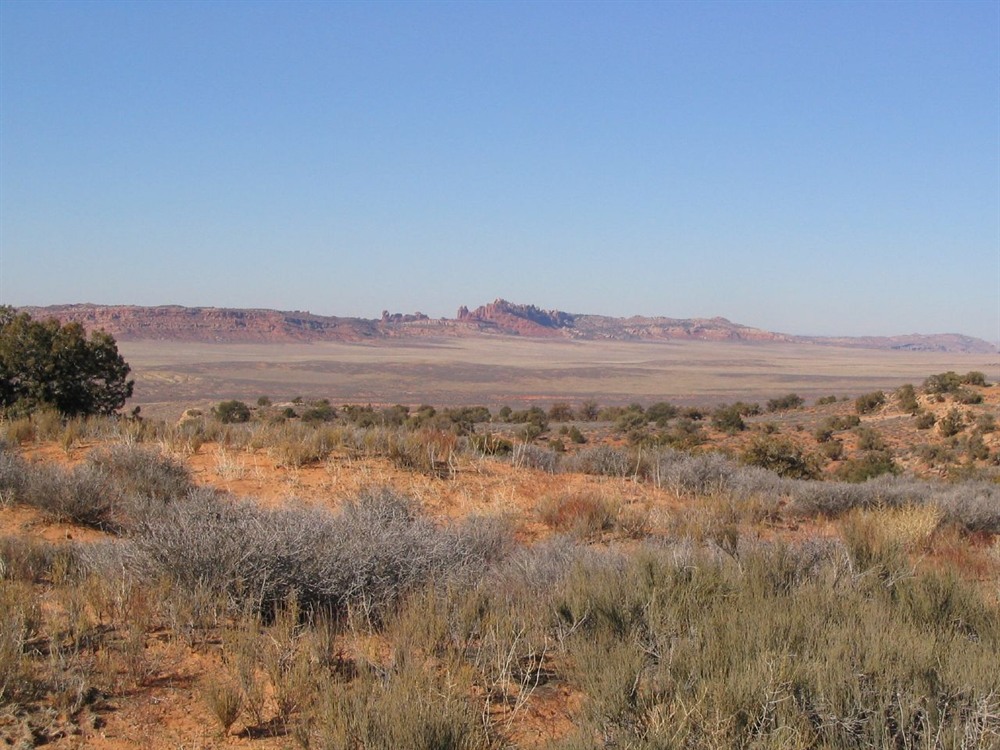
The Klondike Bluffs area offers a quieter, more rugged adventure within and just outside the boundaries of Arches National Park. Unlike the park’s heavily trafficked viewpoints, this region consists of a network of dirt roads, jeep tracks, and trails that traverse open desert terrain toward a dramatic ridge of sandstone cliffs. Along the way, visitors encounter slickrock expanses, sandy washes, and occasional fossilized dinosaur tracks embedded in the rock, all under wide-open desert skies.
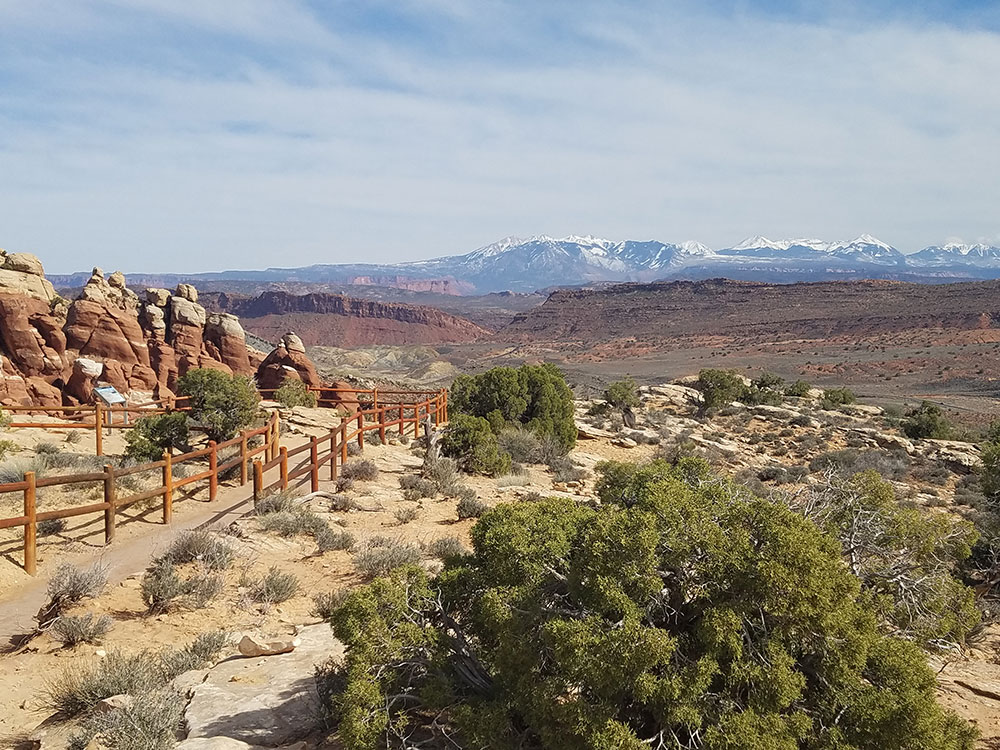
Reaching the bluffs rewards hikers and explorers with sweeping views of Arches National Park, including distant fins, arches, and the La Sal Mountains on the horizon. The experience is defined less by a single destination and more by the journey itself, as multiple routes and side trails invite extended exploration. Due to its remote access, limited shade, and exposure to heat, the area demands preparation but offers solitude and a sense of scale rarely found in more developed sections of the park.
This article uses material from the National Park Service and trail guides for the Arches National Park, which are released under the Creative Commons Attribution-Share-Alike License 3.0.
-1000.jpg)
.jpg)