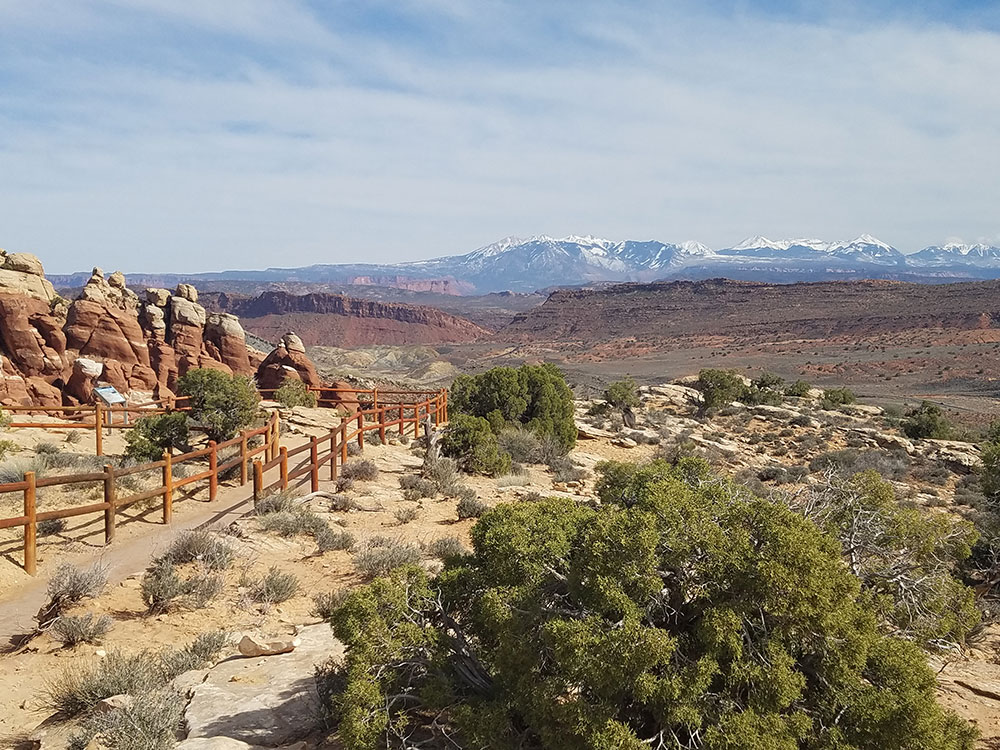
A remote and lightly visited backcountry area in Arches National Park featuring sandstone fins, hidden arches, and wide-open desert terrain, ideal for exploration away from crowds.
General Information
- Length:
- 3–5 miles roundtrip (up to 7+ miles with full exploration)
- Elevation Gain:
- 300–700 feet
- Difficulty:
- Moderate
- Hours:
- Open daily year-round
Accessible during daylight hours - Fees:
- $30 per vehicle (Arches National Park entrance fee, valid 7 days)
- Pet Policy:
- Pets not allowed on trails; allowed only in developed areas on leash
- Seasons:
- Spring and Fall are best; summer is extremely hot and winter road conditions may vary
- Location:
- Herdina Park Area near Balanced Rock, Arches National Park, UT
- Website:
- nps.gov/arch
How to Get There
From Moab (~15 mi): Enter Arches National Park and follow the main scenic drive about 8.5 miles to the Balanced Rock area. Just before the pullout, turn onto the dirt road (Willow Springs Road) and continue about 0.8 miles to a junction. From there, follow the marked 4WD road for about 2 miles to reach the Herdina Park and Eye of the Whale Arch area.
Overview
Herdina Park is one of the most secluded areas of Arches National Park, a quiet expanse of Entrada sandstone fins, domes, and shallow canyons northwest of the busy Balanced Rock area. Its best-known feature is Eye of the Whale Arch, whose shape resembles the eye of a whale when seen from the right angle, and the surrounding slickrock hides other features such as Leaping Arch. Despite being only a few miles from some of the park's most popular viewpoints, the area sees few visitors because of its rough access road and lack of formal trails. Hikers come for the solitude, the freedom to wander across open slickrock, and the sense of discovery that comes with exploring a less-traveled corner of the park.
Getting to the Trailhead
Herdina Park is reached on Willow Springs Road, a rough dirt road that leaves the main park road near Balanced Rock, about 9 miles from the entrance. A high-clearance, four-wheel-drive vehicle is required, since the road crosses deep sand and rocky ledges, and it can become impassable after rain. After about 0.8 mile, turn onto the signed four-wheel-drive road toward Eye of the Whale Arch and continue about 2 miles to a small parking area near the arch. Hikers without a suitable vehicle can walk the sandy road from the paved park road, which adds several miles to the outing, or join a guided four-wheel-drive tour from Moab. In recent years, Arches has required a timed-entry reservation to enter the park during daytime hours from spring through fall, so check the National Park Service website for current requirements before your visit.
Trail Description
From the parking area, a short path leads to Eye of the Whale Arch, where hikers can walk up beneath the arch and look out through its opening. Beyond the arch there are no maintained trails; hikers wander across the slickrock domes and through the sandy washes and ravines between the fins, visiting viewpoints and smaller arches such as Leaping Arch. Routes are unmarked, so it is important to track your direction, note landmarks such as distinctive fins and domes, and know how to find your way back to the parking area. Stay on bare rock or in sandy washes to protect the fragile biological soil crust, and return the way you came. Outings range from a short walk to the arch to several hours of exploration.
Trail Conditions and Difficulty
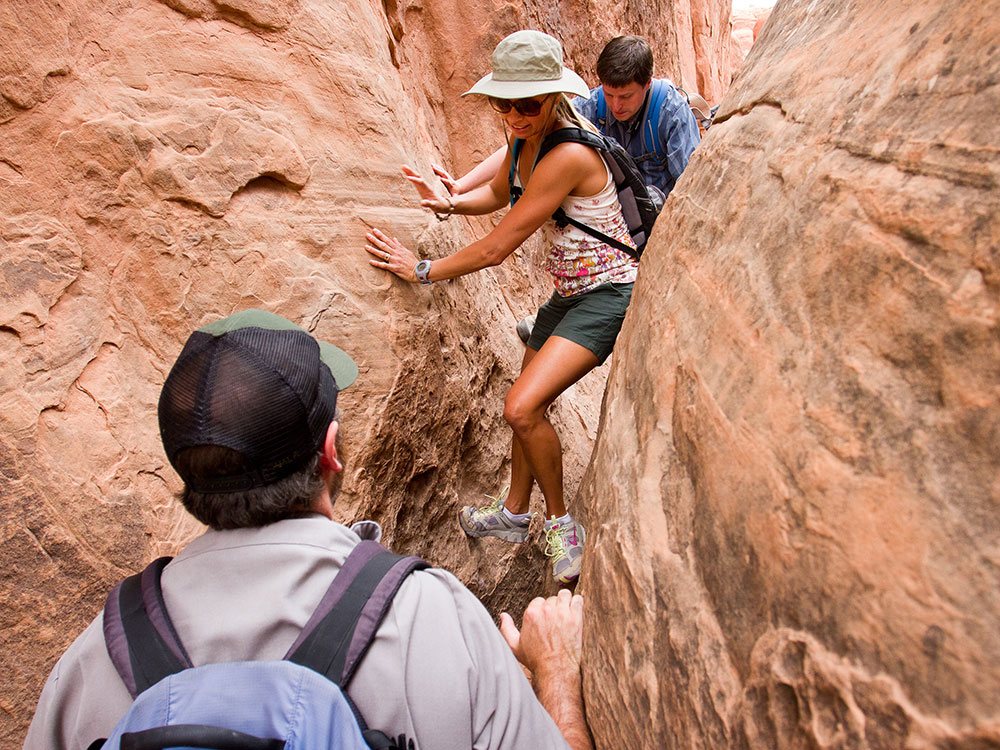
Hiking in Herdina Park is moderate, but the lack of trails means hikers need solid navigation skills, and some routes involve easy scrambling on steep slickrock. The area has no water and almost no shade, and summer temperatures regularly top 100 degrees, so spring and fall are the best seasons and hikers should carry plenty of water. Deep sand on the access road becomes harder to drive in hot, dry conditions, while rain and snow can make the road impassable in winter. Cell service is limited, so let someone know your plans before heading out.
This article uses material from official National Park Service resources and regional trail guides for Arches National Park, which are released under the Creative Commons Attribution-Share-Alike License 3.0. Additional trail information is from the National Park Service page "Hiking - Arches National Park".