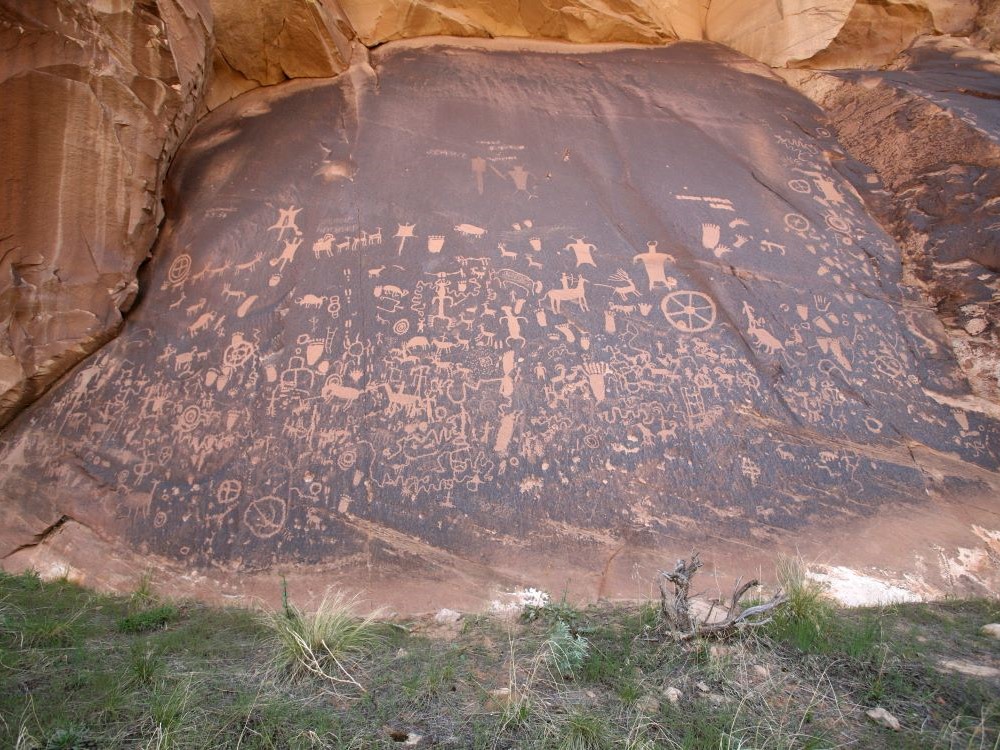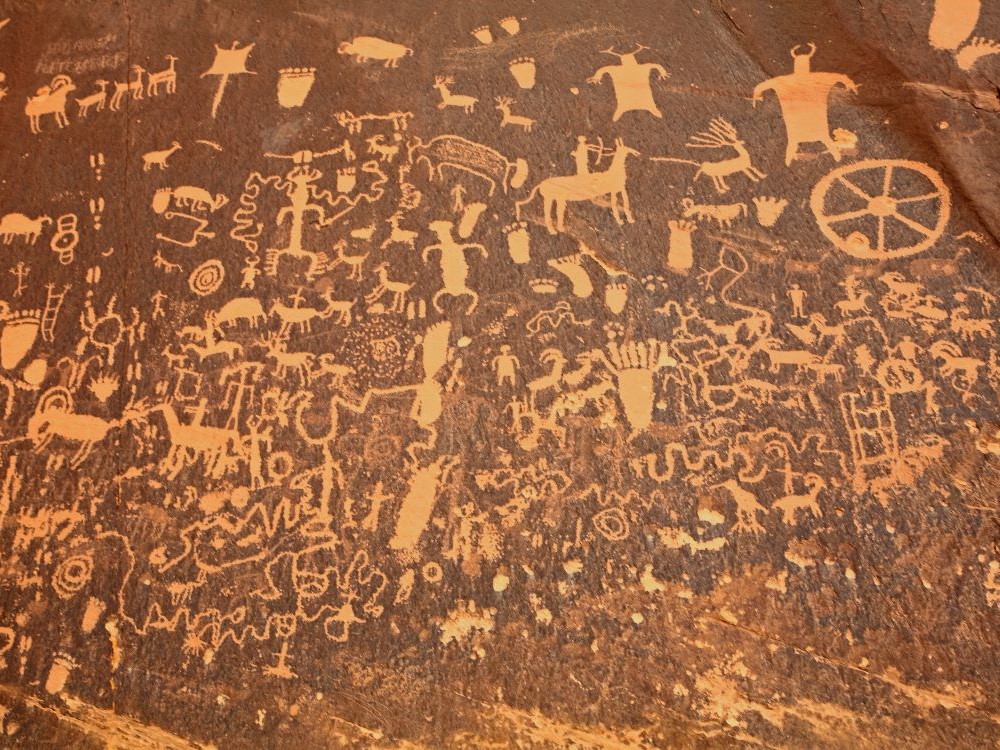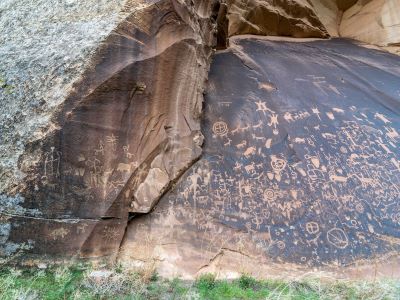

Rock panel etched with hundreds of petroglyphs spanning over 2,000 years, showcasing the cultural expressions of ancient and historic Native American peoples.
General Information
- Hours:
- Open daily, 24 hours a day
- Fees:
- Free admission
- Pet Policy:
- Pets allowed; caution advised due to hot surfaces and lack of shade
- Seasons:
- Spring and Fall offer the most comfortable conditions for viewing and photography
- Location:
- UT-211, Monticello, UT 84535
- Website:
- blm.gov/visit/newspaper-rock
How to Get There
From Moab, drive south on US-191, turn right onto UT-211, and continue 12 miles to the signed site on the right.
Overview
The Newspaper Rock State Historical Monument is one of the most significant petroglyph panels in the American Southwest, featuring over 650 individual carvings etched into desert varnish on a sandstone cliff. These markings span more than 2,000 years and represent the cultural expressions of the Ancestral Puebloans, Fremont, Ute, and Navajo peoples. The site offers a rare and vivid glimpse into the past, with depictions of animals, human figures, symbols, and scenes of daily life. Located along the route to the Needles District of Canyonlands National Park, Newspaper Rock is a popular and easily accessible stop for travelers seeking a deeper connection to the region’s Indigenous history.
Managed by the Bureau of Land Management, the site includes paved parking, vault toilets, and a short accessible path to the petroglyph panel. While there are no picnic facilities or water sources, the monument’s remote setting and interpretive signage make it a peaceful and educational destination. Visitors are encouraged to respect the site’s cultural significance and avoid touching the rock art. With its timeless carvings and dramatic canyon backdrop, Newspaper Rock offers a powerful reminder of the enduring human presence in Utah’s red rock country.
History
The petroglyphs on the panel were made over about 2,000 years by Archaic, Ancestral Puebloan, Fremont, Navajo and Anglo peoples. The Navajo call the rock Tse' Hane, the rock that tells a story. It was protected as a state historic monument in 1961 and is managed by the Bureau of Land Management.
Things to Do
See the Petroglyphs
View the panel from the short path and viewing area.
Read the Interpretive Signs
Signs explain the people who made the carvings.
Drive to the Needles District
The road continues to Canyonlands' Needles District.
Camp Nearby
Campgrounds are along Indian Creek.
This article uses material from the Wikipedia articles and official tourism pages for the Newspaper Rock State Historical Monument, which are released under the Creative Commons Attribution-Share-Alike License 3.0