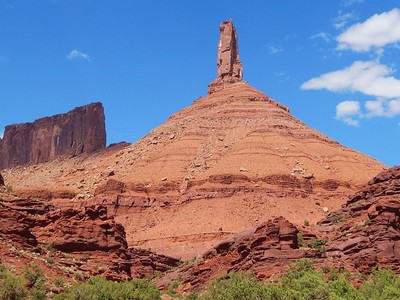

Iconic sandstone spire rising dramatically from the desert floor, renowned for its world-class climbing routes and panoramic views of surrounding red rock formations.
General Information
Guided tours may have separate fees
How to Get There
From Moab, take US-191 north, turn right onto UT-128, then left onto Castle Valley Road and follow signs to the Castleton Tower trailhead.
Overview
The Castleton Tower is one of the most iconic desert formations in the American Southwest, standing over 400 feet tall and perched atop a 1,500-foot talus cone. This towering Wingate sandstone monolith has become a pilgrimage site for climbers from around the world, with its most famous route, the Kor-Ingalls, listed among the 50 Classic Climbs of North America. The surrounding Castle Valley landscape, framed by the La Sal Mountains and Fisher Towers, offers a dramatic backdrop for both adventurers and photographers. The 2.6-mile round-trip trail to the base of the tower is moderately strenuous, rewarding hikers with sweeping views of the Colorado Plateau and glimpses of Arches National Park in the distance.
Managed by the Bureau of Land Management, Castleton Tower is accessible year-round, though spring and fall are ideal for avoiding the desert’s extreme temperatures. The area features primitive camping with no water or restrooms, emphasizing a “leave no trace” ethic. While the tower’s vertical walls attract seasoned climbers, the trail and surrounding mesas offer plenty for casual hikers and nature lovers. Whether you're scaling its sheer cliffs or simply admiring its silhouette against the desert sky, Castleton Tower delivers a quintessential Utah wilderness experience that blends geological wonder with rugged solitude.
This article uses material from the Wikipedia articles and official tourism pages for the Castleton Tower, which are released under the Creative Commons Attribution-Share-Alike License 3.0.