
Historic adobe church complex known for its spiritual significance and centuries-old tradition of pilgrims seeking healing earth and quiet reflection.
General Information
- Hours:
- Daily: 9:00am to 5:00pm
Grounds open from dawn to dusk - Fees:
- Free admission; donations appreciated
- Pet Policy:
- Leashed pets allowed in outdoor areas only
- Closest cities with hotels:
- Santa Fe (25 mi)
- Seasons:
- Spring and Fall for best weather; busiest during Holy Week pilgrimage
- Location:
- 15 Santuario Dr, Chimayo, NM 87522
- Website:
- holychimayo.us
How to Get There
From Santa Fe (25 mi): Take US-84/285 N toward Española, then turn right onto NM-503 and follow it to NM-76, continuing east along the High Road until reaching the church complex in Chimayó.
Overview
Chimayó is a small village in the Sangre de Cristo foothills about 24 miles north of Santa Fe, at 6,075 feet, on the scenic High Road to Taos. It is famous for El Santuario de Chimayó, one of the most important pilgrimage sites in the United States, as well as for its weaving tradition and its distinctive red chile.
Visitors come to see the historic adobe church, to buy handwoven textiles from families that have worked in the village for generations, and to eat New Mexican food in a quiet rural setting. The village is a favorite stop on the High Road to Taos, a scenic route through small villages, orchards, and mountain landscapes, and many travelers also visit during Holy Week, when thousands walk to the church.
Chimayó was settled by Spanish colonists in the early 1700s, on land long used by Tewa-speaking people, and its name comes from a Tewa word often translated as "obsidian hill." The Santuario was built between 1810 and 1816, and according to local tradition it stands where a crucifix was found in the earth. Chimayó became known for weaving in the 19th century, and in 1970 the church was designated a National Historic Landmark.
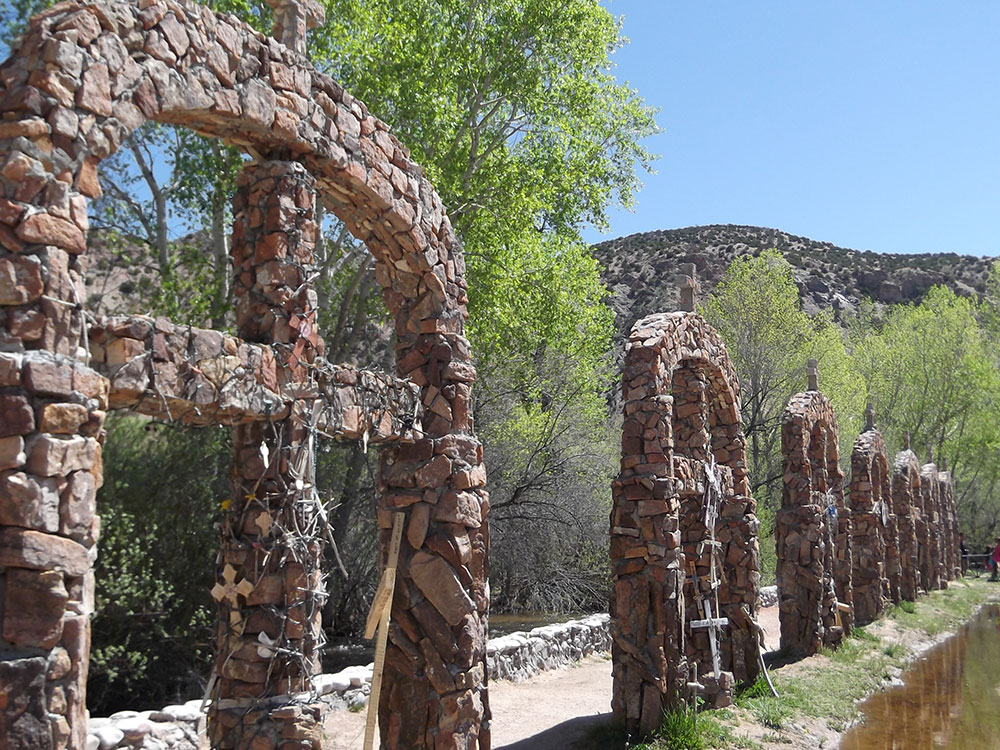
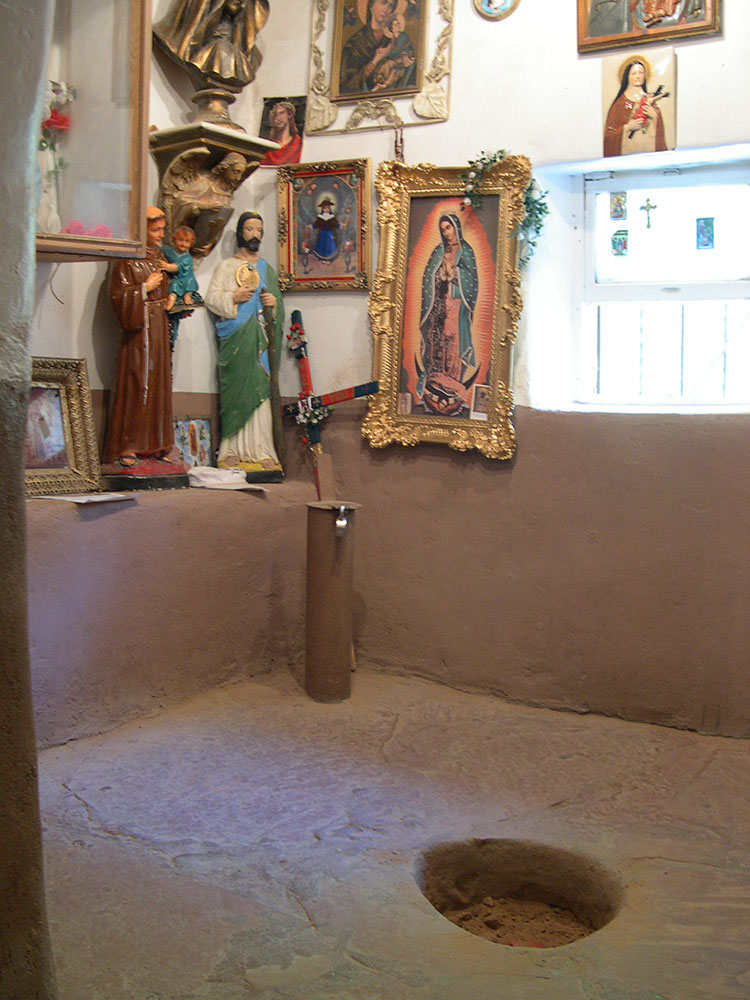
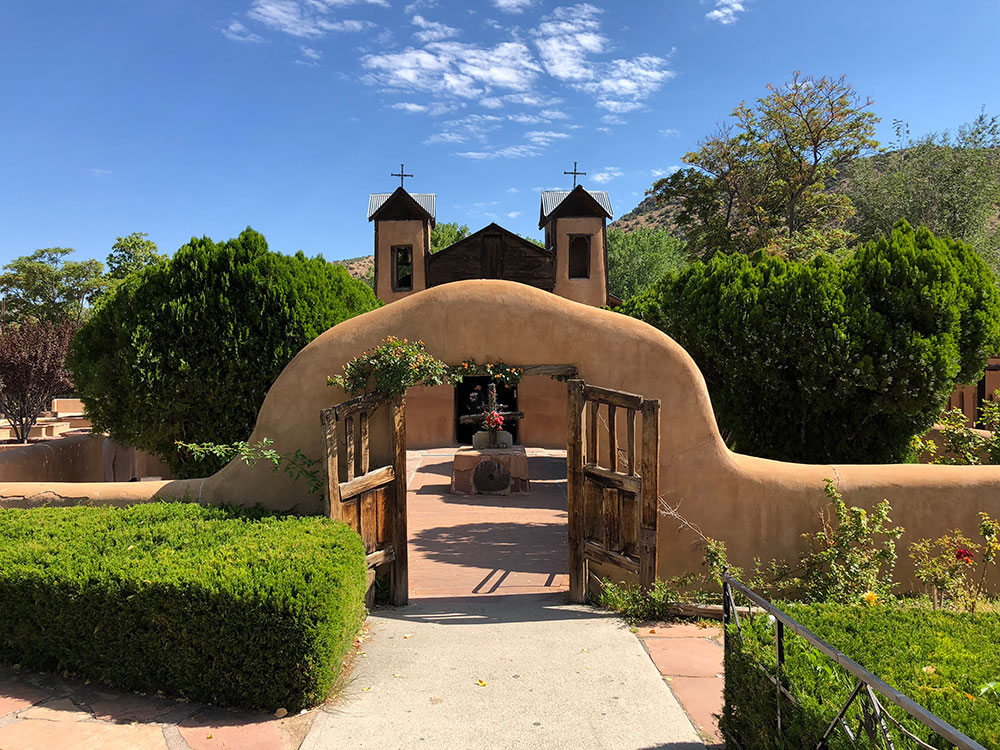
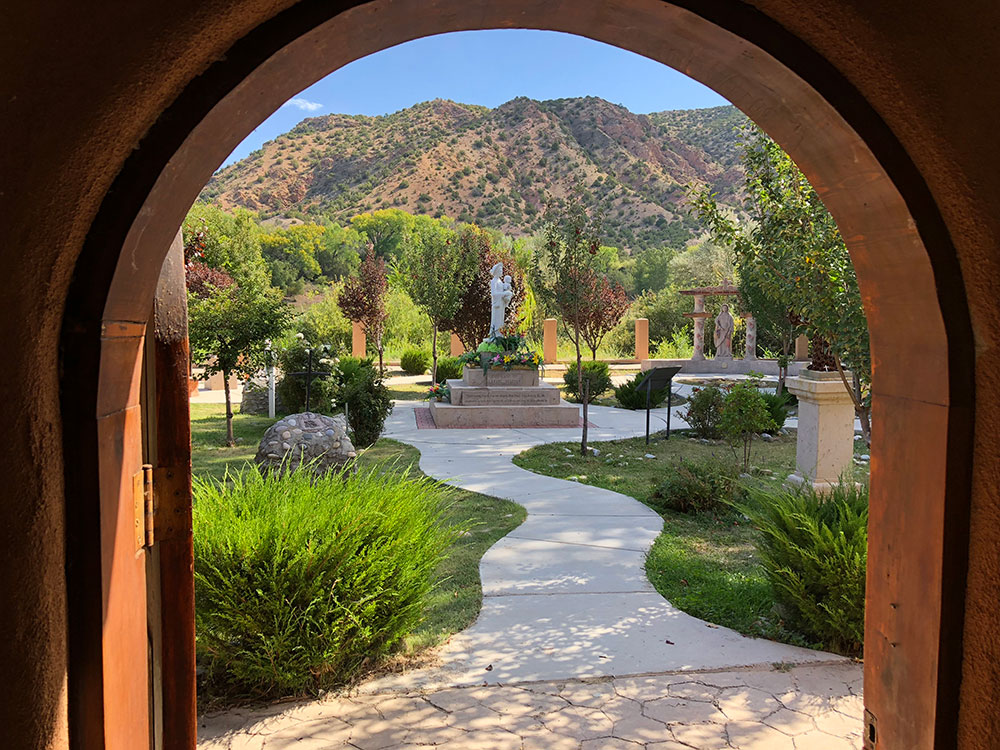
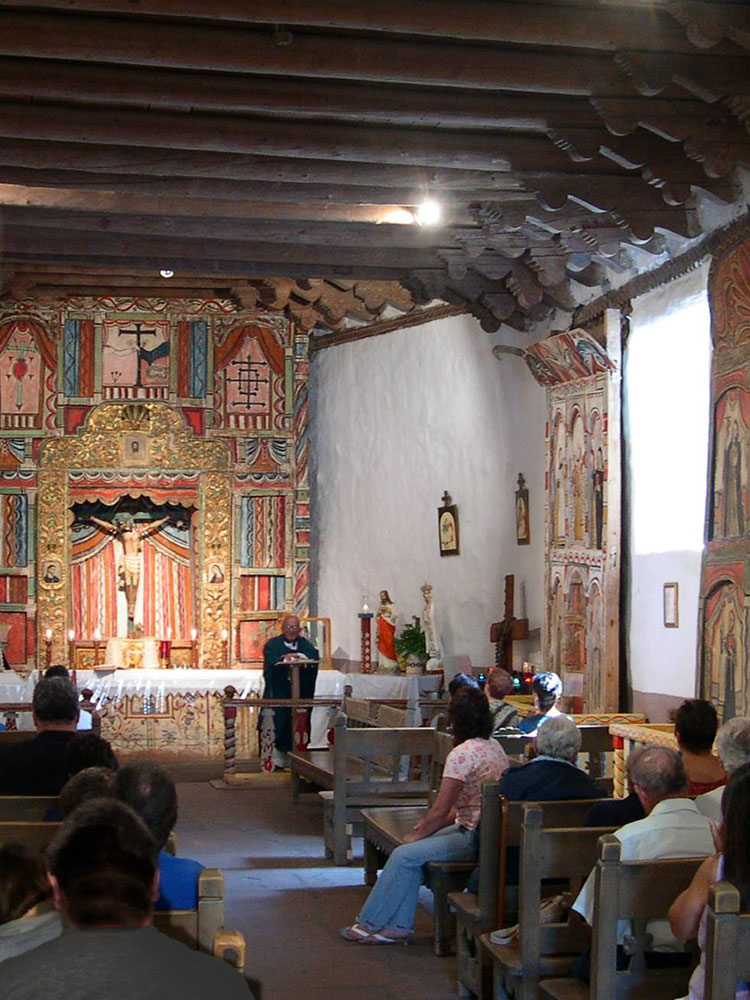
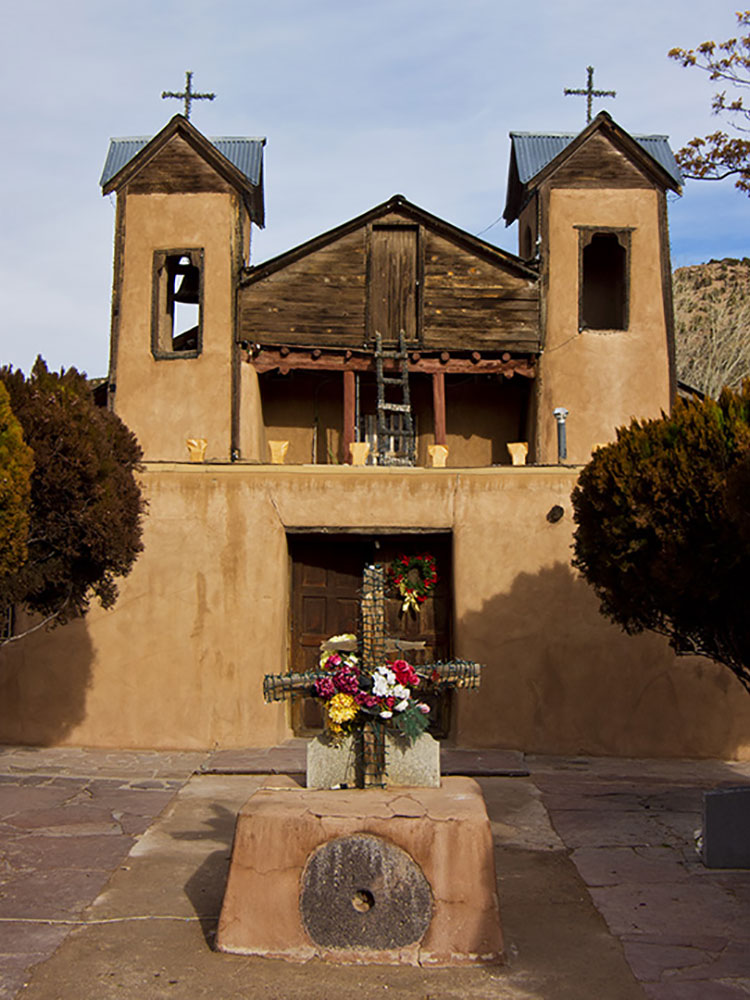
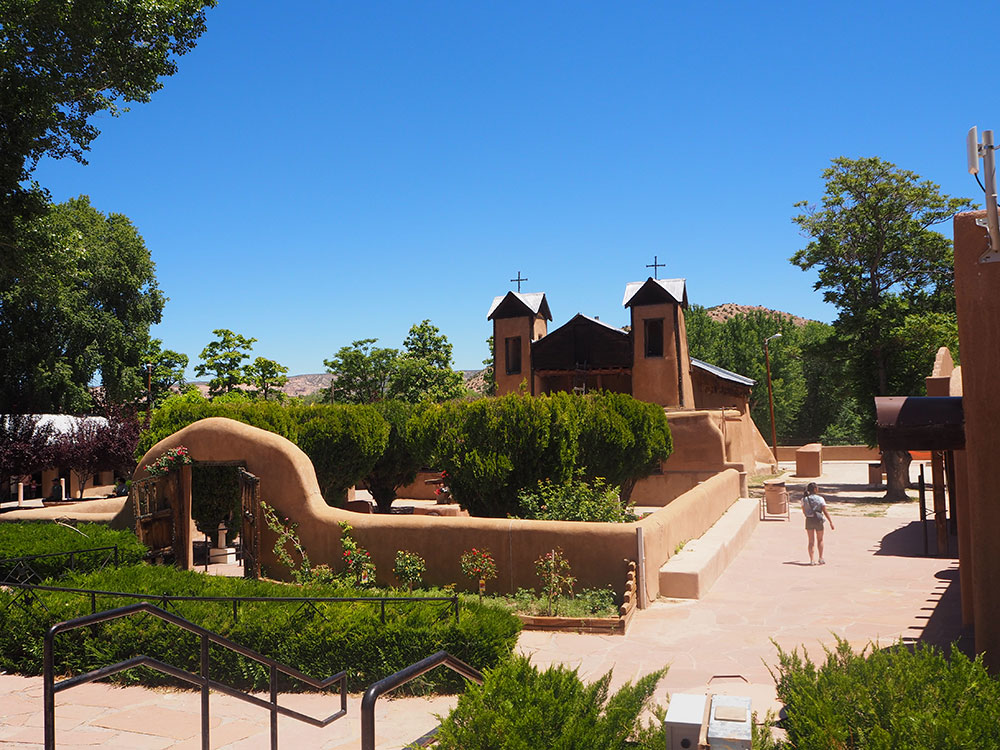
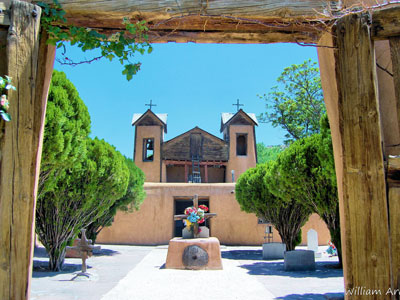
El Santuario de Chimayó is a simple adobe church with two bell towers and a carved altar screen. A small side room holds the "holy dirt," a pit of earth that pilgrims take home for healing, and an adjoining room is filled with crutches and photographs left by the faithful. The smaller Santo Niño Chapel nearby is also a popular stop.
The village is known for its living craft traditions, particularly the weaving of Chimayó blankets at Ortega’s Weaving Shop and Centinela Traditional Arts, which continue methods passed down through many generations. Fiestas, including the feasts of Our Lord of Esquipulas in January and Santiago in July, celebrate the village’s deep Hispanic Catholic heritage. Local restaurants such as Rancho de Chimayó serve traditional dishes made with the village’s own chile.
Chimayó sits in a landscape of farmland and rolling hills, and the Santa Cruz River valley nearby offers quiet walks and views of the mountains. Santa Cruz Lake, a short drive away, provides fishing, hiking, and picnicking, and the Carson National Forest lies just to the east.
Chimayó has a dry, sunny high desert climate with four seasons. Summers are warm, with highs in the 80s °F and monsoon thunderstorms in July and August, while winters are cold with occasional snow. Spring brings the Holy Week pilgrimage, and fall color along the High Road makes autumn one of the most pleasant times to visit.
This article uses material from the Wikipedia articles Chimayo, New Mexico, El Santuario de Chimayo, which are released under the Creative Commons Attribution-Share-Alike License 3.0.