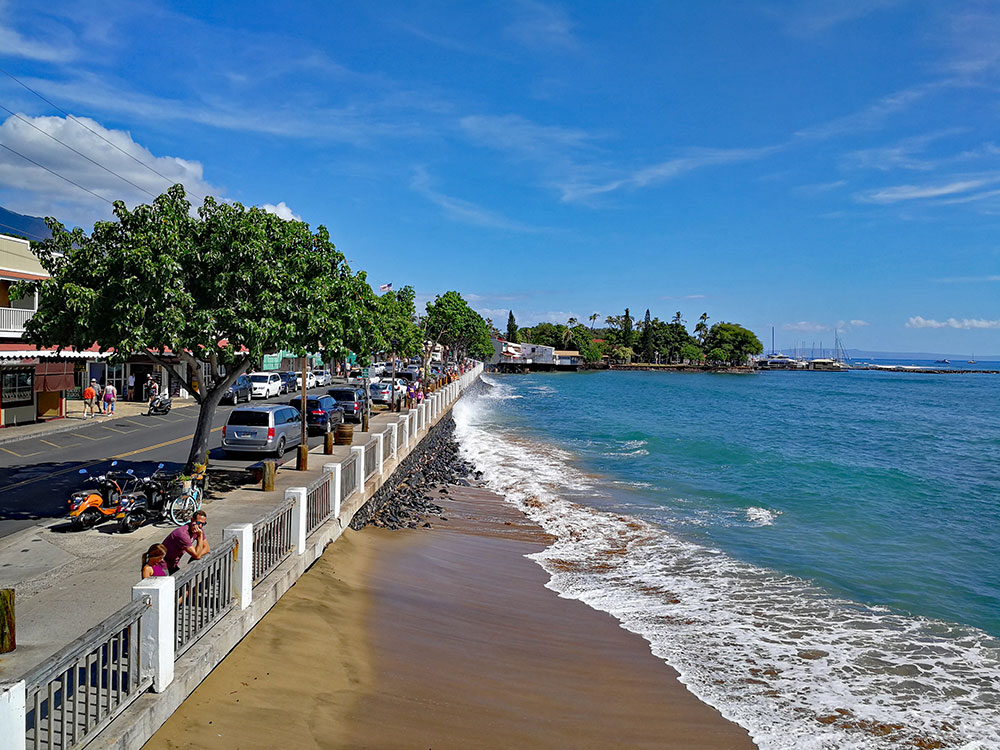
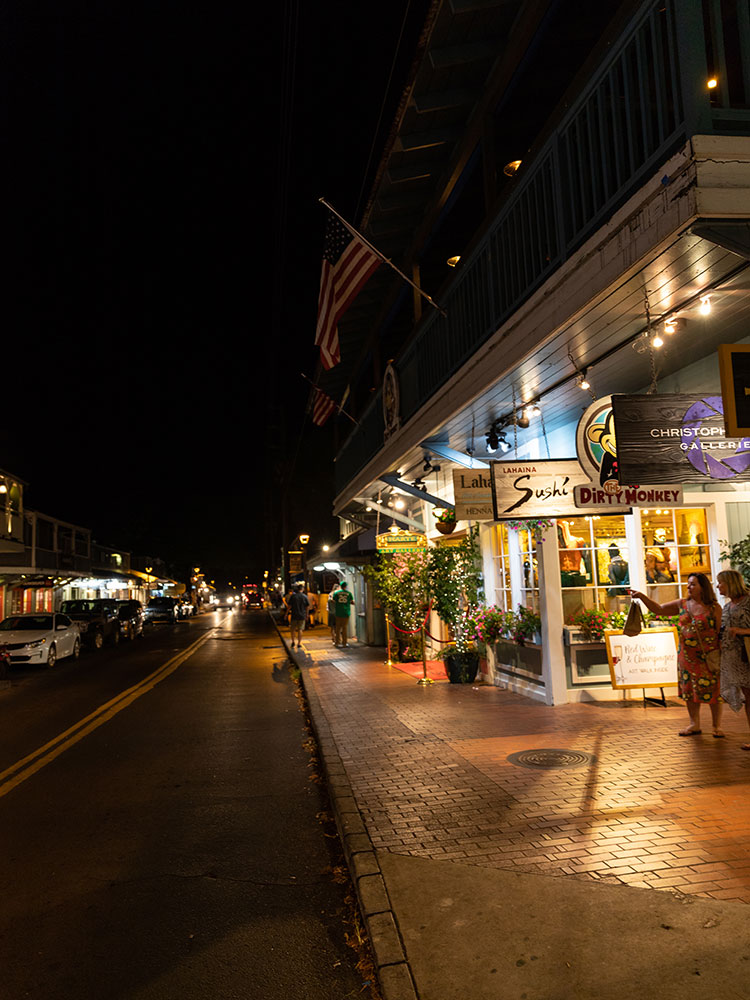
Historic coastal town once a whaling port and Hawaiian royal capital, now known for its art galleries, harborfront dining, and cultural landmarks.
General Information
- Hours:
- Visitor Center: Monday to Saturday, 9am to 5pm
- Fees:
- Free to explore town; individual attractions may charge admission
- Pet Policy:
- Pets allowed in public outdoor areas; not permitted in most historic buildings
- Closest cities with hotels:
- Kāʻanapali (3 mi), Napili (8 mi)
- Seasons:
- All year; driest and sunniest from April to October
- Location:
- Lahaina, HI
- Website:
- mauihawaii.org
How to Get There
From Kahului, HI (24 mi): Take HI-30 W for about 45 minutes to reach Lahaina town; parking is available near Front Street and the harbor.
Overview
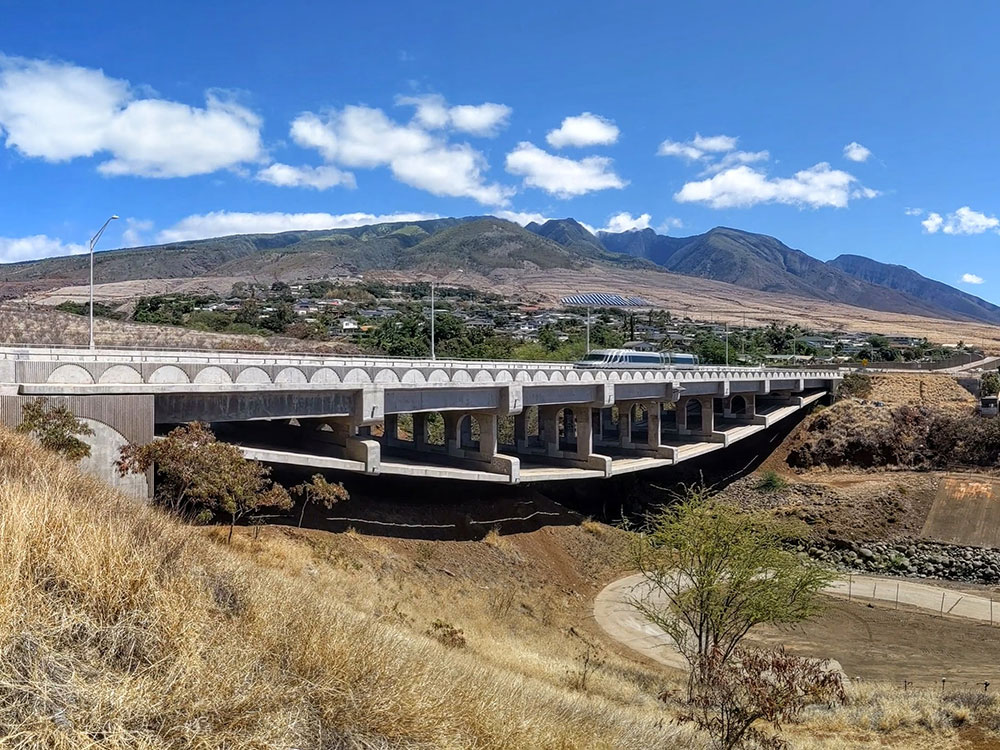
Lahaina is a historic town on Maui's sunny western coast, with about 13,000 residents before 2023, once the capital of the Hawaiian Kingdom and a major whaling port. Before 2023 it was known for oceanfront Front Street, its great banyan tree, galleries, restaurants and harbor cruises, and it was the main town of West Maui. On August 8, 2023, a wildfire destroyed much of the town, killing at least 100 people, and recovery and rebuilding are continuing.
Visitors have come to Lahaina for its history, sunsets and whale watching from December to April, and for access to the beaches and resorts at Kaanapali and Kapalua. Because of the fire, check with the County of Maui and local authorities for current access and travel advice before visiting.
History
Lahaina was a favored residence of Maui's chiefs and the royal capital from about 1820 to 1845, and in the 19th century it became the center of the Pacific whaling trade. Missionaries arrived in 1823 and started the first school for commoners. The Old Lahaina Fort was built in 1831, and Hale Paai at Lahainaluna houses Hawaii's first printing press. Sugar and pineapple replaced whaling, and tourism followed in the 20th century.
Sightseeing and Popular Landmarks
The Lahaina Historic District, a National Historic Landmark, included Banyan Court, planted in 1873 and one of the largest banyan trees in the United States, the Pioneer Inn, the Baldwin Home, the historic district and the Wo Hing Temple. Many buildings were damaged or destroyed, and the banyan survived but was badly affected.
Culture and Museums
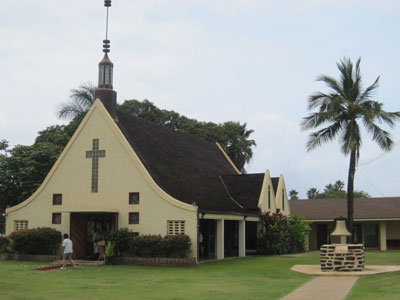
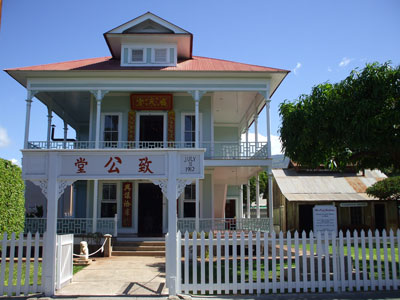
Lahaina's cultural sites included the Wo Hing Temple Museum, which honored the town's Chinese community, Waiola Church and its historic cemetery, and Maria Lanakila Catholic Church. The Lahaina Restoration Foundation cared for the historic sites, and many are being documented and rebuilt.
Parks
Parks and open space near Lahaina include Hanakaoo Beach Park, Puamana Beach Park and Launiupoko Beach Park, as well as the Kaanapali Beach walkway to the north. Offshore, Molokini Crater is a popular snorkeling destination, and whale watching is available from the harbor in winter.
Seasons and Weather
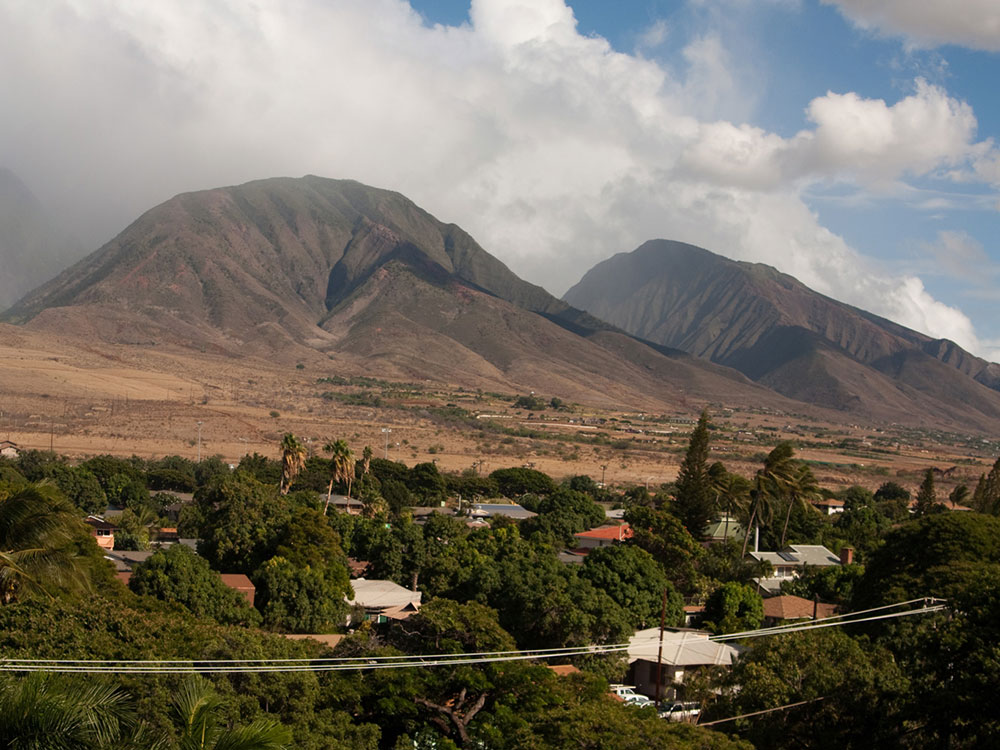
Lahaina is one of the driest and sunniest places in Hawaii, with highs in the mid 80s°F year-round and only about 15 inches of rain a year. The town is in the rain shadow of the West Maui Mountains. Winter brings humpback whales offshore, and strong winds can occur, which contributed to the fire's spread in 2023.
This article uses material from Wikipedia as well as information from official tourism and institutional sources. Key references include Hawaii Tourism Authority, County of Maui, National Park Service, Lahaina Restoration Foundation, and National Weather Service Honolulu. Wikipedia material is from the article "Lahaina, Hawaii", released under the Creative Commons Attribution-Share-Alike License 3.0.
Featured Locations
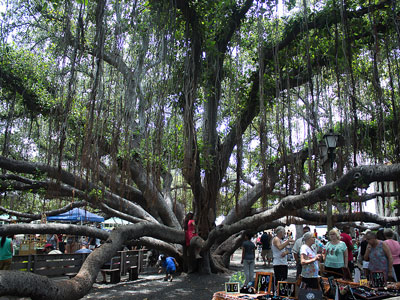
Andym5855, CC BY-SA 2.0, via Wikimedia Commons; Image Size Adjusted

Lahaina Banyan Court
Historic town square home to the largest banyan tree in the U.S., surrounded by heritage buildings, art fairs, and cultural events in the heart of Lahaina.
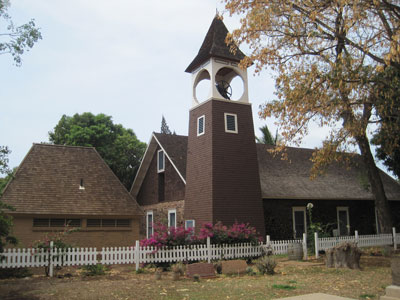
Joel Bradshaw, Public domain, via Wikimedia Commons; Image Size Adjusted

Lahaina Historic District
National Historic Landmark encompassing Lahaina’s old town, featuring preserved missionary-era buildings, royal sites, and whaling-era landmarks along the waterfront.
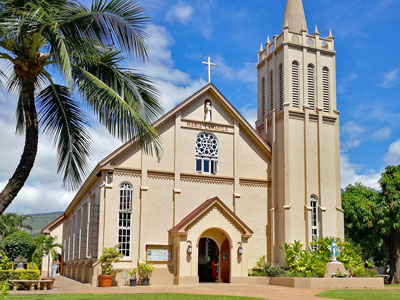
PaulT (Gunther Tschuch), CC BY-SA 4.0, via Wikimedia Commons; Image Size Adjusted

Maria Lanakila Catholic Church
Historic 19th-century Catholic church in Lahaina known for its resilience, spiritual community, and beautiful architecture inspired by Romanesque design.
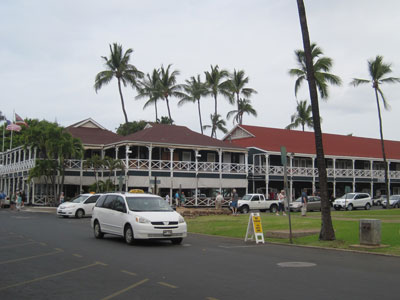
Joel Bradshaw, Public domain, via Wikimedia Commons; Image Size Adjusted

Pioneer Inn
Historic harborfront hotel established in 1901, offering colonial-style charm, a courtyard restaurant, and proximity to Lahaina’s cultural and maritime attractions.
Joel Bradshaw, Public domain, via Wikimedia Commons; Image Size Adjusted

Waiola Church
Historic Christian congregation with deep royal Hawaiian ties, offering monthly outdoor services and preserving a legacy of faith, culture, and resilience.
293.xx.xxx.xx, Public domain, via Wikimedia Commons; Image Size Adjusted

Wo Hing Temple Museum
Restored early 20th-century Chinese society hall featuring cultural artifacts, a Taoist temple, and a cookhouse screening historic Edison films about life in Hawaii.