
Great Sand Dunes National Park Travel Guide
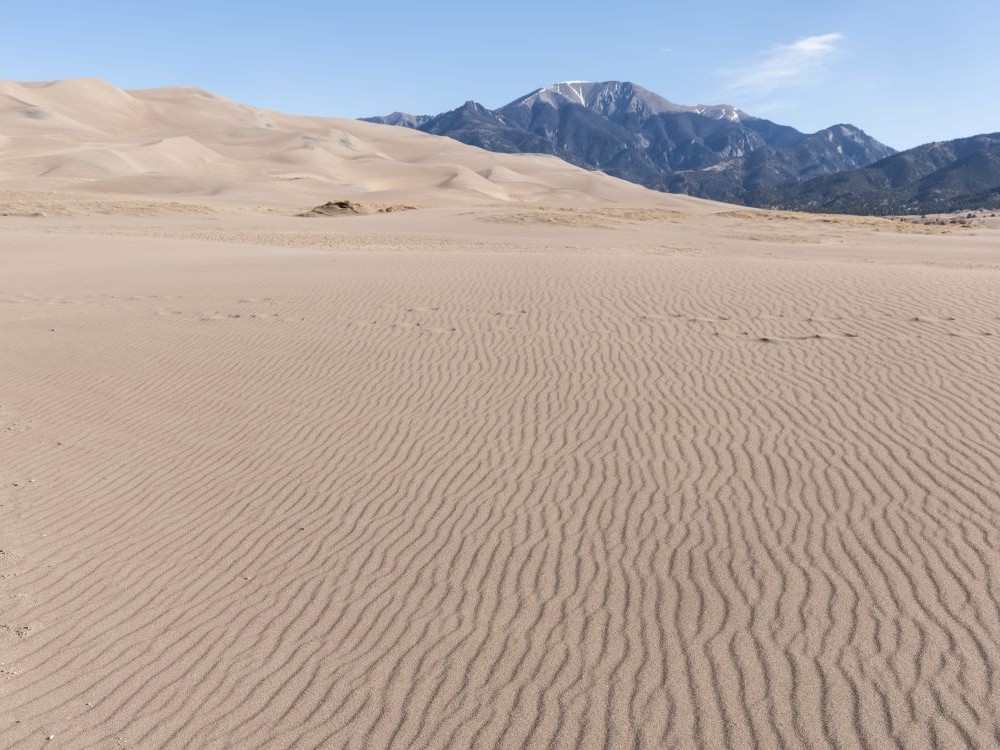
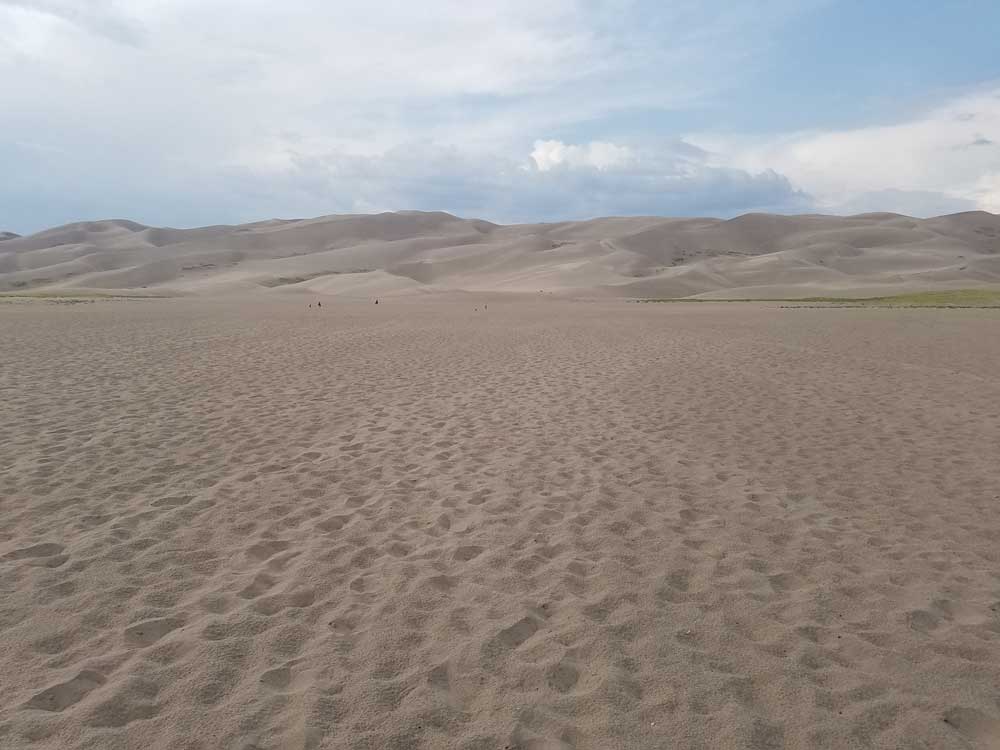
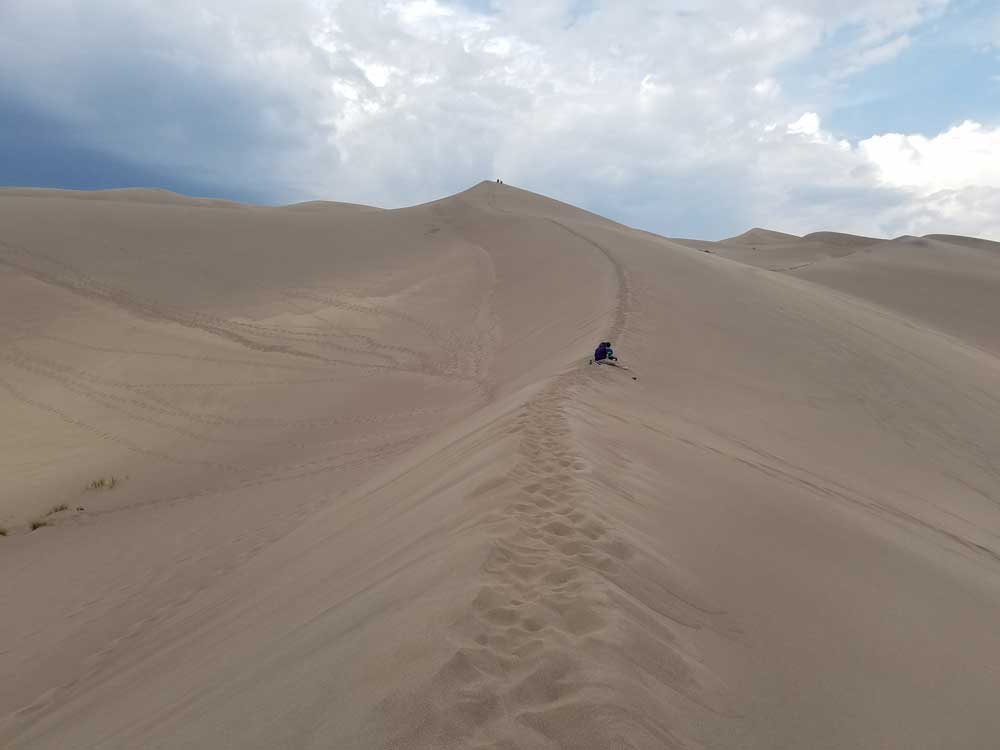
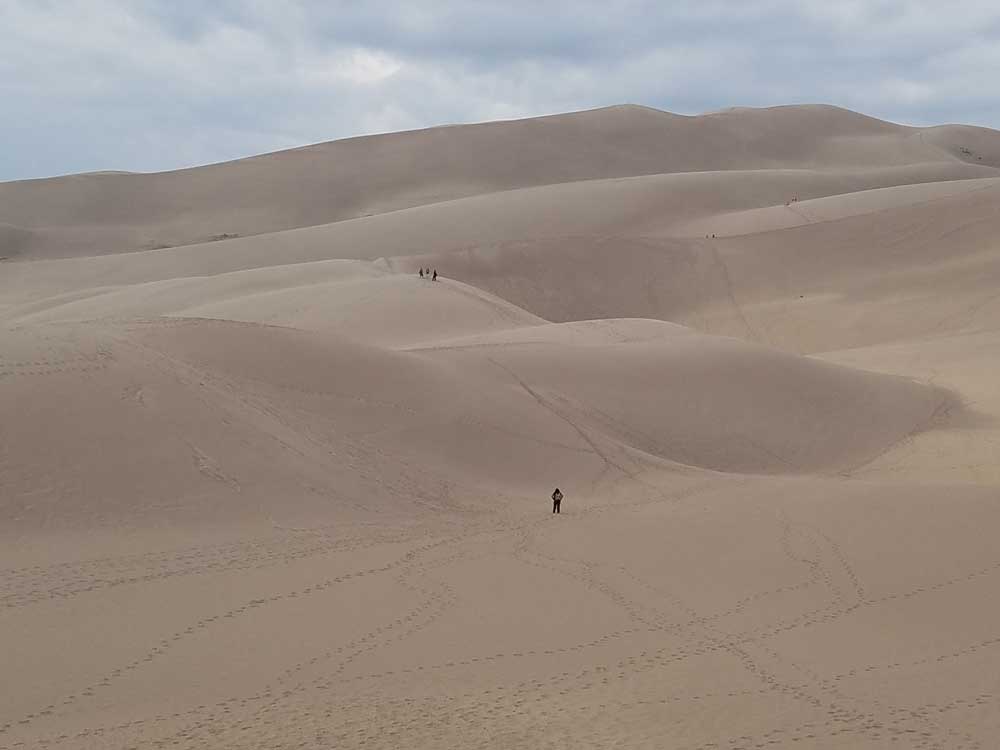
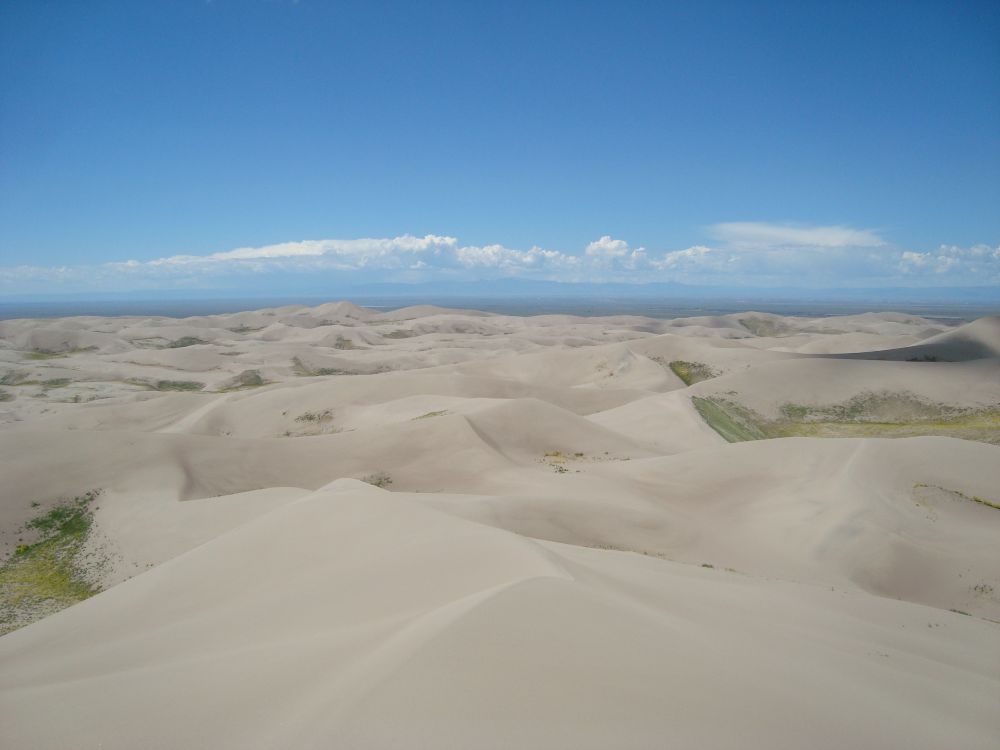
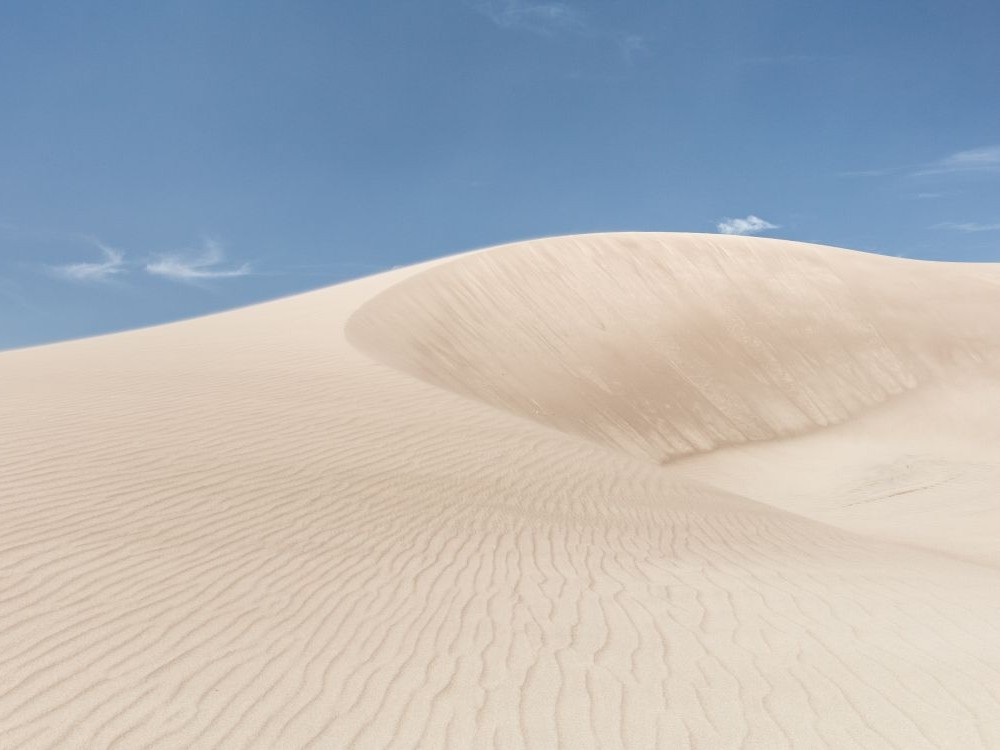
Park conserves an area of large sand dunes up to 750 feet (230 m) tall in south-central Colorado.
General Information
- Hours:
-
Visitor Center:
Open every day of the year except Thanksgiving, Christmas, and New Year's Day.
Current Visitor Center Hours During Pandemic
10am to 12pm and 1pm to 4:30pm
(Closed 12-1 for cleaning)
Normal Visitor Center Hours
Fall, Winter, Spring (Labor Day until Memorial Day Weekend): 9am to 4:30pm daily
Summer (Memorial Day Weekend through Labor Day Weekend): 8:30am to 5pm daily
- Fees:
-
7 Day Vehicle Pass $25.00
Admission to Arches National Park is good for seven days
Accepts America The Beautiful Pass - Pet Policy:
- Pets are only permitted in the Preserve (including Mosca Pass Trail) and main use areas of the Park (including Piñon Flats Campground, Dunes Overlook Trail, and along the Medano Pass Primitive Road)
- Closest cities with hotels:
- Alamosa, 31 miles
- Seasons:
- All year; receives moderate snowfall in winter
- Location:
- Great Sand Dunes National Park, CO
- Website:
- nps.gov
From Colorado Springs (165mi) Take S Nevada Ave to I-25 S. Follow I-25 S to I-25BL S in Huerfano County. Take exit 52 from I-25 S. Take US-160 W to CO-150 N in Alamosa County.
Overview
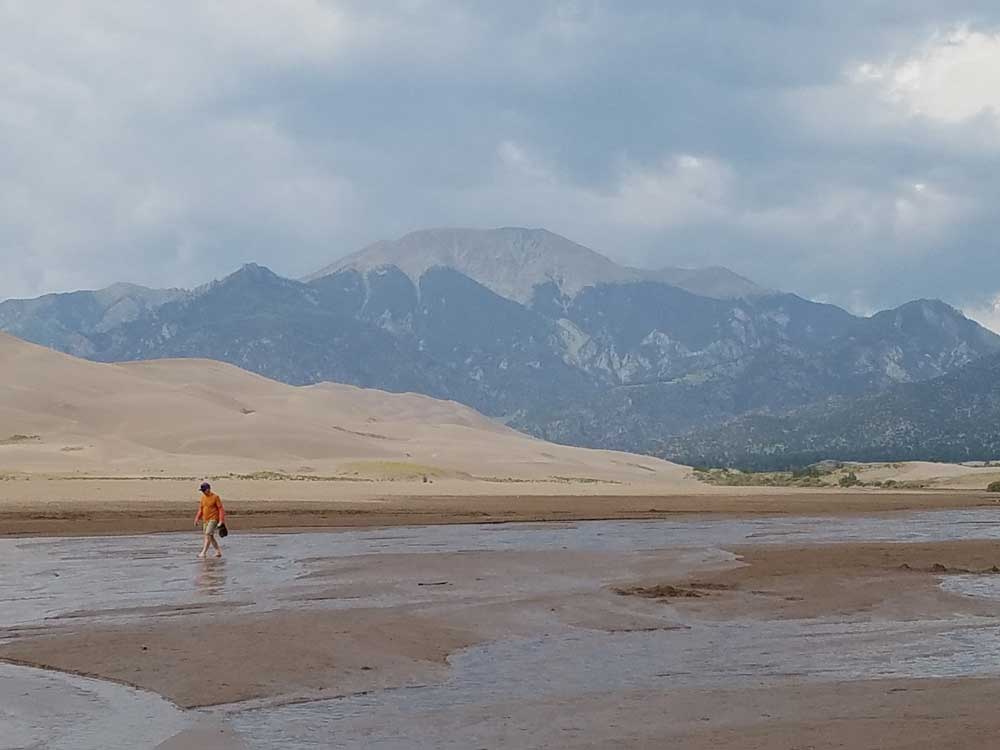
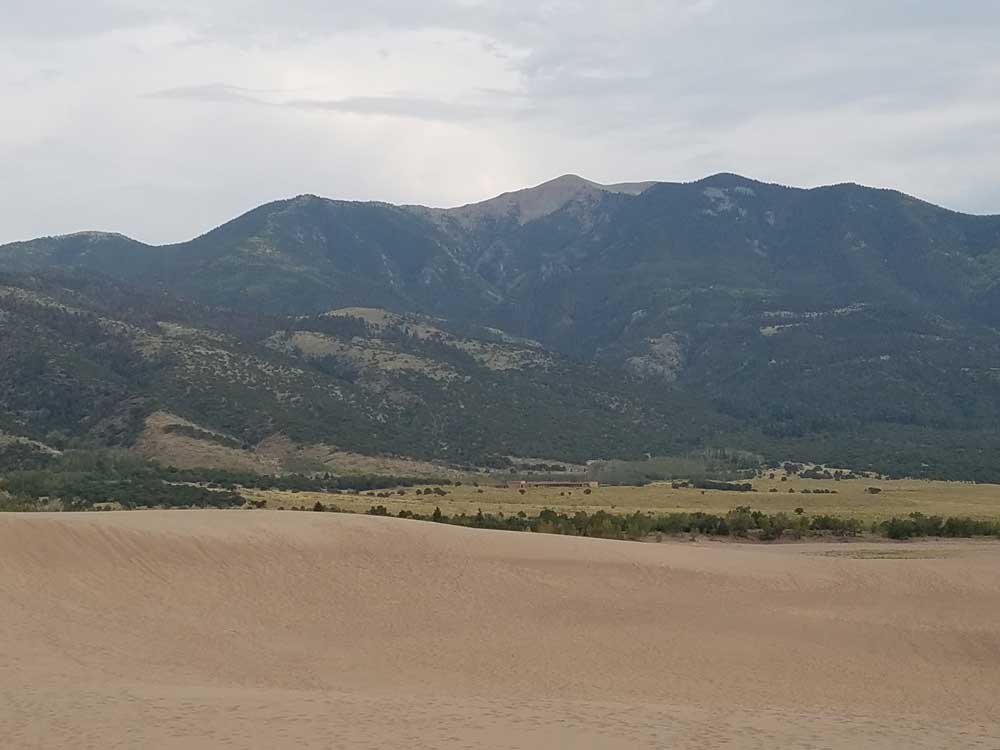
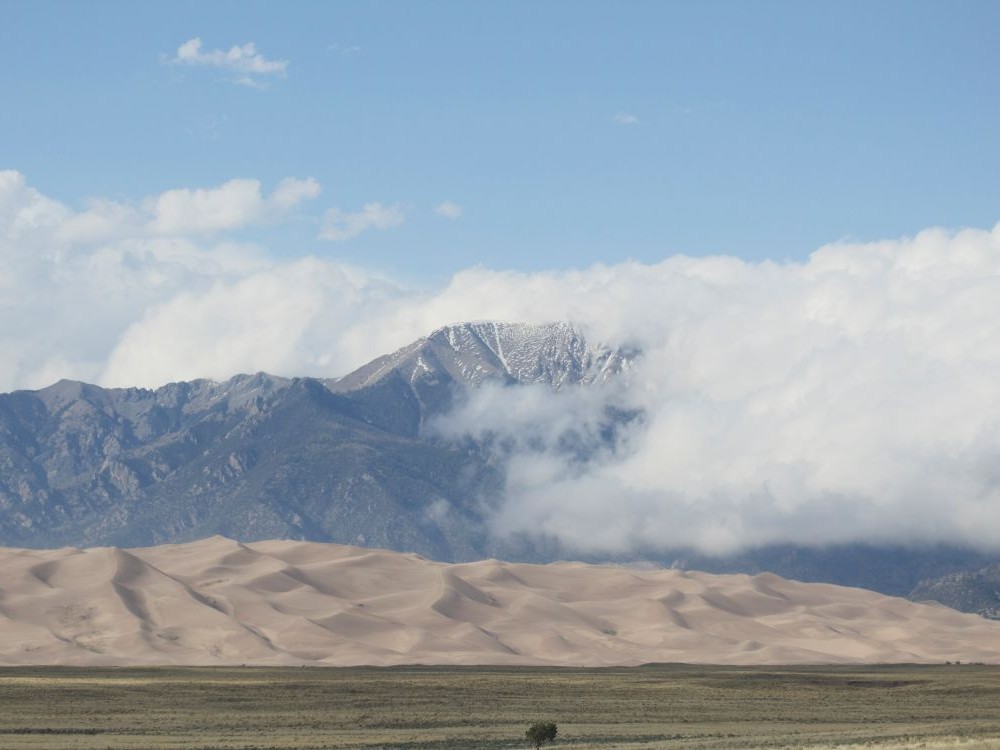
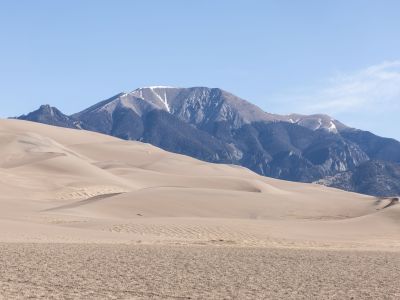
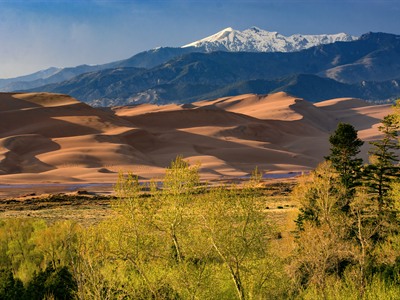
Great Sand Dunes National Park and Preserve in south-central Colorado protects the tallest sand dunes in North America, rising as high as 750 feet above the floor of the San Luis Valley. The dunes cover about 30 square miles at the foot of the Sangre de Cristo Mountains, and they are surrounded by grasslands, wetlands, forests, and alpine tundra, all within a protected area of roughly 149,000 acres. The dunes were formed by winds blowing sand from the valley floor against the mountains, while seasonal streams, such as Medano Creek, carry it back and keep the dunes in balance.
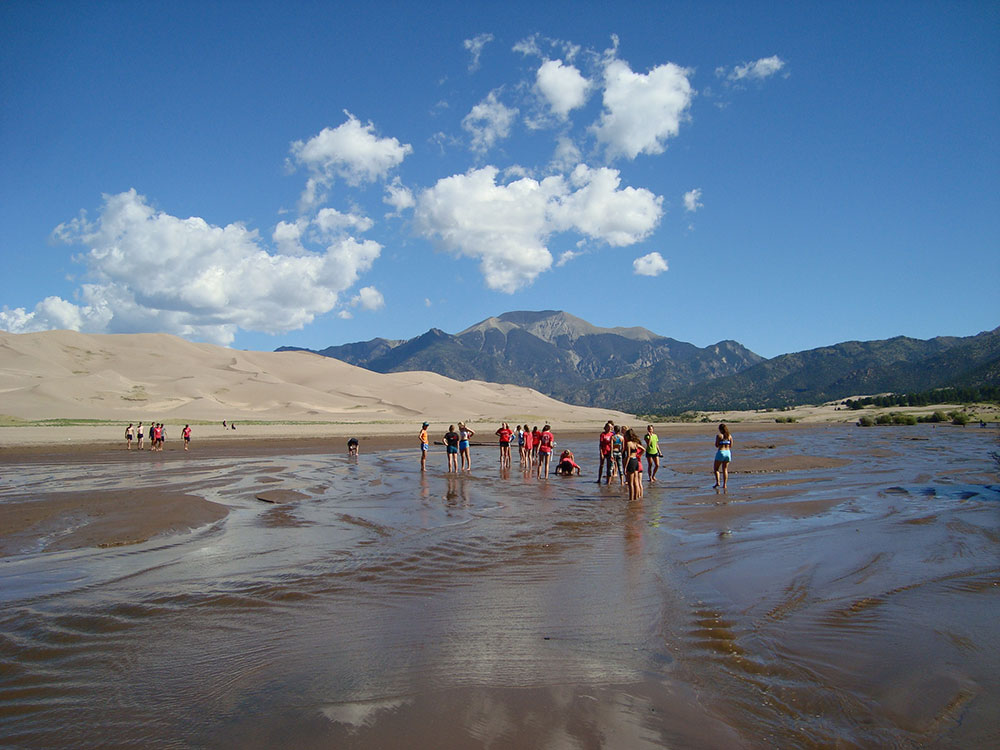
The area was protected as a national monument in 1932 and became a national park and preserve in 2004. Visitors come to climb the dunes, sled and sandboard down the slopes, wade and splash in Medano Creek, hike the mountain trails, and look at the stars, as the park is an International Dark Sky Park. The combination of sand, creek, and snowcapped peaks is unusual, and it makes the park popular with families.
Park Sections
Most visitors stay in the main dunes area, reached by a short road from Highway 150, where the Dunes Parking Lot, the visitor center, Medano Creek, and the High Dune trail are located. Nearby are the Montville Nature Trail, the Sand Sheet Loop, and Pinyon Flats Campground. The Medano Pass Primitive Road, a 4WD road, runs from the main area into the mountains of the preserve, crossing deep sand and creek beds. The mountain trails, such as Mosca Pass and Medano Lake, are reached from various trailheads. Zapata Falls, a short waterfall hike, is just outside the park on BLM land, about 10 miles south.
Sightseeing and Exploring the Park
The park does not have a long scenic drive, but its main road ends at the Dunes Parking Lot, with views of the dunes from a distance, and there is a short drive to the Piñon Flats area. The best views come from the dunes themselves and from the visitor center, which looks out toward the dunes and mountains. The Medano Pass Primitive Road, 22 miles long and open to high-clearance 4WD vehicles, is an adventurous drive through sand, creek crossings, and forest, and it is suited to experienced drivers. Sunrise and sunset light the dunes in warm tones, and many visitors come back at night for the stars.
Hiking
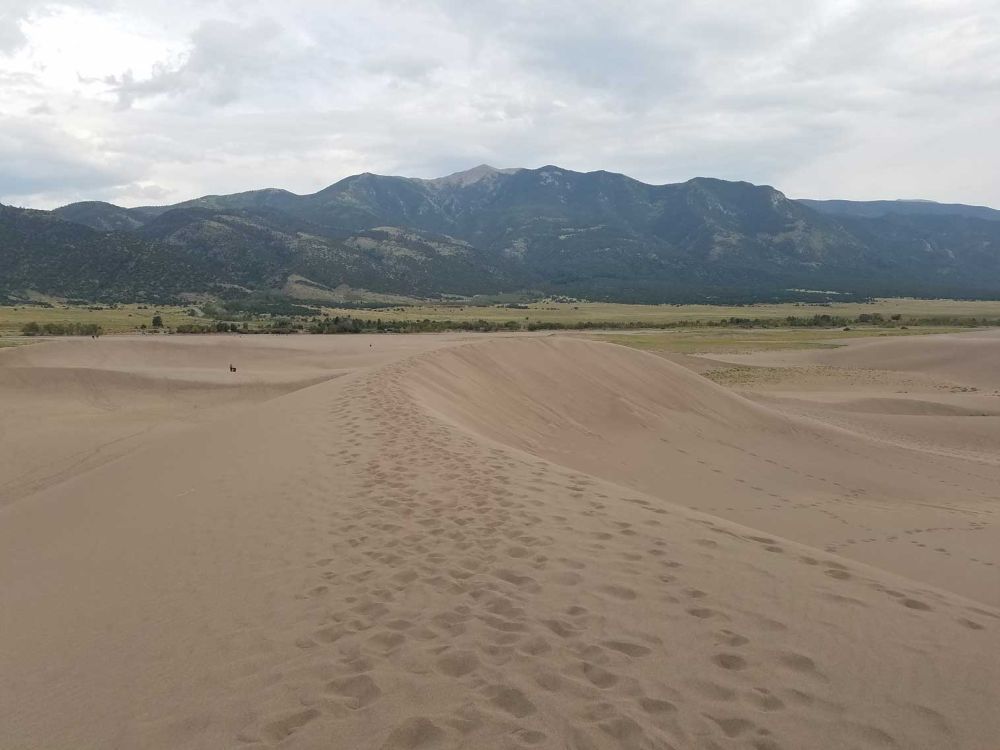
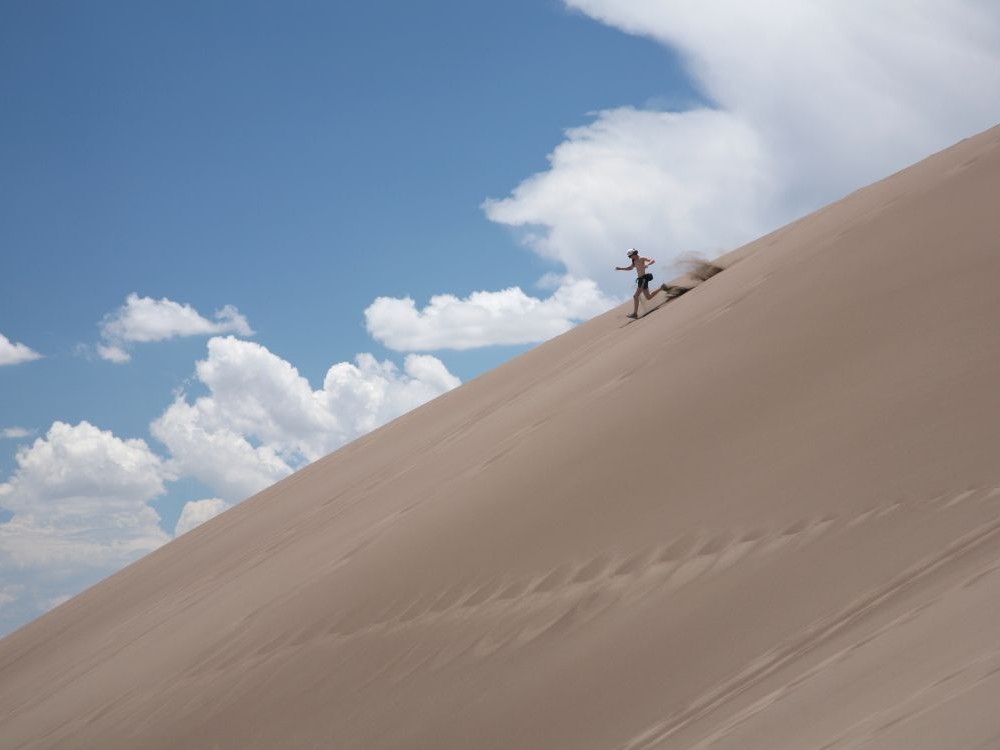
The most popular activity is walking on the dunes. High Dune is a 1.5-mile round trip with about 700 feet of climbing on soft sand, and it takes 2 to 3 hours; Star Dune, the tallest dune at about 755 feet, is a much more strenuous 5-mile round trip. There are no marked trails on the dunes, so you choose your own route along the ridges. Other short, easy walks include the Montville Nature Trail, the Sand Sheet Loop, and the Wellington Ditch Trail. Longer mountain trails, including Mosca Pass (about 3.5 miles one way) and Medano Lake, offer forest and alpine scenery. The sand surface can reach 150 °F in midday, so go early or late and wear shoes.
Other Activities
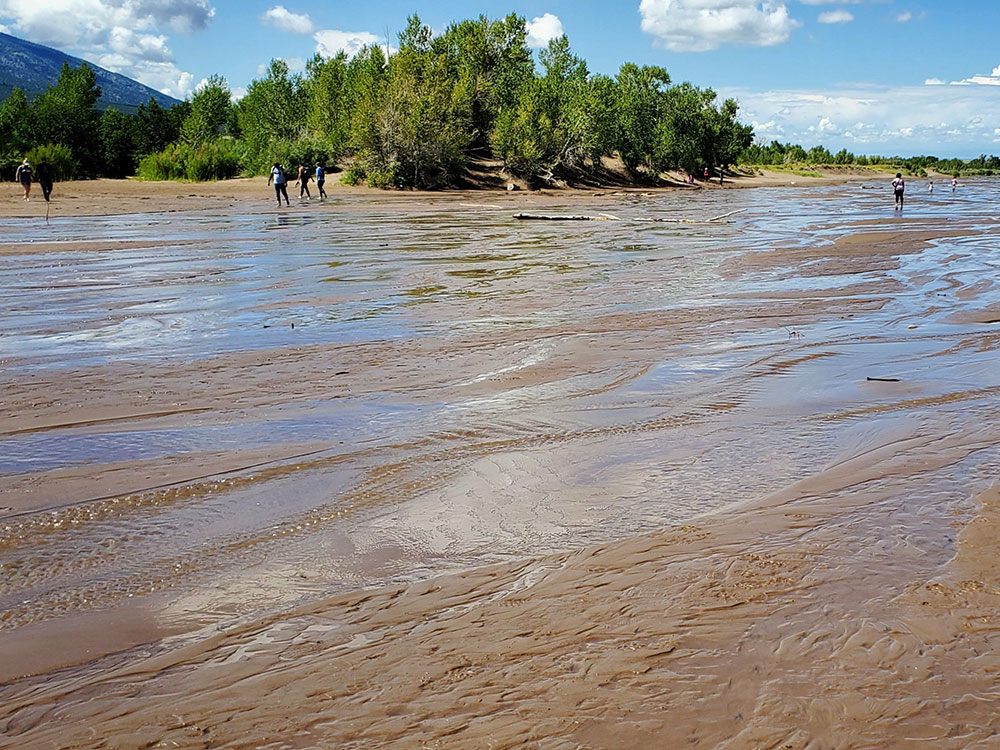
Sledding and sandboarding on the dunes are the signature activities, and rentals are available at the Great Sand Dunes Oasis near the entrance and in Alamosa; use only sleds and boards designed for sand. Medano Creek forms a natural beach and sometimes surge waves from late May into June, which is the park's busiest time. Other activities include 4WD driving on the Medano Pass road, backpacking and camping, horseback riding, fishing in mountain lakes, birding, and ranger programs, including night sky events. The park has no cave tours or guided boat trips.
Flora and Wildlife
The dunes themselves are mostly bare, with plants such as Indian ricegrass, blowout grass, and scurf pea that hold the sand. The preserve and mountains have ponderosa pine, pinyon-juniper woodland, aspen, spruce, and alpine tundra. Wildlife is varied, and includes elk, mule deer, pronghorn, black bears, coyotes, and Ord's kangaroo rats; the park is also home to the Great Sand Dunes tiger beetle, found nowhere else. Many animals are active at dawn and dusk, and you can see their tracks in the sand in the morning. Birders can look for sandhill cranes in the nearby valley, especially in spring.
Access
The park is in the San Luis Valley, about 35 miles northeast of Alamosa and 18 miles from Mosca, off US-160 and Colorado Highway 150. Visitors arrive by car. Denver is about 235 miles (roughly 4 hours) north, Colorado Springs about 160 miles (3 hours), and Santa Fe about 3 hours south. The closest airport with commercial service is Alamosa, and the nearest larger airports are in Colorado Springs, Albuquerque, and Denver. There is no public transportation. Services near the park are limited, so bring water and supplies, and fill your gas tank in Alamosa.
Seasons
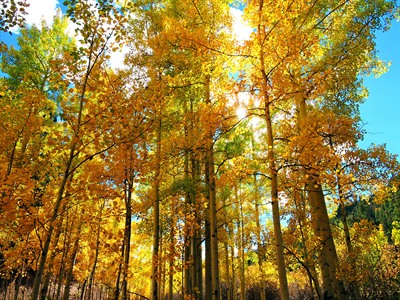
Medano Creek flows from about late May into June, with the biggest surge in spring and early summer, which makes it the most popular time to visit. Summer is hot on the dunes, so hike in the early morning or evening, and thunderstorms with lightning are common in the afternoon. Fall is quieter, with golden aspens and cottonwoods. Winter is cold and often windy, but the dunes covered with snow are especially beautiful and uncrowded, and the park stays open. Spring brings strong winds and sand blowing across the valley. The Medano Pass Primitive Road may close in winter or after storms.
Camping and Lodging
Pinyon Flats Campground, about a mile from the visitor center, has about 88 sites and is usually open from spring through fall, with reservations recommended. Backcountry camping in the dunes and in the mountains requires a permit. The Great Sand Dunes Lodge, just outside the park entrance, and the Oasis camp store, cabins, and RV sites are the closest options. Alamosa, about 35 miles away, has chain hotels and motels, restaurants, and a few campgrounds. Blanca, Fort Garland, and Crestone offer smaller inns and cabins, and Zapata Falls has a small BLM campground.
Visitor Centers
The Great Sand Dunes Visitor Center, near the main dunes area, has exhibits on the dunes and the area's wildlife, a short film, a bookstore, and a view of the dunes. Rangers can help with questions about conditions on the dunes, permits, and Medano Creek. Hours are longer in summer. The nearby Great Sand Dunes Oasis has a store, a restaurant, and sand sleds and sandboards for rent. Check the National Park Service website for current hours.
Highlights
- High Dune: a 1.5-mile round-trip trek, about 700 feet up, on soft sand, best in the morning or evening (the sand can reach 150 °F midday)
- Medano Creek: a "beach" at the dunes' edge from late May to June
- Sand sports: rent sandboards and sleds in Great Sand Dunes Oasis
- Night sky: a certified International Dark Sky Park
This article uses material from the Wikipedia article "Great Sand Dunes National Park and Preserve", which is released under the Creative Commons Attribution-Share-Alike License 3.0. Additional information comes from the National Park Service Great Sand Dunes National Park and Preserve website.
Featured Trails
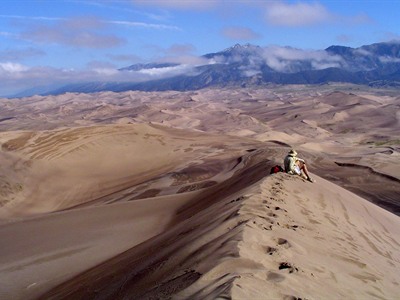
Brendan Harmon, CC BY-SA 3.0, via Wikimedia Commons; Image Size Adjusted

High Dune
2.5 miles roundtrip, 688 feet elevation gain, Strenuous
A prominent towering sand dune offering a strenuous climb with expansive views over a vast desert landscape and surrounding mountain ranges.
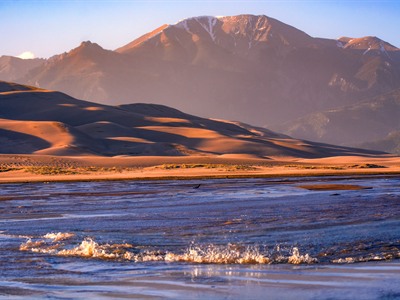
Brendan Harmon, CC BY-SA 3.0, via Wikimedia Commons; Image Size Adjusted
Medano Creek
Seasonal mountain-fed stream flowing across a sandy valley floor, creating a wide, shallow water feature ideal for wading and recreation.

Brendan Harmon, CC BY-SA 3.0, via Wikimedia Commons; Image Size Adjusted
Medano Lake Trail
8 miles roundtrip, 2,000 feet elevation gain, Strenuous
Remote alpine trail leading through forested valleys and rugged terrain to a high-elevation lake nestled beneath steep mountain slopes.
Brendan Harmon, CC BY-SA 3.0, via Wikimedia Commons; Image Size Adjusted
Medano Pass Primitive Road
Rugged high-clearance route traversing sand dunes, creek crossings, and alpine terrain through a remote mountain pass.

Brendan Harmon, CC BY-SA 3.0, via Wikimedia Commons; Image Size Adjusted
Montville Nature Trail
0.5 mile loop, 200 feet elevation gain, Easy
Scenic forested trail winding along a creek with cascading waterfalls, wooden bridges, and shaded canyon views.
Brendan Harmon, CC BY-SA 3.0, via Wikimedia Commons; Image Size Adjusted
Mosca Pass Trail
7 miles roundtrip, 1,400 feet elevation gain, Moderate
High-elevation mountain trail climbing through forest and alpine terrain to a scenic pass with expansive views of a dune-filled valley.
Brendan Harmon, CC BY-SA 3.0, via Wikimedia Commons; Image Size Adjusted
Sand Sheet Loop Trail
0.8 mile loop, 50 feet elevation gain, Easy
Gentle loop trail crossing an open sandy landscape with low vegetation and sweeping views of surrounding dunes and mountains.

Brendan Harmon, CC BY-SA 3.0, via Wikimedia Commons; Image Size Adjusted
Star Dune
6 miles roundtrip, 800 feet elevation gain, Strenuous
Tallest sand dune in North America, rising high above a vast dune field with steep slopes and panoramic desert and mountain views.

Brendan Harmon, CC BY-SA 3.0, via Wikimedia Commons; Image Size Adjusted
Wellington Ditch Trail
1.8 miles roundtrip, 150 feet elevation gain, Easy
Flat scenic trail following an irrigation channel through grasslands with views of surrounding dunes and mountain peaks.