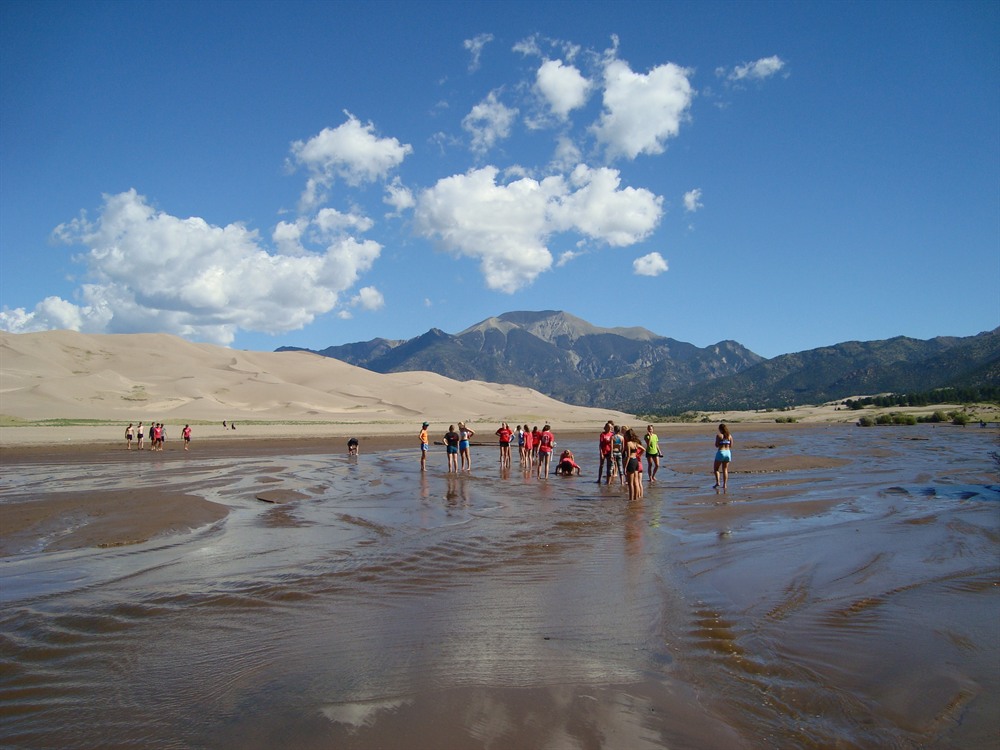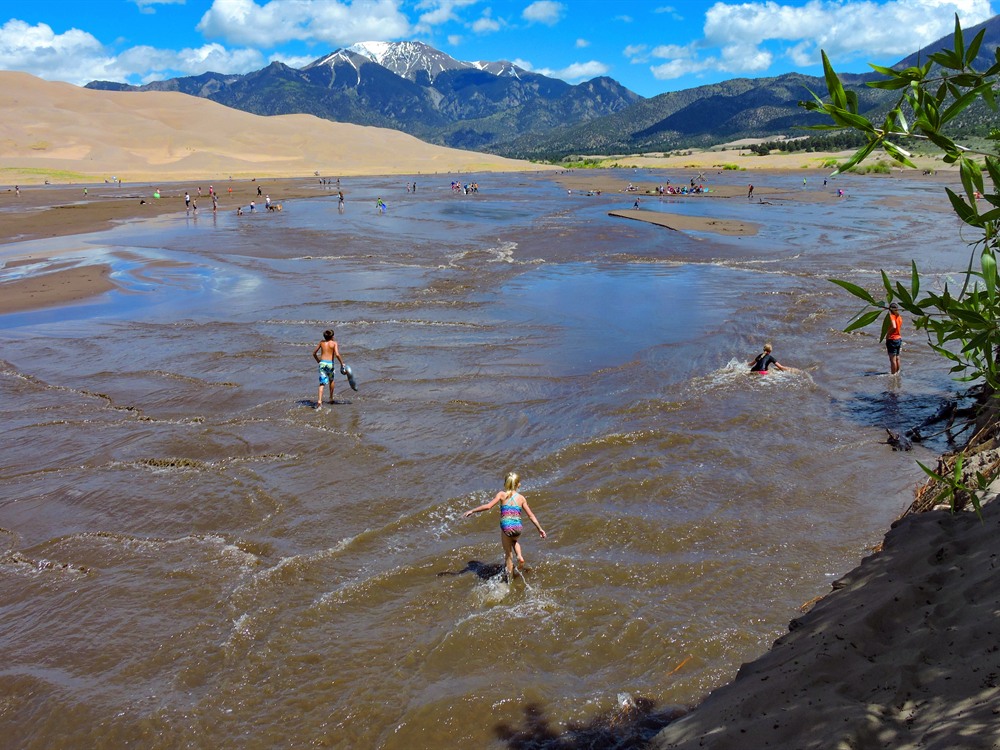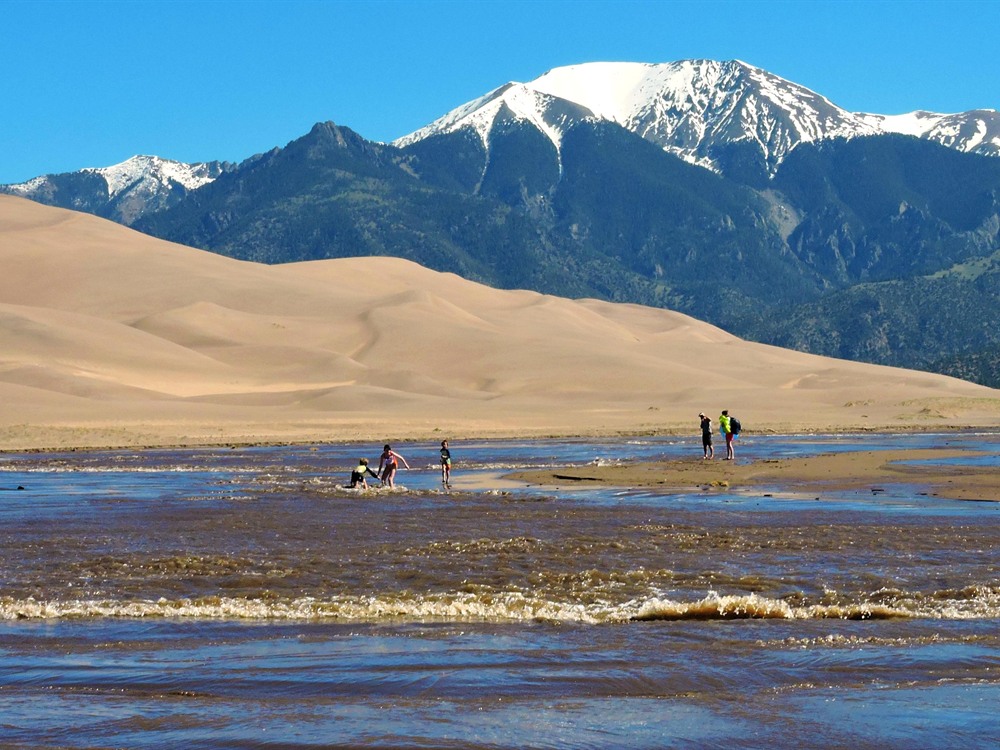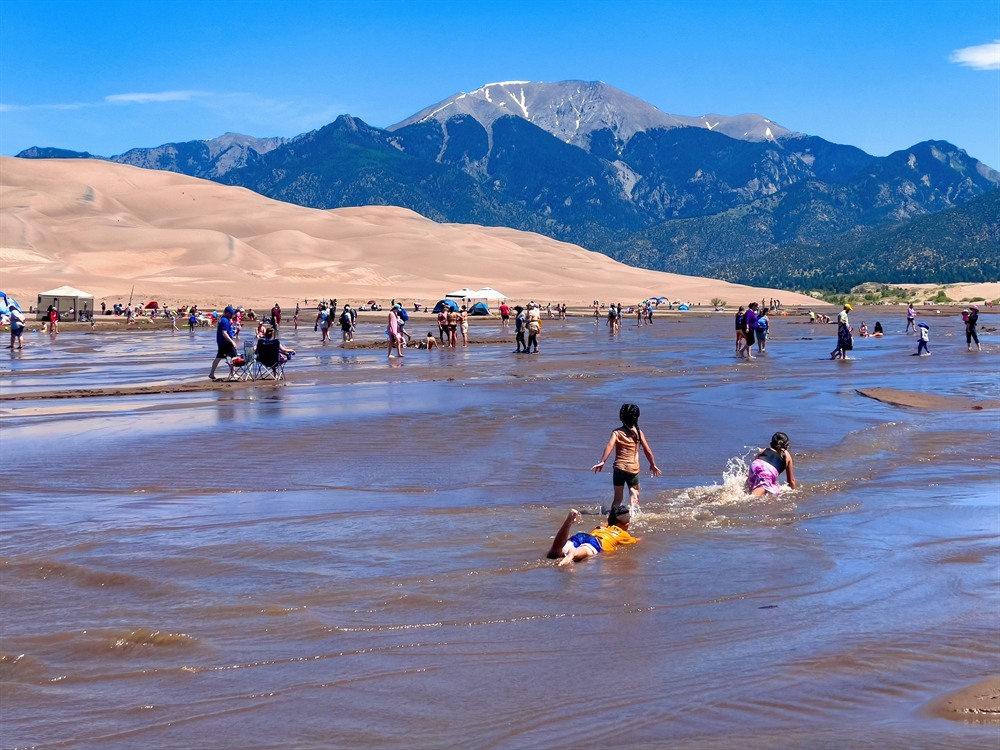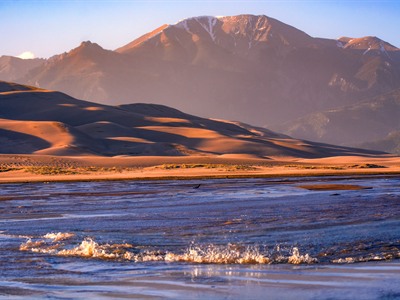

Seasonal mountain-fed stream flowing across a sandy valley floor, creating a wide, shallow water feature ideal for wading and recreation.
General Information
- Length:
- Varies; spreads across several miles of the dune field
- Elevation Gain:
- Minimal, generally flat terrain
- Difficulty:
- Easy
- Hours:
- Open daily year-round
Peak water flow typically occurs late spring through early summer - Fees:
-
$25 per vehicle (valid for 7 days)
$15 per person (walk-in/bicycle) - Pet Policy:
- Pets are allowed in some areas but restricted on the main dune field and creek during certain seasons
- Seasons:
- Late spring to early summer for peak flow; accessible year-round with changing conditions
- Closest cities with hotels:
- Alamosa (35 mi)
- Location:
- Medano Creek, Great Sand Dunes National Park, CO
- Website:
- nps.gov
How to Get There
From Alamosa (35 mi): Take US-160 E to CO-150 N and follow it north for about 16 miles to the park entrance, then continue to the Dunes Parking Area where the creek flows seasonally at the base of the dunes.
Overview
The Medano Creek forms a rare and dynamic feature where water meets sand, flowing across the base of a vast dune field in spring and early summer. Fed by melting mountain snow, the shallow creek creates a natural playground where visitors can wade, splash, and experience the unusual sensation of water running over soft desert terrain. Its braided channels shift constantly, carving new paths and forming gentle pools that reflect the surrounding dunes and peaks.
As temperatures rise and snowmelt diminishes, the creek gradually fades, leaving behind rippled sand and traces of its movement. During peak flow, small waves known as “surges” roll downstream in rhythmic pulses, adding a distinctive character to the experience. The combination of water, sand, and mountain scenery makes this area one of the most unique environments in the region, offering both a refreshing escape and a striking contrast between desert and alpine influences.
History
People have visited the dunes for thousands of years, including the Ute and Jicarilla Apache, who gathered plants and hunted in the valley. Medano Creek flows down from the Sangre de Cristo Mountains and carries sand back toward the dune field, helping to shape it. Great Sand Dunes was protected as a national monument in 1932 and became a national park in 2004.
Things to Do
Wade in the Creek
Peak flow usually comes in late May or early June.
Watch the Surge Flow
Small waves called surges form in the creek.
Build Sand Castles
The wet sand is perfect for building.
Sandboard the Dunes
Sandboards and sleds can be rented outside the park.
This article uses material from the Wikipedia articles and official tourism pages for the Great Sand Dunes National Park, which are released under the Creative Commons Attribution-Share-Alike License 3.0.