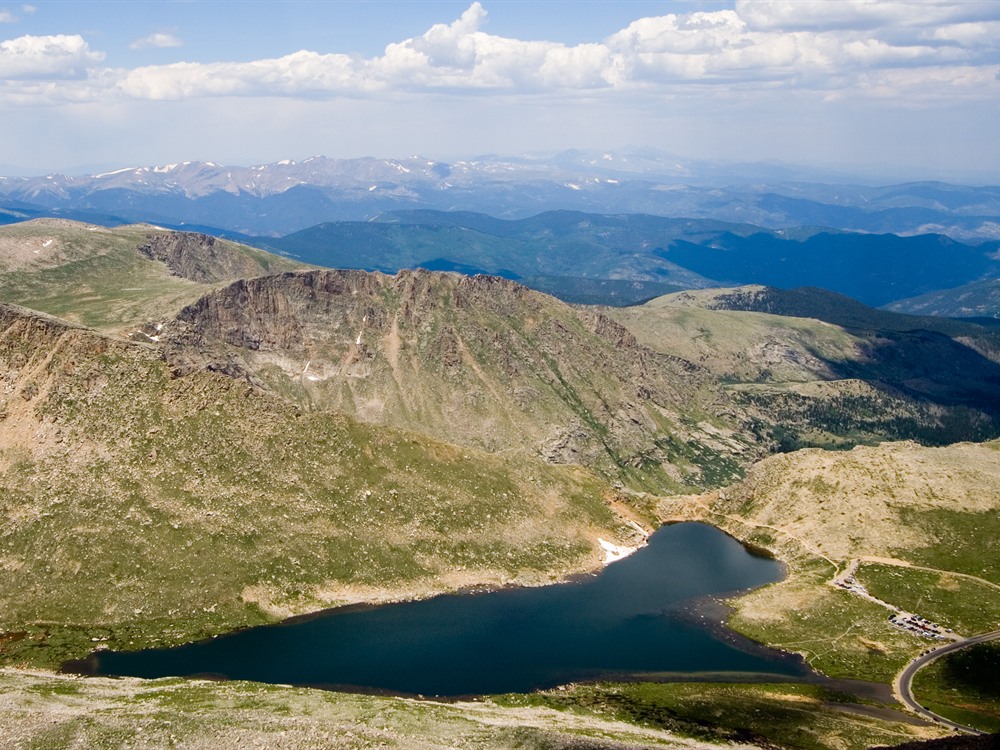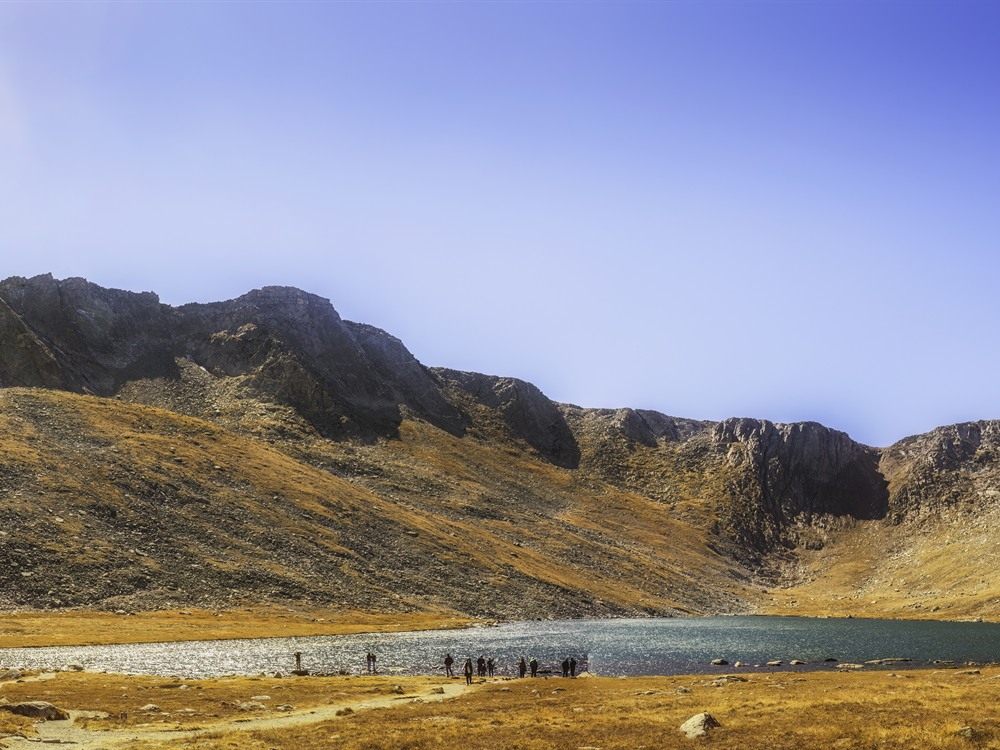

High-elevation alpine lake surrounded by fragile tundra ecosystems, offering short scenic trails and panoramic mountain views near a summit roadway.
General Information
Accessible during daylight hours; road conditions and weather may affect access
Higher fee options available for full byway access (~$15–$20 per vehicle)
Evergreen (25 mi)
Denver (60 mi)
How to Get There
From Idaho Springs (15 mi): Take CO-103 (Mount Blue Sky Scenic Byway) south from town, then follow the winding high-altitude road up to the lake access area along the route.
Overview
Summit Lake Park is a 160-acre Denver Mountain Park on the Mount Blue Sky Scenic Byway (Mount Evans road), about 64 miles west of Denver. Summit Lake sits in a glacial cirque at 12,836 feet, at the foot of Mount Blue Sky and Mount Spalding, above treeline in alpine tundra. Denver acquired the land in 1924, and it became a National Natural Landmark in 1965. Watch for mountain goats and marmots. The byway road is open only in summer, and requires a reservation (a timed entry) in season.
Summit Lake
Summit Lake is a tarn which sits at 12,836 feet (3,912 m) elevation in a glacial cirque on the north face of Mount Blue Sky and the east face of Mount Spalding. To the north, there is a col (12,855 feet/3918 m elevation) looking down into the chain of two cirques holding the Chicago Lakes at the headwaters of Chicago Creek. By one count that includes several unnamed lakes, Summit Lake is the 13th highest lake in the United States. In 1915, the USGS reported that Summit Lake was the highest lake in Colorado, at 12,740 feet. Later secondary sources occasionally report it as the highest lake in the United States.
The land was acquired by Denver in 1924 and incorporated into the Denver Mountain Parks system. It was declared a National Natural Landmark in April, 1965.
This article uses material from the Wikipedia article "Summit Lake Park", which is released under the Creative Commons Attribution-Share-Alike License 3.0