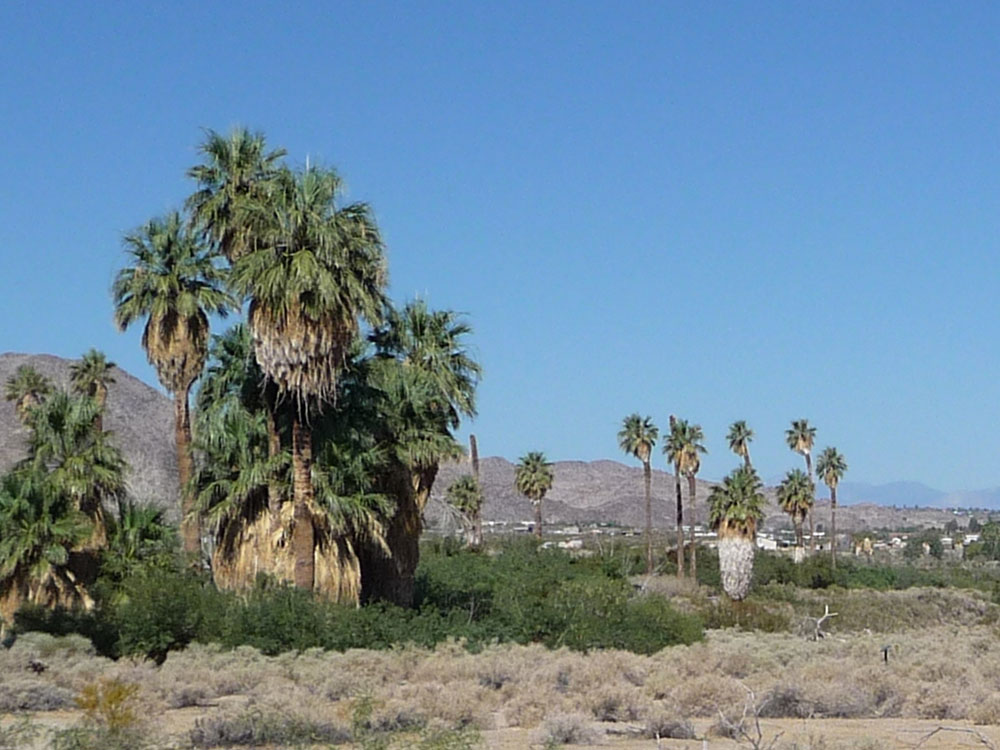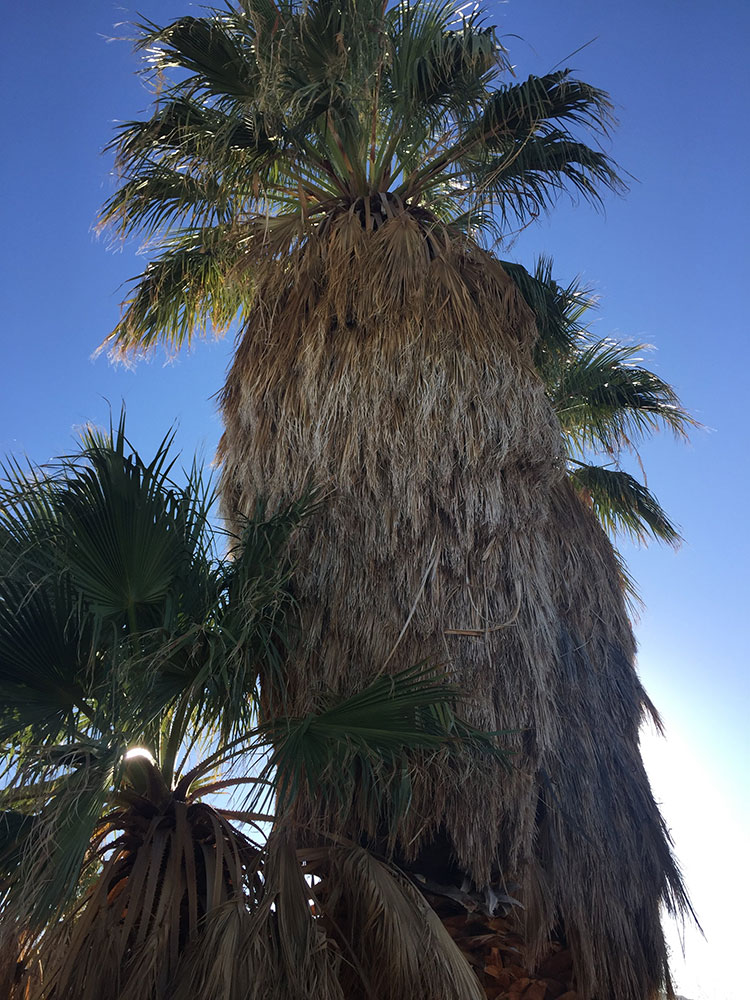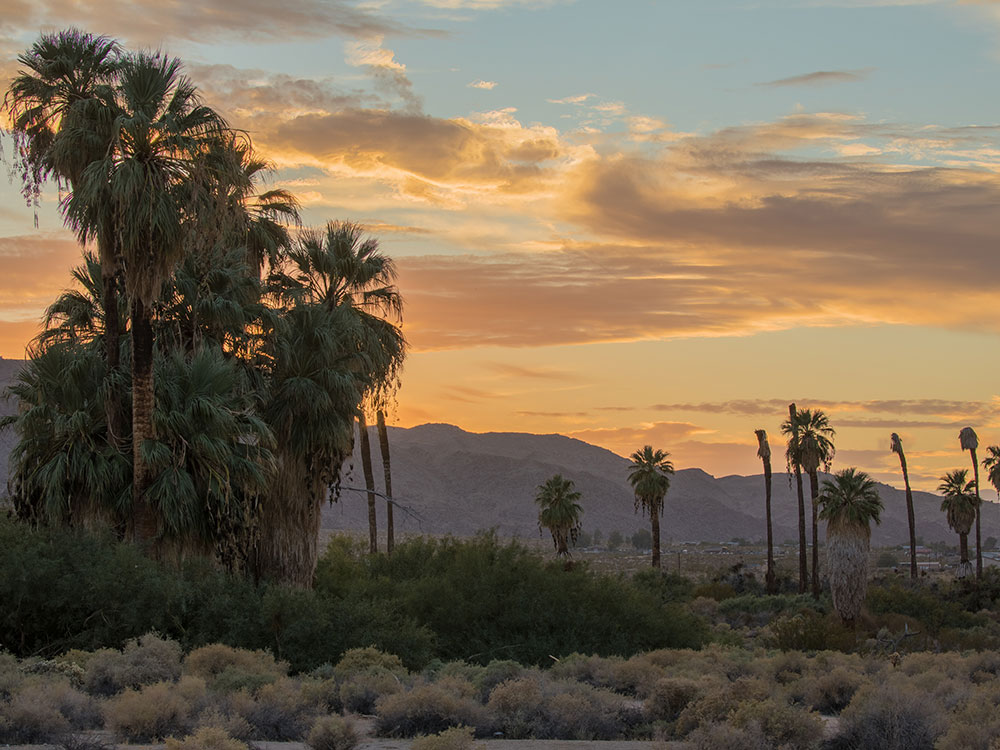

Desert oasis featuring native California fan palms, cultural history exhibits, walking paths, and one of the most significant natural water sources in the Mojave Desert.
General Information
- Hours:
- Open daily, year-round
Visitor Center: Typically 8:30am to 5pm
Oasis grounds accessible during daylight hours - Fees:
-
Joshua Tree National Park entrance fees apply
Private Vehicle: $30
Motorcycle: $25
Individual (on foot or bicycle): $15
National Park passes accepted - Pet Policy:
- Pets are permitted on paved and developed areas on a leash but are not allowed on most park trails
- Closest cities with hotels:
- Twentynine Palms (0 mi)
- Seasons:
- October through April; summer temperatures can be extreme
- Location:
- 74485 National Park Drive, Twentynine Palms, CA 92277
- Website:
- nps.gov/places/oasis-of-mara.htm
How to Get There
From Twentynine Palms (1 mi): Follow Twentynine Palms Highway to National Park Drive, enter the Joshua Tree National Park Visitor Center area, and walk the short paths leading through the Oasis of Mara.
Overview
The Oasis of Mara is one of the most historically and ecologically important locations in Joshua Tree National Park. For thousands of years, this rare desert water source sustained Native American communities, wildlife, and travelers crossing the arid landscapes of the Mojave Desert. The oasis derives its name from the Serrano people, who called the area "Mara," and its dependable groundwater supported generations of human settlement long before the arrival of modern towns. Today, visitors can follow easy interpretive paths through a grove of native California fan palms while learning about the cultural and natural history that made the oasis such a vital landmark.
Surrounded by rugged desert mountains and expansive desert scenery, the oasis provides a striking contrast to the dry environment that dominates much of the national park. Interpretive exhibits explain the area's Indigenous heritage, early ranching history, and the unique ecology that allows water-dependent plants and animals to thrive in an otherwise harsh climate. Birdwatchers frequently visit the site to observe species drawn to the oasis, while photographers appreciate the scenic blend of palms, desert vegetation, and mountain backdrops. As both a natural refuge and a living historical site, the Oasis of Mara offers visitors an engaging introduction to the diverse stories found within Joshua Tree National Park.
History
The Serrano people lived at the oasis, which they called Mara, “the place of little springs and much grass,” and according to tradition they planted 29 palm trees, one for each boy born in the first year. The Chemehuevi later lived here as well, and the town of Twentynine Palms takes its name from the oasis. Miners and homesteaders arrived in the late 1800s and early 1900s, and the oasis became part of Joshua Tree National Monument in 1936.
Things to Do
Walk the Oasis Trail
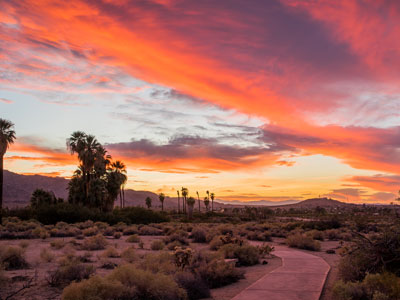
A paved half-mile loop circles the oasis, with signs about the palms, the spring and the people who lived here.
Stop at the Oasis Visitor Center
The Joshua Tree National Park Visitor Center in Twentynine Palms has exhibits, maps and a bookstore.
Look for Birds
The palms and the water attract birds, especially during spring and fall migration.
Explore Twentynine Palms
The nearby town has murals, restaurants and lodging, and serves as the gateway to the park's North Entrance.
This article uses material from the Wikipedia articles and official tourism pages for the Oasis of Mara, which are released under the Creative Commons Attribution-Share-Alike License 3.0.