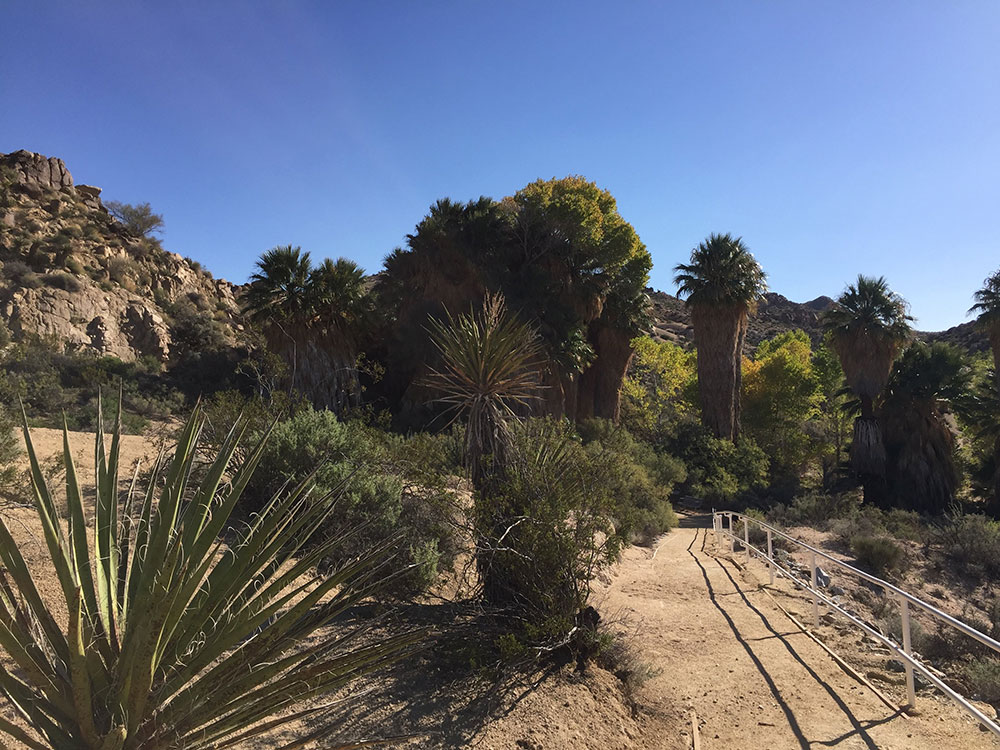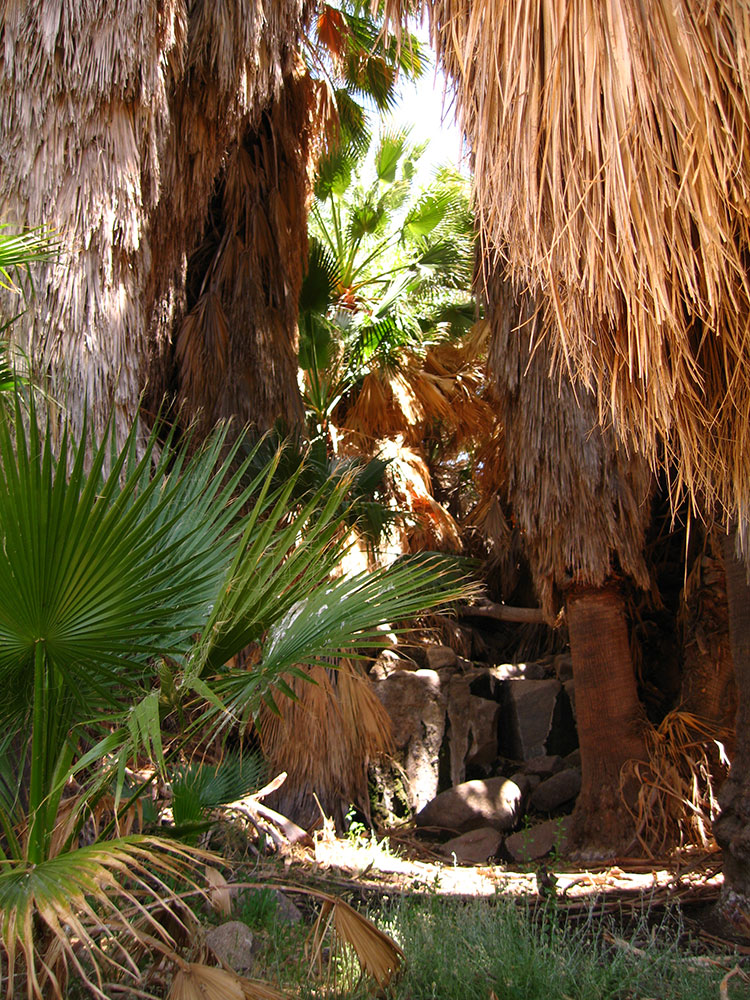
Important water stop for prospectors, miners, and teamsters traveling from Mecca to mines in the north and where a number of park hikes begin.
General Information
- Length:
- 0.1 mile roundtrip
- Elevation Gain:
- 25 feet
- Difficulty:
- Easy
- Pet Policy:
- Pets not allowed on trails
- Seasons:
- All year, but very hot in summer
- Location:
- Cottonwood Spring
- Website:
- nps.gov/jotr/planyourvisit/cottonwood.htm
How to Get There
Overview
Cottonwood Spring Oasis, one of the best kept secrets in Joshua Tree National Park, is just seven miles from the southern entrance to the park. The spring, the result of earthquake activity, was used for centuries by the Cahuilla Indians, who left bedrock mortars and clay pots, or ollas, in the area.
Gold
Cottonwood Spring was an important water stop for prospectors, miners, and teamsters traveling from Mecca to mines in the north. Water was necessary for gold processing, so a number of gold mills were located here. The remains of an arrastra, a primitive type of gold mill, can be found near the spring, and concrete ruins mark the sites of two later gold mills in the area.
Cottonwood Spring was first mentioned in a gold mine claim filed in 1875, indicating that the trees are native. Fan palms first appear around 1920, perhaps growing from seeds deposited by a bird or coyote.
Hiking
A number of hikes begin at Cottonwood Spring. A short, easy walk down Cottonwood Wash leads past a second oasis to a dry falls. In wet years, the falls can become a scene of rushing water and red-spotted toads. Bighorn sheep often come up the wash for water in the early hours. An old teamster road drops down past the falls to the lower wash. A short hike leads through palo verde and desert willow trees to the remains of Moorten's Mill.
The three-mile loop trail to Mastodon Peak offers spectacular views, interesting geology, the Mastodon Mine, and the Winona Mill Site. And, for those looking for a longer hike—eight miles round trip—and the largest stand of fan palms in the park, the Lost Palms Oasis trail is a sure winner.
History
After the Cahuilla, the spring became an important stop for prospectors and teamsters in the late 1800s. Mines and mills, including the Mastodon Mine and the Winona Mill, were active in the hills nearby into the 20th century. When Joshua Tree National Monument was created in 1936, Cottonwood Spring became part of the protected area, and it later became the site of the Cottonwood Visitor Center and Campground at the park's south entrance.
Things to Do
Stop at the Cottonwood Visitor Center
The visitor center near the south entrance offers maps, exhibits and information on trails and road conditions.
Birdwatch at the Oasis
The spring and its trees attract migrating and resident birds, making it one of the best birding spots in the park.
Hike the Mastodon Peak Loop
The 3-mile loop passes the Mastodon Mine and the Winona Mill Site and climbs to a viewpoint over the Eagle Mountains and the Salton Sea.
Camp at Cottonwood Campground
The campground is one of the quietest in the park and a good base for exploring the southern part of Joshua Tree.
Top Trails
Lost Palms Oasis Trail
Length: 7.5 miles roundtrip
Elevation Gain: 500 feet
Difficulty: Strenuous
This trail crosses washes and ridges to the largest grove of fan palms in the park. See the Lost Palms Oasis page for full details.
Mastodon Peak Trail
Length: Approximately 3 miles loop
Elevation Gain: Approximately 400 feet
Difficulty: Moderate
A loop past the Mastodon Mine to a granite peak with views of the Salton Sea on clear days.
Cottonwood Spring Nature Trail
Length: Approximately 1 mile round trip
Elevation Gain: Minimal
Difficulty: Easy
A short walk from the campground to the palm oasis, with signs about desert plants and their uses.
This article uses material from nps.gov"Joshua Tree"