Petrified Forest National Park Travel Guide
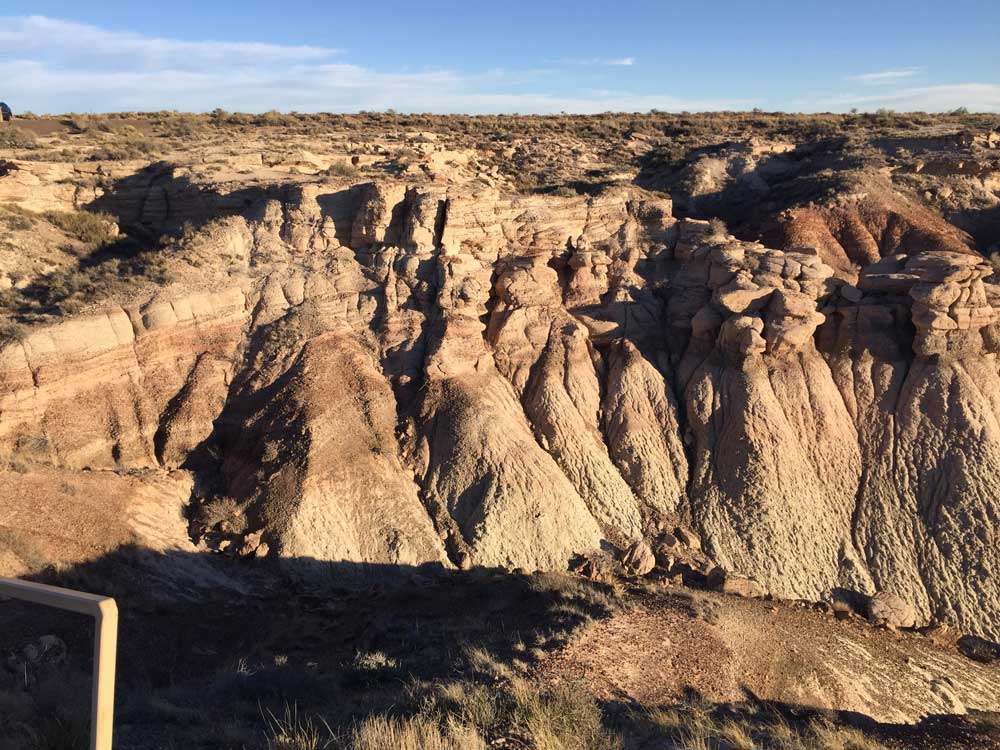
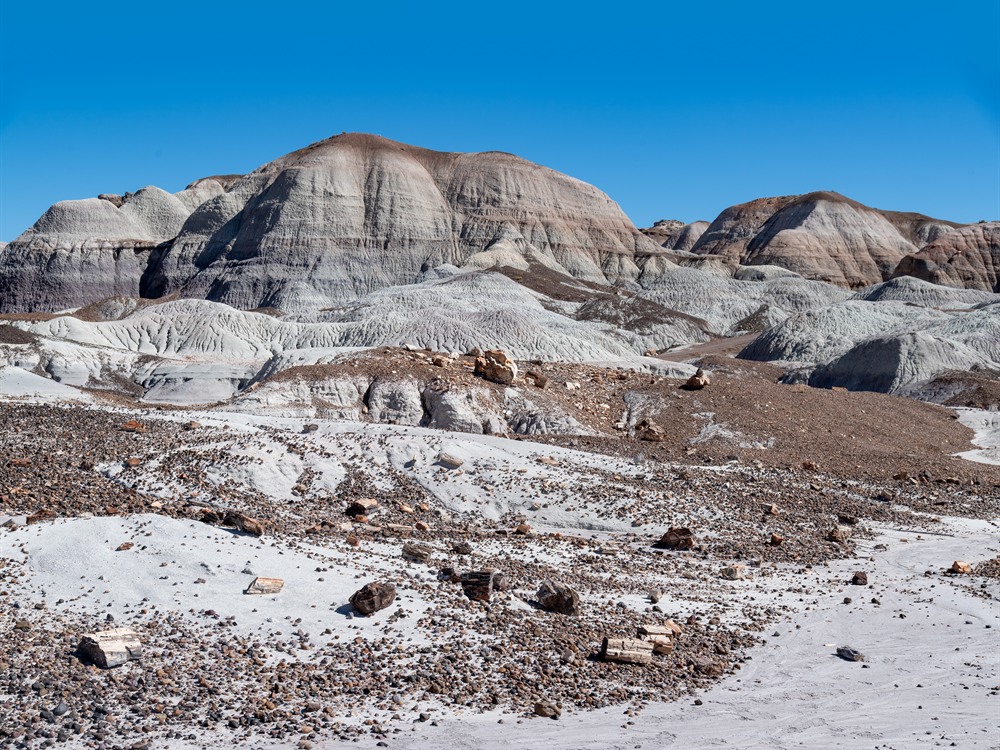
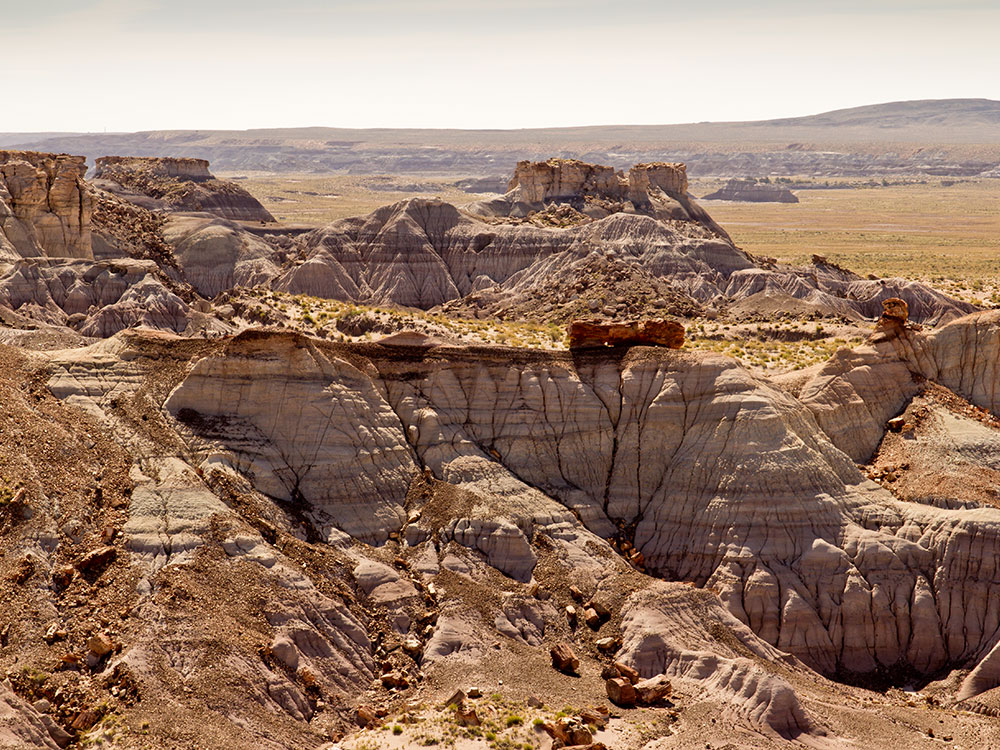
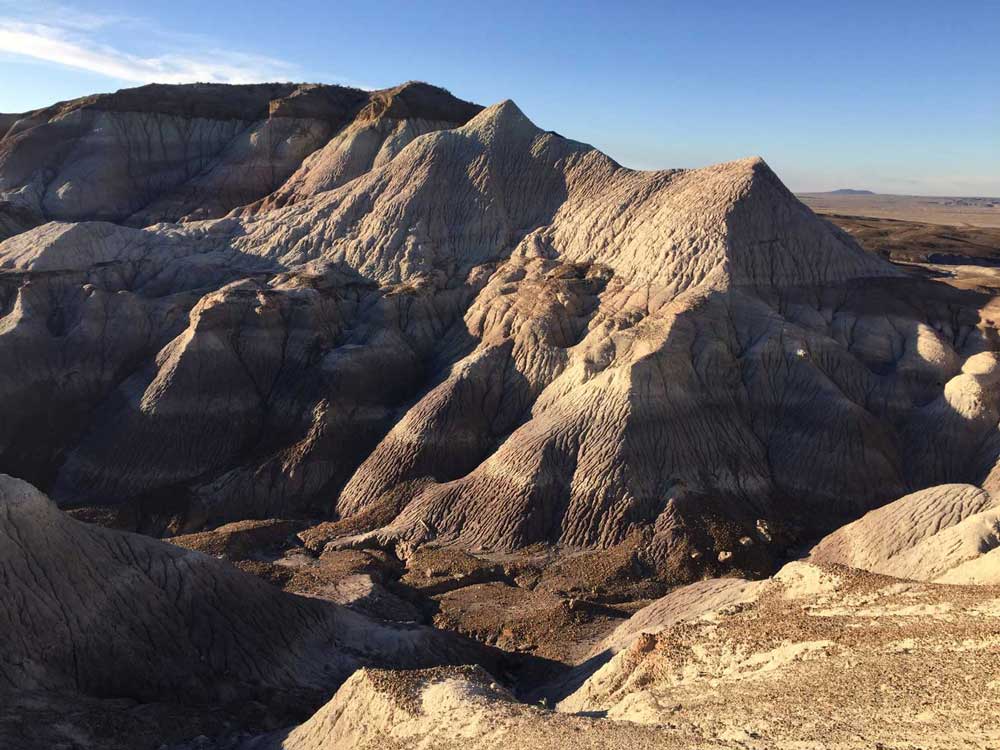
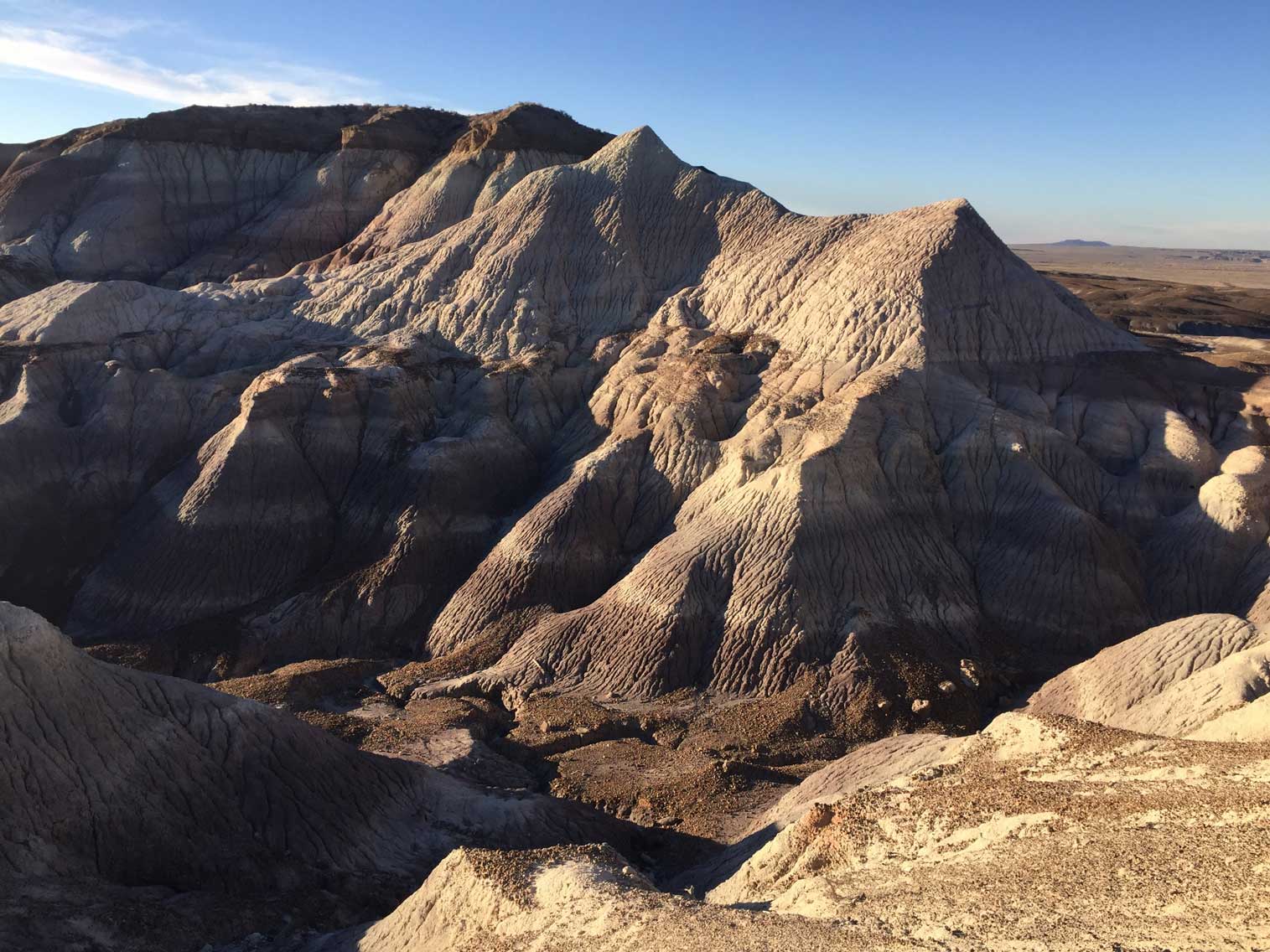
Named for its large deposits of petrified wood, the park covers about 346 square miles (900 square kilometers), encompassing semi-desert shrub steppe as well as highly eroded and colorful badlands.
General Information
- Hours:
-
Open daily: 8:00 a.m. to 5:00 p.m. MST
Closed on Thanksgiving and Christmas Day
Arizona does not observe Daylight Saving Time - Fees:
-
Private vehicle: $25 (valid for 7 days)
Motorcycle: $20
Individual (on foot or bicycle): $15
Annual Petrified Forest Pass: $45
America the Beautiful Passes accepted - Pet Policy:
-
Pets are allowed
Permitted on trails, paved roads, and parking areas
Not allowed inside buildings - Closest cities with hotels:
-
Holbrook, AZ (26 mi)
Winslow, AZ (70 mi) - Seasons:
-
All year
Best visited March–May and September–November for mild weather and fewer crowds - Location:
- Petrified Forest National Park, AZ
- Website:
- nps.gov/pefo
How to Get There
From Flagstaff to North Entrance (116 mi): Follow I-40 E to Park Rd in Petrified Forest National Park. Take exit 311 from I-40 E. Continue on Park Rd to park.
From Flagstaff to South Entrance (109 mi): Follow I-40 E to US-180 E/W Hopi Dr in Holbrook. Take exit 285 from I-40 E. Continue on US-180 E. Drive to Petrified Forest Rd.
Overview
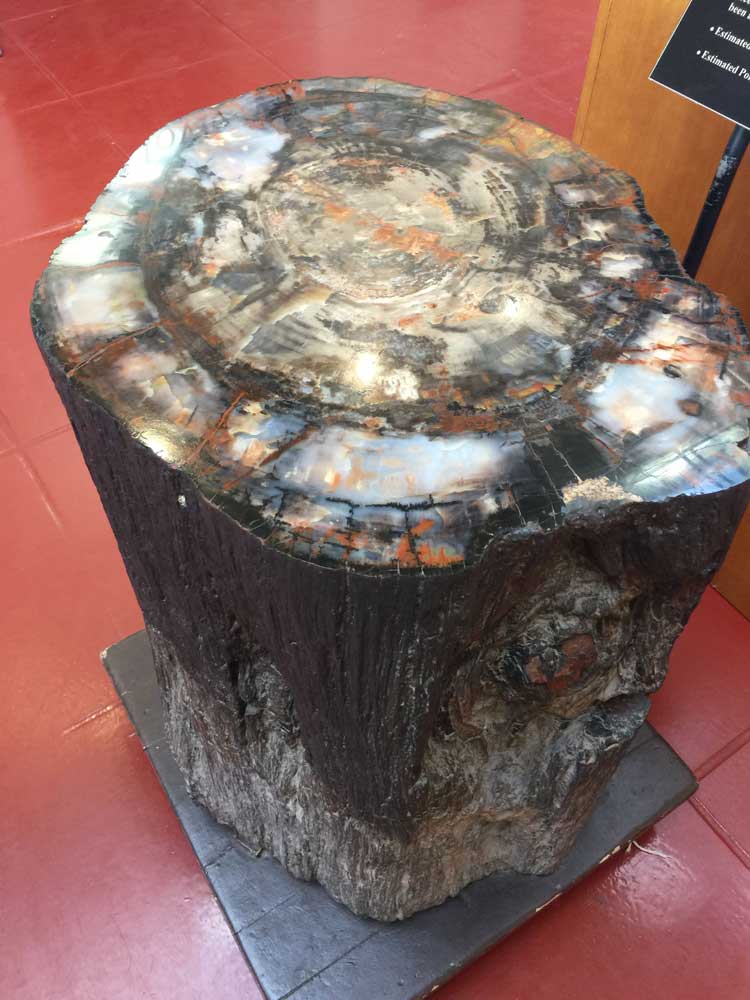
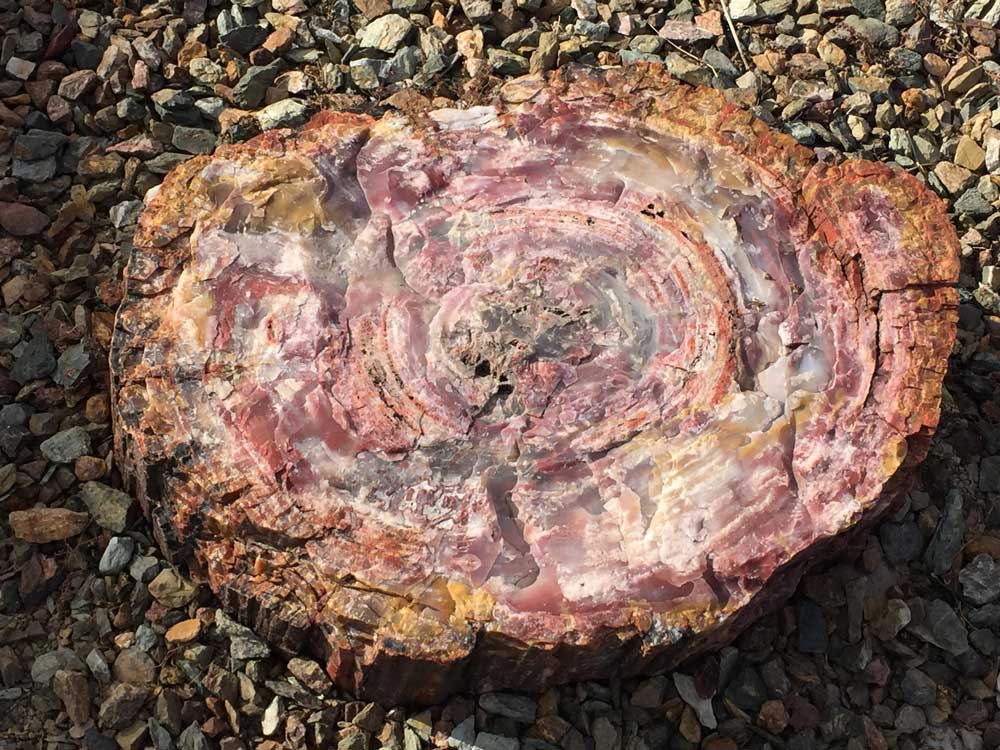
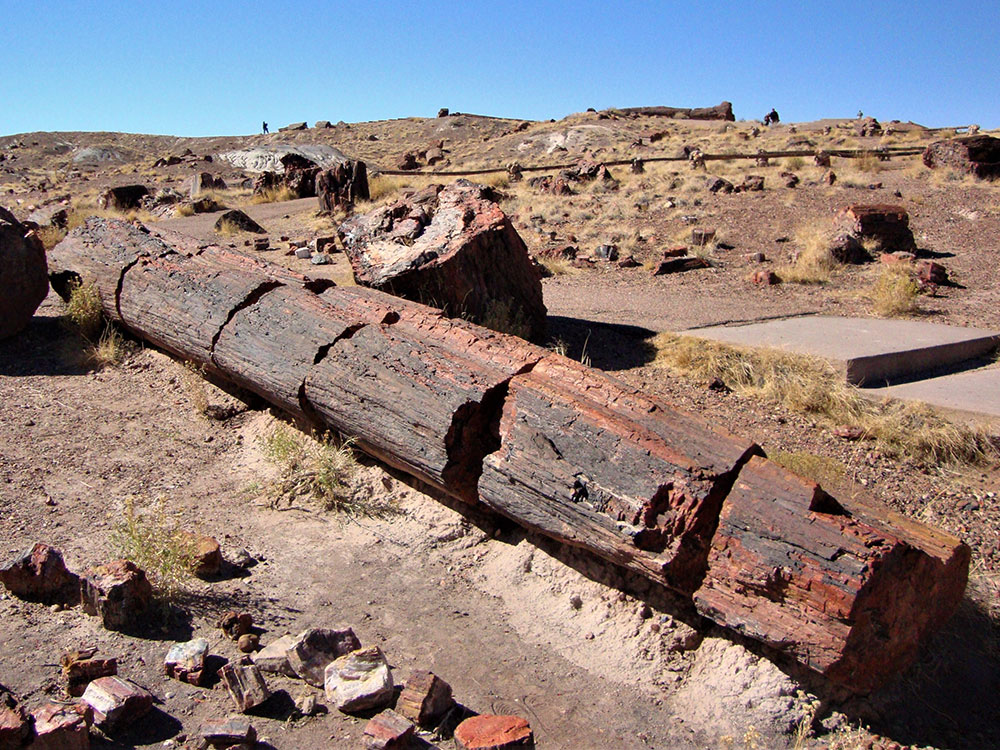
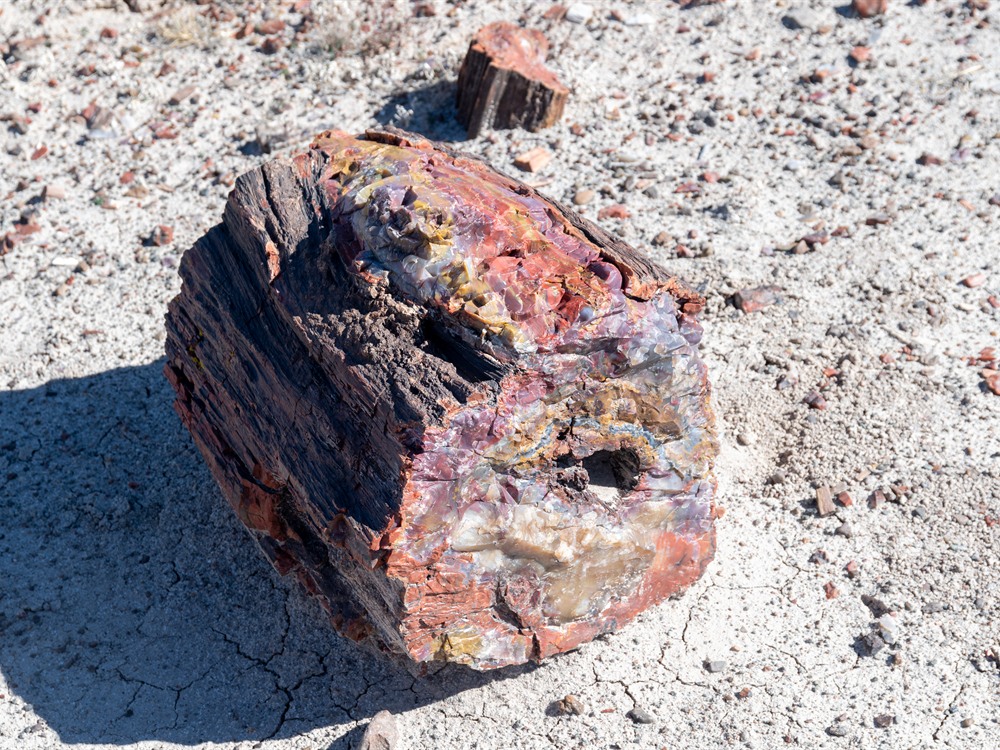
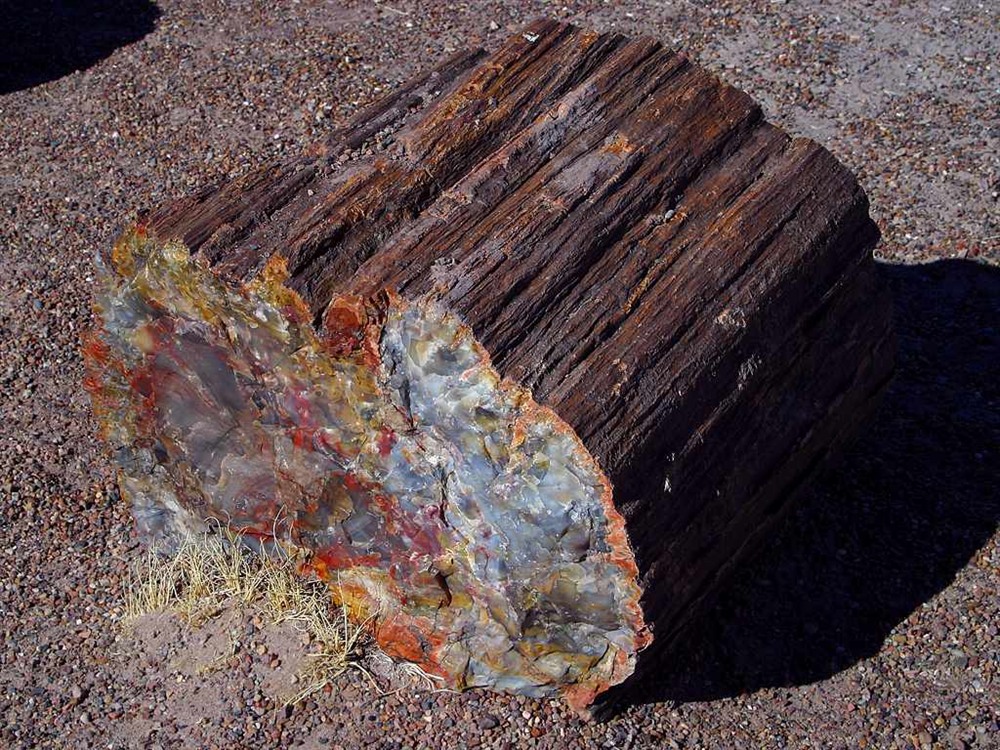
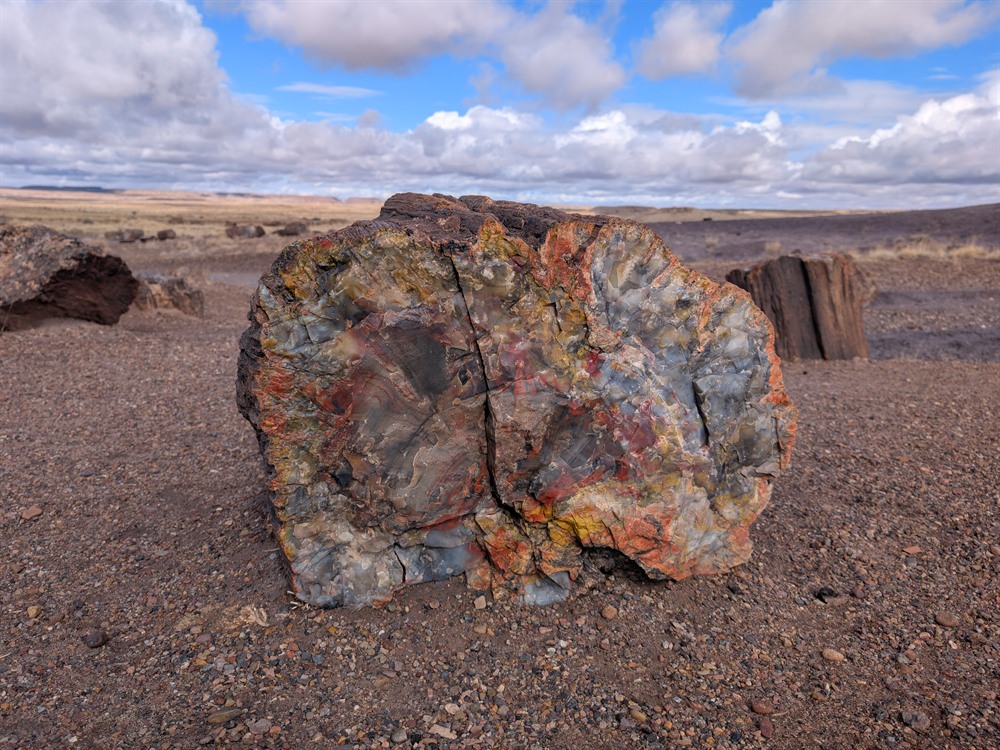
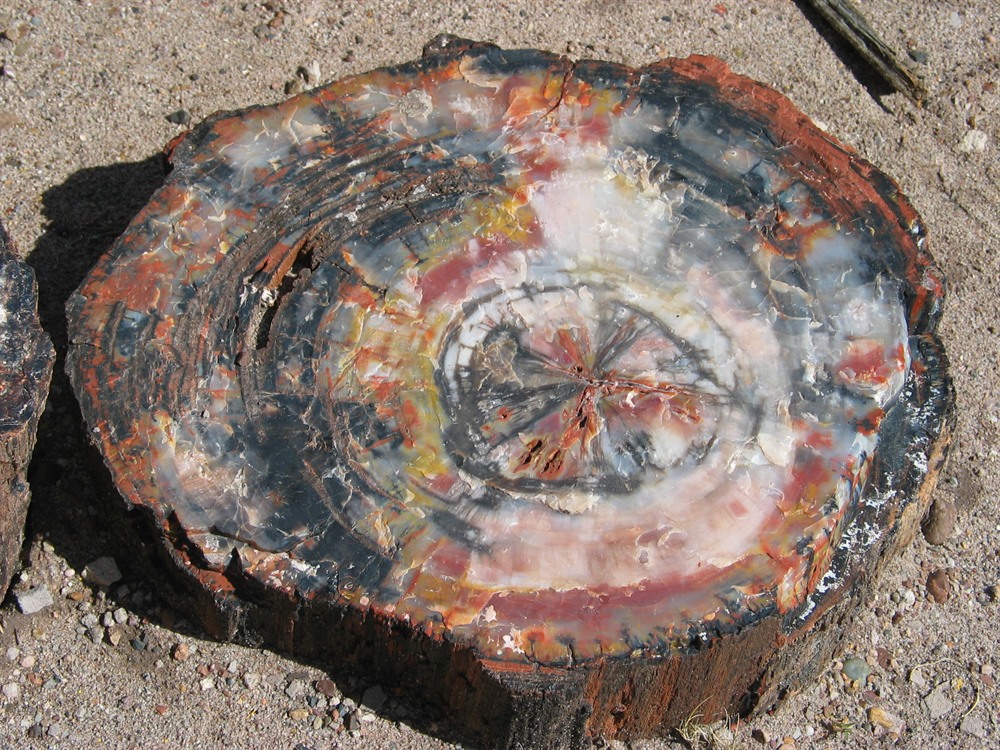
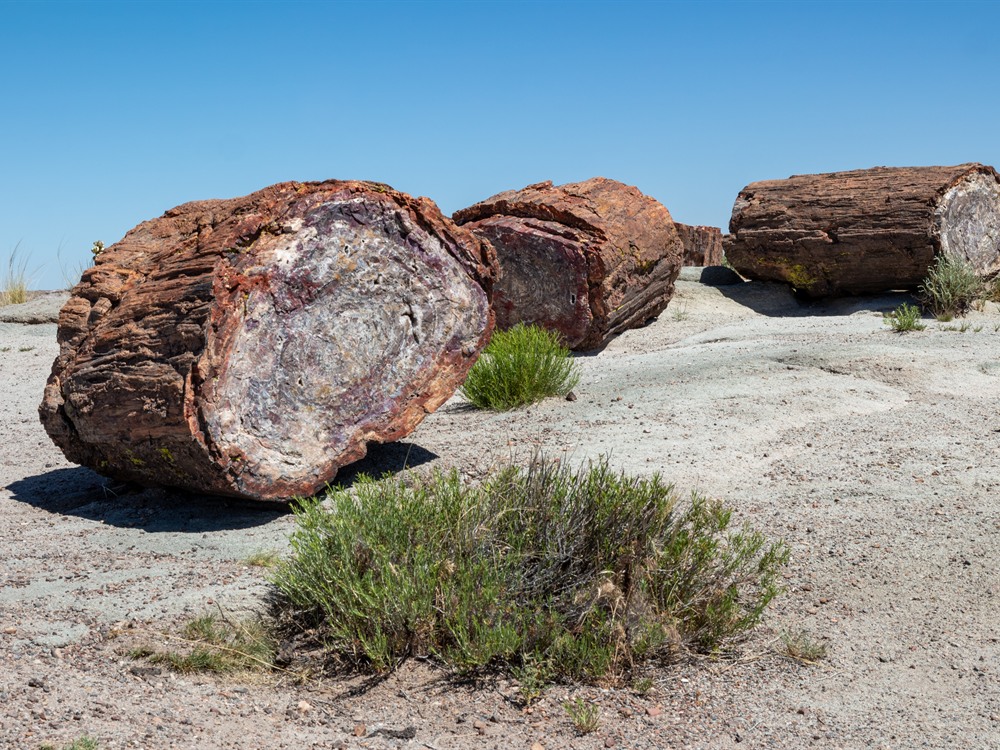
Petrified Forest National Park in northeastern Arizona is famous for its huge deposits of colorful petrified wood, some 225 million years old, and for the striking badlands of the Painted Desert. The logs are Late Triassic trees that were buried by sediment and volcanic ash, where silica-rich groundwater replaced the wood with quartz crystals, and iron and manganese oxides gave them red, orange, yellow, and purple colors. The 346-square-mile park also holds fossils of ferns, giant reptiles called phytosaurs, and early dinosaurs, as well as more than 600 archaeological sites, including petroglyphs left by people who lived here for at least 8,000 years.
The site became a national monument in 1906, the second created under the Antiquities Act, and a national park in 1962. People visit because the park is easy to see by car, with a scenic road passing overlooks and short trails, and because it is a rare place to walk among logs that turned to stone, see ancient rock art, and stop at an historic stretch of Route 66. Removing petrified wood from the park is prohibited, and the theft of wood remains a problem.
Park Sections
The park is a long strip crossed by Interstate 40 and a 28-mile scenic road that runs from the north entrance to the south entrance. The north end, near I-40 exit 311, includes the Painted Desert overlooks, the Painted Desert Visitor Center, the historic Painted Desert Inn, and Puerco Pueblo. Moving south, the road passes Newspaper Rock, the Tepees, and Blue Mesa. The south end, off US-180, has the Rainbow Forest Museum and Visitor Center, the Giant Logs, Long Logs, and Crystal Forest trails, and Agate House. The Painted Desert Wilderness and other backcountry areas are open to hikers with a free permit.
Sightseeing and Exploring the Park
The park road is the main way to see the park, and you can drive the whole length in about two hours, though most visitors stop at many overlooks. Along the northern part, a series of Painted Desert overlooks, including Tawa, Kachina, Chinde, Pintado, and Nizhoni Points, show the banded, multicolored badlands. Further south, a short side road leads to the 3.5-mile Blue Mesa loop through blue-gray hills, and other stops include Jasper Forest, Agate Bridge, and the 1932 Studebaker marking the old Route 66 alignment. Most overlooks are paved and accessible, and the road is open to cars and RVs.
Hiking
The park's seven maintained trails range from less than half a mile to nearly 3 miles. The Painted Desert Rim Trail is a short, level walk along the rim with views, and the Giant Logs Trail (0.4 miles) near the south visitor center passes some of the largest petrified logs. The Blue Mesa trail (1 mile) is a steeper loop through the badlands. The Crystal Forest Trail (0.75 miles) passes logs sparkling with quartz crystals, and the Long Logs Trail (1.6 miles) has the biggest concentration of fallen logs. The Agate House Trail (2 miles round trip) leads to a partly reconstructed pueblo made of petrified wood. Most trails are easy, and none is difficult, but there is little shade.
Other Activities
Besides sightseeing and short hikes, the park is known for its archaeology, including the petroglyphs at Newspaper Rock and Puerco Pueblo, and the Painted Desert Inn, a National Historic Landmark and former Harvey House with murals by Hopi artist Fred Kabotie. Rangers give talks and guided walks, and the park offers a Junior Ranger program. Backcountry hiking and camping in the wilderness is allowed with a free permit, and the park is a good spot for photography and stargazing. There are no commercial outfitters or cave tours, but Route 66 sites in Holbrook and Winslow are nearby.
Flora and Wildlife
Petrified Forest is not known for its living plants, since most of the park is high desert grassland and badlands. Native grasses, saltbush, rabbitbrush, and wildflowers after summer rains cover the ground, and cottonwoods grow near the Puerco River. Wildlife includes pronghorn, coyotes, bobcats, black-tailed jackrabbits, collared lizards, and many birds such as ravens and raptors. Pronghorn are often seen from the road in the open grasslands, and the best times to look are early morning and evening. Viewing is on your own from the road and trails.
Access
The park is on Interstate 40 in northeastern Arizona, and the north entrance is at exit 311, about 25 miles east of Holbrook. The south entrance is on US-180, about 20 miles southeast of Holbrook. Flagstaff is about 110 to 116 miles west, roughly 1.75 hours, Albuquerque about 3 hours east, Gallup about 1.25 hours east, and Phoenix about 4 hours south. There is no public transportation. Most visitors drive through the park from one end to the other, and the road is paved all the way. Cell service is limited and services inside the park are few, so bring water and snacks.
Seasons
The park is open year-round, and each season has its own character. Spring and fall are the most comfortable, with mild days and clear air. Summer is hot, often above 90 °F, with monsoon thunderstorms from July to September that can bring flash floods and dramatic skies. Winter is cold, and snow and ice can temporarily close roads, but the Painted Desert looks striking with a light dusting of snow. Sunrise and sunset bring the best colors on the badlands. Check the National Park Service website for hours, which vary by season, and for any road closures.
Camping and Lodging
There are no campgrounds or lodgings in the park, but wilderness backpacking and camping is permitted with a free permit. The closest lodging is in Holbrook, about 25 miles away, which has chain hotels and the historic Wigwam Motel with its concrete tepee rooms on old Route 66. Winslow, about 55 miles west, is home to La Posada, a restored Harvey House hotel, and Homolovi State Park has a campground nearby. Gallup, New Mexico, about 1.25 hours east, offers more motels. Chambers and Sanders, on the Navajo Nation, have a few basic services.
Visitor Centers
The park has two main visitor centers. The Painted Desert Visitor Center at the north end, designed by architect Richard Neutra, has exhibits, a film, a bookstore, and a gas station and restaurant nearby. The Rainbow Forest Museum and Visitor Center at the south end has exhibits on petrified wood and fossils, a bookstore, and a gift shop. The historic Painted Desert Inn also houses a small museum and is open seasonally. Hours vary by season, so check the National Park Service website.
This article uses material from the Wikipedia article "Petrified Forest National Park", "Agate House Pueblo", "Newspaper Rock Petroglyphs Archeological District", and "Painted Desert Inn", which is released under the Creative Commons Attribution-Share-Alike License 3.0. Additional information comes from the National Park Service Petrified Forest National Park website.
Featured Trails
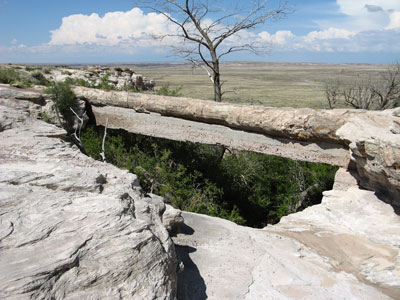
Agate Bridge
0.2–0.25 mile roundtrip, Under 50 feet elevation gain, Easy
Natural sandstone arch formed by erosion spans a small ravine, showcasing layers of petrified wood embedded within the structure.
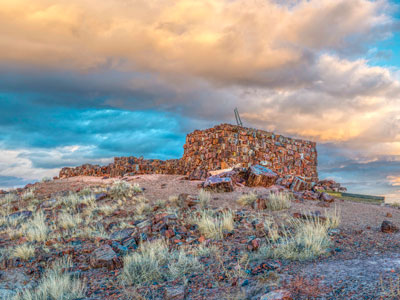
Agate House Trail
2 miles roundtrip, 50 feet elevation gain, Easy
Short paved trail leading to a partially reconstructed ancient pueblo built from petrified wood and set within a desert landscape.
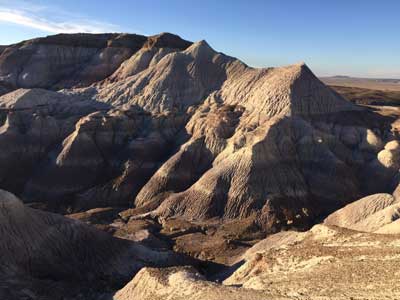
Blue Mesa Trail
1 mile loop, 130 feet elevation gain, Moderate
Badlands landscape of eroded blue-gray hills and ridges featuring layered sediment, colorful mineral deposits, and striking geological formations shaped by erosion.
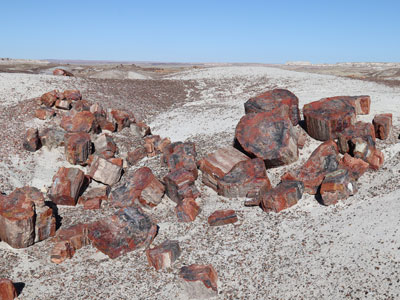
Crystal Forest
0.75 mile loop, 30 feet elevation gain, Easy
Desert trail winding through scattered deposits of large, colorful petrified logs formed from ancient trees that turned to stone over millions of years.
Jeff P from Berkeley, CA, USA, CC BY 2.0, via Wikimedia Commons; Image Size Adjusted

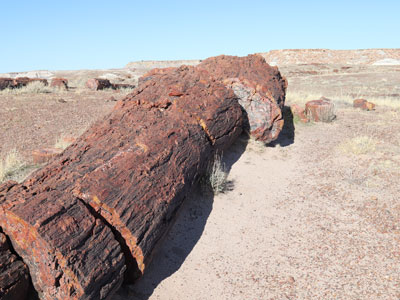
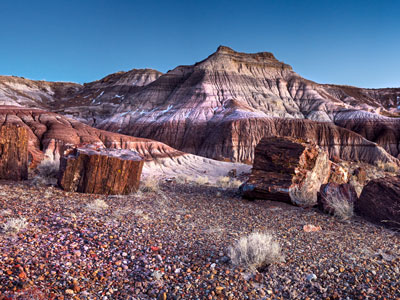
Giant Logs Trail
0.4 mile loop, 40 feet elevation gain, Easy
Short loop trail passing among massive petrified tree trunks scattered across a desert landscape, showcasing some of the largest fossilized logs in the area.
Jeff P from Berkeley, CA, USA, CC BY 2.0, via Wikimedia Commons; Image Size Adjusted
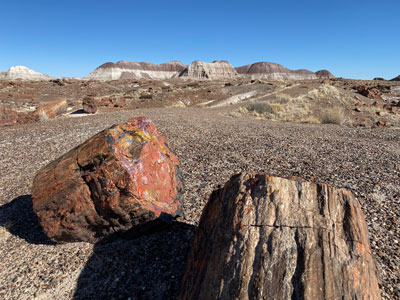
Jasper Forest
0.5 mile roundtrip, 40 feet elevation gain, Easy
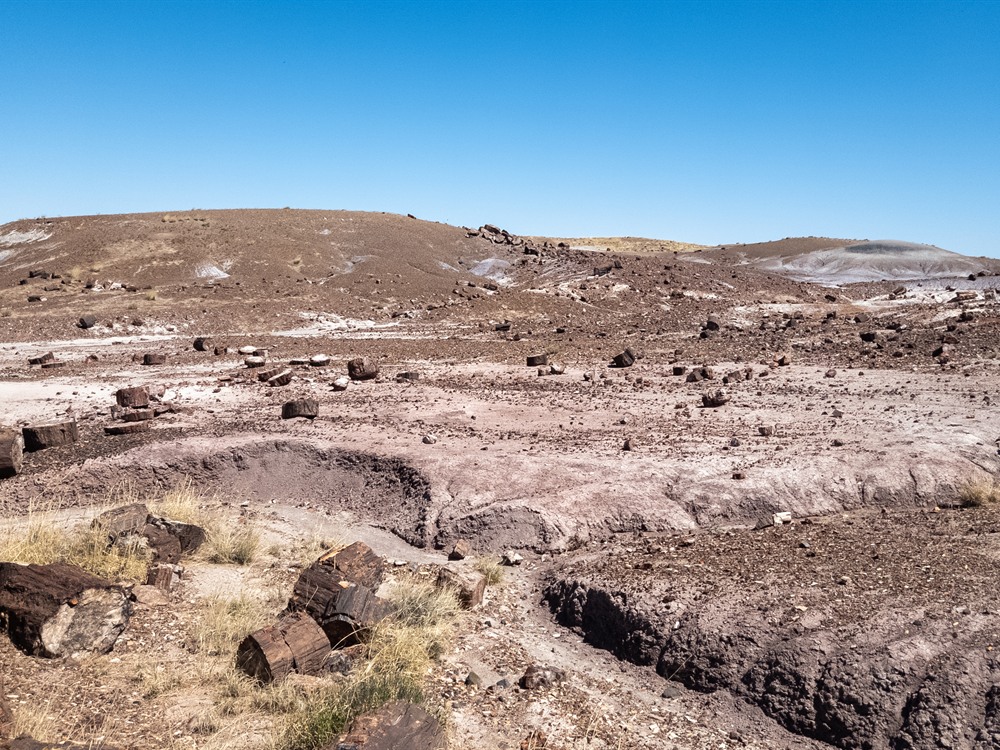
Expansive badlands basin filled with colorful petrified wood fragments scattered across rolling hills and open desert terrain.
Jeff P from Berkeley, CA, USA, CC BY 2.0, via Wikimedia Commons; Image Size Adjusted
Long Logs
1.6 miles loop, 50 feet elevation gain, Easy
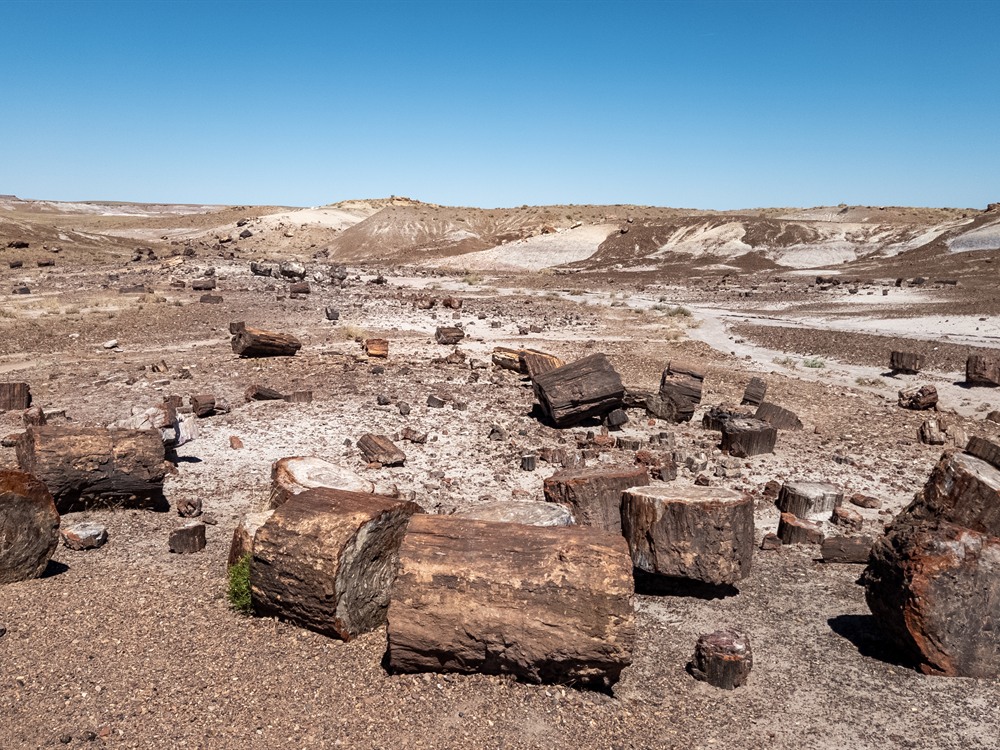
Loop trail passing through a dense concentration of elongated petrified logs scattered across desert terrain with vivid mineral colors and preserved wood textures.
Jeff P from Berkeley, CA, USA, CC BY 2.0, via Wikimedia Commons; Image Size Adjusted
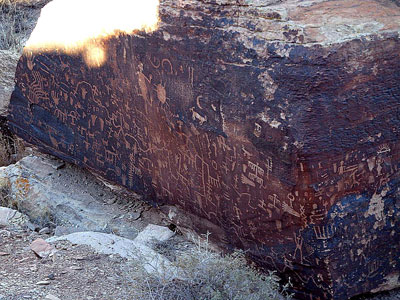
Newspaper Rock
0.3 mile roundtrip, 30 feet elevation gain, Easy
Cluster of weathered sandstone boulders covered with a dense collection of ancient petroglyphs carved into dark rock surfaces.
Jeff P from Berkeley, CA, USA, CC BY 2.0, via Wikimedia Commons; Image Size Adjusted
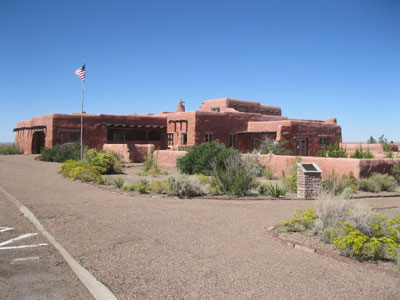
Painted Desert Inn
Historic adobe-style structure showcasing regional architecture and exhibits overlooking expansive desert badlands and colorful layered landscapes.
Jeff P from Berkeley, CA, USA, CC BY 2.0, via Wikimedia Commons; Image Size Adjusted
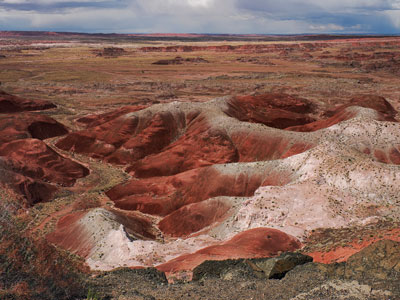
Painted Desert
Vast desert region of layered badlands displaying vibrant bands of color shaped by erosion and ancient geological processes.
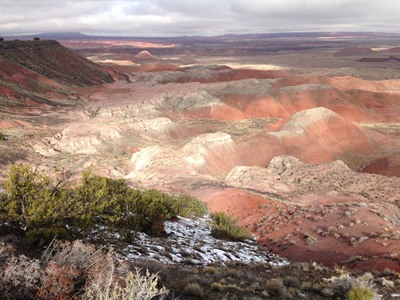
Painted Desert Rim Trail, Petrified Forest National Park, AZ
Tomošius from Chicago, U.S.A., CC BY 2.0, via Wikimedia Commons

Painted Desert Rim Trail
1 mile roundtrip, Minimal elevation gain, Easy
Paved scenic pathway following the edge of colorful badlands with expansive views of layered desert formations and eroded hills.
Jeff P from Berkeley, CA, USA, CC BY 2.0, via Wikimedia Commons; Image Size Adjusted
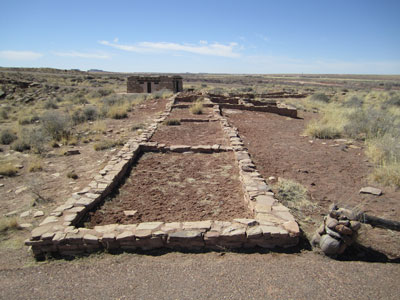
Puerco Pueblo
0.3 mile loop, Minimal elevation gain, Easy
Ancient pueblo site with partially reconstructed stone structures and nearby petroglyphs offering insight into early agricultural communities.
Jeff P from Berkeley, CA, USA, CC BY 2.0, via Wikimedia Commons; Image Size Adjusted
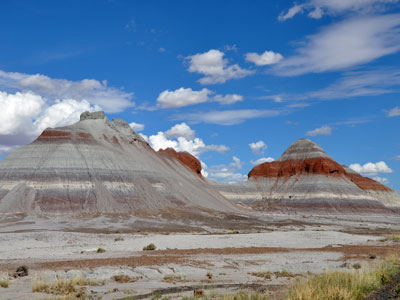
Tepees
0.5 mile roundtrip, Minimal elevation gain, Easy
Cluster of cone-shaped badlands formations composed of layered sediment and colorful mineral deposits shaped by erosion into distinct pointed mounds.