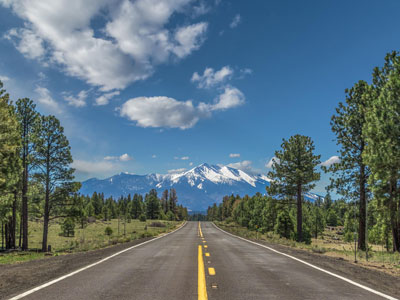

Arizona city with strong tourism sector, due to its proximity to Grand Canyon National Park, Oak Creek Canyon, the Arizona Snowbowl, Meteor Crater, and Historic Route 66.
General Information
- Hours:
-
Open daily 24 hours
Individual attractions, restaurants, and businesses operate on varying schedules - Fees:
-
No general admission cost to visit the city
Separate fees may apply for parks, attractions, and activities - Pet Policy:
- Pets are generally allowed in outdoor public areas on a leash; individual businesses and parks may have restrictions
- Closest cities with hotels:
- Flagstaff
- Seasons:
- Spring, summer, and fall are best; winter offers snow but colder temperatures
- Location:
- Flagstaff, AZ 86001
- Website:
- flagstaffarizona.org
How to Get There
From Phoenix (145 mi): Take I-17 N from Phoenix and continue north for approximately 145 miles until you reach Flagstaff in northern Arizona.
Overview
Flagstaff is a lively mountain city in northern Arizona at 7,000 feet, surrounded by the world’s largest ponderosa pine forest and dominated by the San Francisco Peaks, home to Humphreys Peak (12,633 feet), the highest point in Arizona. It is famous as the gateway to the Grand Canyon, about 80 miles north, and as the “City of Seven Wonders,” with Sunset Crater, Wupatki, Walnut Canyon, Oak Creek Canyon and more nearby.
Flagstaff is significant as a center of astronomy, science and outdoor recreation, and as a historic Route 66 railroad town. It is popular for its cool summers and snowy winters, with skiing at Arizona Snowbowl, extensive hiking and mountain biking trails, and a historic downtown with breweries, restaurants and shops. Visitors come to escape the desert heat, explore the surrounding national monuments and enjoy a university town with a relaxed mountain feel.
History
The Sinagua people farmed here after the 11th-century eruption of Sunset Crater enriched the soil. The modern city dates to the 1870s and grew as a railroad town, becoming a tourist stop when Route 66 came through in 1926. Lowell Observatory, founded in 1894, is where Clyde Tombaugh discovered Pluto in 1930, and it was used to map the Moon for the Apollo missions. Downtown’s red Moenkopi sandstone buildings were revitalized in the 1990s around Heritage Square.
Day Trips
Flagstaff’s location makes it one of the best bases in the Southwest for day trips. Within about 30 minutes are Sunset Crater Volcano, Wupatki and Walnut Canyon national monuments, which protect a cinder cone, ancestral Pueblo ruins and a canyon of cliff dwellings, and Meteor Crater is a short drive east. Grand Canyon National Park’s South Rim is about 80 miles north, and Sedona and its red rocks are only about 30 miles south through scenic Oak Creek Canyon.
Route 66
Route 66 shaped modern Flagstaff. After the highway was commissioned in 1926, it ran along what is now Santa Fe Avenue and Old Route 66 through downtown, and motels, diners, gas stations and neon signs sprang up to serve the road-trippers heading to California and the Grand Canyon. Many of those landmarks survive, including the historic Hotel Monte Vista and the Galaxy Diner, and the Mother Road still runs beside the railroad tracks through the heart of downtown. Interstate 40 bypassed the city in the 1960s and 1970s, but Flagstaff has kept its Route 66 character alive, celebrating it each September at Route 66 Days.
Sightseeing and Popular Landmarks
Highlights include Lowell Observatory with its Giovale Open Deck Observatory, Historic Downtown and Route 66, the historic Weatherford Hotel and Orpheum Theater, the Hotel Monte Vista and the Galaxy Diner. Just outside the city are Humphreys Peak, Walnut Canyon, Sunset Crater, Wupatki and Meteor Crater.
Culture and Museums
Flagstaff’s museums reflect the region’s science, Native American heritage and pioneer history. The Museum of Northern Arizona focuses on the natural and cultural history of the Colorado Plateau, and the Riordan Mansion State Historic Site preserves the Arts and Crafts home of a lumber baron family. Annual events include Route 66 Days in early September and the Flagstaff Festival of Science in the fall, and Northern Arizona University adds concerts, theater and lectures to the calendar.
Parks
Flagstaff has an extensive park system, including the Arboretum at Flagstaff and the 50-plus-mile Flagstaff Urban Trails System, which links neighborhoods with open space and the surrounding Coconino National Forest. Buffalo Park offers a loop trail with views of the San Francisco Peaks, and nearby national monuments such as Walnut Canyon, Sunset Crater Volcano and Wupatki protect remarkable landscapes and ancestral Pueblo ruins.
Seasons and Weather
Flagstaff has four distinct seasons. Summers are warm and pleasant, with highs usually in the 70s and low 80s°F and afternoon monsoon storms from July to September. Fall brings golden aspens and crisp air, while winters are cold and snowy, with average snowfall of around 100 inches and highs in the 40s°F. Spring is breezy and variable, and the ski season at Snowbowl typically runs from December into spring.
This article uses material from the Wikipedia article "Flagstaff, Arizona", along with the Lowell Observatory, Museum of Northern Arizona, Discover Flagstaff and National Park Service visitor information, and National Weather Service climate data, which are released under the Creative Commons Attribution-Share-Alike License 3.0.
Featured Locations
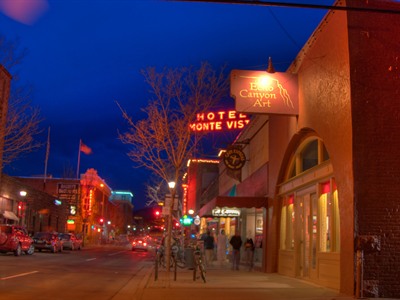
Downtown Flagstaff
Vibrant mountain city center known for historic architecture, local shops, breweries, and a lively cultural scene set against a backdrop of pine forests and high-elevation peaks.

Flagstaff Visitor Center
Historic railroad depot serving as the city's official tourism hub with travel resources, local exhibits, maps, souvenirs, and Route 66 information.
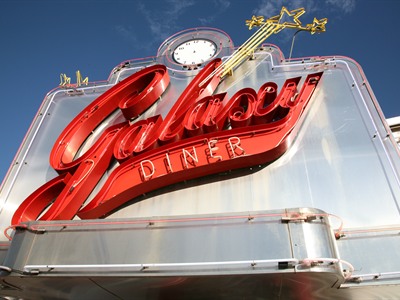
Galaxy Diner
Retro Route 66 dining destination featuring a classic 1950s-style atmosphere, vintage décor, comfort food, and an extensive menu of traditional American diner favorites.
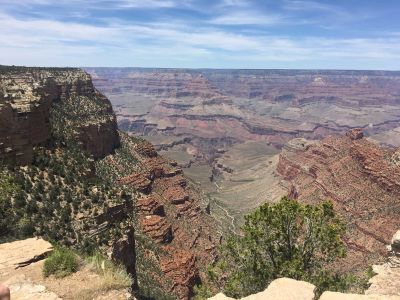
Grand Canyon National Park
Park's central feature is the Grand Canyon, a gorge of the Colorado River, which is often considered one of the Wonders of the World
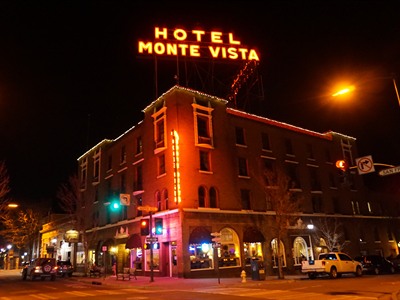
Hotel Monte Vista
Historic downtown hotel offering vintage accommodations, lively nightlife venues, and preserved 1920s architecture associated with the golden age of rail and highway travel.
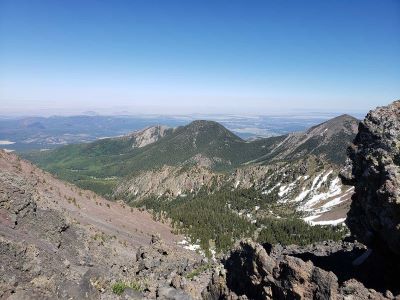
Humphreys Peak
10 miles roundtrip, 3,300 feet elevation gain, Strenuous
Alpine summit trail ascending through conifer forests and tundra to the highest point in the state, offering panoramic views of the Grand Canyon, Painted Desert, and surrounding volcanic peaks.
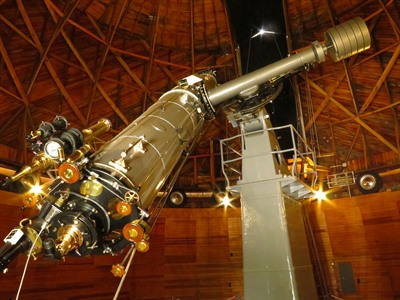
Lowell Observatory
Historic hilltop research facility featuring powerful telescopes, interactive exhibits, and guided stargazing experiences that explore the mysteries of the universe.
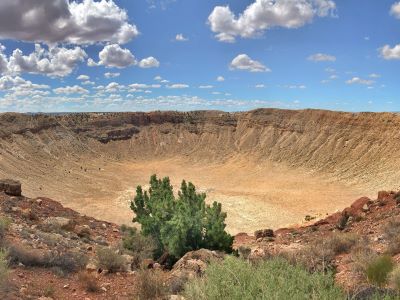
Meteor Crater Natural Landmark
Massive impact site formed by a meteorite 50,000 years ago, featuring a mile-wide crater, museum exhibits, guided rim tours, and space science displays.
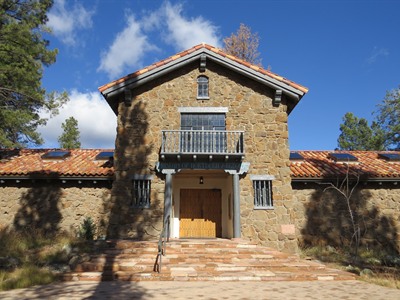
Museum of Northern Arizona
Regional museum showcasing the natural history, geology, archaeology, and Indigenous cultures of the Colorado Plateau through immersive exhibits and collections.
Riordan Mansion State Historic Park
Historic Arts and Crafts–style mansion showcasing preserved early 20th-century architecture, original furnishings, and the legacy of a prominent regional family.
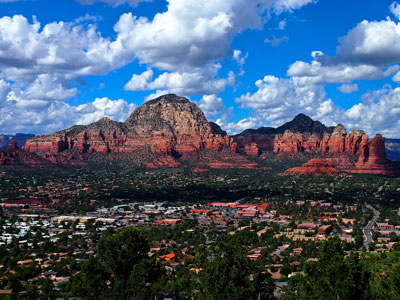
Sedona
Known for array of red sandstone formations that appear to glow in brilliant orange and red when illuminated by the rising or setting sun that form a popular backdrop for many activities, including hundreds of hiking and mountain biking trails.
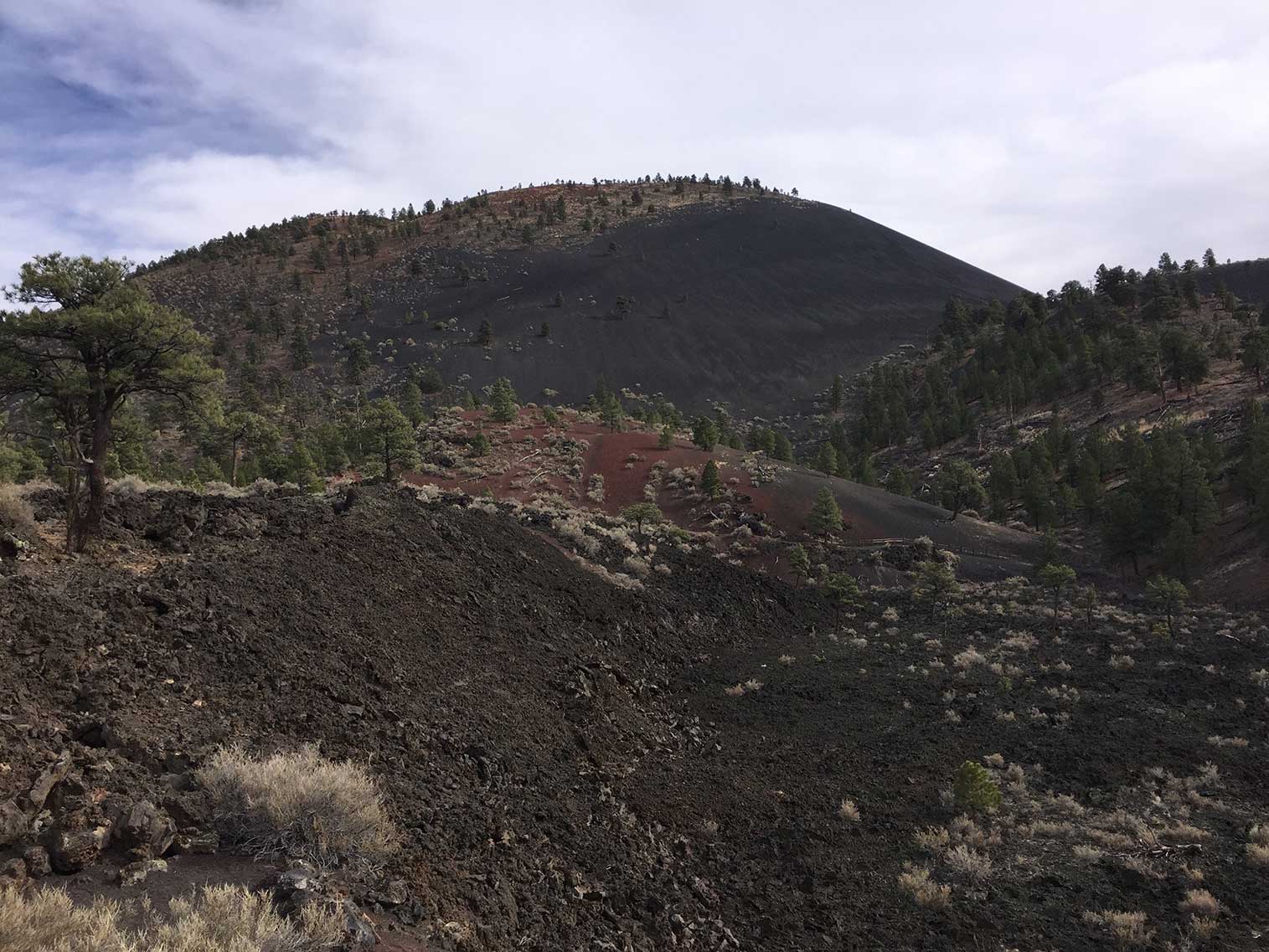
Sunset Crater National Monument
Volcanic landscape of cinder cones and lava flows offering scenic drives, hiking trails, and geological exploration.
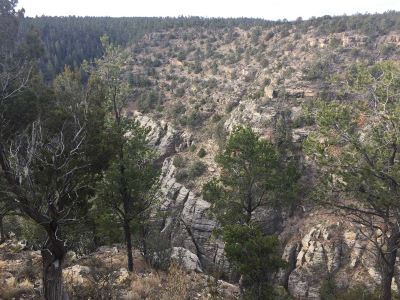
Walnut Canyon National Monument
Canyon landscape featuring ancient cliff dwellings accessible via scenic hiking trails and interpretive exhibits.
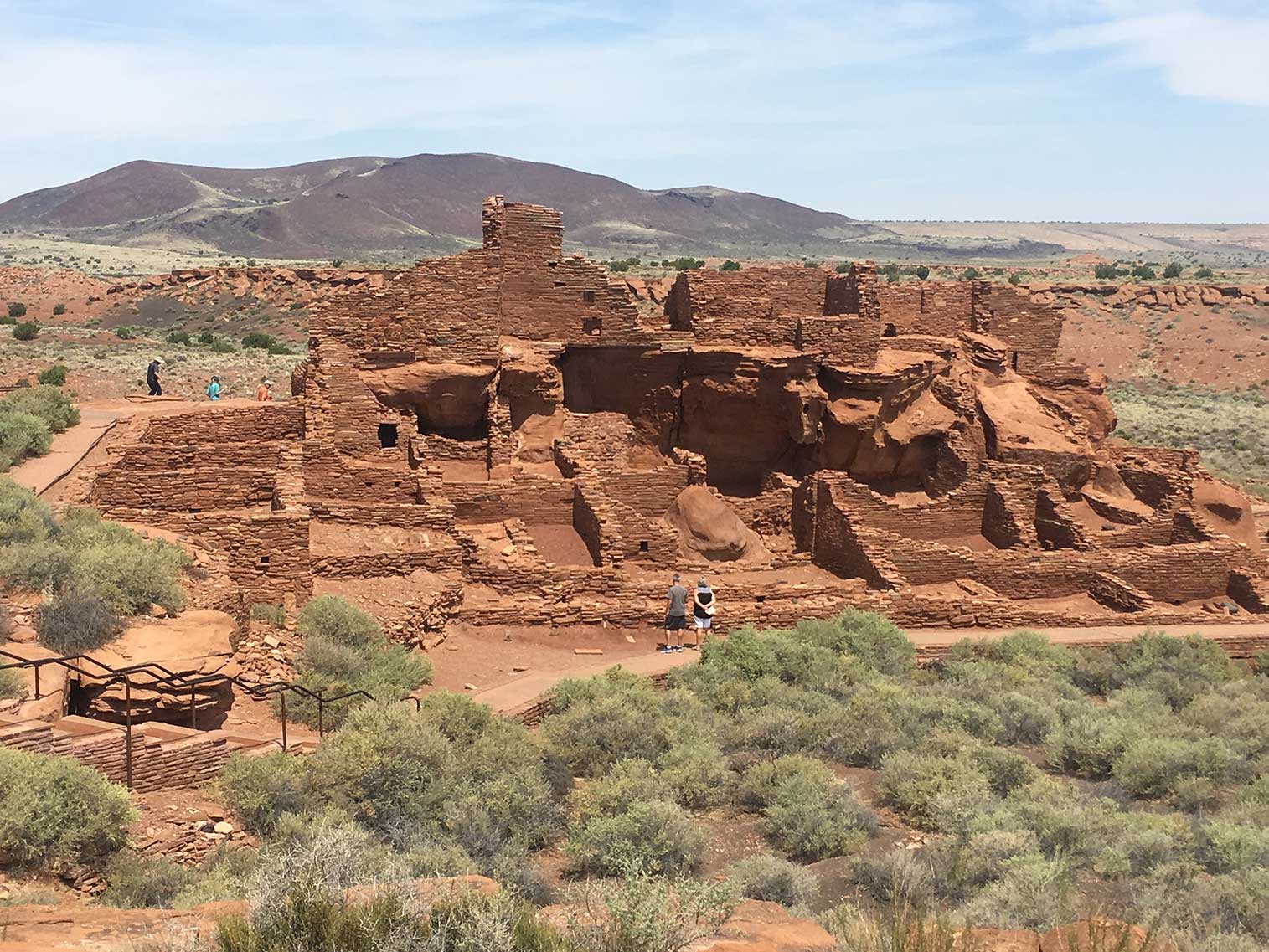
Wupatki National Monument
Expansive desert preserve featuring ancestral Puebloan ruins, scenic trails, and cultural exhibits across a volcanic landscape.