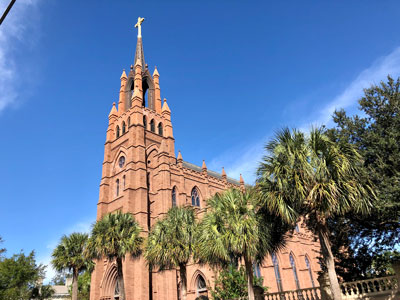

Mother church of the Roman Catholic Diocese of Charleston, designed in the Gothic Revival style
General Information
Friday: 9:00am to 12:00pm
Weekends: Open for Masses and tours following weekend Masses
Preserved plantation landscape and museum exhibits interpreting the life, legacy, and constitutional contributions of an American founding statesman, along with the experiences of the enslaved people who lived and worked on the estate.
Closed Monday and Tuesday
Grounds, trails, restrooms, and water station generally accessible from 9:00am to 4:30pm
No entrance fee required
How to Get There
From Mount Pleasant (3 mi): Take Long Point Road east from central Mount Pleasant and continue directly to the entrance of the historic site at 1254 Long Point Road.
Overview
Charles Pinckney National Historic Site preserves a portion of Snee Farm, the former plantation and country retreat associated with Charles Pinckney, one of the signers of the United States Constitution and a prominent political leader in the early American republic. Set among towering live oaks and historic landscapes, the site invites visitors to explore the complex stories of the founding era through exhibits, walking trails, archaeological resources, and the surviving plantation grounds. Museum displays examine Pinckney's influence on the formation of the nation while also addressing the lives and labor of the enslaved African Americans who sustained the property and contributed to the region's economic development.
Today, visitors can experience a blend of history and natural beauty while walking through a landscape that reflects centuries of Lowcountry heritage. Interpretive exhibits inside the visitor center provide context for the plantation's operations, the political legacy of Charles Pinckney, and the broader social realities of eighteenth and nineteenth-century South Carolina. The grounds offer a peaceful setting for reflection, where shaded pathways, historic agricultural features, and educational displays help connect the ideals of the nation's founding with the lived experiences of the diverse people whose lives shaped this remarkable place.
This article uses material from the Wikipedia articles and official tourism pages for the https://www.nps.gov/chpi/Charles Pinckney National Historic Site, which are released under the Creative Commons Attribution-ShareAlike License 3.0.


