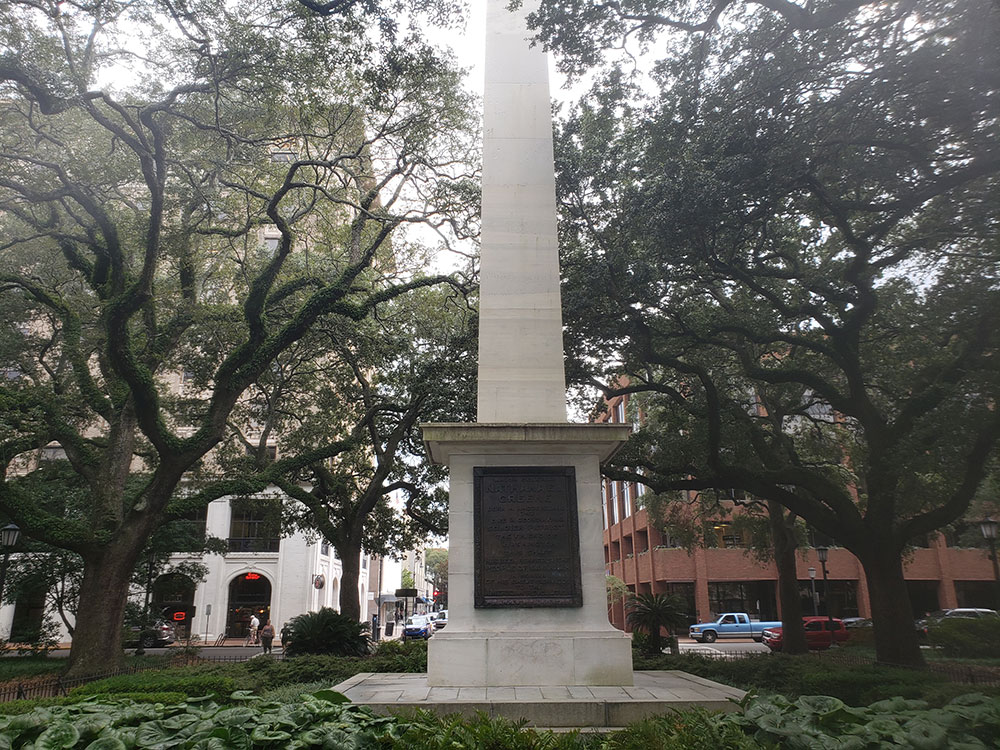
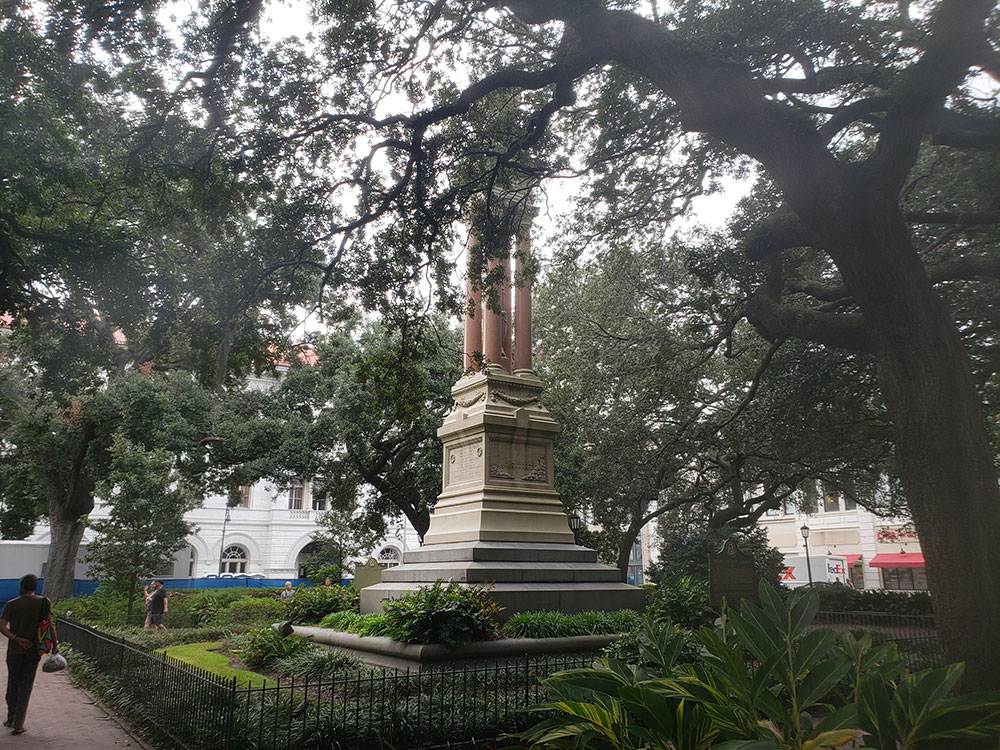
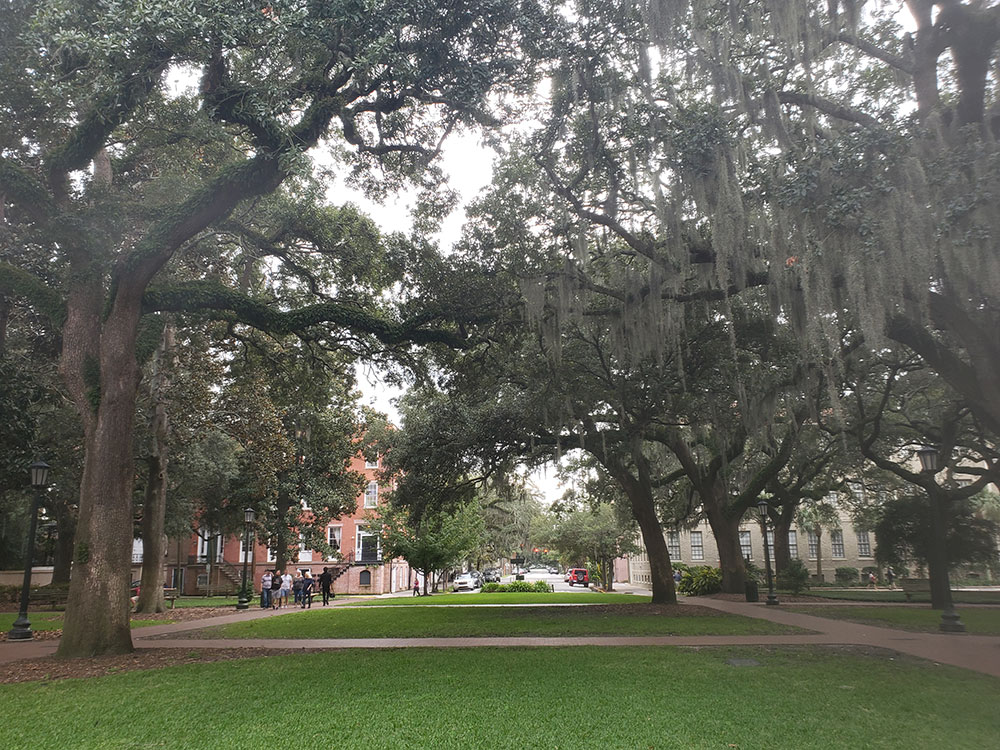
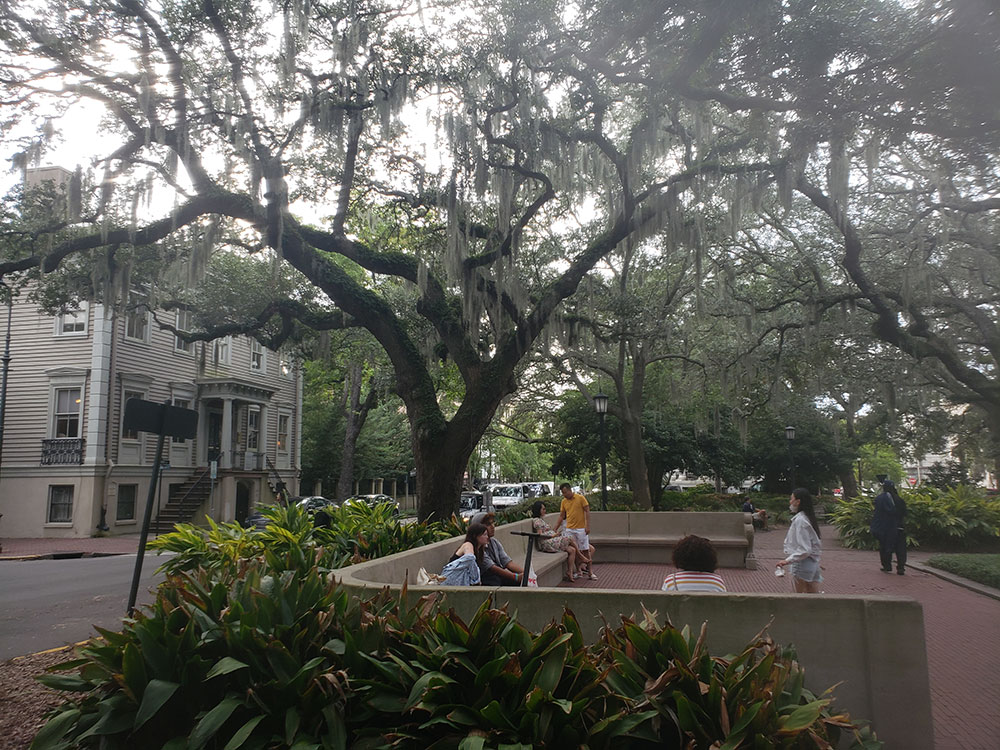
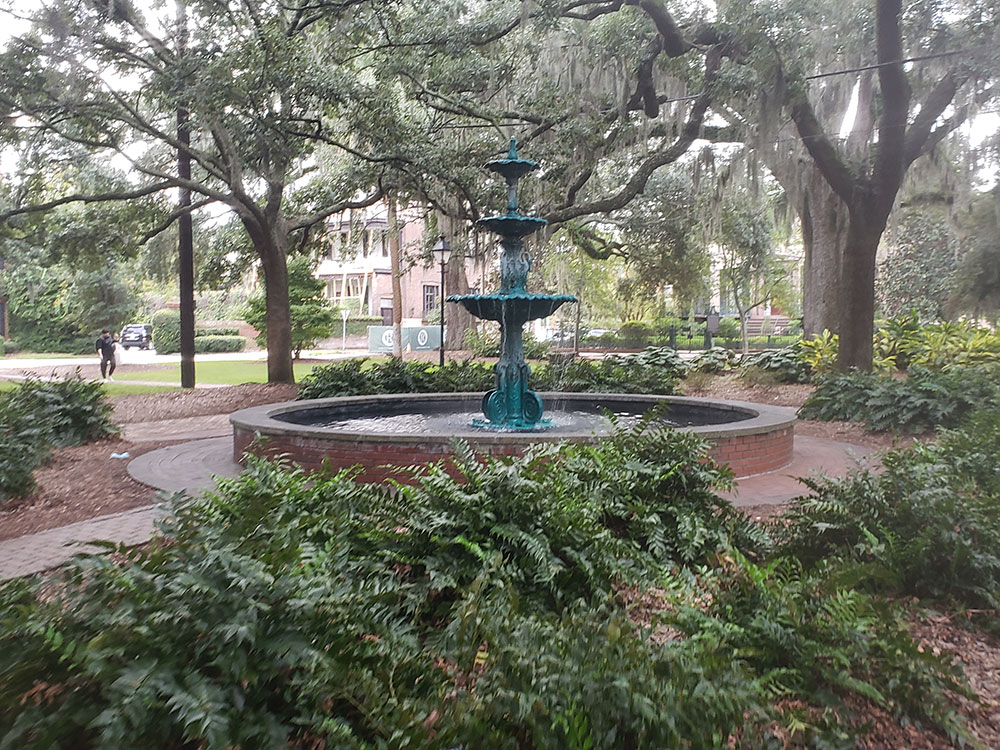
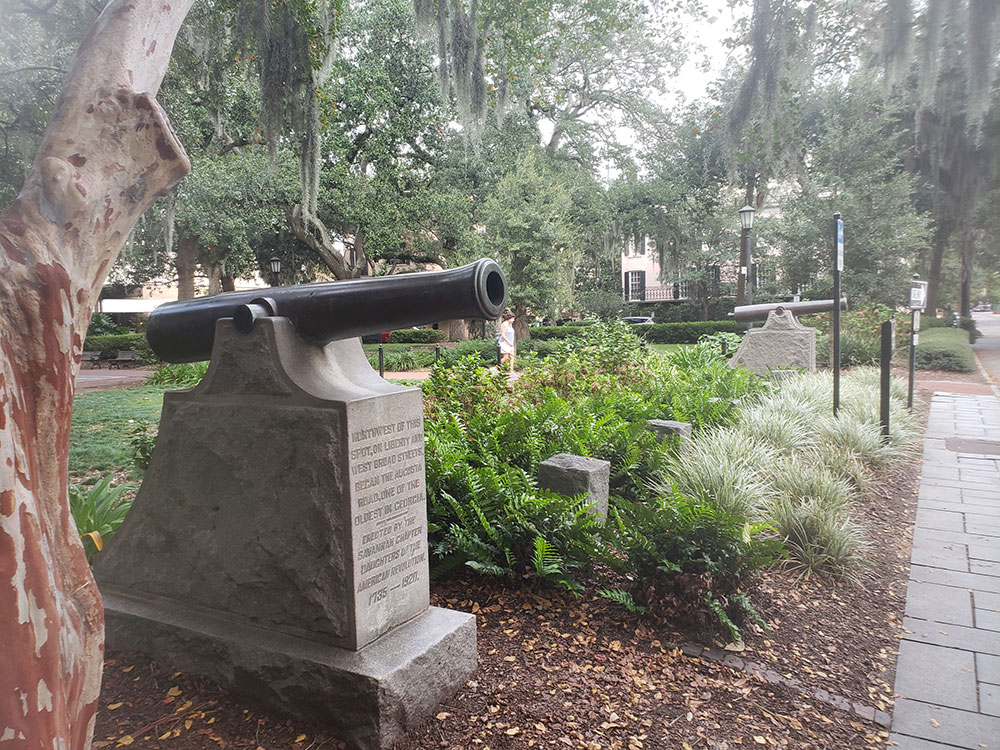
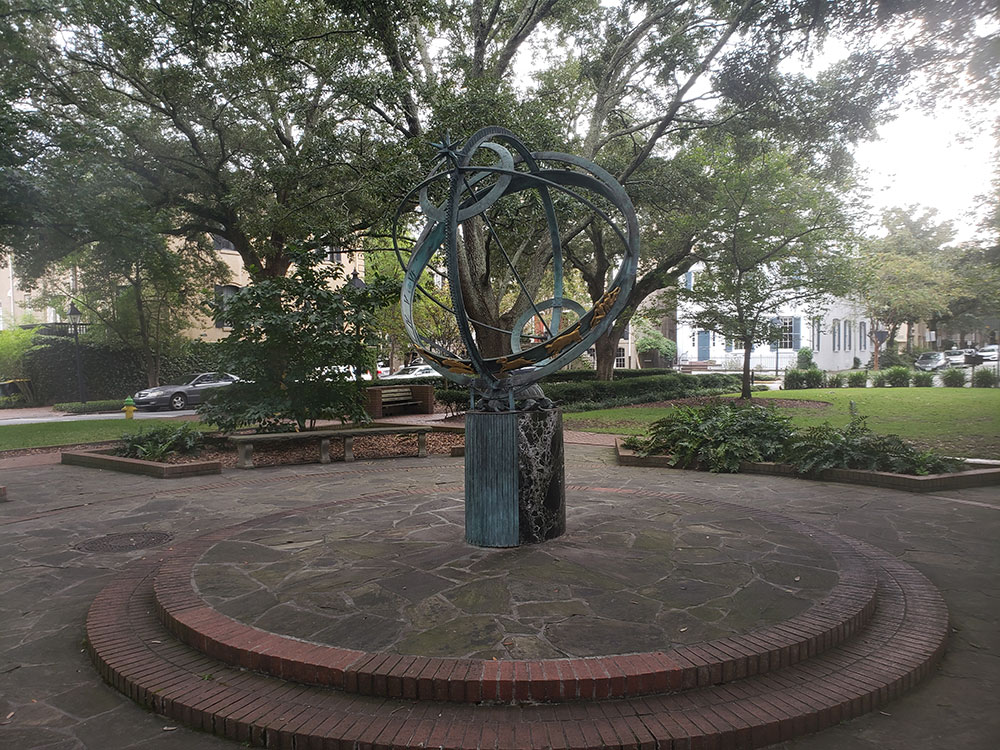
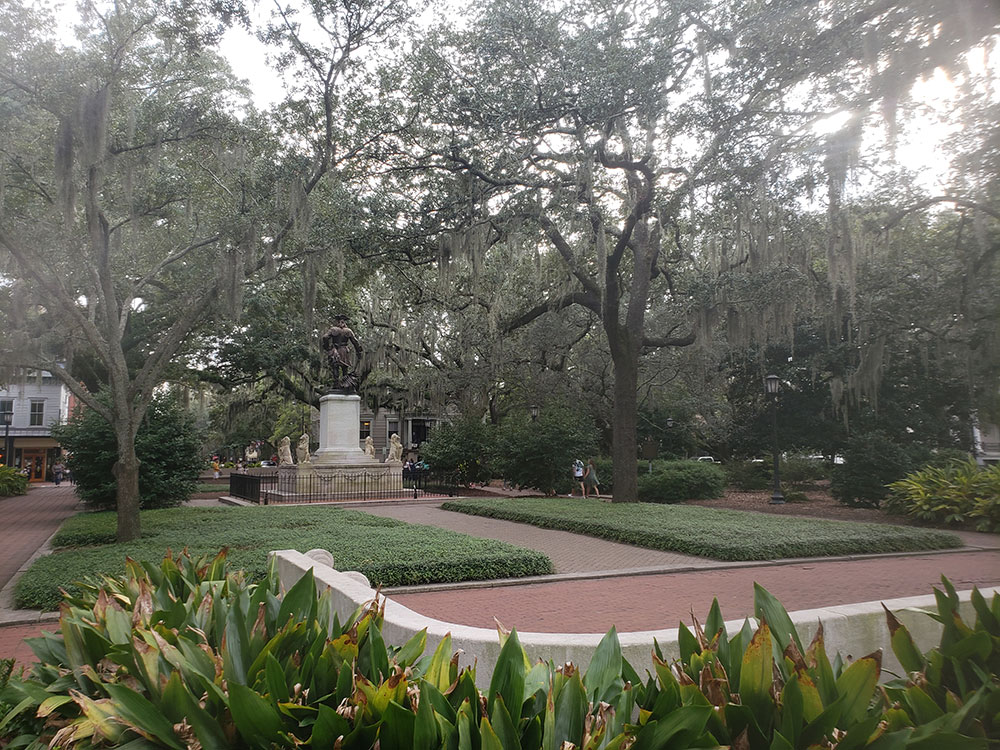
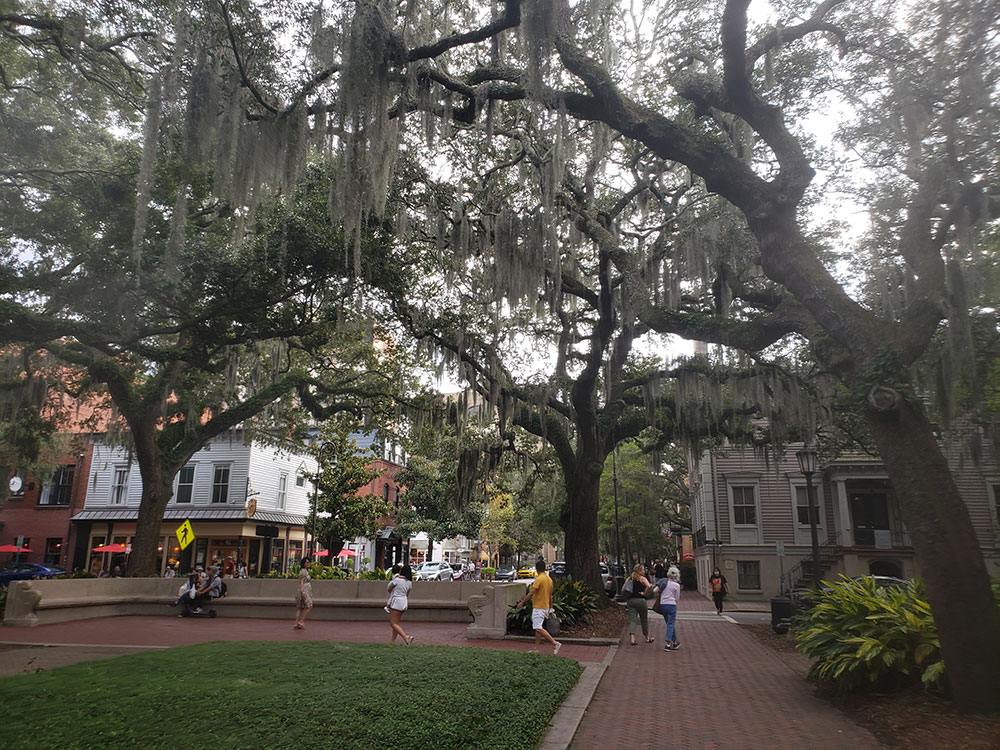
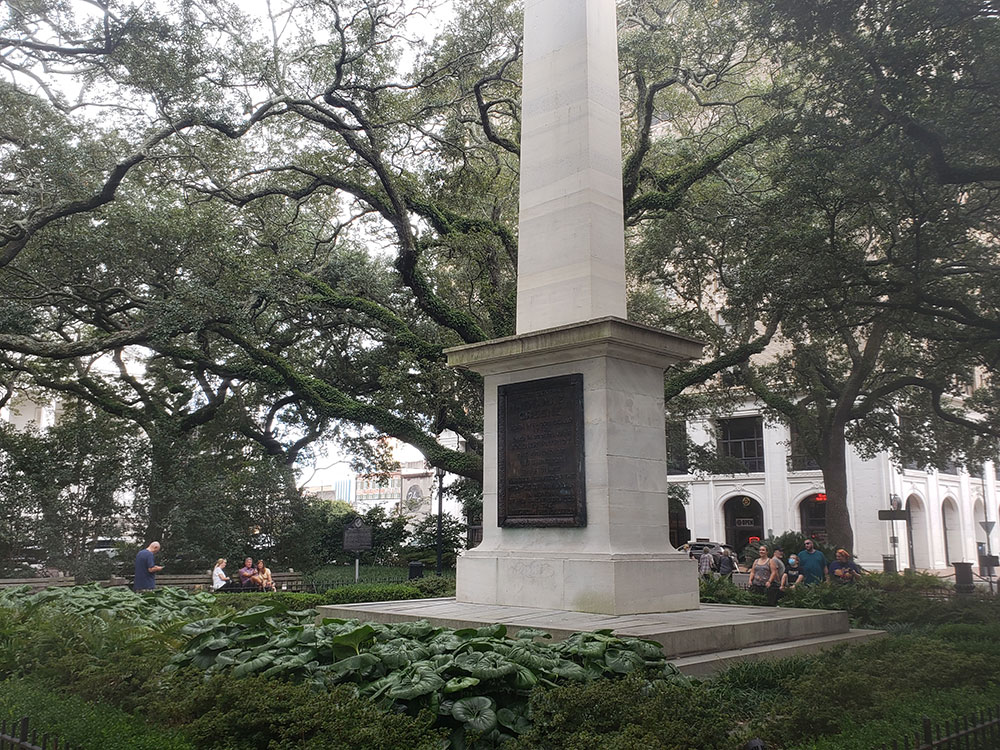
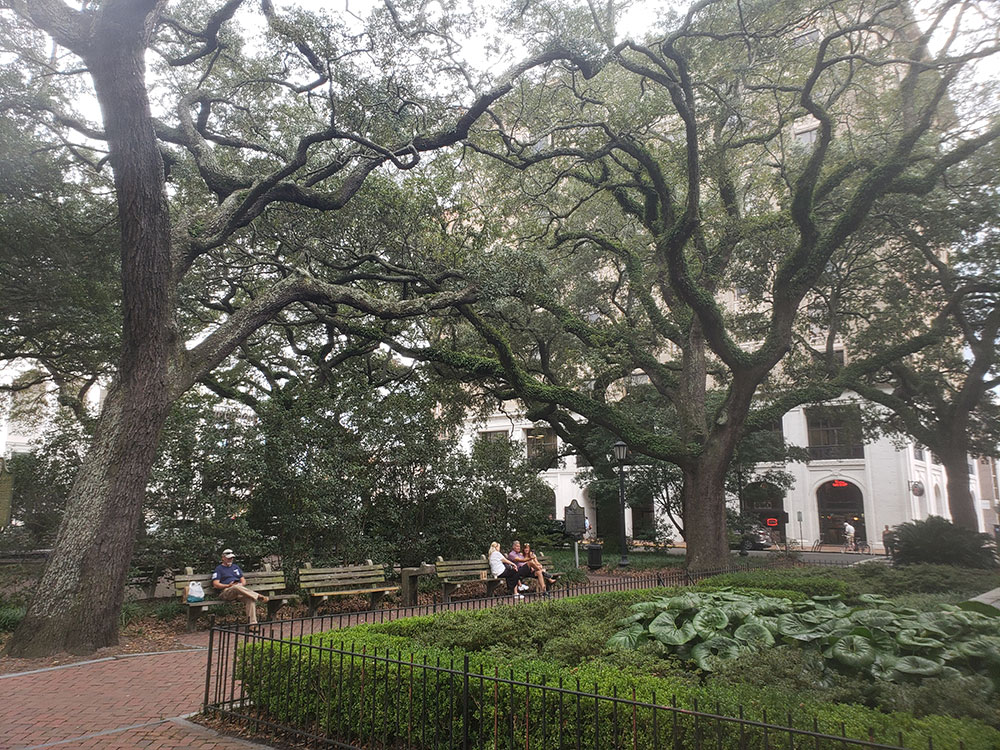
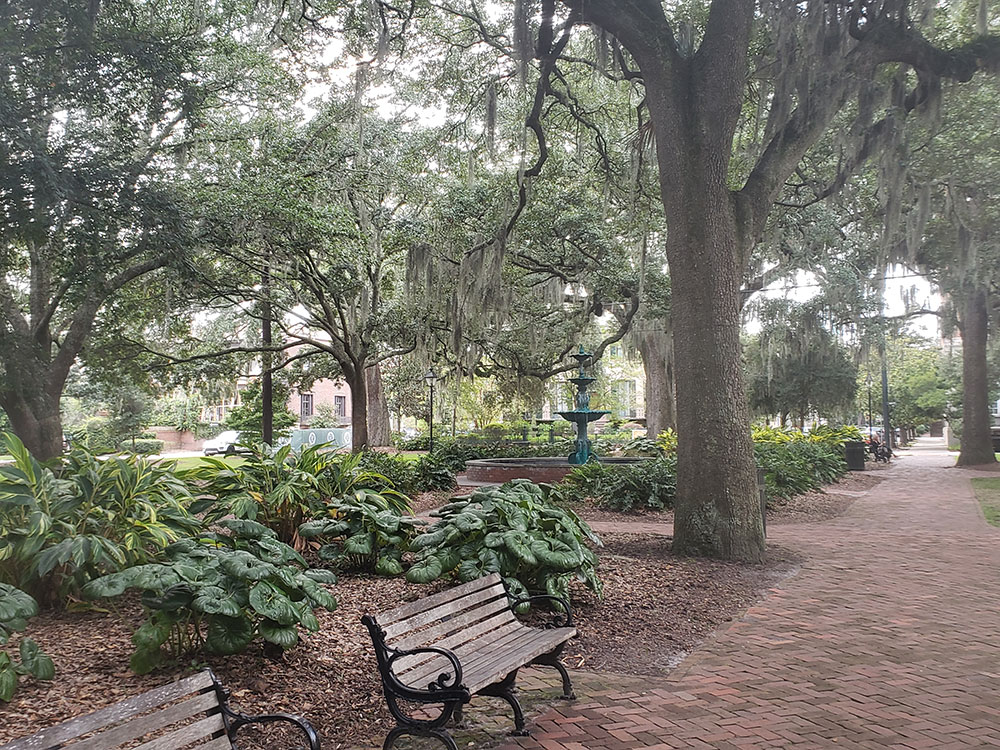
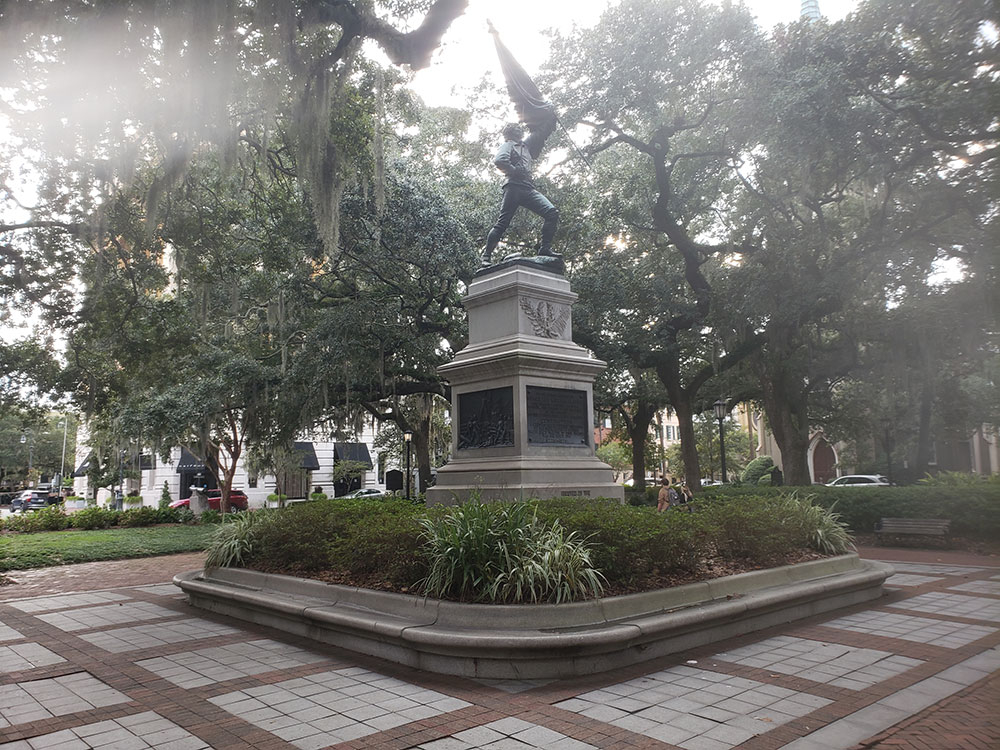
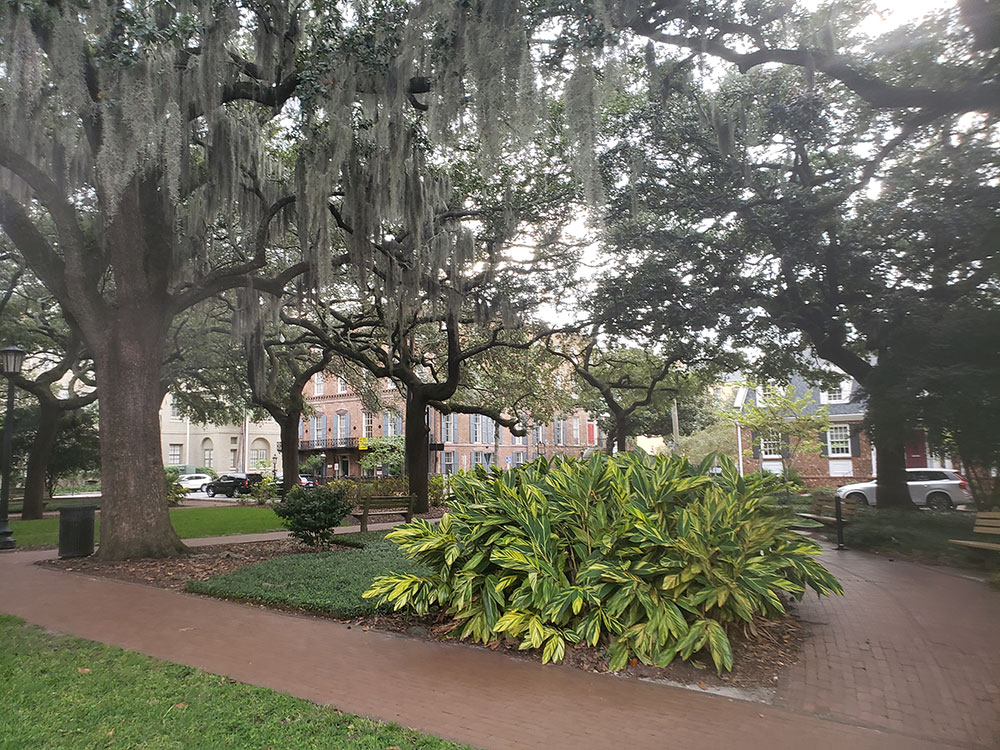
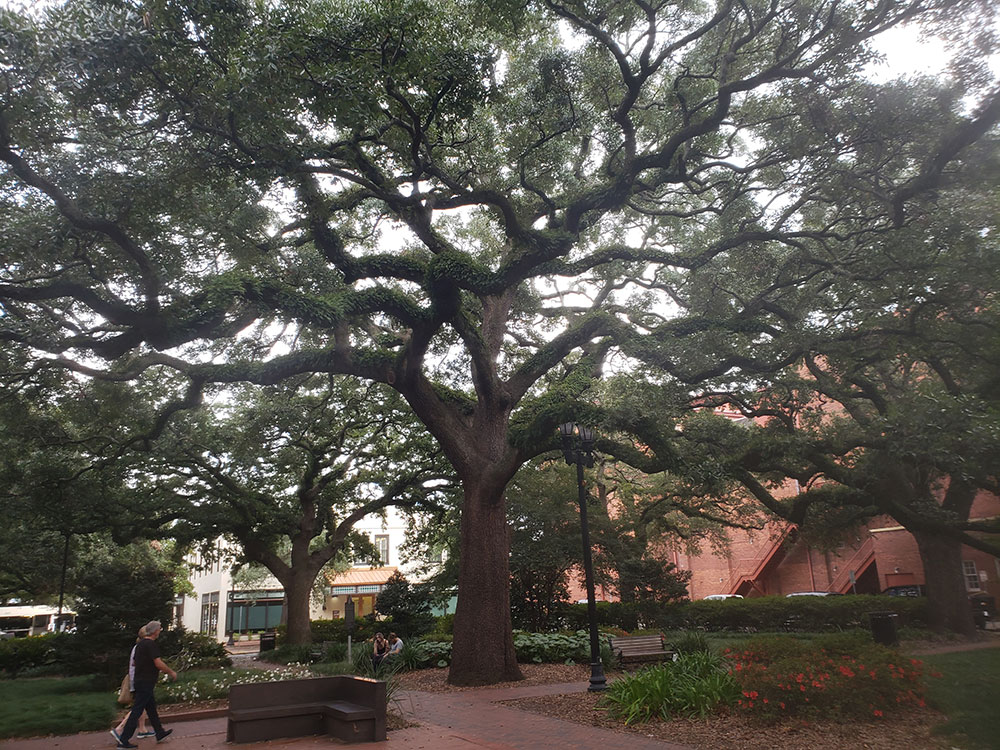
Savannah's squares known for their aesthetic beauty are named in honor or in memory of a person, persons or historical event, and many contain monuments, markers, memorials, statues, plaques, and other tributes
General Information
8an to 5pm daily
Overview
Savannah's historic district is laid out around 22 shady public squares, a design General James Oglethorpe began with the city's founding in 1733. Each square sits at the center of a "ward" and is ringed by residential blocks and civic blocks for churches, schools, and markets. Most are named for people or events and hold monuments, fountains, and memorials. All lie within less than half a square mile, so the whole system is easy to cover on foot. The plan is a National Historic Civil Engineering Landmark, and architect John Massengale has called it "the most intelligent grid in America, perhaps the world."
The five squares along Bull Street (Monterey, Madison, Chippewa, Wright, and Johnson) were intended as grand monument spaces and are known as Savannah's "Crown Jewels." Squares once numbered 24 by 1851; three were lost in the 20th century, and Ellis Square was reclaimed in 2010.
Squares Worth Seeking Out
| Square | Highlights |
|---|---|
| Johnson | Savannah's first and largest square, now the financial district. The Nathanael Greene Monument, two fountains, and a sundial honoring Colonel William Bull. |
| Wright | Burial site of Tomochichi, the Creek leader and friend of Oglethorpe who helped found the colony. |
| Ellis | Reclaimed in 2010; centuries of market history and once a slave market site. |
| Telfair | Overlooked by the Telfair Academy; the only square honoring a family. Tributes to the Girl Scouts, founded by Savannahian Juliette Gordon Low. |
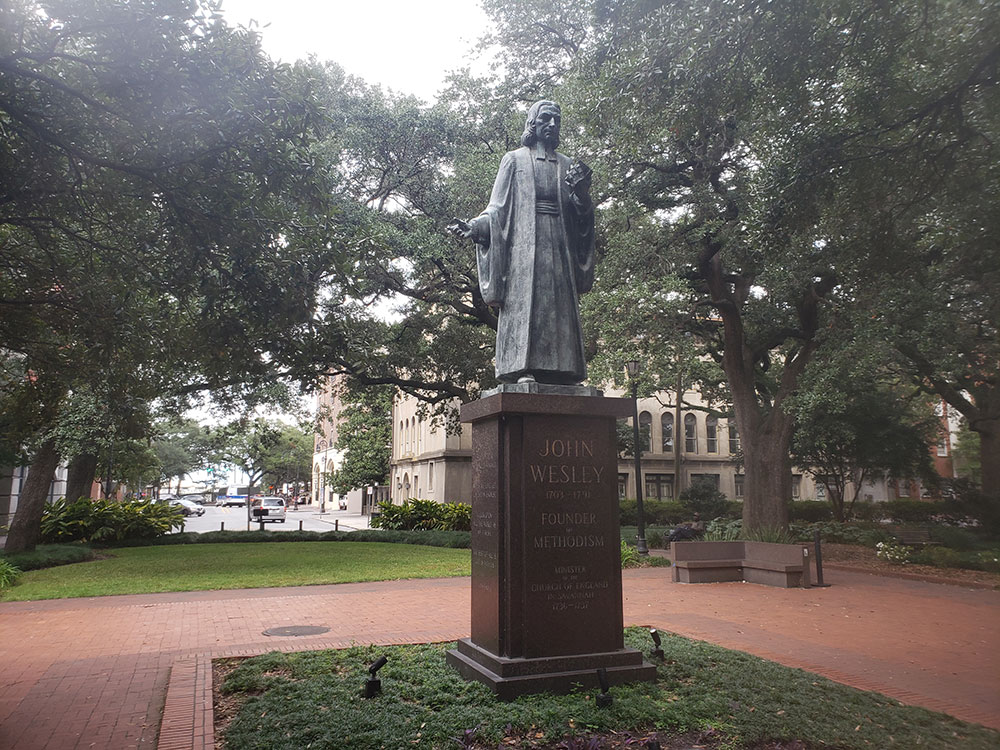
| Reynolds | Statue of John Wesley, who founded America's first Sunday school here. The Olde Pink House stands on the northwest corner. |
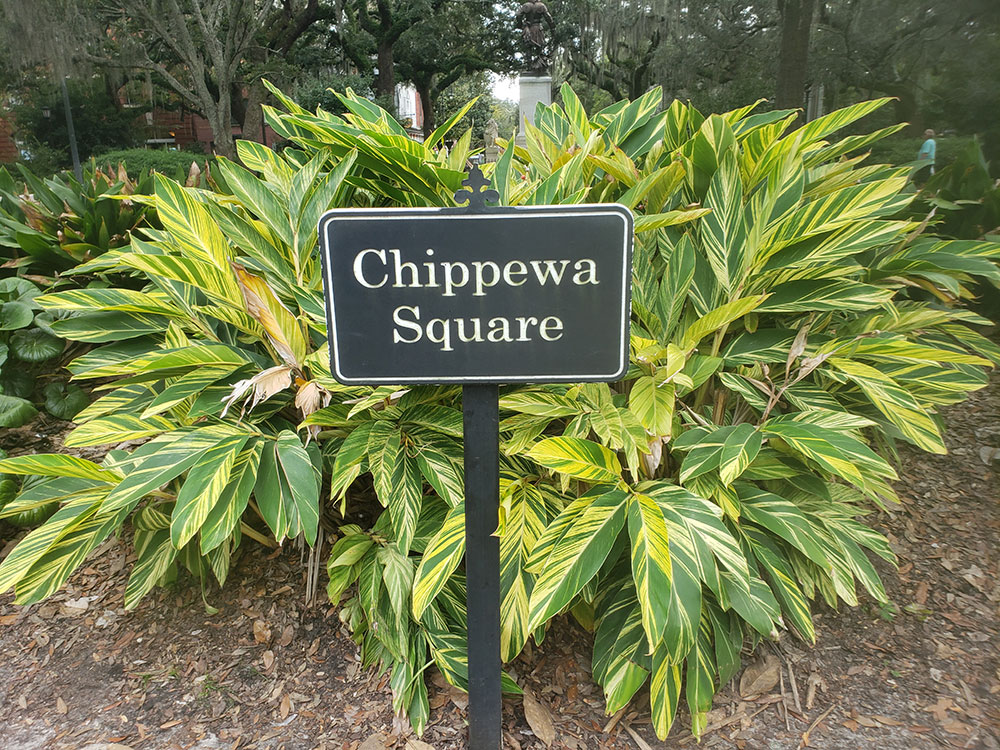
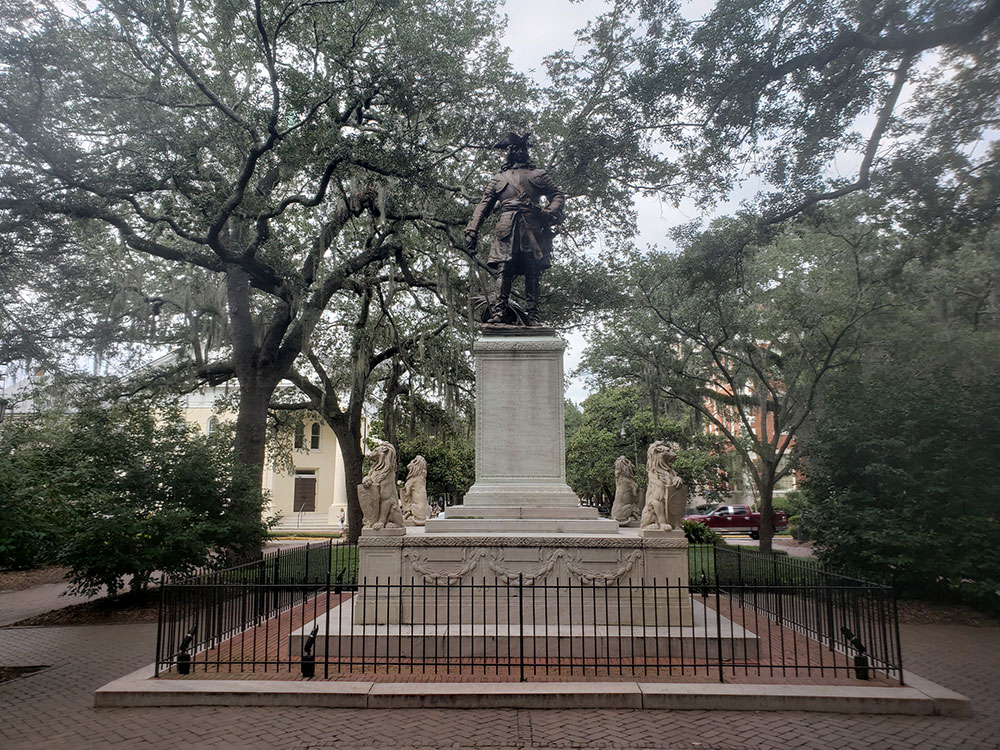
| Chippewa | The James Oglethorpe Monument (1910) and the "park bench" scene that opens Forrest Gump. |
| Lafayette | Beside the Cathedral Basilica of St. John the Baptist, with a fountain dyed green for St. Patrick's Day and cobblestone sidewalks. |
| Madison | William Jasper Monument and a vintage cannon from the Savannah Armory. |
| Monterey | Mercer House, made famous by Midnight in the Garden of Good and Evil; Congregation Mickve Israel; and an 1853 monument to Casimir Pulaski. |
| Columbia | A "rustic fountain" of vines and leaves that once stood at Wormsloe. |
| Orleans | German Memorial Fountain honoring early German immigrants, next to the Civic Center. |
| Pulaski | Known for its live oaks; one of the few squares without a monument. |
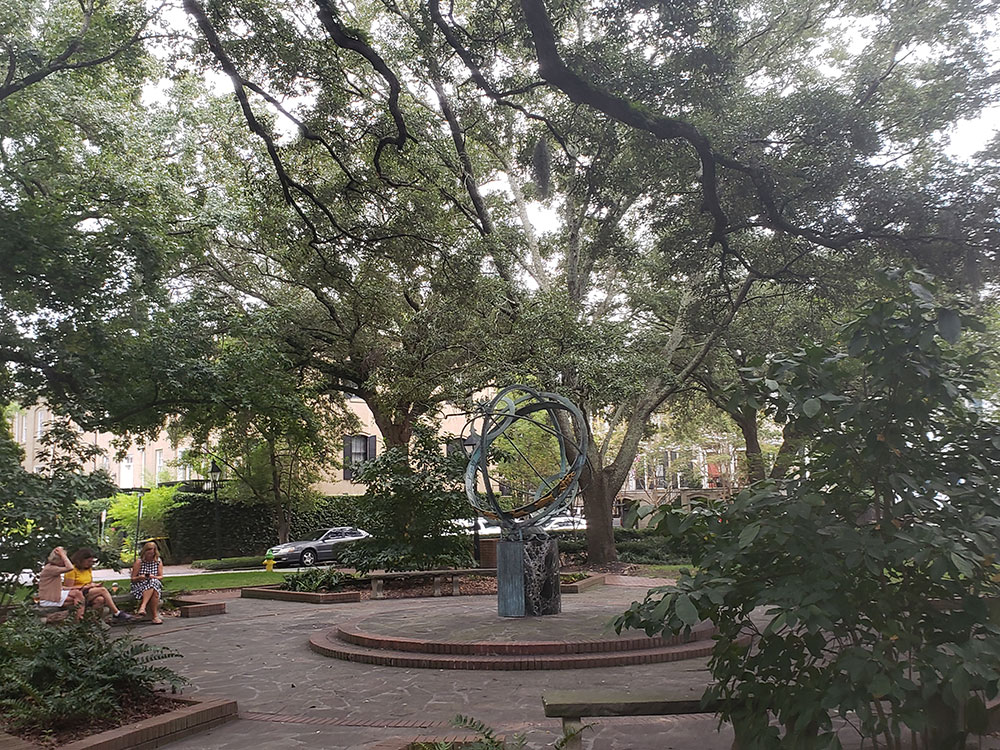
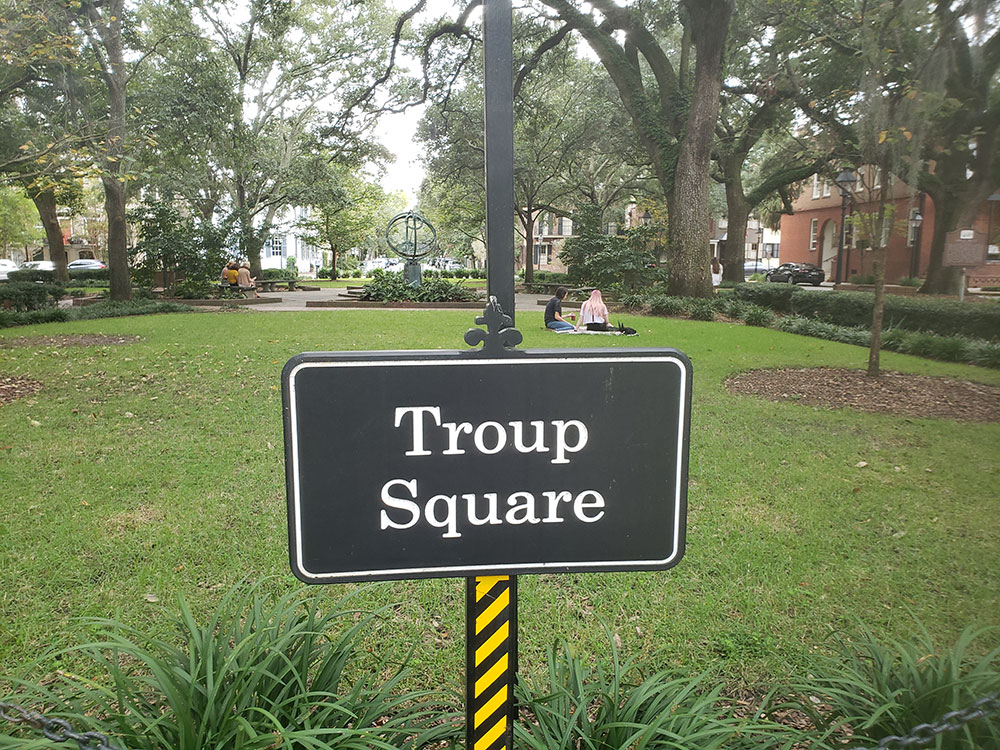
| Troup | An iron armillary sphere supported by six small metal turtles. |
| Calhoun | The only square with all of its original buildings intact. |
| Whitefield | The last square built (1851), with a center gazebo. |
| Franklin | Restored in the 1980s with a memorial to Haitian soldiers who fought at the siege of Savannah. |
Other squares include Oglethorpe, Washington, Warren, Greene, Crawford, and Chatham, and just south, Forsyth Park was created as one large park after the grid stopped expanding in 1851.
This article uses material from the Wikipedia article "Squares of Savannah, Georgia", released under the Creative Commons Attribution-Share-Alike License 3.0.