Tampa Bay Area Travel Guide
Unofficial name for the coastal area in Florida on the Gulf of Mexico that stretches about 100 miles and includes Pensacola Beach, Navarre Beach, Fort Walton Beach, Destin, and Panama City.


Places to See in Tampa Bay Area
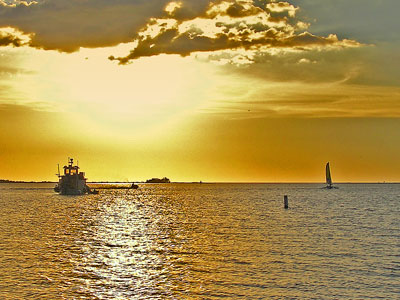
Trish Hartmann from Tampa, Florida, USA, CC BY 2.0, via Wikimedia Commons; Image Size Adjusted

Caladesi Island State Park
State Park located on Caladesi Island in the Gulf of Mexico, north of Clearwater Beach

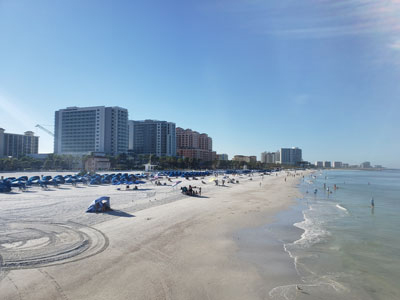
Clearwater Beach
Resort area and a residential area on the Gulf of Mexico on the west-central coast of Florida characterized by white sand beaches stretching for 2.5 miles and sits on a barrier island
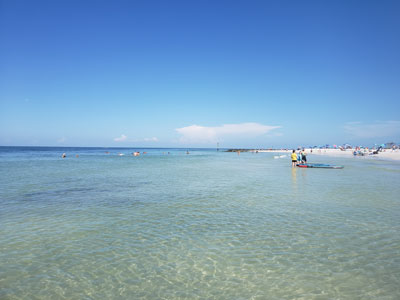
Honeymoon Island State Park
State Park located on Honeymoon Island, with 4 miles (6 km) of beach, is the most-visited state park in Florida
John O'Neill, CC BY-SA 3.0, via Wikimedia Commons; Image Size Adjusted

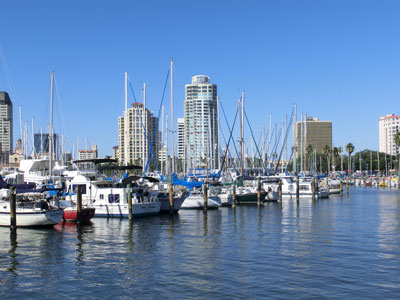
St. Petersburg
City is the fifth-most populous city in Florida, the second-largest city in the Tampa Bay Area, after Tampa, and is located on the Pinellas peninsula between Tampa Bay and the Gulf of Mexico
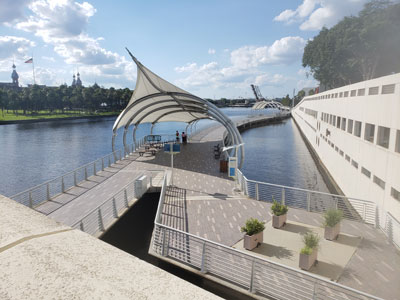
user:Tampa Gator at en.wikipedia, Public domain, via Wikimedia Commons; Image Size Adjusted

Tampa
Major city on the Gulf Coast of Florida, sitting on Tampa Bay as the largest city in the Tampa Bay area, and is the third-most populated city in Florida
Overview
The Tampa Bay area on Florida’s west coast surrounds Tampa Bay and centers on Tampa, St. Petersburg, and Clearwater. Visitors come for nearly 70 miles of Gulf beaches and barrier islands, museums, historic districts, theme parks, and fresh seafood.
Three of its beaches have been named America’s Top Beach by “Dr. Beach”: Fort De Soto’s North Beach (2005), Caladesi Island (2008), and Siesta Key (2011). Attractions include Busch Gardens, Ybor City, Clearwater Beach, Dunedin, and the state parks at Honeymoon Island and Caladesi Island.
Geography
Tampa Bay is the largest open-water estuary in Florida, covering about 400 square miles. The Pinellas Peninsula separates it from the Gulf of Mexico, with a chain of barrier islands, mangrove islands, and white-sand beaches along the Gulf side. The land is low and flat, with a humid subtropical climate, afternoon thunderstorms in summer, and mild winters. The Sunshine Skyway Bridge crosses the mouth of the bay.
History
The Tocobaga people lived around the bay when Spanish explorers, including Pánfilo de Narváez in 1528 and Hernando de Soto in 1539, landed on the coast. Fort Brooke was established at Tampa in 1824, and the arrival of Henry Plant’s railroad in 1884 helped turn the area into a resort. Cuban and Spanish cigar makers built Ybor City in the 1880s, and troops massed in Tampa for the Spanish-American War in 1898. St. Petersburg was developed as a winter resort, and the area grew rapidly after air conditioning and highways arrived in the 20th century.
Cities and Towns
Tampa is the largest city, with its Riverwalk, the Florida Aquarium, the Henry B. Plant Museum, and the historic Ybor City. St. Petersburg is known for its waterfront, museums, and the Salvador Dalí Museum, and Clearwater Beach is famous for its white sand and the Clearwater Marine Aquarium. Dunedin, Tarpon Springs with its Greek sponge-diving heritage, and Safety Harbor are smaller towns worth a visit.
National Protected Areas
De Soto National Memorial in Bradenton commemorates the 1539 landing of Hernando de Soto. Egmont Key National Wildlife Refuge and Passage Key National Wildlife Refuge protect nesting seabirds and shorebirds at the mouth of the bay. To the north, Chassahowitzka and Crystal River national wildlife refuges are popular for manatee viewing in winter.
State Parks and Historic Sites
Honeymoon Island State Park has beaches, nature trails, and an osprey nesting area, and Caladesi Island State Park is a largely undeveloped barrier island reached by ferry. Egmont Key State Park has a historic lighthouse and the ruins of Fort Dade, and Hillsborough River State Park offers kayaking and hiking near Tampa. Weeki Wachee Springs State Park, home of the famous mermaid shows, lies to the north, and Fort De Soto Park, a Pinellas County park, has a Civil War-era fort and a top beach.
Seasons and Best Time to Visit
Winter and early spring, from November through April, are the most pleasant months, with warm, dry weather, lower humidity, and peak tourist crowds. Summer is hot, humid, and rainy, with afternoon thunderstorms and the warmest Gulf water for swimming. Hurricane season runs from June through November, with the most risk from August to October. The Gasparilla Pirate Festival in Tampa in late January or February is the region’s biggest event, and manatees gather in warm springs from November through March.
This article uses material from the Wikipedia articles "Tampa Bay area", which are released under the Creative Commons Attribution-Share-Alike License 3.0. Additional information is from the National Park Service page for De Soto National Memorial, the U.S. Fish and Wildlife Service Egmont Key National Wildlife Refuge page, Florida State Parks, and Visit Tampa Bay.