Refuge is located on the Atlantic coast of Florida's largest barrier island containing over 1000 species of plants, 117 species of fish, 68 amphibians and reptiles, 330 birds, and 31 mammal species.
General Information
- Hours:
-
November through April open 8am to 4pm daily
May through October open 8am to 4pm Monday through Saturday. Closed Sunday
The Visitor Center is closed Thanksgiving, Christmas, and New Year's Day
The Visitor Information Center is currently CLOSED
An information table is currently available outside from 9am to 4pm, on Friday, Saturday, and Sunday
Volunteers are providing information, maps and passes at the table
When the table is not staffed, information, maps and passes are available from self-serve kiosks throughout the Refuge
The Manatee Observation Deck is currently closed for maintenance and repairs - Fees:
-
There is a $10 fee (cash or check) per vehicle for a day pass or you can purchase a yearly pass for $25 at the Visitor Information Center
Duck Stamps, America the Beautiful Passes (annual, senior, and access), and Canaveral National Seashore passes may be substituted for the refuge pass - Pet Policy:
- Pets allowed
- Closest cities with hotels:
- Titusville
- Seasons:
- All year though Summer can be very hot and humid. Mosquitoes are less troublesome during Winter months
- Location:
- 1987 Scrub Jay Way #32782, Titusville, FL, 32781
Getting There
From Titusville: Head north on S Washington Ave toward Main St. Turn right onto A. Max Brewer Memorial Pkwy. Slight right onto State Hwy 402. Turn right onto Scrub Jay Way.
Overview
Merritt Island National Wildlife Refuge is a national wildlife refuge managed by the U.S. Fish and Wildlife Service, established in 1963 on land that overlaps NASA's Kennedy Space Center on Florida's largest barrier island. The buffer around the launch complexes left a large area of saltwater estuary, freshwater marsh, dune, hardwood hammock and scrub habitat undeveloped, and it is one of the best wildlife areas in the state. The refuge holds more than 1,000 plant species, about 330 bird species and many state or federally listed species, and many waterfowl and shorebirds use it in winter or during migration. It is a gateway site for the Great Florida Birding Trail, and visitors come for birding, wildlife drives, short hikes, manatees, fishing and boating.
Access
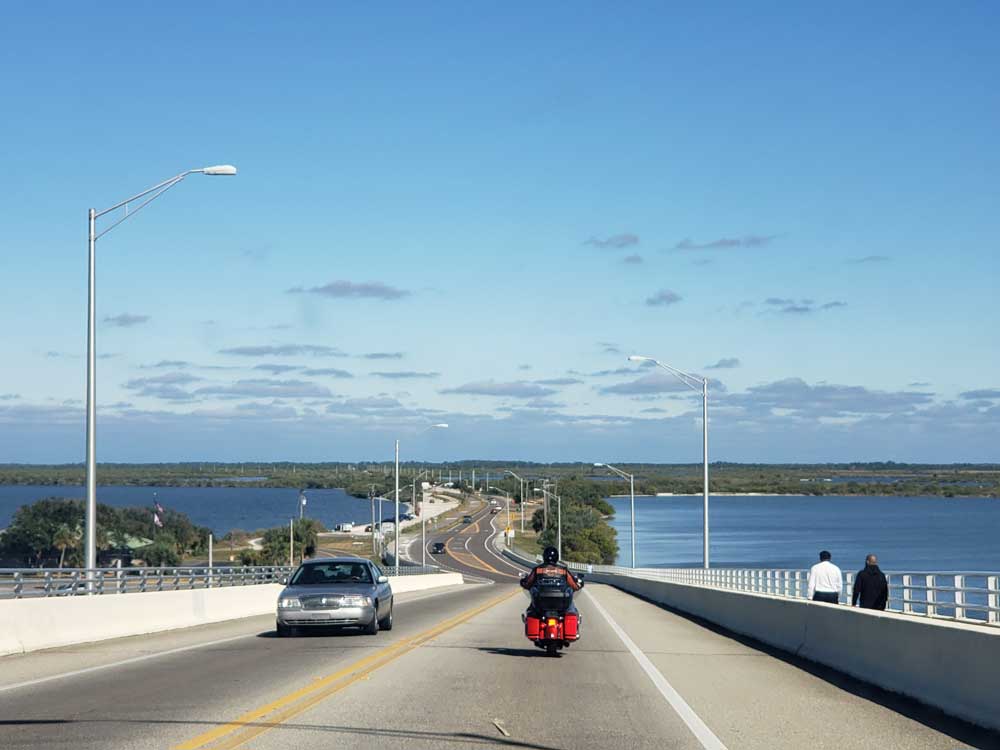
The refuge is east of Titusville in Brevard County. From Interstate 95, take Exit 220 (State Road 406/Garden Street) and go east about 4 miles, crossing the Max Brewer Causeway Bridge, where the refuge begins. The visitor center on Scrub Jay Way is about 4 miles past the entrance; stay right at the fork. State Road 402 continues through the refuge to Playalinda Beach in Canaveral National Seashore. A refuge pass or other accepted federal pass is required for Black Point Wildlife Drive and some boat ramps, and the fee is paid in cash. NASA can close roads, boat ramps and the visitor center during launch operations.
Seasons
Winter is the best time for birds, when waterfowl and shorebirds fill the impoundments, and manatees gather near Haulover Canal in cooler months. Mosquitoes and other biting insects are present in all seasons but are less troublesome in winter. Summers are hot and humid with frequent lightning, and hurricane season runs from June through November. Refuge roads, trails and boat ramps are open daily from sunrise to sunset, but launch closures can happen any time of year, and limited hunting seasons affect some areas in fall and winter.
Things to Do
Drive Black Point Wildlife Drive
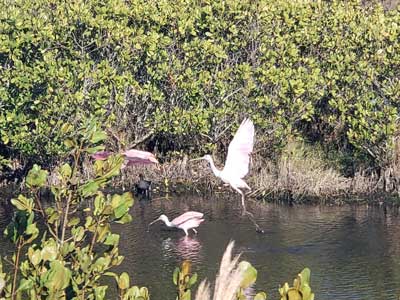
This 7-mile, one-way drive follows a dike road around shallow marsh impoundments and through pine flatwoods, with good chances to see wading birds, waterfowl and alligators. See Black Point Wildlife Drive.
Walk the Short Trails
The Visitor Center Boardwalk, Oak Hammock Trail and Cruickshank Trail cover freshwater ponds, seasonally flooded forest and a dike loop, and are all easy walks.
See Manatees at Haulover Canal
A manatee observation deck near the Haulover Canal drawbridge is a good stop in cooler months, though it has been closed for maintenance, so check its status.
Go Birding and Wildlife Watching
With more than 300 bird species recorded, the refuge is a highlight of the Great Florida Birding Trail, and winter brings large numbers of migratory waterfowl. The refuge also gives access to Playalinda Beach.
Visitor Centers
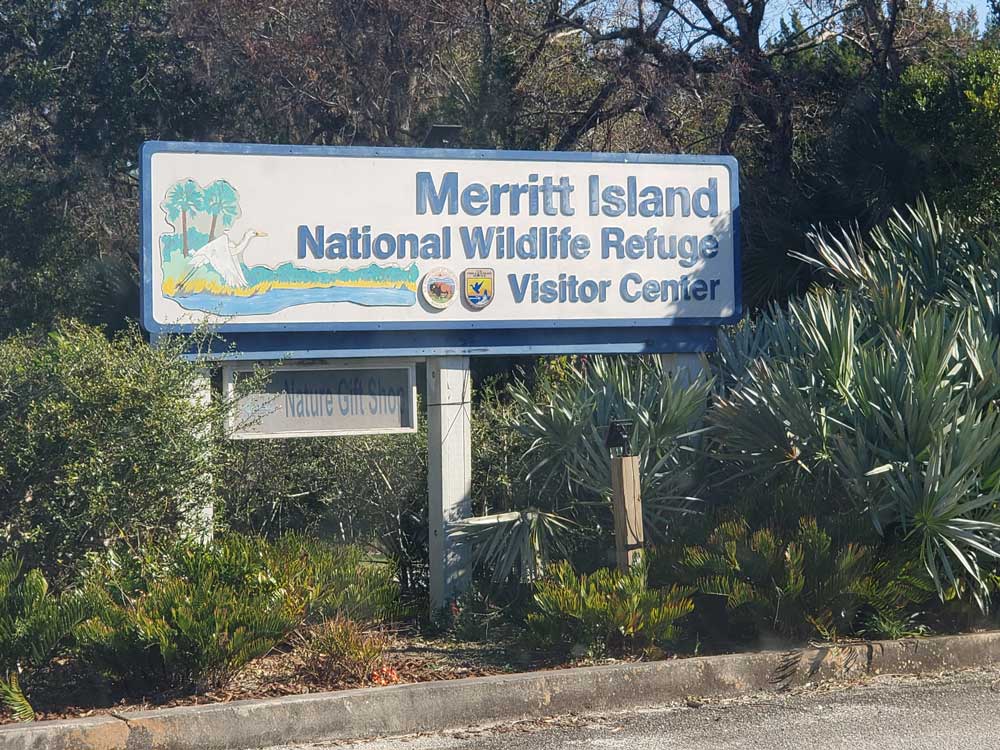
The refuge visitor center on Scrub Jay Way has exhibits, a bookstore, restrooms, water and a short boardwalk, and passes are sold there. The U.S. Fish and Wildlife Service lists it as open Tuesday through Saturday, 8:30 am to 4:00 pm, and closed Sunday, Monday and on major holidays, but hours and services have changed in recent years, so check ahead. When the center is unstaffed, maps and passes are available from self-serve kiosks around the refuge.
Camping and Lodging
Camping is not allowed in the refuge, apart from certain organized youth groups. Hotels, motels and restaurants are in Titusville, just west of the refuge, with more in Cape Canaveral and Cocoa Beach to the south and New Smyrna Beach to the north, all within about 45 minutes. Orlando is roughly an hour away. For camping, backcountry sites in Canaveral National Seashore and Tomoka State Park near Ormond Beach are the closest options.
This article uses material from the Wikipedia article "Merritt Island National Wildlife Refuge", which is released under the Creative Commons Attribution-Share-Alike License 3.0. Additional information from U.S. Fish and Wildlife Service.
Featured Trails
Visitor Center Boardwalk Trail
0.8 mile roundtrip, Minimal elevation gain, Easy
Boardwalk offering great views of two freshwater ponds, a native butterfly garden, hammock, a wetland prairie and associated wildlife
Oak Hammock Trail
0.8 mile roundtrip, Minimal elevation gain, Easy
Trail in a figure 8 design that winds through seasonally flooded forests
Black Point Wildlife Drive
7-mile, one-way drive follows a dike road around several shallow marsh impoundments and through pine flatwoods
Cruickshank Trail
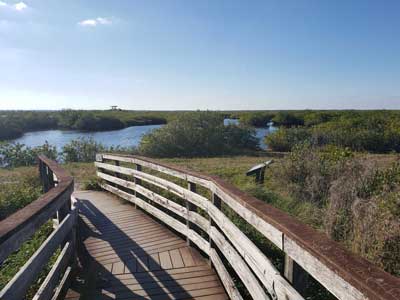
5 miles loop, Minimal elevation gain, Easy
5 mile loop that follows a mosquito control dike