Alabama's only saltwater port and known for having the oldest organized Carnival or Mardi Gras celebrations in the United States.
Featured Locations
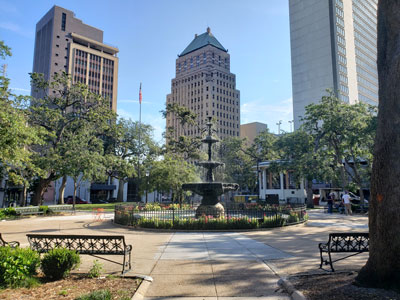
Bienville Square
Historic city park in the center of downtown Mobile, Alabama, named for Mobile's founder, Jean-Baptiste Le Moyne, Sieur de Bienville
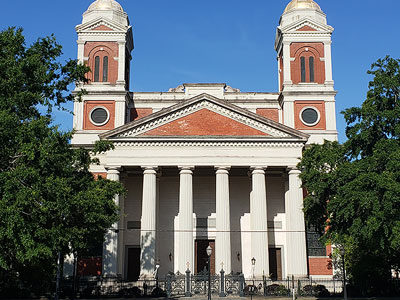
Cathedral Conception of the Immaculate Conception
Cathedral in Mobile, Alabama, on the National Register of Historic Places as a contributing property to the Church Street East Historic District and Lower Dauphin Street Historic District
National Maritime Museum of the Gulf
Interactive maritime museum featuring more than 80 immersive exhibits focused on shipping, navigation, shipwrecks, marine science, Gulf maritime history, and global trade.
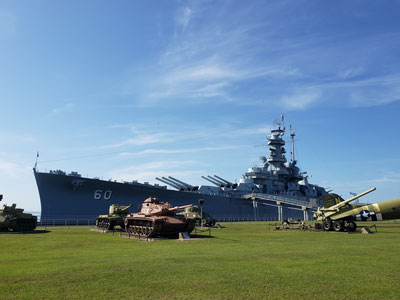
USS Alabama Battleship Memorial Park
Military history park and museum with a collection of notable aircraft and museum ships including the South Dakota-class battleship USS Alabama and Gato-class submarine USS Drum
Overview
Mobile is a port city on Mobile Bay in southwest Alabama, and it is the oldest city in the state, founded by the French in 1702 as the first capital of colonial French Louisiana. It is known for having the oldest organized Mardi Gras celebration in the United States, for its historic downtown with oak-lined streets and Gulf Coast architecture, and for the battleship USS Alabama. The city has a blend of French, Spanish, British, and American culture and a laid-back Gulf Coast atmosphere.
Visitors come to Mobile for Mardi Gras, which begins in January and builds to Fat Tuesday, for the USS Alabama Battleship Memorial Park, and for historic districts such as Oakleigh and Church Street East. They also come for the National Maritime Museum of the Gulf, the Cathedral Basilica of the Immaculate Conception, and the Gulf seafood, and it is a short drive from Dauphin Island and the beaches of Gulf Shores.
History
French explorers Pierre Le Moyne d'Iberville and Jean-Baptiste Le Moyne de Bienville founded Fort Louis de la Louisiane near here in 1702, and the settlement moved to the current site on the river in 1711. It was held by France, Britain, and Spain before becoming part of the United States in 1813, and it grew as a cotton port and a Confederate stronghold during the Civil War. The Battle of Mobile Bay in 1864, in which Admiral David Farragut is said to have uttered "Damn the torpedoes," led to the city's fall. The Clotilda, the last known slave ship to reach the United States, arrived in 1860, and the community of Africatown founded by its survivors is an important historic site. Mobile later became a major shipbuilding and port city.
Sightseeing and Popular Landmarks
The USS Alabama Battleship Memorial Park has the WWII battleship, the submarine USS Drum, and a collection of aircraft, and Bienville Square is a downtown park with fountains and live oaks. The Cathedral Basilica of the Immaculate Conception is a Neoclassical church built in 1850, and the historic districts of Oakleigh Garden, De Tonti Square, and Church Street East have antebellum homes. The Mobile Carnival Museum and the Fort Conde reconstruction downtown are other attractions.
Culture and Museums
The National Maritime Museum of the Gulf has exhibits on the history of Gulf shipping and the Clotilda, and the Mobile Carnival Museum tells the story of Mardi Gras. The Gulf Coast Exploreum Science Center, the Mobile Museum of Art, and the History Museum of Mobile are other museums, and the Saenger Theatre and the Mobile Symphony Orchestra offer performances. Bellingrath Gardens and Home, about 20 miles south, is a large garden known for its azaleas and camellias.
Parks
Mobile has a number of parks and nature areas. Bayfront Park, Langan Park, and Cathedral Square are in the city, while the Mobile-Tensaw River Delta, north of the city, is a vast wetland with birds, alligators, and nature tours. Dauphin Island, about 30 miles south, has beaches, the Estuarium, and Fort Gaines, and Meaher State Park on the causeway has fishing and trails. The Mobile Bay Causeway offers views of the bay and the Jubilee phenomenon, in which fish and crabs gather at the shore.
Seasons and Weather
Mobile has a humid subtropical climate with hot, humid summers and mild winters. Summer highs are in the low 90s°F, winter highs are in the 60s°F, and the city receives more than 60 inches of rain a year, more than almost any other major U.S. city. Hurricane season runs from June to November, and Mardi Gras in February is the busiest time of year.
This article uses material from Wikipedia as well as information from official tourism and institutional sources. Key references include Visit Mobile, USS Alabama Battleship Memorial Park, National Maritime Museum of the Gulf, Mobile Carnival Association, Alabama Tourism Department, and National Weather Service Mobile. Wikipedia material is from the articles "Mobile, Alabama" and "History of Mobile, Alabama", and is available under the Creative Commons Attribution-Share-Alike License 3.0.