
Historic river junction area known for abundant wildlife, scenic meadows, geothermal features, and convenient access to major park attractions.
General Information
- Hours:
- Open 24 hours a day year-round, though visitor services and campground operations are seasonal.
- Fees:
-
Yellowstone National Park entrance fees apply
Private vehicle: $35 (7-day pass)
Motorcycle: $30 (7-day pass)
Individual (walk/bike): $20 (7-day pass)
Annual Yellowstone Pass: $70 - Pet Policy:
- Pets are allowed in developed areas when leashed but are not permitted on most trails, boardwalks, or in thermal areas.
- Closest cities with hotels:
- West Yellowstone, Montana (approximately 14 mi)
- Seasons:
- Late spring through fall provides the best access to services, camping, and nearby attractions.
- Location:
- Madison and the West, Yellowstone National Park, WY
- Website:
- nps.gov
How to Get There
From West Yellowstone (14 mi): Enter Yellowstone National Park through the West Entrance and follow Grand Loop Road east to Madison Junction.
Overview
The Madison area occupies a strategic location where the Firehole and Gibbon Rivers merge to form the Madison River, creating one of Yellowstone's most historically significant landscapes. Wide meadows, river corridors, and nearby geothermal features make the region a favorite destination for wildlife viewing, photography, and fishing. The area is also one of the first major destinations encountered by visitors entering from the West Entrance.
Madison serves as an excellent base for exploring the park's geyser basins, including nearby Fountain Paint Pot and the Lower Geyser Basin. Elk, bison, bald eagles, and other wildlife are regularly seen throughout the meadows, especially during the early morning and evening hours. The combination of scenic river views, rich history, and central location makes Madison one of Yellowstone's most popular districts.
This article uses material from the Wikipedia articles and official tourism pages for the Madison area of Yellowstone National Park, which are released under the Creative Commons Attribution-Share-Alike License 3.0.
Featured Regions
Yellowstone National Park, Public domain, via Wikimedia Commons; Image Size Adjusted

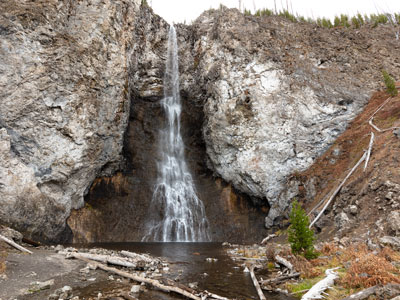
Fairy Falls
5.4 miles roundtrip, 200 feet elevation gain, Easy
Tall waterfall cascading over a volcanic plateau into a forested canyon, reached by one of the park's most popular hiking trails and known for views of nearby geothermal features.
Brocken Inaglory, CC BY-SA 3.0, via Wikimedia Commons; Image Size Adjusted

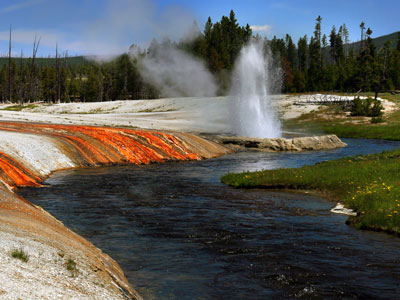
Firehole River
Thermal river fed by runoff from nearby hot springs and geysers, flowing through open meadows popular for wildlife viewing and designated summer swimming.
Pat Shanks. Public domain., Public domain, via Wikimedia Commons; Image Size Adjusted

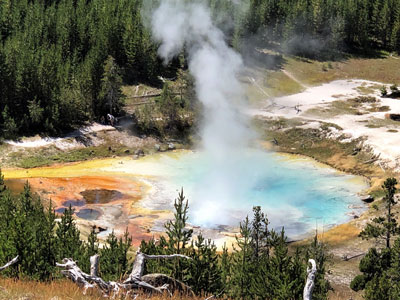
Imperial Geyser
6.2 miles roundtrip, 200 feet elevation gain, Moderate
Remote cone geyser surrounded by colorful thermal features and known for powerful eruptions that send water high above a broad geothermal basin.
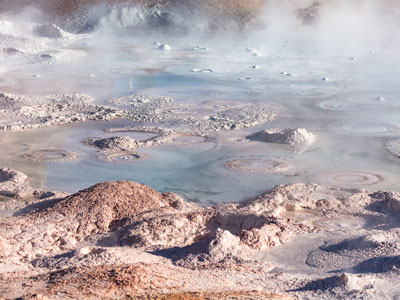
Lower Geyser Basin
Largest geyser basin in area, covering approximately 11 square miles, including Fountain Paint Pots, a hot spring mud pot that contains boiling mud instead of water, and other geothermal features.
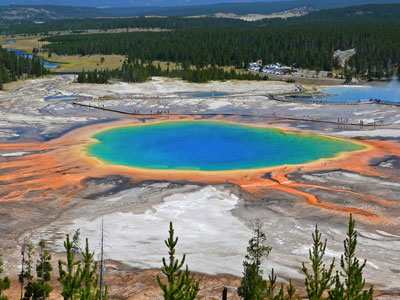
Clément Bardot, CC BY-SA 3.0, via Wikimedia Commons; Image Size Adjusted
Midway Geyser Basin
Renowned geothermal basin featuring enormous hot springs, vivid microbial colors, steaming vents, and some of the largest thermal pools in the world.