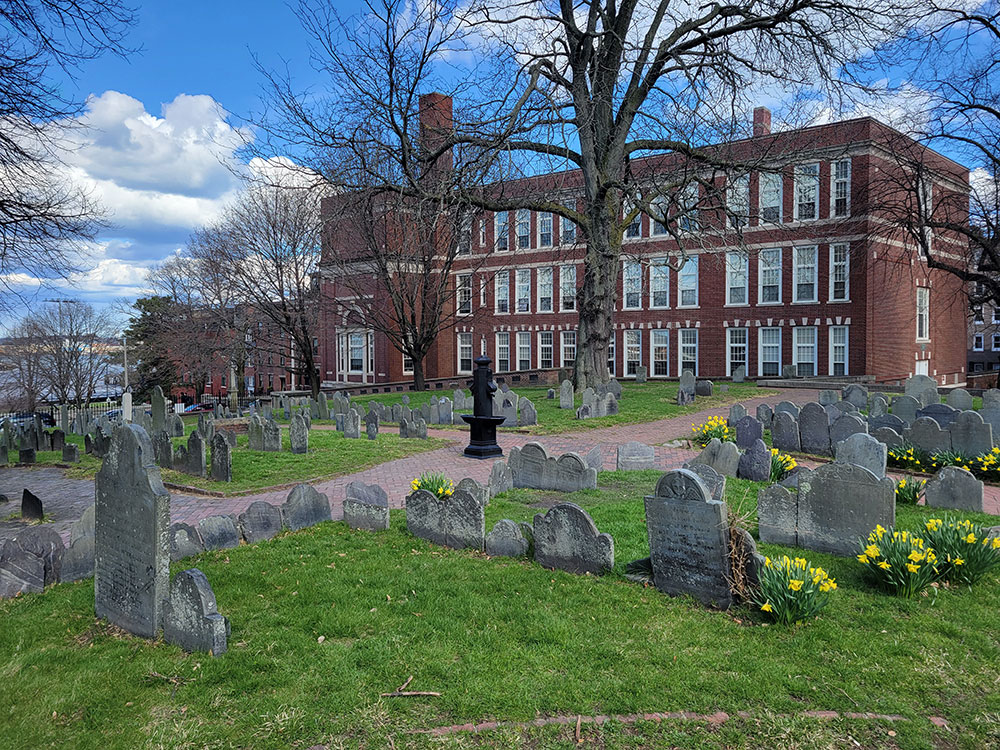
Second oldest cemetery in Boston contains more than 1200 marked graves, including the remains of various notable Bostonians from the colonial era into the 1850s
General Information
Hours:
Daily: 9am to 4pm
Closed only during severe weather conditions
Closed only during severe weather conditions
Fees:
Free admission
Pet Policy:
Pets are allowed
Closest cities with hotels:
Boston, MA (North End / Downtown)
Seasons:
All year
Best visited spring through fall for walking and views
Best visited spring through fall for walking and views
Location:
https://maps.app.goo.gl/hE5X4eTCncpwJHjH9
45 Hull St, Boston, MA 02113
Website:
How to Get There
From Downtown Boston (1 mi): Walk or take public transit toward the North End, continue along Hanover Street, turn onto Hull Street, and follow signs to Copp’s Hill Burying Ground at the top of the hill.
Overview
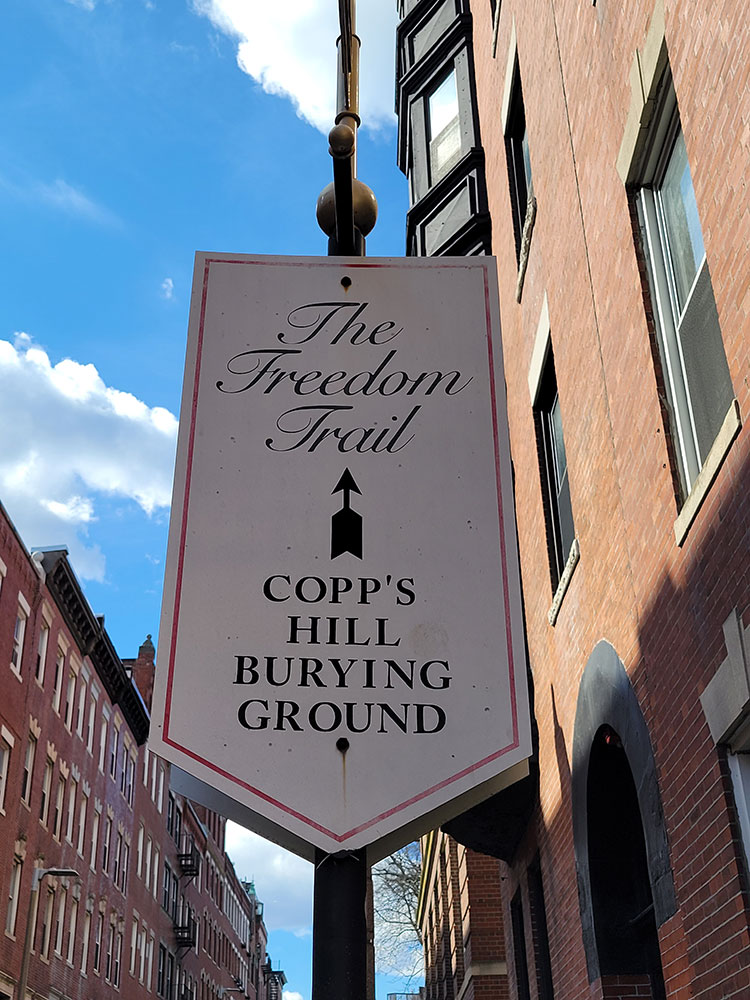
Copp's Hill Burying Ground in the North End, established in 1659, is Boston's second-oldest cemetery and a Freedom Trail stop with views over Charlestown and the harbor. It was added to the National Register of Historic Places in 1974.
Notable Burials
- Puritan ministers Increase, Cotton, and Samuel Mather
- Robert Newman, who hung the lanterns at Old North Church for Paul Revere
- Prince Hall, abolitionist and founder of Black Freemasonry
- Shem Drowne, who made the grasshopper weathervane on Faneuil Hall
- Many free Black residents of the North End, including a large early community
This article uses material from the Wikipedia article "Copp's Hill Burying Ground", which is released under the Creative Commons Attribution-Share-Alike License 3.0