Old North Church

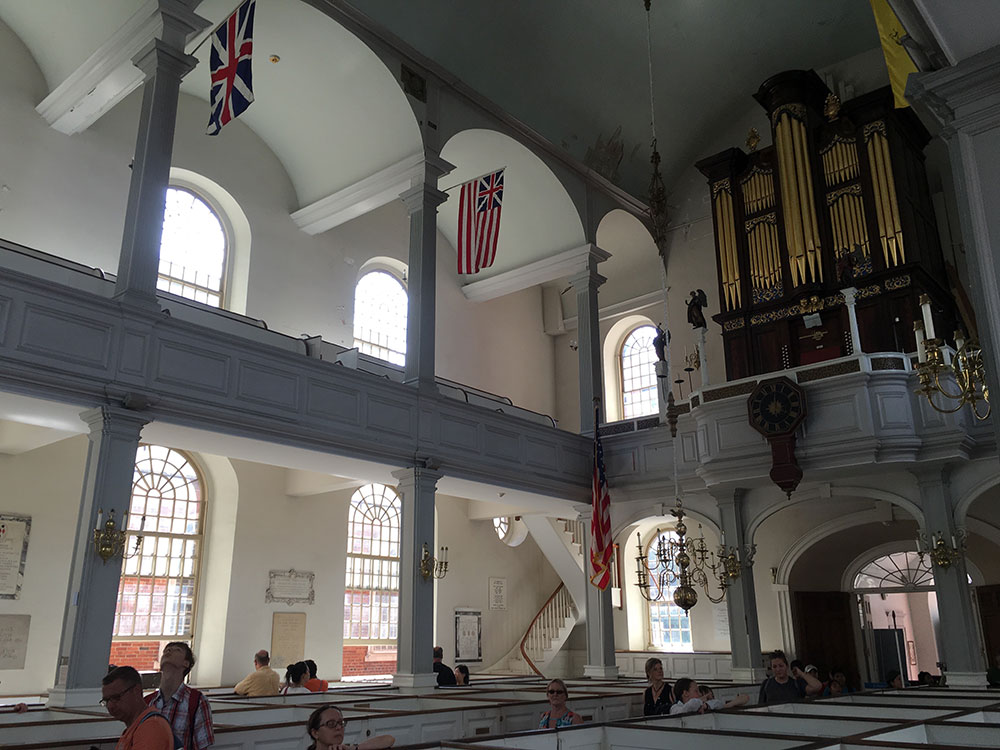
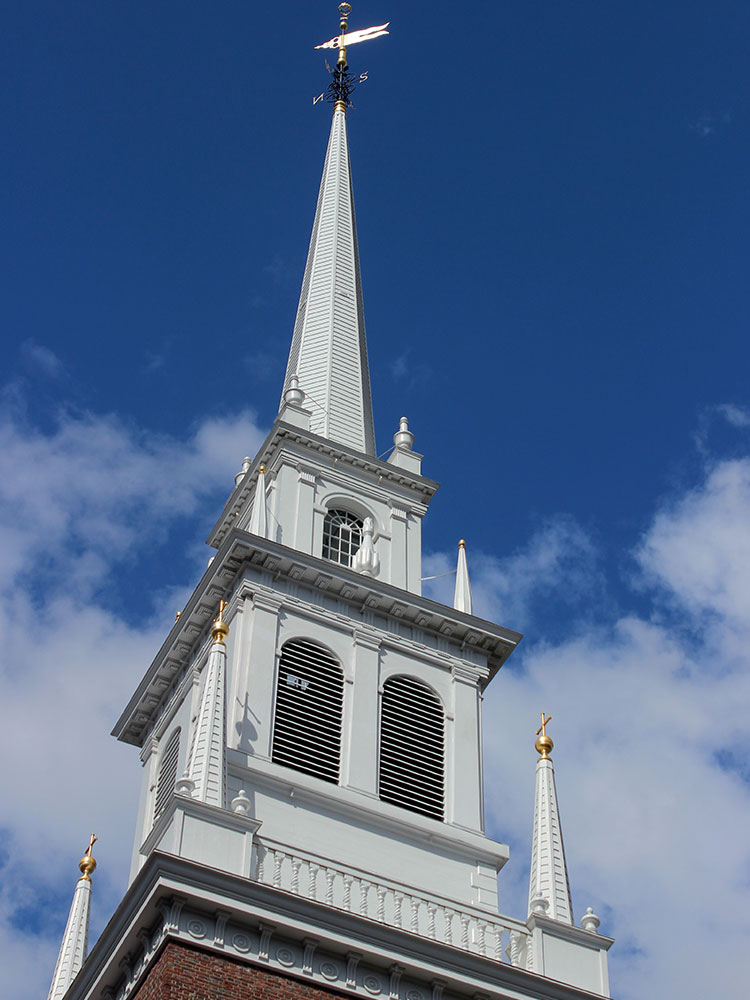
Domenico Convertini, CC BY-SA 2.0, via Wikimedia Commons; Image Size Adjusted

Location from which the famous "One if by land, two if by sea" signal is said to have been sent, relating to Paul Revere's midnight ride

General Information

Hours:
Tuesday–Saturday: 10am to 5pm
Sunday: 12:30pm to 5pm
Closed Mondays and major holidays
Fees:
Adults: $5
Children 5–17: $3
Children under 5: Free
Pet Policy:
Pets are not allowed inside the church or historic buildings
Closest cities with hotels:
Boston, MA (North End / Downtown)
Seasons:
All year
Best visited spring through fall
Location:
https://maps.app.goo.gl/Lm7t6k5z3nESfFoj7 193 Salem St, Boston, MA 02113
Website:
oldnorth.com

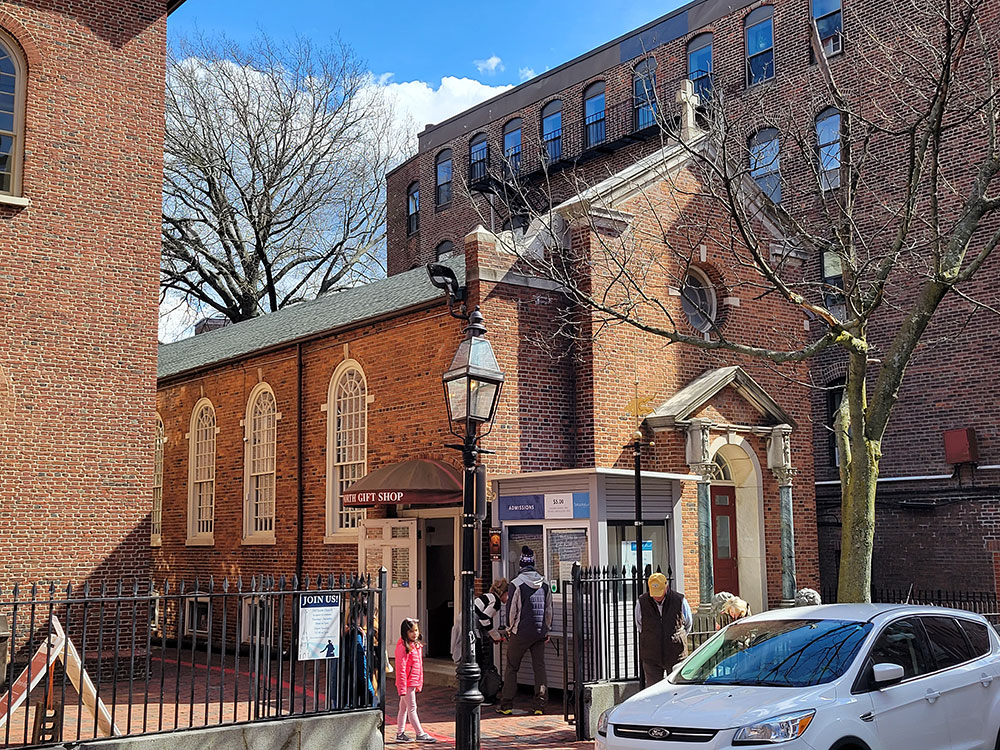
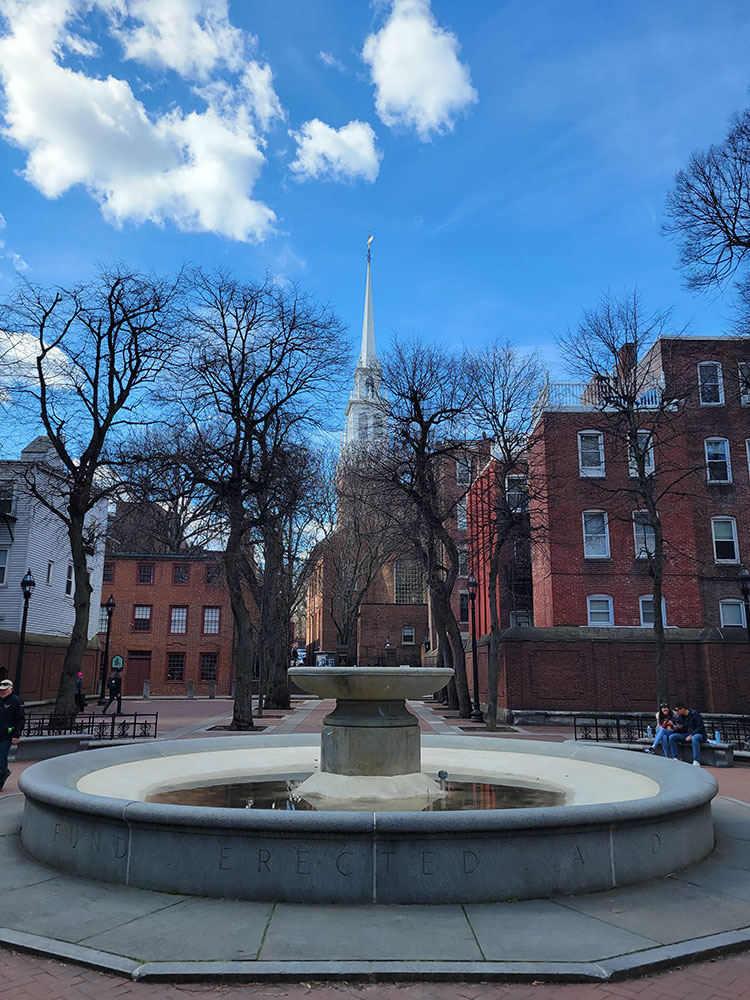
From Downtown Boston (0.8 mi): Walk north along the Freedom Trail through the North End, following the red brick line to Salem Street, where Old North Church is located near the Paul Revere House.

Overview

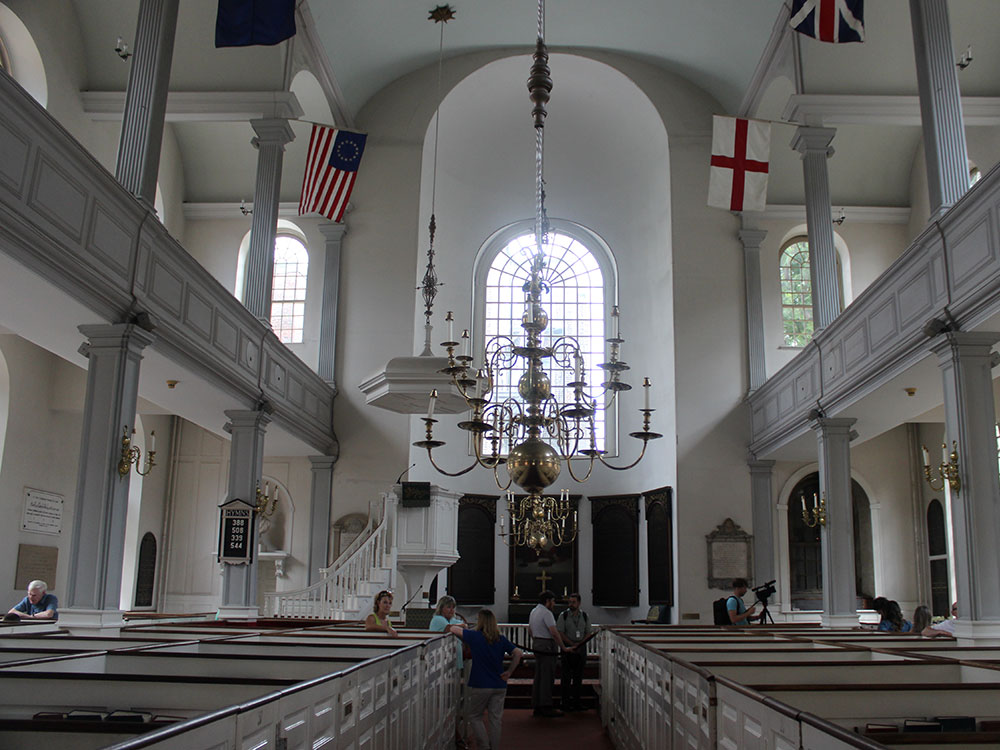
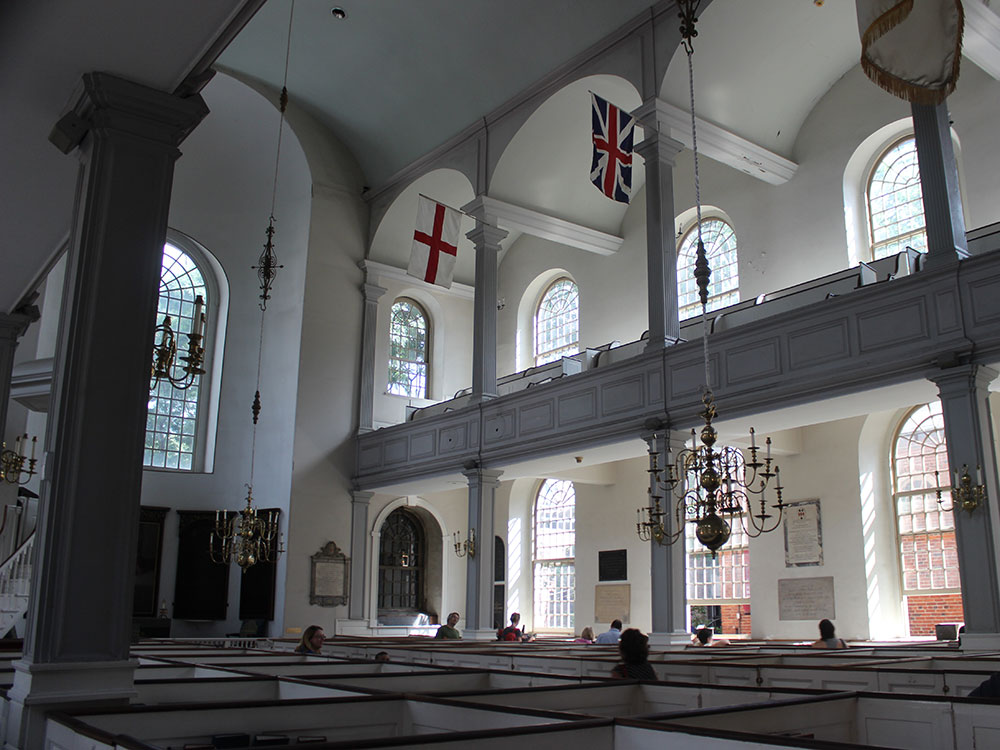
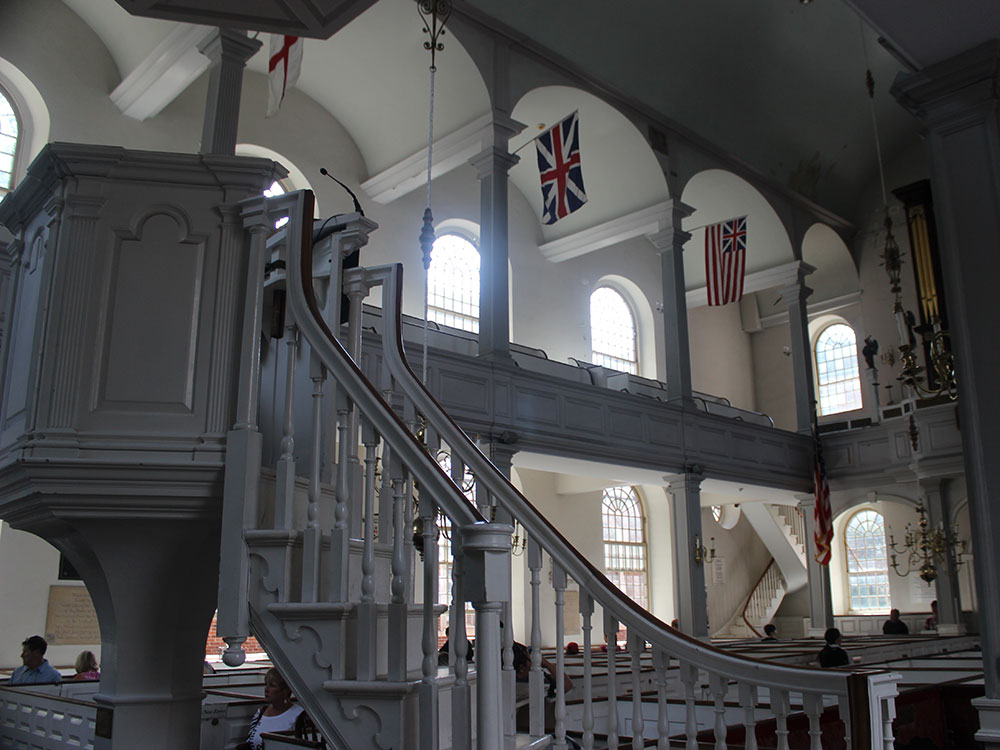
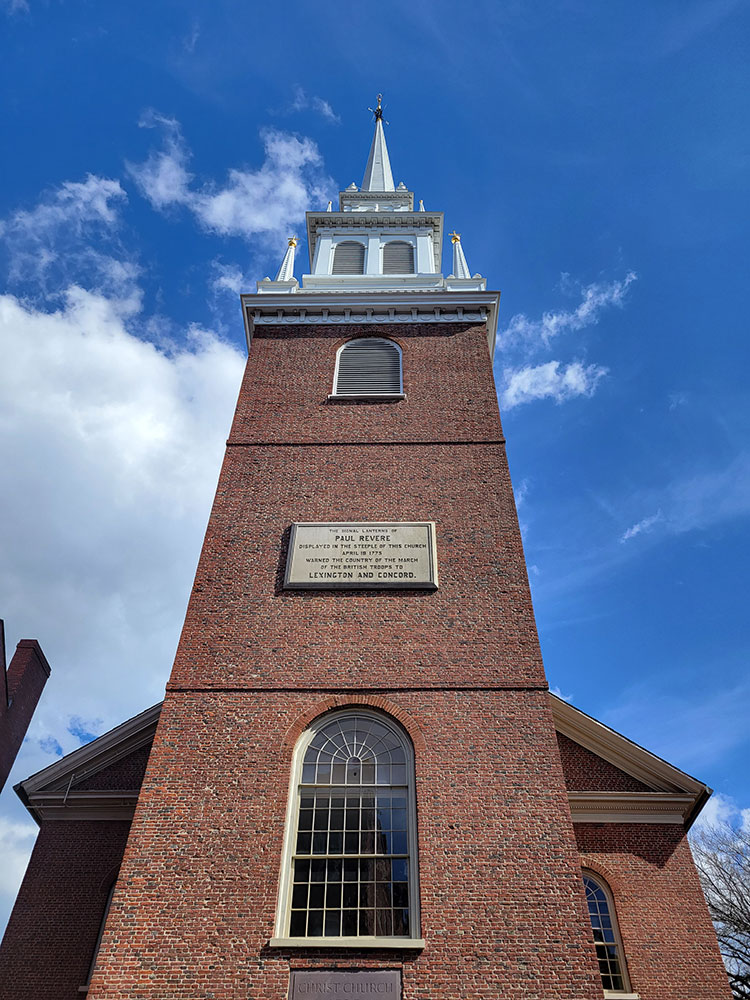
Old North Church (officially, Christ Church in the City of Boston), in the North End, Boston, is the location from which the famous "One if by land, two if by sea" signal is said to have been sent. This phrase is related to Paul Revere's midnight ride of April 18, 1775, which preceded the Battles of Lexington and Concord during the American Revolution.

The church is a mission of the Episcopal Diocese of Massachusetts. It was built in 1723 and is the oldest standing church building in Boston and a National Historic Landmark. Inside the church is a bust of George Washington, which Gilbert du Motier, Marquis de Lafayette, reportedly remarked was the best likeness of the first president he had ever seen.

The Old North Church was built in December 1723, inspired by the works of Christopher Wren, the British architect who was responsible for rebuilding London after the Great Fire. Timothy Cutler was the founding rector after serving as third rector of Yale College from 1719 to 1722. Jason Haven was called to minister, but his parishioners at the First Church and Parish in Dedham convinced him to stay.

In April 1775, Paul Revere told three Boston patriots to hang two lanterns in the steeple. These men were the church sexton Robert Newman and Captain John Pulling—the two of whom historian David Hackett Fischer suggests each carried one lantern up to the steeple—as well as Thomas Bernard, who stood watch for British troops outside the church. The lanterns were displayed to send a warning to Charlestown patriots across the Charles River about the movements of the British Army. Revere and William Dawes would later deliver the same message to Lexington themselves, but this lantern method was a fast way to inform the back-up riders in Charlestown about the movements of the British; these back-up riders planned to deliver the warning message to Lexington and Concord in case Revere and Dawes were arrested on the way.

The lanterns were hung for just under a minute to avoid catching the eyes of the British troops occupying Boston, but this was long enough for the message to be received in Charlestown. The militia waiting across the river had been told to look for the signal lanterns, and were prepared to act as soon as they saw them.

"One if by land, and two if by sea" is from Henry Wadsworth Longfellow's 1860 poem "Paul Revere's Ride". One lantern was to notify Charlestown that the British Army would march over Boston Neck and the Great Bridge, and two were to notify them that the troops were taking boats across the Charles River to land near Phips farm (the British Army would take the "sea" route; thus, two lanterns were hung). After receiving the signal, the Charlestown Patriots sent out a rider to Lexington, but this rider did not reach his destination and his identity has disappeared from history, having possibly been captured by a British patrol.

But the warning was delivered miles away to dozens of towns, first by Revere and Dawes on horses, and then by other men on horses and men who rang church bells and town bells, beat drums, and shot off warning guns. The current status of the lanterns is not entirely clear; one is said to be in the hands of a private collector, another was broken during a tour, and yet another is on display at the Concord Museum.

Eight change ringing bells at Old North Church were cast by Abel Rudhall (Rudhall of Gloucester) in Gloucester, England, in 1744 and hung in 1745. One bell has the inscription: "We are the first ring of bells cast for the British Empire in North America, A.R. 1744." The bells were restored in 1894 and in 1975. They are maintained and rung regularly by the Massachusetts Institute of Technology Guild of Bellringers.

Old North Church is today one of four church sites among the 16 stops on the Freedom Trail. It is an active congregation of the Episcopal Diocese of Massachusetts with a Sunday morning service.

This article uses material from the Wikipedia article "Old North Church", which is released under the Creative Commons Attribution-Share-Alike License 3.0

Ajay Suresh from New York, NY, USA, CC BY 2.0, via Wikimedia Commons; Image Size Adjusted
Miguel Hermoso Cuesta, CC BY-SA 4.0, via Wikimedia Commons; Image Size Adjusted