-400.jpg)
.jpg)
National monument located on the north shore of Lake Superior in northeastern Minnesota that preserves a vital center of fur trade activity and Anishinaabeg Ojibwe heritage
General Information
How to Get There
From Duluth, MN (150 mi): Take MN-61 E (North Shore Scenic Drive) northeast from Duluth along Lake Superior for approximately 150 miles to Grand Portage, then turn right onto S. Broadway to the monument entrance.
Overview
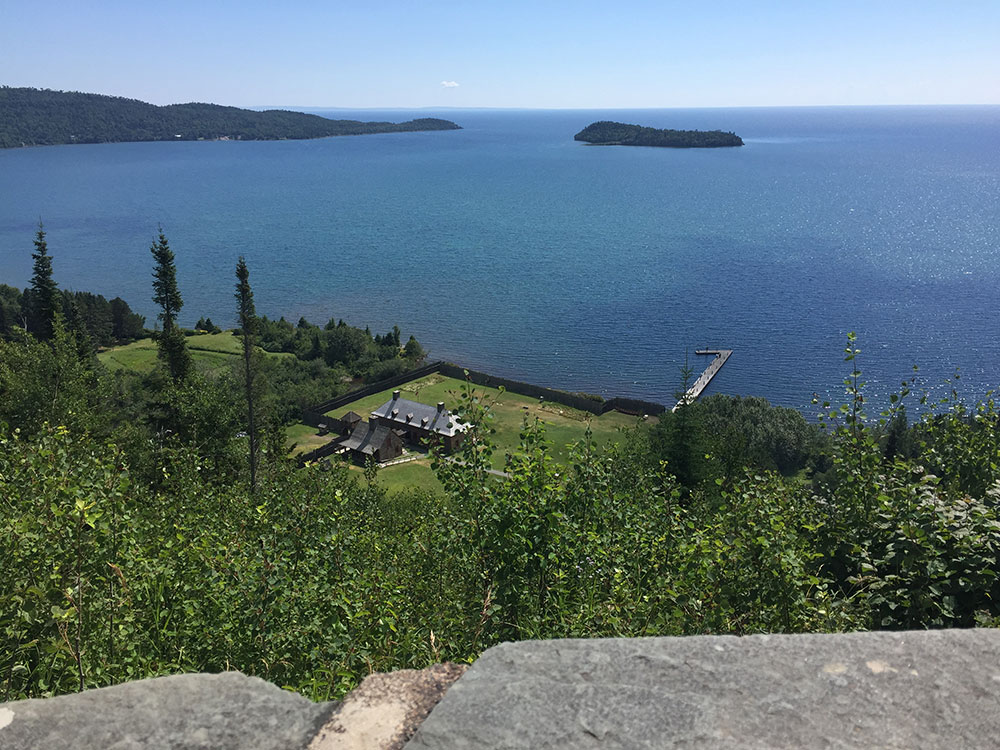
Grand Portage National Monument is a national monument located on the north shore of Lake Superior in northeastern Minnesota that preserves a vital center of fur trade activity and Anishinaabeg Ojibwe heritage. The area became one of the British Empire's four main fur trading centers in North America, along with Fort Niagara, Fort Detroit, and Michilimackinac.
The Grand Portage is an 8.5-mile (13.7 km) (2720 rod) footpath which bypasses a set of waterfalls and rapids on the last 20 miles (32 km) of the Pigeon River before it flows into Lake Superior. This path is part of the historic trade route of the French-Canadian voyageurs and coureur des bois between their wintering grounds and their depots to the east.
Composed of the Pigeon River and other strategic interior streams, lakes, and portages, this route was of enormous importance in pre-industrial times. It provided quick water access from Canada's settled areas and Atlantic ports to the fur-rich Rupert's Land and the North-Western Territory. Some 50 miles (80 km) upstream from Lake Superior, this trade route crosses the Height of Land Portage, on the Northern continental divide, and connects South Lake in the Pigeon River/Great Lakes watershed with North Lake of the Rainy River watershed. Grand Portage therefore was an essential link between the drainage basin of the Nelson River to Hudson Bay and that of the Saint Lawrence River to the Atlantic Ocean.
In 1951 the property was designated as the Grand Portage National Historic Site and opened for visitors. In 1958, it was designated a National Monument. The portage trail has also been separately designated a Minnesota State Historic Site. The monument's 710 acres (2.9 km2) lie entirely within the boundaries of Grand Portage Indian Reservation. The depot was reconstructed to allow celebration of the fur trade and Ojibwe lifeways. It was added to the National Register of Historic Places in 1966.
Things to Do
Step Into the Heart of the North American Fur Trade
Grand Portage National Monument preserves one of the most important fur trading centers in North American history. Located on the shore of Lake Superior in northeastern Minnesota near the Canadian border, the monument commemorates the historic Grand Portage, an 8.5-mile route used for centuries by Indigenous peoples and later by voyageurs of the North West Company. Today, visitors can explore reconstructed historic buildings, learn about Ojibwe culture, and experience the landscapes that shaped the fur trade.
Explore the Historic Depot and Reconstructed Fur Trade Buildings
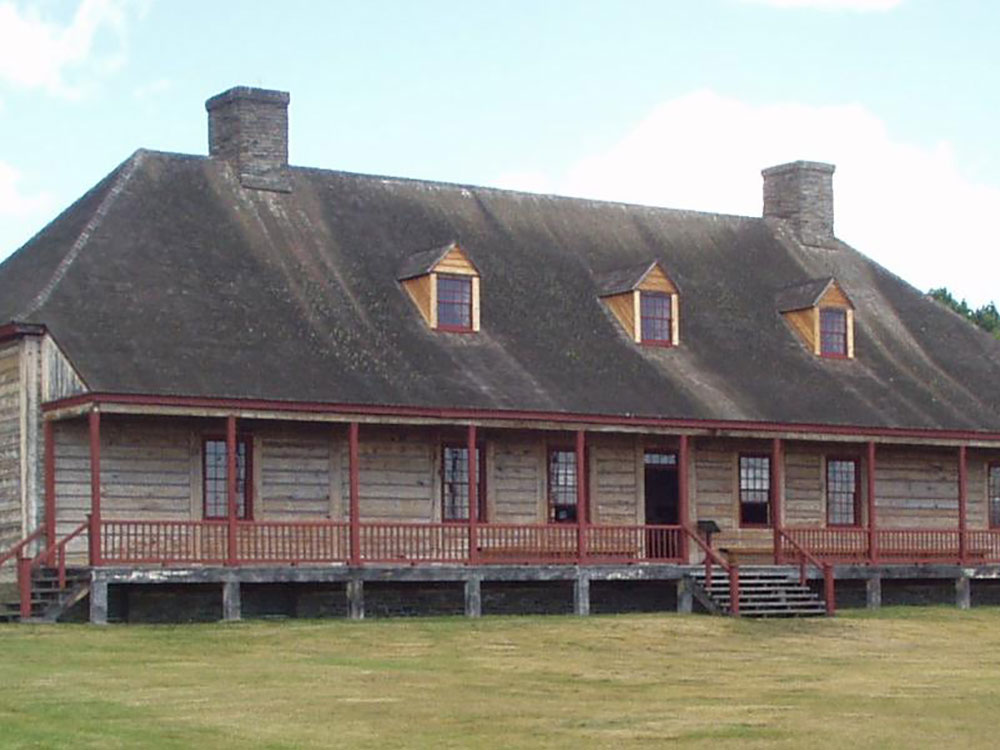
The monument features a reconstructed trading post, great hall, kitchen, canoe warehouse, and voyageurs' quarters that recreate the bustling headquarters of the North West Company during the late eighteenth and early nineteenth centuries. Costumed interpreters and exhibits help bring this important period of history to life.
Learn About the Grand Portage Band of Lake Superior Chippewa
The monument is located on the Grand Portage Reservation and highlights the enduring heritage of the Grand Portage Band of Lake Superior Chippewa. Exhibits and programs explore Ojibwe traditions, culture, trade, and the vital role Indigenous peoples played in the region's history.
Visit the Heritage Center
The Heritage Center contains exhibits, artifacts, films, and educational displays covering the history of the fur trade, traditional Ojibwe lifeways, voyageurs, and the importance of the Grand Portage route. It serves as an excellent starting point for exploring the monument.
Attend Rendezvous Days
Each summer, the monument hosts Grand Portage Rendezvous Days and Pow Wow, one of the largest historical reenactments in the Midwest. The event features voyageurs, traditional crafts, cultural demonstrations, music, and educational programs celebrating the region's diverse heritage.
Top Trails
Grand Portage Trail
Length: Approximately 8.5 miles one way
Elevation Gain: Moderate
Difficulty: Moderate
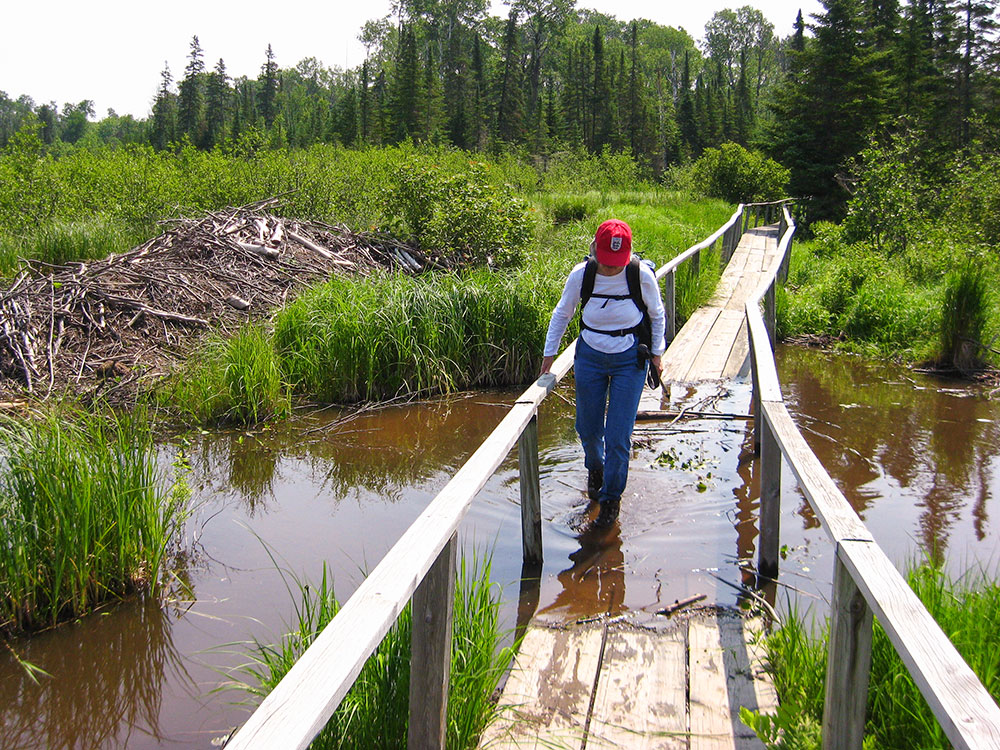
This historic route follows the original portage trail used for centuries to bypass the waterfalls and rapids of the Pigeon River. Hikers can experience portions of the route and gain appreciation for the challenges faced by voyageurs transporting trade goods and canoes between Lake Superior and inland waterways.
Mount Rose Trail
Length: Approximately 2 miles round trip
Elevation Gain: Moderate
Difficulty: Moderate
This trail climbs to overlooks above Lake Superior and Grand Portage Bay, offering excellent views of the surrounding landscape and insight into why the area became an important transportation corridor.
Heritage Center Walking Paths
Length: Approximately 0.5 miles
Elevation Gain: Minimal
Difficulty: Easy
Short interpretive paths connect the Heritage Center with the reconstructed fur trade depot and shoreline areas, allowing visitors to explore key historical features at a relaxed pace.
Nearby North Shore Trail Connections
Length: Variable distances available
Elevation Gain: Moderate
Difficulty: Easy to Strenuous
The surrounding region offers access to the Superior Hiking Trail, Judge C.R. Magney State Park, Grand Portage State Park, and other North Shore recreation areas featuring waterfalls, forests, and dramatic Lake Superior scenery.
Sources: National Park Service official Grand Portage National Monument information, including details on the fur trade depot, Grand Portage Trail, Heritage Center, Ojibwe history, cultural programs, and visitor experiences. https://www.nps.gov/grpo
Additional information verified through National Park Service visitor resources covering the North West Company, Grand Portage Band of Lake Superior Chippewa, Rendezvous Days, hiking opportunities, and historical interpretation. https://www.nps.gov/grpo/planyourvisit
The portage trail exists in much the same location and condition as in historic times. Visitors can hike 8.5 miles (13.7 km) from Lake Superior to the Pigeon River.
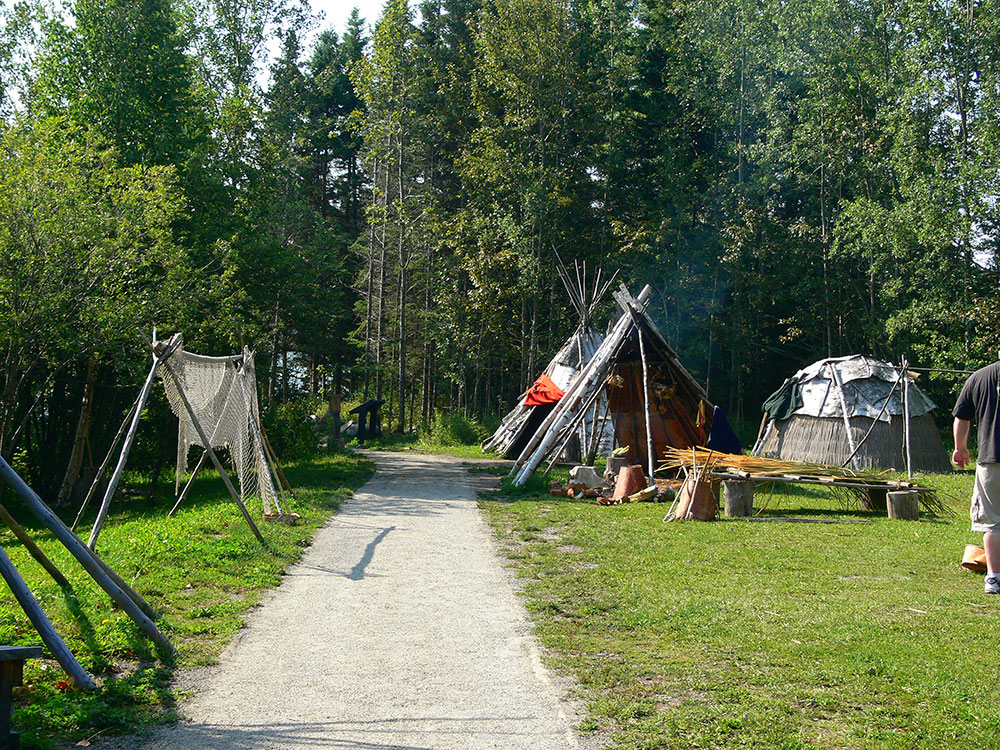
Volunteers and park staff at the monument dress in period attire. They staff the Kitchen, Great Hall, Canoe Warehouse, Ojibwe Village and Voyageur Encampment in and around the Stockade, and explain and interpret what life was like at the trading post at the turn of the 18th century. During the second weekend of August, the Grand Portage National Monument hosts a rendezvous re-enactment.
The four corner rooms off of the Great Hall are each decorated to represent a different aspect of the fur trade, including a shareholder's bedroom, a trading post with examples of furs and goods that would have been exchanged, a London streetscape with finished goods made from the furs that came through Grand Portage, and a hatter's shop showing the steps of turning beaver pelts into fine felt hats.
Opened in 2007, the Grand Portage National Monument Heritage Center features exhibit galleries about Ojibwe culture and the fur trade, a bookstore, multi-media programs, park offices, archives and a classroom. The center is a collaboration between the National Park Service and the Grand Portage Band of Lake Superior Chippewa. It overlooks the reconstructed fur trading post.
This article uses material from the Wikipedia article "Grand Portage National Monument", which is released under the Creative Commons Attribution-Share-Alike License 3.0


-1000.jpg)
.jpg)