

Second largest commercial business district in North America and contains the headquarters and regional offices of several global and national businesses, retail, restaurants, hotels, and theaters, as well as many of Chicago's most famous attractions
Rating:
![]()
Grinnell Point and Swiftcurrent Lake from the Many Glacier Hotel
Jeff P from Berkeley, CA, USA, CC BY 2.0, via Wikimedia Commons; Image Size Adjusted
Auditorium Building
National Historic Landmark mixed-use structure renowned for its groundbreaking architecture, ornate theater, innovative engineering, and lasting influence on modern building design.

Ken Lund from Reno, Nevada, USA, CC BY-SA 2.0, via Wikimedia Commons; Image Size Adjusted
Chicago Board of Trade Building
44-story, 604-foot Art Deco skyscraper standing at the foot of the LaSalle Street canyon
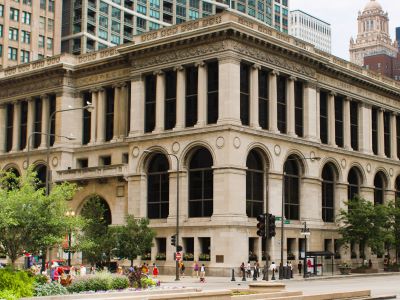
Victorgrigas, CC BY-SA 3.0, via Wikimedia Commons; Image Size Adjusted
Chicago Cultural Center
One of the city's most popular attractions featuring more than 1,000 programs and exhibitions covering a wide range of the performing, visual and literary arts
Loco Steve, CC BY 3.0, via Wikimedia Commons; Image Size Adjusted
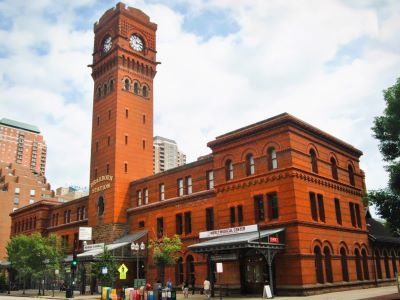
Dearborn Station
Romanesque Revival intercity train station serving downtown Chicago, now a shopping mall housing office, retail, and entertainment spaces
ajay_suresh, CC BY 2.0, via Wikimedia Commons; Image Size Adjusted
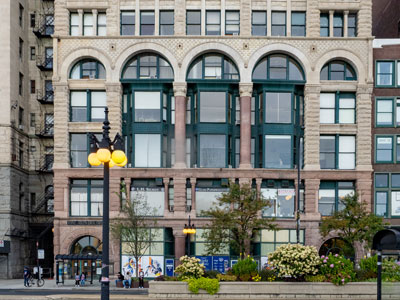
Fine Arts Building
Ten-story landmark building located across from Grant Park with interior featuring Art Nouveau motifs and murals
Roman Kharkovski, CC BY-SA 3.0, via Wikimedia Commons; Image Size Adjusted
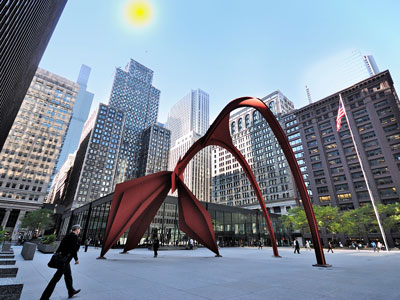
Flamingo Sculpture
53-foot tall stabile created by noted American artist Alexander Calder located in the Federal Plaza
ajay_suresh, CC BY 2.0, via Wikimedia Commons; Image Size Adjusted
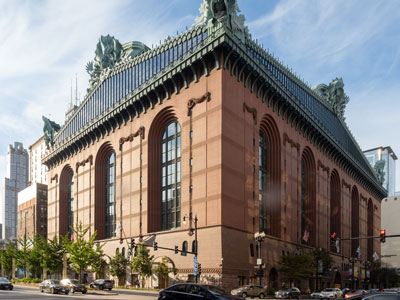
Harold Washington Library
Central library for the Chicago Public Library System and condsidered the largest public library building in the world
Paul R. Burley, CC BY-SA 4.0, via Wikimedia Commons; Image Size Adjusted
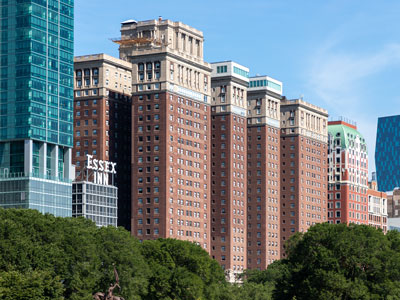
Hilton Chicago
Chicago landmark overlooking Grant Park, Lake Michigan, and the Museum Campus
Ken Lund from Reno, Nevada, USA, CC BY-SA 2.0, via Wikimedia Commons; Image Size Adjusted
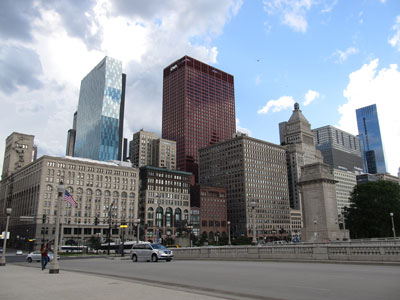
Historic Michigan Boulevard District
Historic district including numerous significant buildings on Michigan Avenue facing Grant Park and point recognized as the end of Route 66

Jaysin Trevino from Evanston, IL, US, CC BY 2.0, via Wikimedia Commons; Image Size Adjusted
Marquette Building
One of the early steel frame skyscrapers, and is considered one of the best examples of the Chicago School of architecture
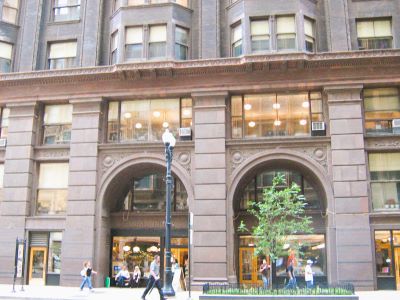
Zol87, CC BY-SA 2.0, via Wikimedia Commons; Image Size Adjusted
Monadnock Building
16-story skyscraper is the tallest load-bearing brick building ever constructed
Counselman Collection from McClure, CC BY-SA 2.0, via Wikimedia Commons; Image Size Adjusted
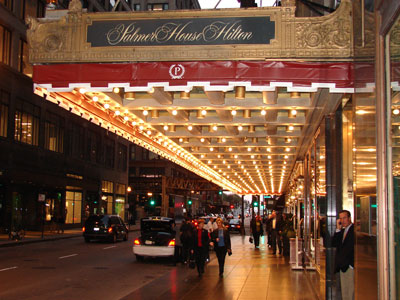
Palmer House a Hilton Hotel
Historic hotel dubbed the longest continuously operating hotel in North America
BladeJogger2049, CC BY-SA 4.0, via Wikimedia Commons; Image Size Adjusted
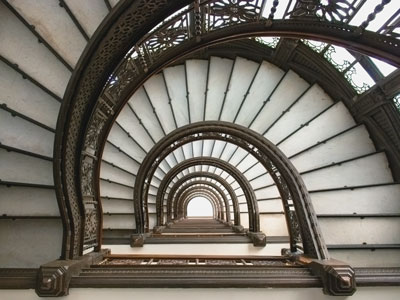
Rookery Building
Historic office building is considered the oldest standing high-rise in Chicago
Cody Hough, CC BY-SA 3.0, via Wikimedia Commons; Image Size Adjusted
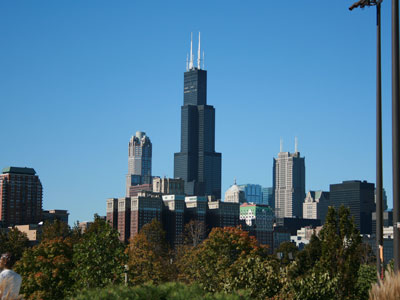
Willis Tower
Formerly the Sears Tower, the 108-story, 1,450-foot (442.1 m) skyscraper was also the tallest building in the Western Hemisphere for 41 years
Overview
The Loop is Chicago's central business district and the heart of Downtown Chicago, the second-largest commercial district in North America and home to City Hall, Cook County's seat, and the offices of major national and global companies. Bounded by the Chicago River and Lake Michigan, it gets its name from the elevated railway loop that has encircled the district since the late 19th century.
History and Architecture
Fort Dearborn, the U.S. Army's first settlement here, was built in 1803, and the area became Chicago's commercial core after the Great Chicago Fire of 1871, when the rebuilding effort produced some of the world's first skyscrapers, including the 1885 Home Insurance Building, considered the first true skyscraper, along with Chicago School landmarks such as the Rookery and Monadnock Buildings.
Culture and Attractions
The Loop's cultural institutions include the Art Institute of Chicago, the Goodman and Chicago Theatres, and the Lyric Opera, alongside the Loop Retail Historic District and Chicago's Theatre District. Along the waterfront, Grant Park is home to Buckingham Fountain and the Taste of Chicago festival, and its Millennium Park section features the Jay Pritzker Pavilion, Crown Fountain, and Anish Kapoor's Cloud Gate sculpture.
Notable landmarks
- Art Institute of Chicago
- Auditorium Building
- Buckingham Fountain
- Carbide & Carbon Building
- Carson, Pirie, Scott and Company Building
- Chicago Board of Trade Building
- Chicago Theatre
- Chicago Cultural Center
- Chicago City Hall
- Civic Opera House
- Commercial National Bank Building
- Field Building
- Fine Arts Building
- Grant Park
- Jewelers Row District
- Mather Tower
- Historic Michigan Boulevard District
- Monadnock Building
- The Palmer House
- Grea Northern Hotel, Chicago
- Printing House Row
- Reliance Building
- Rookery Building
- Symphony Center - home of the Chicago Symphony Orchestra
- Willis Tower - formerly the Sears Tower
Printer's Row
Printer's Row, also known as Printing House Row, is a neighborhood located in the southern portion of the Loop community area of Chicago. It is centered on Dearborn Street from Ida B. Wells Drive on the north to Polk Street on the south, and includes buildings along Plymouth Court on the east and Federal Street to the west. Most of the buildings in this area were built between 1886 and 1915 for house printing, publishing, and related businesses. Today, the buildings have mainly been converted into residential lofts. Part of Printer's Row is an official landmark district, called the Printing House Row District.
South Loop
Dearborn Station at the south end of Printers Row, is the oldest train station still standing in Chicago; it has been converted to retail and office space. Most of the area south of Ida B. Wells Drive between Lake Michigan and the Chicago River, excepting Chinatown, is referred to as the South Loop. Perceptions of the southern boundary of the neighborhood have changed as development spread south, and the name is now used as far south as 26th Street.
The neighborhood includes former railyards that have been redeveloped as new-town-in-town such as Dearborn Park and Central Station. Former warehouses and factory lofts have been converted to residential buildings, while new townhouses and highrises have been developed on vacant or underused land.
Historic Michigan Boulevard District
The Loop also contains the Chicago Landmark Historic Michigan Boulevard District, which is the section of Michigan Avenue opposite Grant Park and Millennium Park.
Loop Retail Historic District
The Loop Retail Historic District is a shopping district within the Chicago Loop community area. It is bounded by Lake Street to the north, Ida B. Wells Drive to the south, State Street to the west and Wabash Avenue to the east. The district has the highest density of National Historic Landmark, National Register of Historic Places and Chicago Landmark designated buildings in Chicago. It hosts several historic buildings including former department store flagship locations Marshall Field and Company Building (now Macy's at State Street), and the Sullivan Center (formerly Carson, Pirie, Scott and Company Building).
Parks and recreation
Chicago Riverwalk
The Chicago Riverwalk spans the southern edge of the Chicago River.
Grant Park
Grant Park is located on the shores of Lake Michigan. Set aside in the late 19th century, it was originally known as "Lake Park" but was renamed for Civil War general and U.S. President Ulysses Grant. Buckingham Fountain was constructed in 1927 in Grant Park.
Maggie Daley Park
Maggie Daley Park is located to the east of Millennium Park.
Millennium Park
Millennium Park is located northwest of Grant Park. Originally intended to celebrate the new millennium, it opened in 2004.
Printer's Row Park
Officially known as Park No. 543, this park is located in the Printer's Row neighborhood. It contains a community garden and an ornamental fountain.
Pritzker Park
Pritzker Park is located on State Street near Harold Washington Library. It occupies the site of the Rialto Hotel, which was demolished in 1990. It is a green space developed by Ronald Jones and named for Cindy Pritzker. Originally constructed by the Chicago Department of Planning and Development, the Chicago Park District assumed control of it in 2008. It has a short wall with quotes from famous writers and philosophers.
Theodore Roosevelt Park
Theodore Roosevelt Park is located in the South Loop. Named for President Theodore Roosevelt, it was constructed beginning in 1980 as an adjunct to the Dearborn Park homes.It contains open space and three tennis courts. It is located on Roosevelt Road, also named for Roosevelt.
This article uses material from the Wikipedia article "Chicago Loop", which is released under the Creative Commons Attribution-Share-Alike License 3.0.
Grinnell Point and Swiftcurrent Lake from the Many Glacier Hotel
Jeff P from Berkeley, CA, USA, CC BY 2.0, via Wikimedia Commons; Image Size Adjusted

Auditorium Building
National Historic Landmark mixed-use structure renowned for its groundbreaking architecture, ornate theater, innovative engineering, and lasting influence on modern building design.
Ken Lund from Reno, Nevada, USA, CC BY-SA 2.0, via Wikimedia Commons; Image Size Adjusted

Chicago Board of Trade Building
44-story, 604-foot Art Deco skyscraper standing at the foot of the LaSalle Street canyon
Victorgrigas, CC BY-SA 3.0, via Wikimedia Commons; Image Size Adjusted

Chicago Cultural Center
One of the city's most popular attractions featuring more than 1,000 programs and exhibitions covering a wide range of the performing, visual and literary arts
Loco Steve, CC BY 3.0, via Wikimedia Commons; Image Size Adjusted

Dearborn Station
Romanesque Revival intercity train station serving downtown Chicago, now a shopping mall housing office, retail, and entertainment spaces
ajay_suresh, CC BY 2.0, via Wikimedia Commons; Image Size Adjusted

Fine Arts Building
Ten-story landmark building located across from Grant Park with interior featuring Art Nouveau motifs and murals
Roman Kharkovski, CC BY-SA 3.0, via Wikimedia Commons; Image Size Adjusted

Flamingo Sculpture
53-foot tall stabile created by noted American artist Alexander Calder located in the Federal Plaza
ajay_suresh, CC BY 2.0, via Wikimedia Commons; Image Size Adjusted

Harold Washington Library
Central library for the Chicago Public Library System and condsidered the largest public library building in the world
Paul R. Burley, CC BY-SA 4.0, via Wikimedia Commons; Image Size Adjusted

Hilton Chicago
Chicago landmark overlooking Grant Park, Lake Michigan, and the Museum Campus
Ken Lund from Reno, Nevada, USA, CC BY-SA 2.0, via Wikimedia Commons; Image Size Adjusted

Historic Michigan Boulevard District
Historic district including numerous significant buildings on Michigan Avenue facing Grant Park and point recognized as the end of Route 66
Jaysin Trevino from Evanston, IL, US, CC BY 2.0, via Wikimedia Commons; Image Size Adjusted

Marquette Building
One of the early steel frame skyscrapers, and is considered one of the best examples of the Chicago School of architecture
Zol87, CC BY-SA 2.0, via Wikimedia Commons; Image Size Adjusted

Monadnock Building
16-story skyscraper is the tallest load-bearing brick building ever constructed
Counselman Collection from McClure, CC BY-SA 2.0, via Wikimedia Commons; Image Size Adjusted

Palmer House a Hilton Hotel
Historic hotel dubbed the longest continuously operating hotel in North America
BladeJogger2049, CC BY-SA 4.0, via Wikimedia Commons; Image Size Adjusted

Rookery Building
Historic office building is considered the oldest standing high-rise in Chicago
Cody Hough, CC BY-SA 3.0, via Wikimedia Commons; Image Size Adjusted

Willis Tower
Formerly the Sears Tower, the 108-story, 1,450-foot (442.1 m) skyscraper was also the tallest building in the Western Hemisphere for 41 years
Overview
The Loop is Chicago's central business district and the heart of Downtown Chicago, the second-largest commercial district in North America and home to City Hall, Cook County's seat, and the offices of major national and global companies. Bounded by the Chicago River and Lake Michigan, it gets its name from the elevated railway loop that has encircled the district since the late 19th century.
History and Architecture
Fort Dearborn, the U.S. Army's first settlement here, was built in 1803, and the area became Chicago's commercial core after the Great Chicago Fire of 1871, when the rebuilding effort produced some of the world's first skyscrapers, including the 1885 Home Insurance Building, considered the first true skyscraper, along with Chicago School landmarks such as the Rookery and Monadnock Buildings.
Culture and Attractions
The Loop's cultural institutions include the Art Institute of Chicago, the Goodman and Chicago Theatres, and the Lyric Opera, alongside the Loop Retail Historic District and Chicago's Theatre District. Along the waterfront, Grant Park is home to Buckingham Fountain and the Taste of Chicago festival, and its Millennium Park section features the Jay Pritzker Pavilion, Crown Fountain, and Anish Kapoor's Cloud Gate sculpture.
Notable landmarks
- Art Institute of Chicago
- Auditorium Building
- Buckingham Fountain
- Carbide & Carbon Building
- Carson, Pirie, Scott and Company Building
- Chicago Board of Trade Building
- Chicago Theatre
- Chicago Cultural Center
- Chicago City Hall
- Civic Opera House
- Commercial National Bank Building
- Field Building
- Fine Arts Building
- Grant Park
- Jewelers Row District
- Mather Tower
- Historic Michigan Boulevard District
- Monadnock Building
- The Palmer House
- Grea Northern Hotel, Chicago
- Printing House Row
- Reliance Building
- Rookery Building
- Symphony Center - home of the Chicago Symphony Orchestra
- Willis Tower - formerly the Sears Tower
Printer's Row
Printer's Row, also known as Printing House Row, is a neighborhood located in the southern portion of the Loop community area of Chicago. It is centered on Dearborn Street from Ida B. Wells Drive on the north to Polk Street on the south, and includes buildings along Plymouth Court on the east and Federal Street to the west. Most of the buildings in this area were built between 1886 and 1915 for house printing, publishing, and related businesses. Today, the buildings have mainly been converted into residential lofts. Part of Printer's Row is an official landmark district, called the Printing House Row District.
South Loop
Dearborn Station at the south end of Printers Row, is the oldest train station still standing in Chicago; it has been converted to retail and office space. Most of the area south of Ida B. Wells Drive between Lake Michigan and the Chicago River, excepting Chinatown, is referred to as the South Loop. Perceptions of the southern boundary of the neighborhood have changed as development spread south, and the name is now used as far south as 26th Street.
The neighborhood includes former railyards that have been redeveloped as new-town-in-town such as Dearborn Park and Central Station. Former warehouses and factory lofts have been converted to residential buildings, while new townhouses and highrises have been developed on vacant or underused land.
Historic Michigan Boulevard District
The Loop also contains the Chicago Landmark Historic Michigan Boulevard District, which is the section of Michigan Avenue opposite Grant Park and Millennium Park.
Loop Retail Historic District
The Loop Retail Historic District is a shopping district within the Chicago Loop community area. It is bounded by Lake Street to the north, Ida B. Wells Drive to the south, State Street to the west and Wabash Avenue to the east. The district has the highest density of National Historic Landmark, National Register of Historic Places and Chicago Landmark designated buildings in Chicago. It hosts several historic buildings including former department store flagship locations Marshall Field and Company Building (now Macy's at State Street), and the Sullivan Center (formerly Carson, Pirie, Scott and Company Building).
Parks and recreation
Chicago Riverwalk
The Chicago Riverwalk spans the southern edge of the Chicago River.
Grant Park
Grant Park is located on the shores of Lake Michigan. Set aside in the late 19th century, it was originally known as "Lake Park" but was renamed for Civil War general and U.S. President Ulysses Grant. Buckingham Fountain was constructed in 1927 in Grant Park.
Maggie Daley Park
Maggie Daley Park is located to the east of Millennium Park.
Millennium Park
Millennium Park is located northwest of Grant Park. Originally intended to celebrate the new millennium, it opened in 2004.
Printer's Row Park
Officially known as Park No. 543, this park is located in the Printer's Row neighborhood. It contains a community garden and an ornamental fountain.
Pritzker Park
Pritzker Park is located on State Street near Harold Washington Library. It occupies the site of the Rialto Hotel, which was demolished in 1990. It is a green space developed by Ronald Jones and named for Cindy Pritzker. Originally constructed by the Chicago Department of Planning and Development, the Chicago Park District assumed control of it in 2008. It has a short wall with quotes from famous writers and philosophers.
Theodore Roosevelt Park
Theodore Roosevelt Park is located in the South Loop. Named for President Theodore Roosevelt, it was constructed beginning in 1980 as an adjunct to the Dearborn Park homes.It contains open space and three tennis courts. It is located on Roosevelt Road, also named for Roosevelt.
This article uses material from the Wikipedia article "Chicago Loop", which is released under the Creative Commons Attribution-Share-Alike License 3.0.